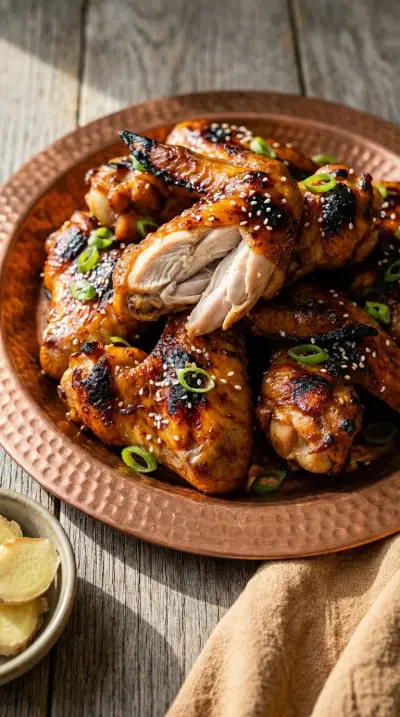
Chinese Salt and Pepper Chicken Wings: Crisp Asian Appetiser
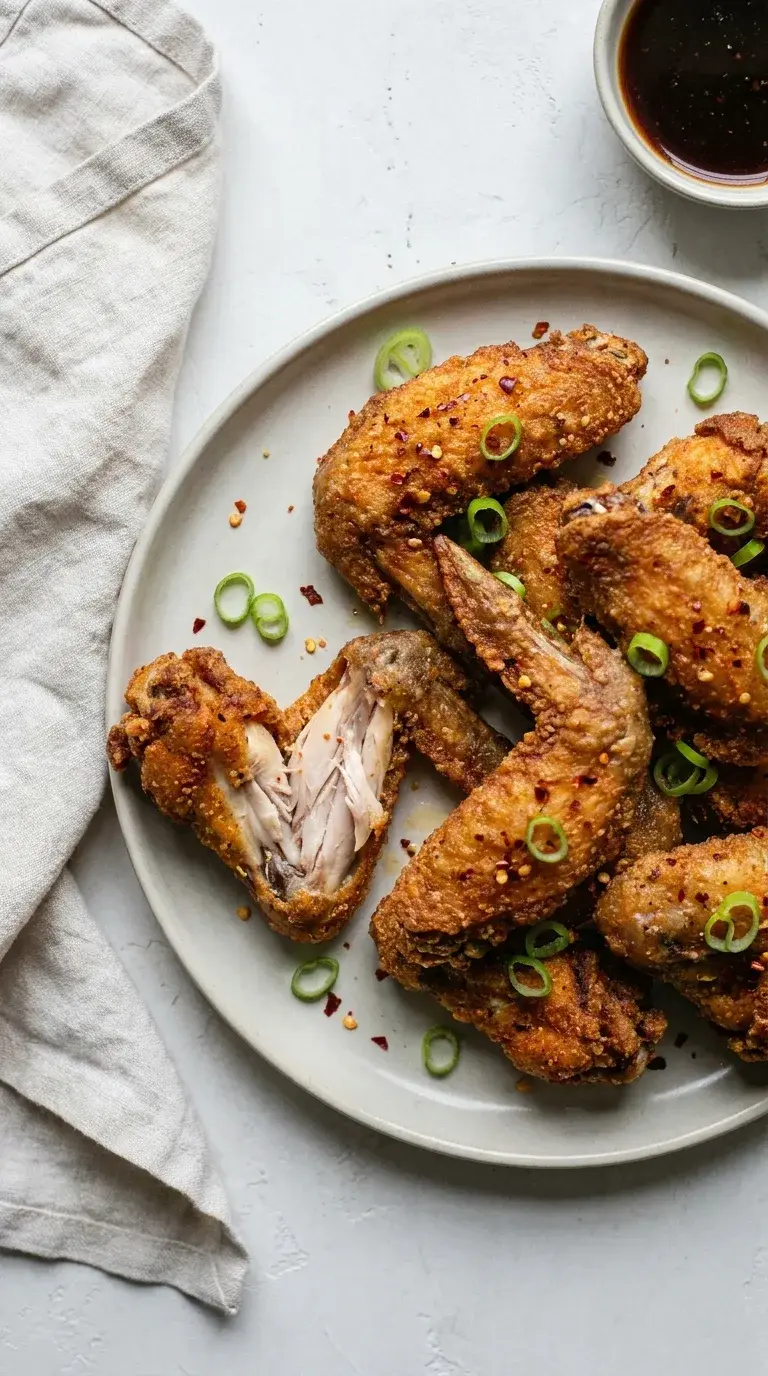
Traditional Chinese salt and pepper chicken wings often rely on a single starch or a heavy batter. This version uses a mixture of corn starch and potato starch. Use this blend to create a velvety coating that fries into a thinner, lighter shell. This departure ensures the wings stay crisp longer without feeling greasy, allowing the aromatic spices to remain the focus.
You get a savoury finish with a hint of heat from sliced chilies and scallions. Pat the wings dry with paper towels before you begin. Removing excess moisture is vital for a crisp coating. Maintain your oil at 175°C (350°F) to ensure the chicken cooks through to 74°C (165°F) without burning the exterior. This temperature control decides the final texture of the wing.
Chinese Salt and Pepper Chicken Wings: Crisp Asian Appetiser
Recipe cardIngredients
Watch how it's made
Instructions
-
Prepare the wings
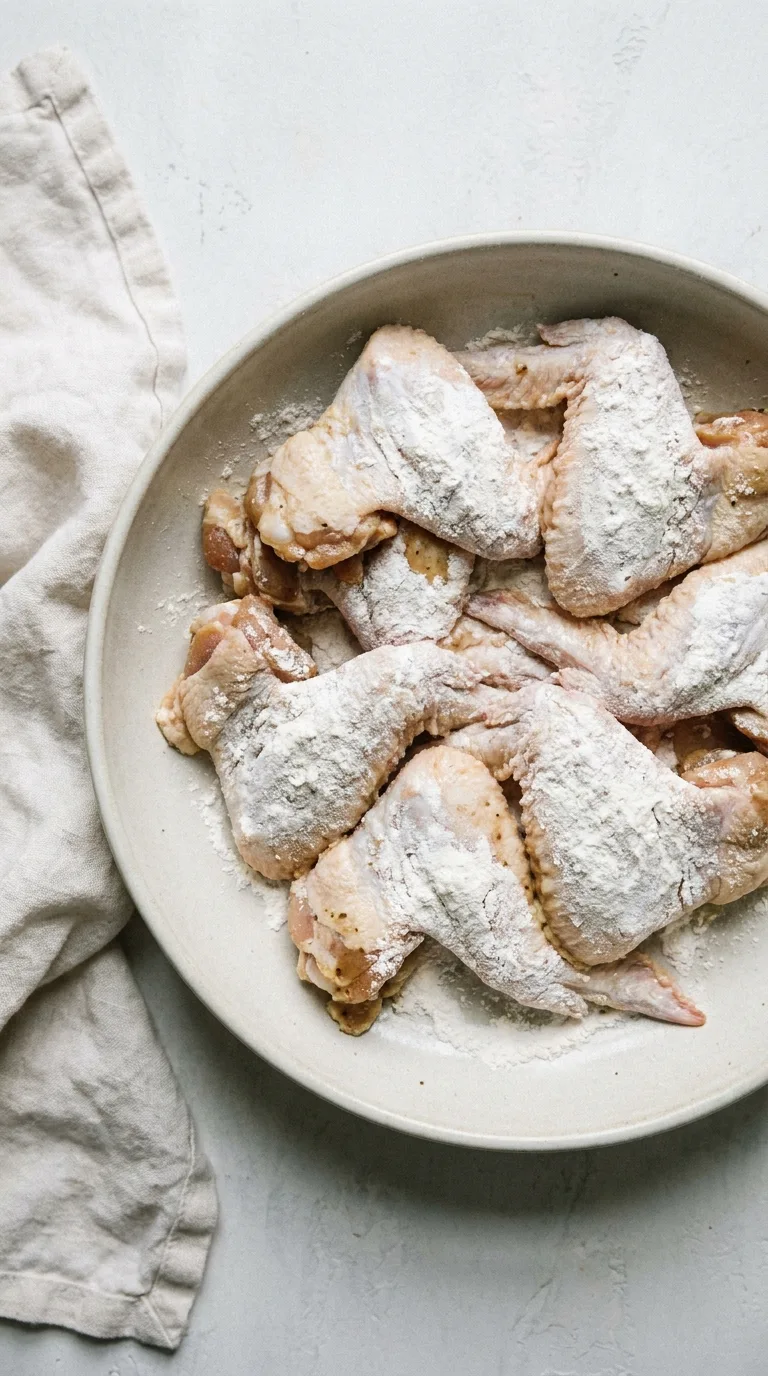
Rinse the chicken wings under cold water and pat them dry with paper towels. You must remove all excess moisture to ensure the coating adheres and becomes crisp.
-
Marinate the chicken
Whisk together soy sauce, oyster sauce, apple juice, salt, white pepper, five-spice powder, minced garlic and ginger. Toss the wings in this mixture until fully coated. Cover and refrigerate for at least 30 minutes to let the flavours penetrate the meat.
-
Coat with starch
Sift corn starch and potato starch together in a shallow dish. Toss the marinated wings in the powder until every surface is velvety. Shake off any excess dust so the oil does not burn.
-
Fry the wings
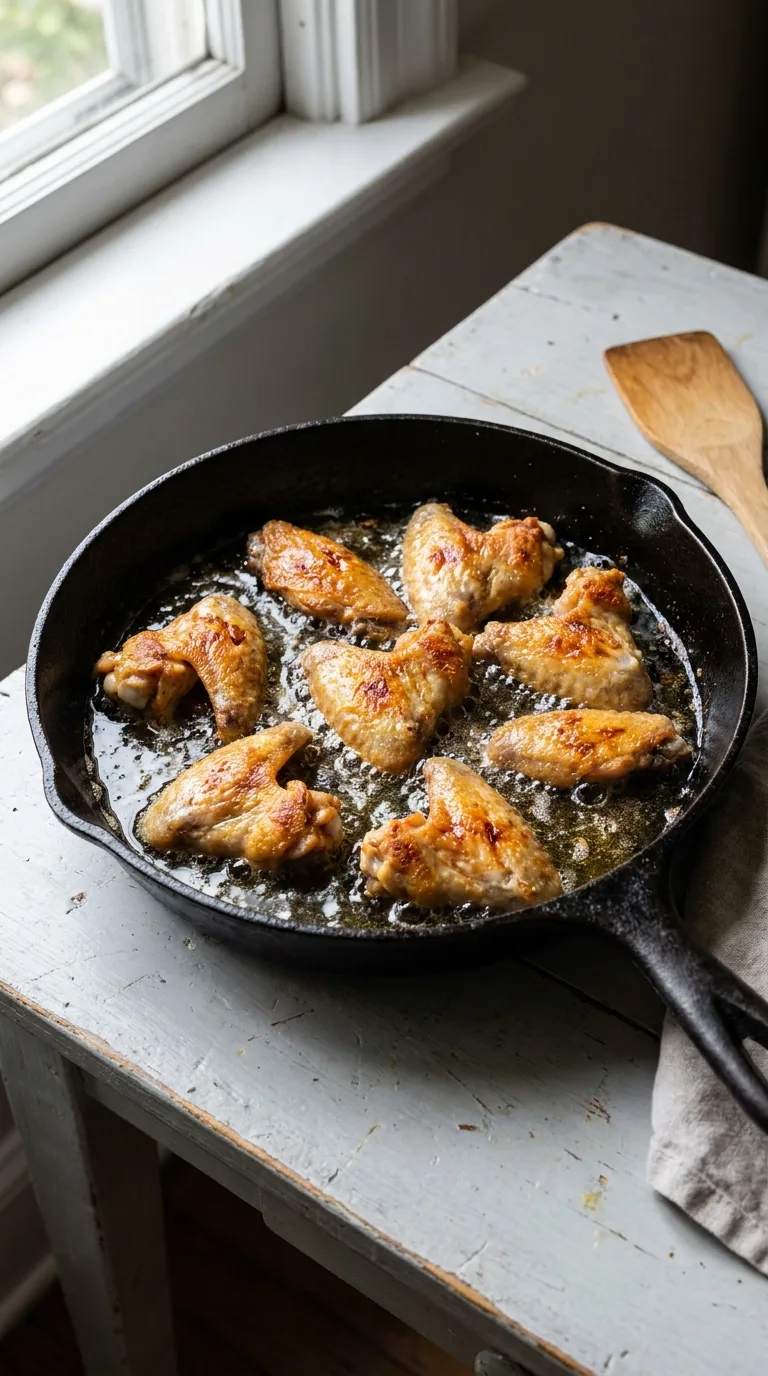
Heat vegetable oil to 175°C (350°F) in a deep frying pan. Slide wings into the hot oil in batches until golden-brown. Ensure the interior temperature reaches 74°C (165°F) to guarantee the chicken is cooked through.
-
Prepare the aromatics
Melt 30 g of butter in a wok over medium heat. Stir-fry sliced chilies, scallions and one minced garlic clove for 30 seconds. Stop once they are fragrant but not browned to keep the flavour fresh.
-
Finish and serve
Toss the hot wings into the wok with the butter-chilli mixture. Drizzle with the remaining 15 g of melted butter and stir quickly. Transfer to a platter and garnish with fresh coriander.
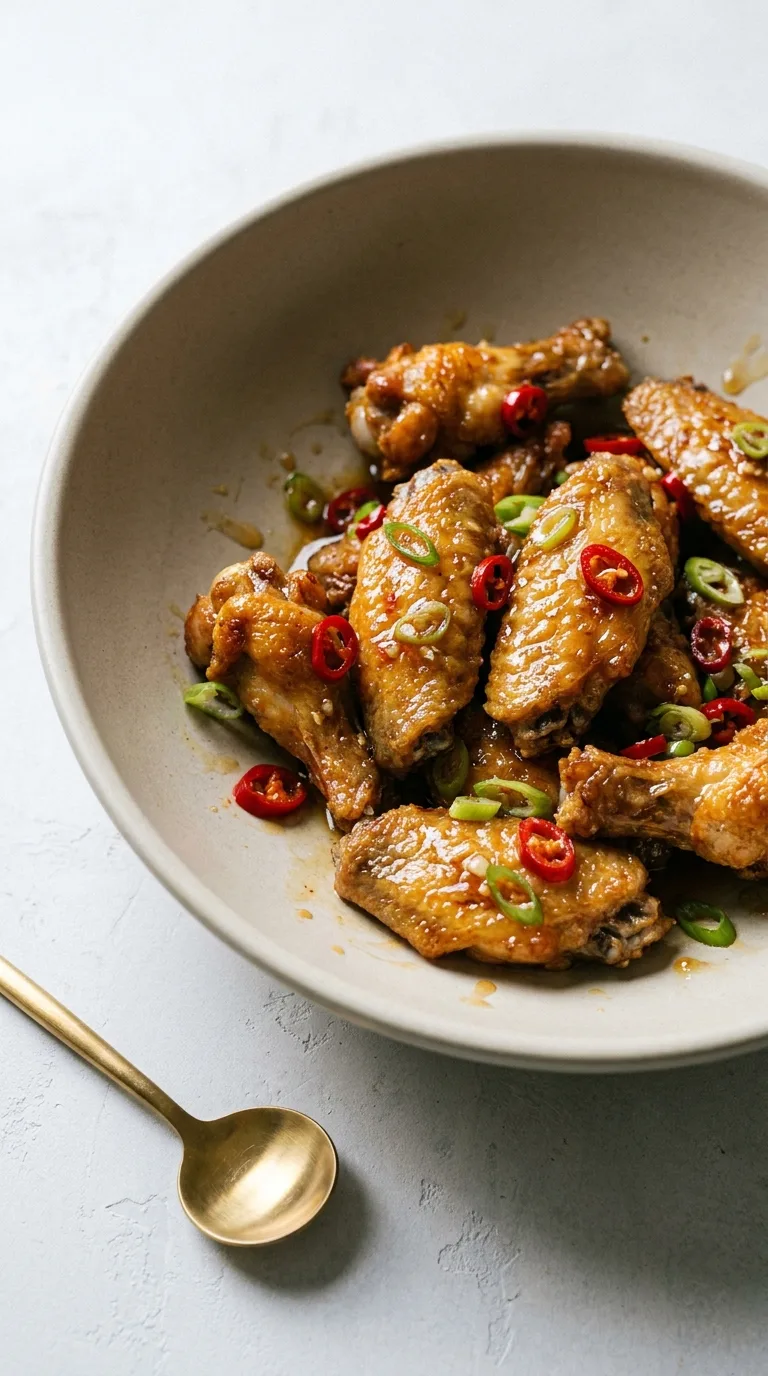
Keep a close eye on your oil temperature with a thermometer. If the oil drops below 175°C (350°F) after adding chicken, the wings will absorb too much fat and lose their crunch. Let the oil recover its heat for a few seconds between batches.
How it differs from the traditional method
This version uses a blend of corn starch and potato starch for a velvetier finish. Traditional methods often rely on a single flour or starch. This combination ensures the coating adheres better and resists softening, providing a more durable crunch after the wings are tossed in butter.
Storing and reheating
Store these wings in an airtight container in the freezer for up to 2 weeks. To restore the original crispness, reheat them in a pre-heated oven at 160°C (325°F) for 10 minutes. Avoid the microwave, as it will make the starch coating soft and chewy.
Nutrition per serving
- Calories
- 410
- Protein
- 22.5 g
- Carbs
- 9.2 g
- Fat
- 28.4 g
- Fiber
- 1.1 g
- Sugar
- 3.8 g
Estimated, and offered as a guide rather than a medical figure.
Made it? Rate it.
Questions people ask
How to make Chinese style salt and pepper chicken wings?
Marinate the chicken in soy, oyster sauce, and five-spice powder before coating in starch. Deep-fry at 175°C (350°F) until golden. Finish by tossing the wings in a wok with melted butter, sliced chilies, and scallions to add aromatic heat.
What do Chinese restaurants use to season chicken wings?
Restaurants typically use a mixture of salt, white pepper, and often five-spice powder. They use corn starch or potato starch for the coating to achieve a light, crisp shell that absorbs the butter and aromatics without becoming greasy.
Why do Chinese chicken wings taste so good?
The flavour comes from the balance of salty soy and oyster sauces against the pungent heat of white pepper and ginger. Frying the wings at a high temperature creates a Maillard reaction, which develops deep, savoury notes.

About the author
Mary C. Rivero
Mary C. Rivero specializes in comforting home‑cooked meals, from hearty pastas and sheet‑pan dinners to quick weeknight snacks. Her recipes feature clear, step‑by‑step directions and practical tips, helping readers create flavorful dishes with confidence and ease.