Creamy Mushroom Udon: Japanese Style Noodle Dish
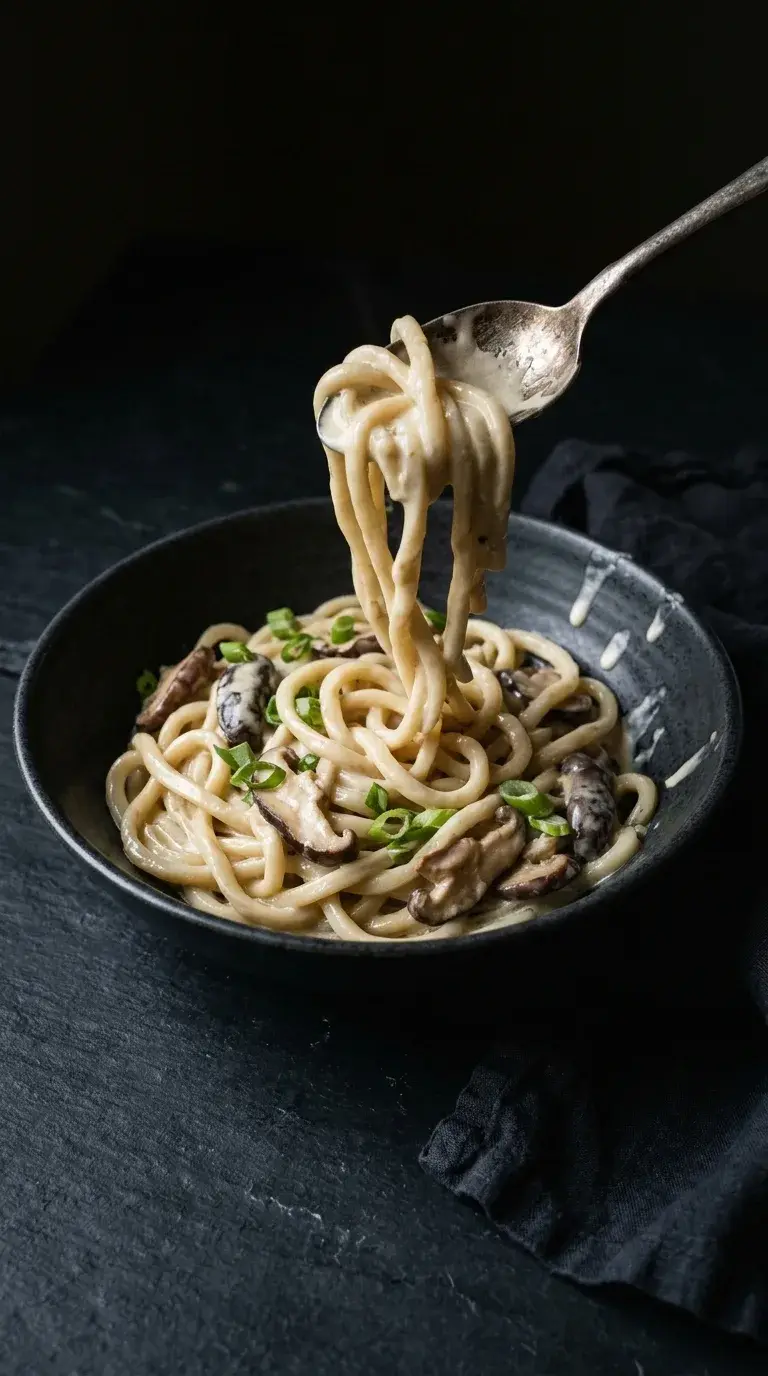
Choose fresh or frozen udon noodles for this creamy mushroom udon to ensure the best texture. Fresh noodles provide a softer bite, while frozen options often hold their shape better when tossed in a heavy sauce. Use a large skillet to sauté the mushrooms, as a wider surface area allows the moisture to evaporate quickly. This ensures the fungi brown and caramelise rather than stewing in their own liquid.
This dish combines thick, chewy noodles with a rich dairy sauce infused with soy, oyster sauce, and minced ginger. You will produce a silky, savoury meal that balances the earthiness of shiitake and cremini mushrooms with the smoothness of heavy cream. The result is a hearty dinner that feels indulgent yet comes together in 22 minutes.
Creamy Mushroom Udon: Japanese Style Noodle Dish
Recipe cardIngredients
Instructions
-
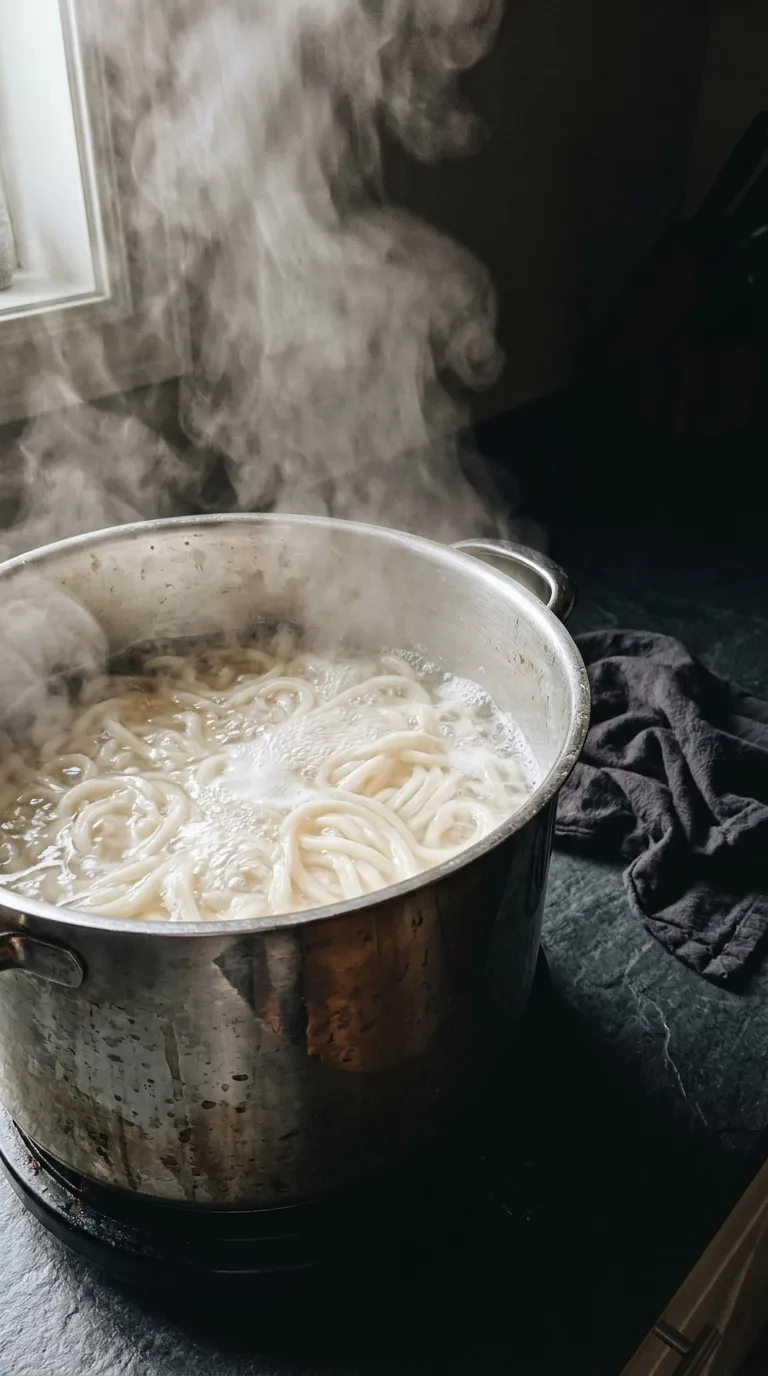
Cook the udon
Bring a large pot of salted water to a rolling boil. Add the noodles and cook for 4-5 minutes until al dente. Drain them but reserve a cup of the starchy noodle water to adjust your sauce later.
-
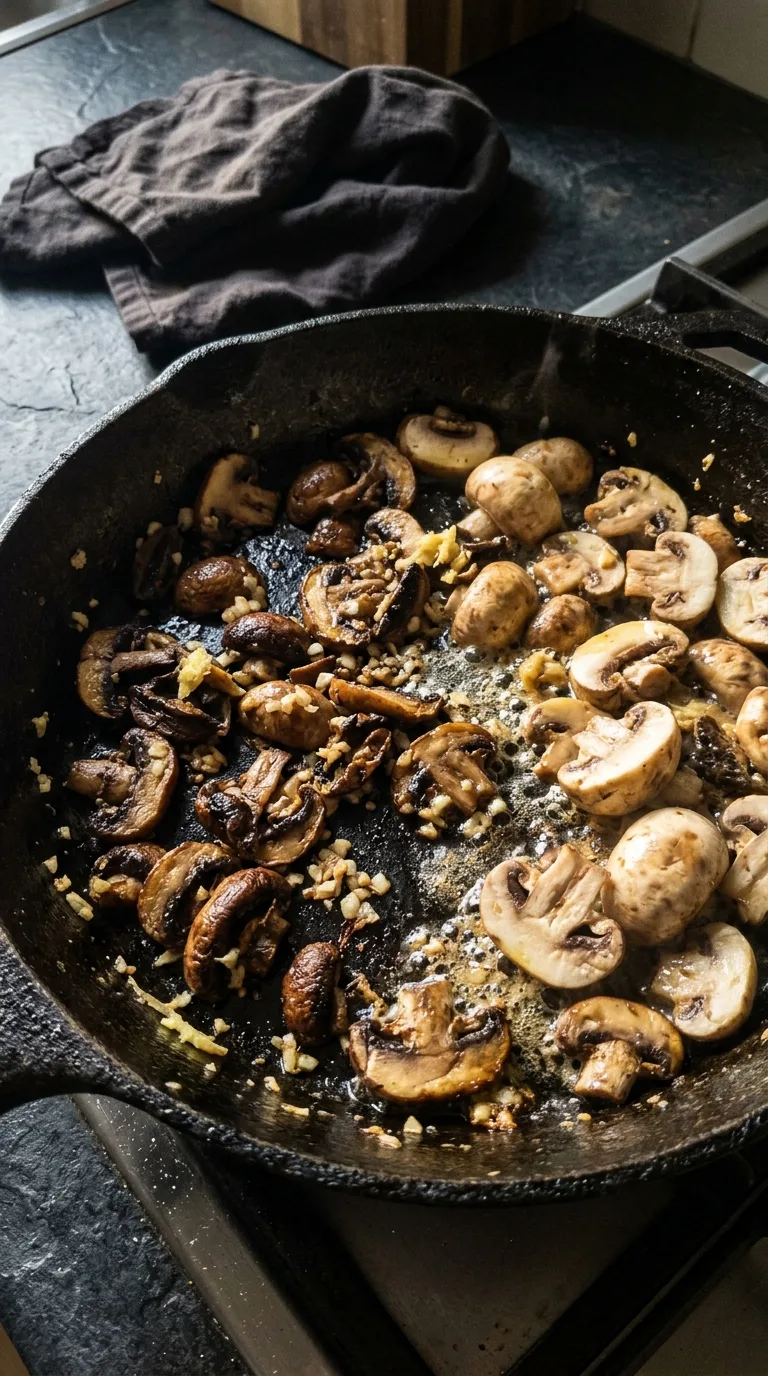
Sauté the mushrooms
Heat butter and oil in a large skillet over medium heat. Add sliced mushrooms, garlic, and ginger. Stir occasionally for 5 minutes until the mushrooms release their moisture and brown to develop a savoury depth.
-
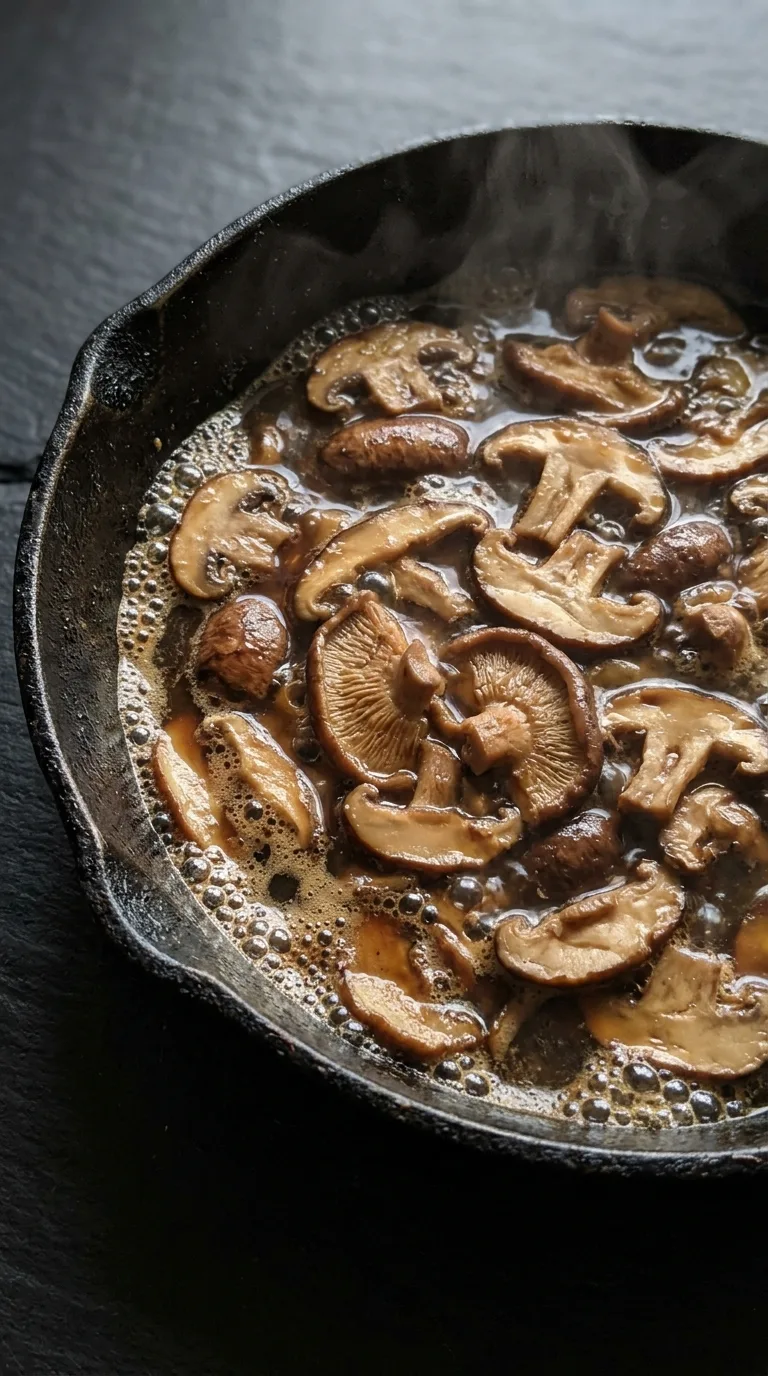
Simmer the base
Stir in the soy sauce, oyster sauce, and broth. Bring the mixture to a gentle simmer. Cook for 2 minutes to meld the flavours into a cohesive base.
-
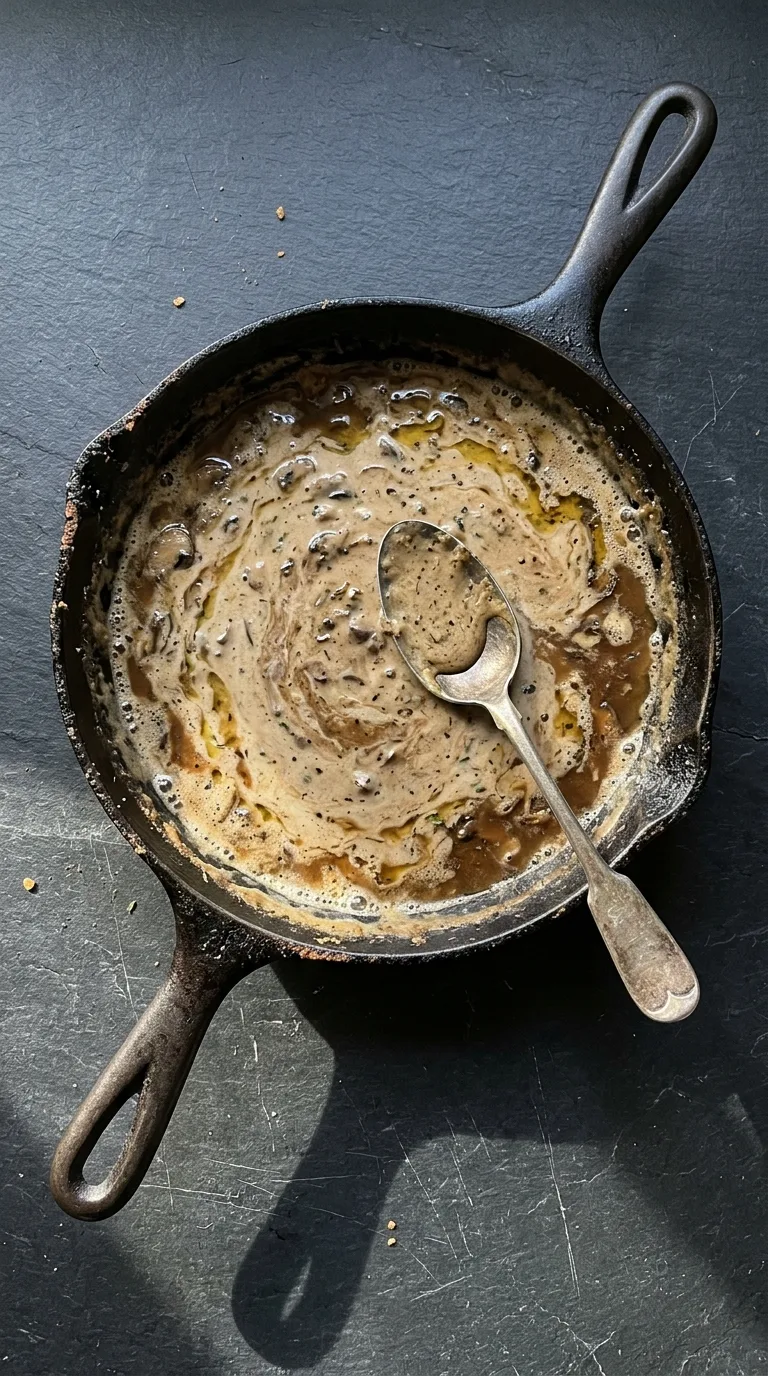
Thicken the sauce
Reduce the heat to low and pour in the heavy cream. Stir for 3 minutes until the sauce thickens slightly. Use a splash of reserved noodle water if the sauce becomes too thick to coat the noodles.
-
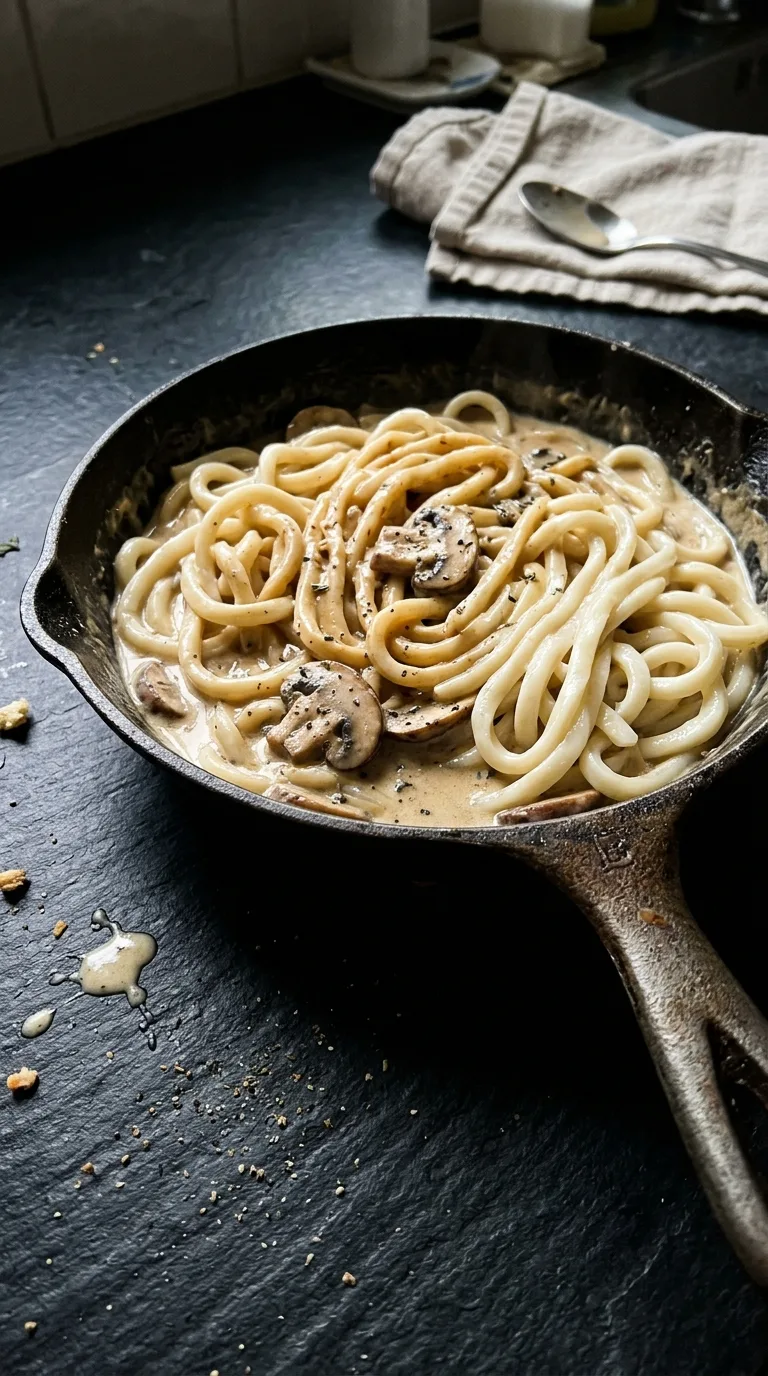
Combine with noodles
Return the drained noodles to the skillet. Toss them gently to coat every strand in the creamy mushroom sauce. Cook for 1-2 minutes until the noodles are heated through.
-
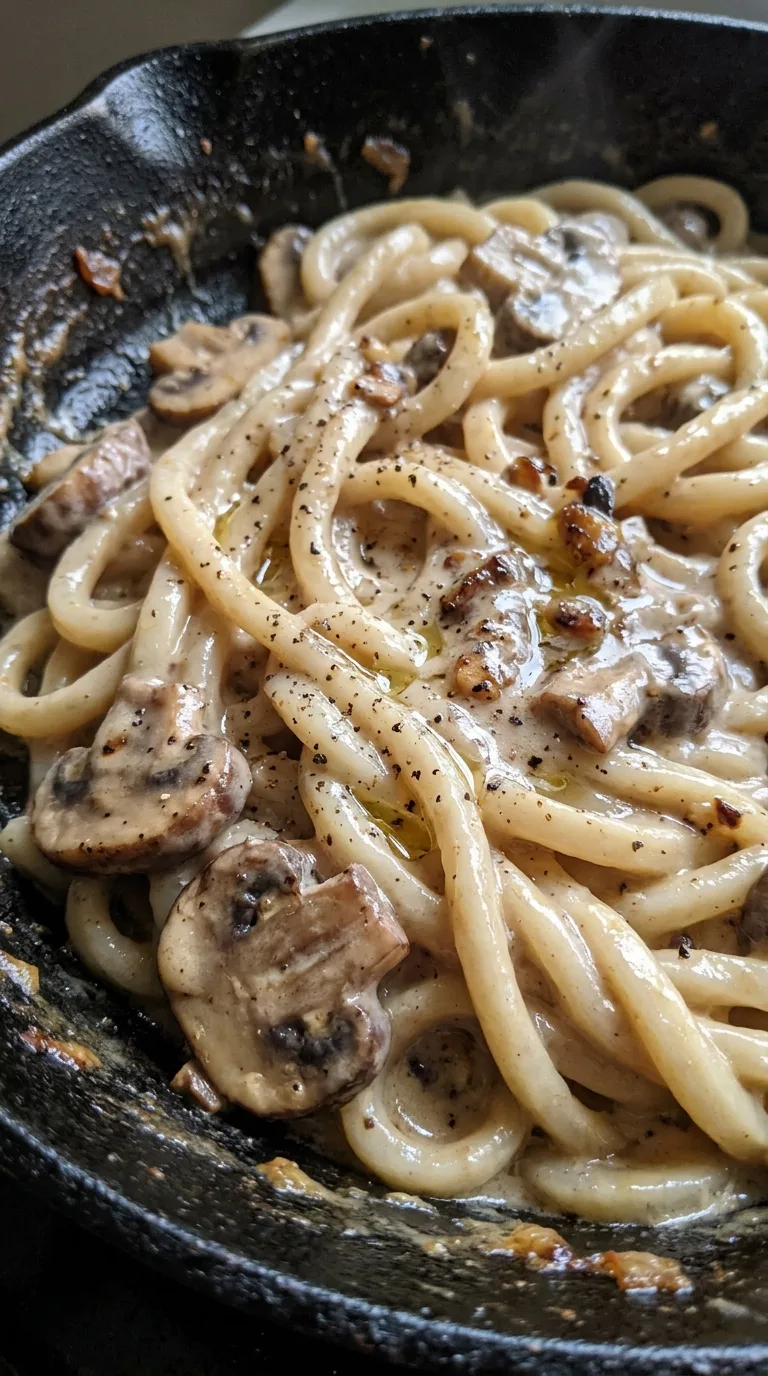
Final seasoning
Drizzle the sesame oil over the udon. Season with salt and pepper to taste. Stir quickly to combine the oils and remove the skillet from the heat.
-
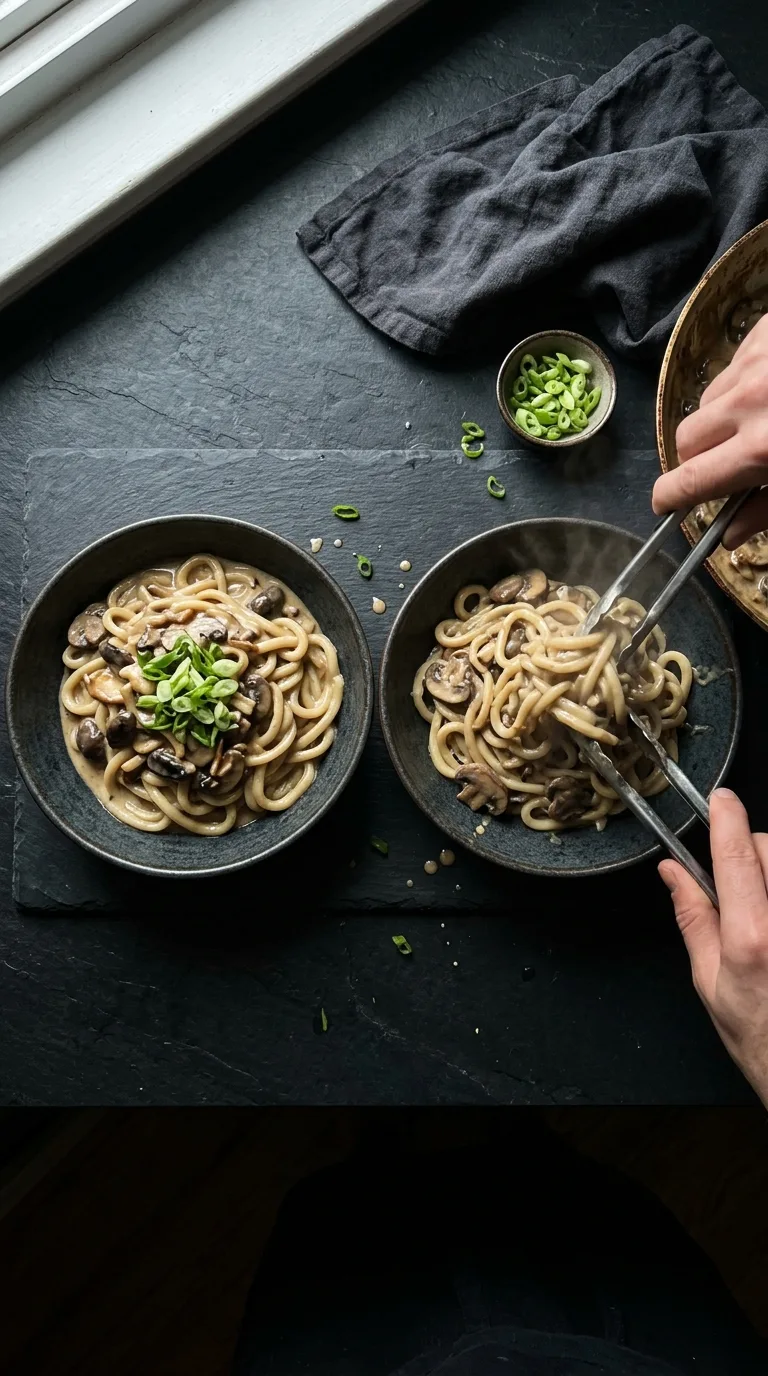
Plate and garnish
Transfer the udon to serving bowls. Garnish with sliced green onion for a fresh contrast. Serve immediately while the sauce is silky.
Keep the heat low to medium when you stir in the heavy cream. If the temperature is too high, the dairy may curdle, leaving the sauce grainy rather than silky. Watch for small clumps forming and lower the heat immediately to maintain a smooth texture.
What to serve with it
Pair this dish with a cucumber salad dressed in rice vinegar to provide a refreshing contrast to the dairy. Steamed bok choy or mixed greens add a healthy element. For a more comforting meal, serve a small bowl of miso soup on the side to balance the rich sauce.
Storing and reheating
Keep the udon in an airtight container in the fridge for up to 2 days or in the freezer for up to 2 weeks. When you reheat it, add a splash of broth or milk. This prevents the sauce from thickening too much and restores the silky texture.
Nutrition per serving
- Calories
- 640
- Protein
- 18.4 g
- Carbs
- 52.1 g
- Fat
- 38.2 g
- Fiber
- 4.5 g
- Sugar
- 7.2 g
Estimated, and offered as a guide rather than a medical figure.
Made it? Rate it.
Questions people ask
Can I make this recipe vegan?
Yes. Replace the heavy cream with 200 ml of coconut milk. Use mushroom stock and miso paste instead of dairy-based broth and ensure your soy sauce is a plant-based variety to keep the dish entirely vegan.
How do I stop the cream from curdling?
Keep the heat low to medium when you pour in the cream. High temperatures cause the fats to separate from the liquid, which ruins the silky consistency of the sauce.
What can I use if I do not have udon noodles?
Use thick wheat noodles or spaghetti as a substitute. These options maintain the chewiness required to carry the heavy mushroom sauce, though the flavour will differ slightly from traditional Japanese udon.
How do I make the mushroom flavour stronger?
Pre-toast the sliced mushrooms in the skillet for an extra minute after the initial sauté. This encourages deeper caramelisation, which concentrates the earthy notes before you add the liquid ingredients.

About the author
Mary C. Rivero
Mary C. Rivero specializes in comforting home‑cooked meals, from hearty pastas and sheet‑pan dinners to quick weeknight snacks. Her recipes feature clear, step‑by‑step directions and practical tips, helping readers create flavorful dishes with confidence and ease.