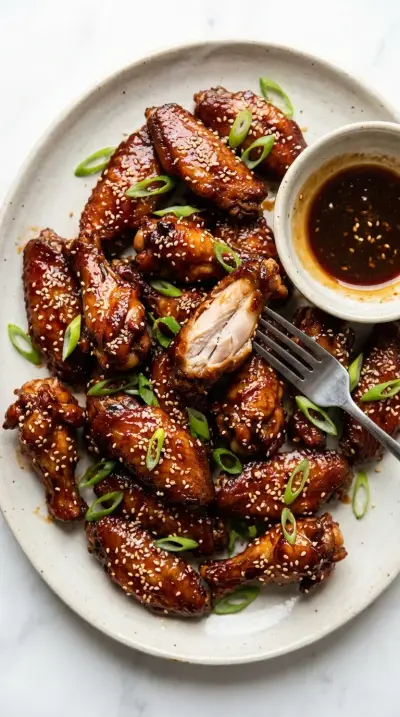
Gochujang Chicken Wings: Spicy Korean Glazed Wings
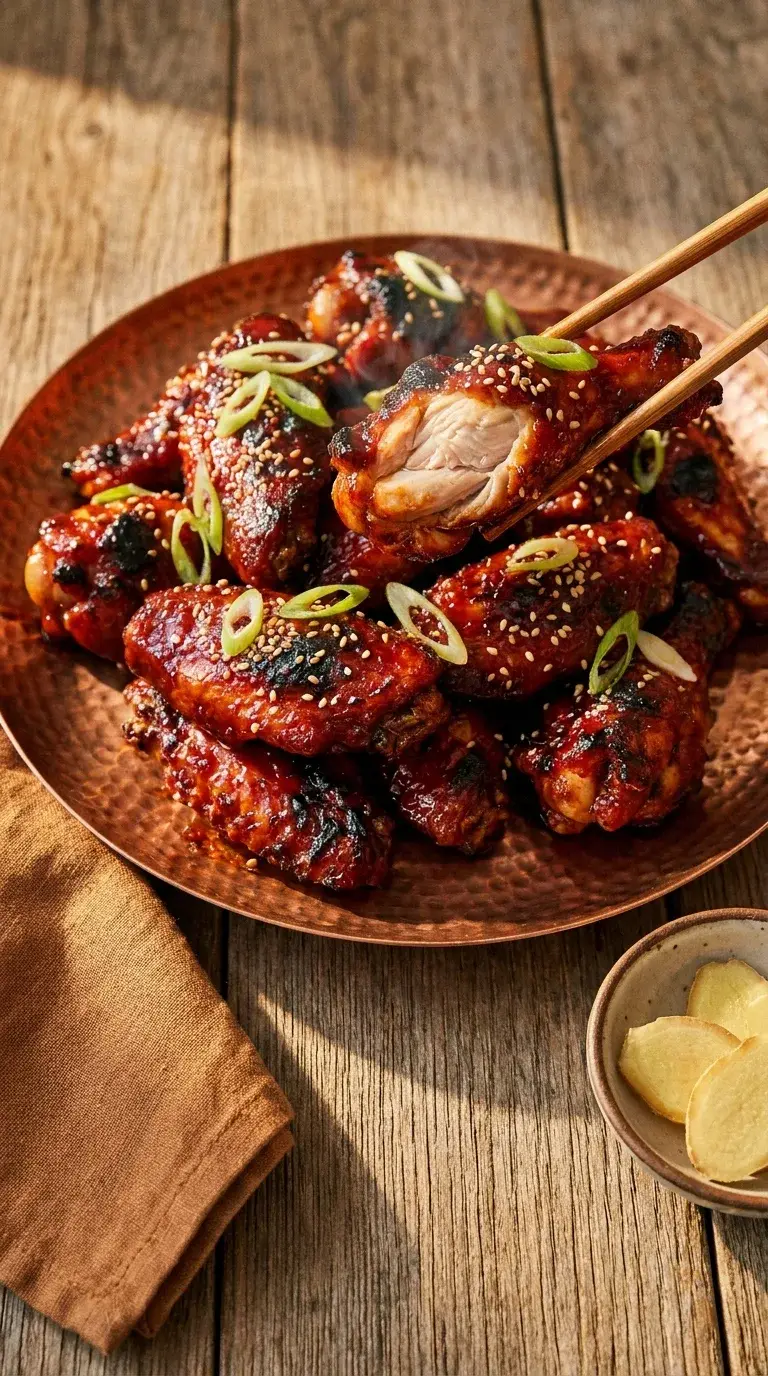
These gochujang chicken wings use a fermented Korean chilli paste to create a thick, savoury glaze. You combine the heat of the paste with honey and soy sauce to balance the salt and spice. The result is a sticky coating that clings to the chicken, providing a concentrated punch of flavour in every bite.
Pat the wings dry with a kitchen towel before seasoning to remove surface moisture. This step ensures the skin crisps instead of steaming in the oven. Let the wings rest for 10° minutes after oiling them so the seasoning adheres. If you skip the drying or the rest, the wings will remain soft and the sauce will slide off the meat rather than caramelising.
Gochujang Chicken Wings: Spicy Korean Glazed Wings
Recipe cardIngredients
Watch how it's made
Instructions
-
Prepare the oven
Preheat your oven to 220°C (425°F). Line a baking sheet with parchment paper and place a wire rack on top. The rack allows air to circulate under the wings to ensure they crisp on all sides.
-
Clean the chicken
Rinse the wings under cold water and pat them dry with a kitchen towel. Trim any excess fat if you prefer. Dry skin is essential for achieving a crisp texture in the oven.
-
Season and rest
Sprinkle salt in the centre of the wings. Drizzle 15ml of neutral cooking oil over them and toss to coat evenly. Arrange them in a single layer on the wire rack and let them rest for 10 minutes to allow the seasoning to penetrate.
-
Whisk the sauce
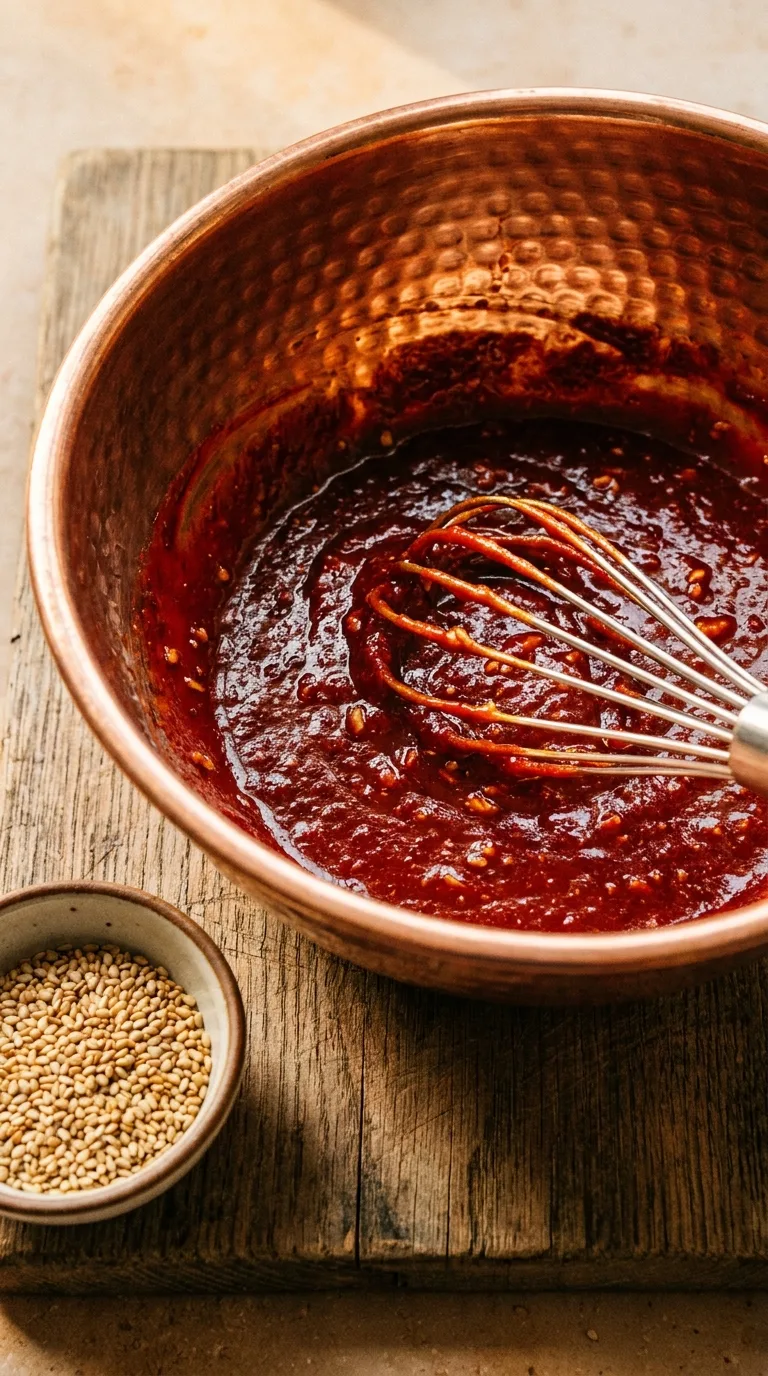
In a mixing bowl, whisk together the gochujang, soy sauce, rice vinegar, honey, sesame oil, minced garlic, grated ginger and black pepper. Stir until the mixture is smooth. This ensures the flavours are evenly distributed across every wing.
-
First roast cycle
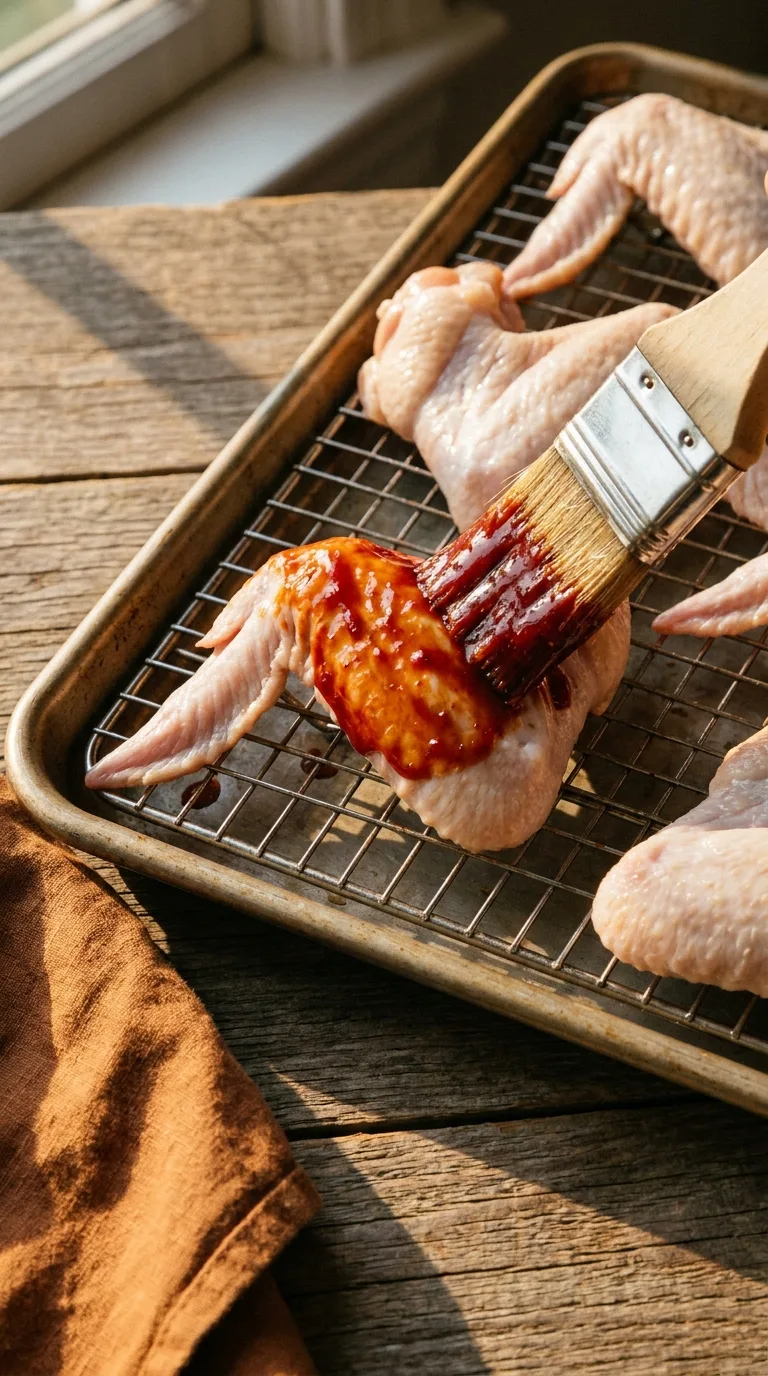
Place the baking sheet in the preheated oven and roast the wings for 15 minutes. Turn the wings over and begin brushing them with half of the sauce. Turning them ensures the heat hits both sides of the skin.
-
Glaze and finish
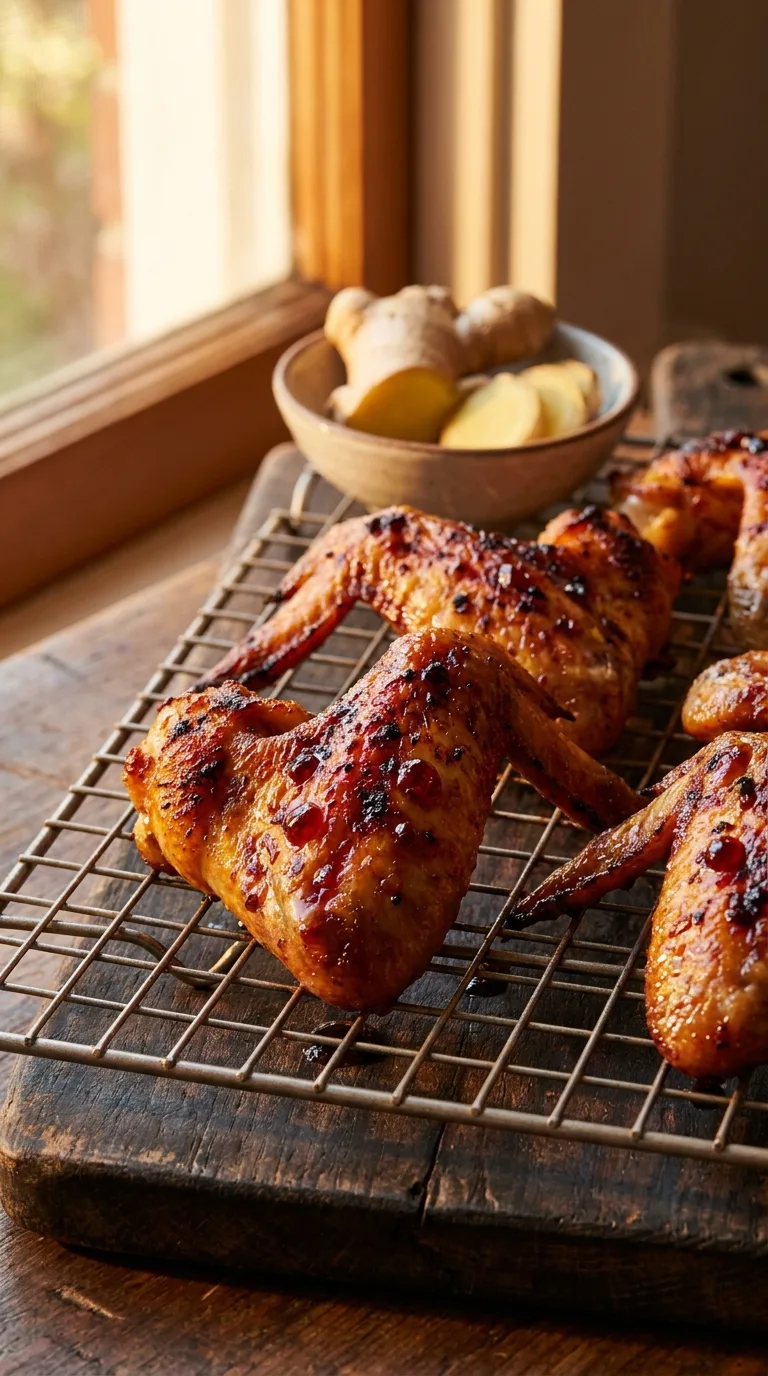
Continue roasting for another 15 minutes, brushing the wings with the remaining sauce. Remove them when they are golden-brown and the internal temperature reaches 74°C (165°F). Use a thermometer to prevent over-baking, which can burn the skins.
-
Garnish and serve
Transfer the wings to a serving platter. Sprinkle with toasted sesame seeds and sliced spring onions. Serve immediately while hot to maintain the crispness of the glaze.
Use a meat thermometer to monitor the internal temperature. If the skins begin to darken too quickly before the meat reaches 74°C (165°F), the honey in the glaze is caramelising too fast. Lower the oven temperature slightly to ensure the chicken cooks through without burning the exterior.
What to serve with it
Serve these wings with a chilled cucumber salad and steamed jasmine rice to balance the heat. You can also provide vegetable sticks like baby carrots, bell pepper strips, and cherry tomatoes for dipping. For those who prefer more heat, drizzle extra gochujang sauce over the serving platter before bringing it to the table.
Storing and reheating
Keep leftover wings at room temperature for up to 2 hours. For longer storage, place them in a freezer-safe container and freeze for up to 2 months. Thaw the wings in the refrigerator overnight before reheating to ensure the meat stays moist and the glaze does not burn during the process.
Nutrition per serving
- Calories
- 410
- Protein
- 28.5 g
- Carbs
- 12.0 g
- Fat
- 24.2 g
- Fiber
- 1.1 g
- Sugar
- 7.5 g
Estimated, and offered as a guide rather than a medical figure.
Made it? Rate it.
Questions people ask
How to use gochujang paste for chicken wings?
Whisk the paste with soy sauce, rice vinegar, honey, sesame oil, garlic, and ginger. Brush this mixture onto the wings halfway through roasting at 220°C (425°F). This prevents the sugars in the paste from burning while the chicken cooks through.
Does gochujang go well with chicken?
Yes. The fermented chillies in the paste provide a savoury depth that complements the richness of chicken. The addition of honey and rice vinegar balances the spice, creating a glaze that clings well to the skin after roasting.
Is gochujang a good marinade for chicken?
Yes, but apply it as a glaze during the final stages of cooking. Because gochujang contains sugar and thickeners, it can caramelise and burn quickly if left in a hot oven for the entire cooking duration.

About the author
Mary C. Rivero
Mary C. Rivero specializes in comforting home‑cooked meals, from hearty pastas and sheet‑pan dinners to quick weeknight snacks. Her recipes feature clear, step‑by‑step directions and practical tips, helping readers create flavorful dishes with confidence and ease.