Jambalaya: Creole Chicken and Shrimp Stew
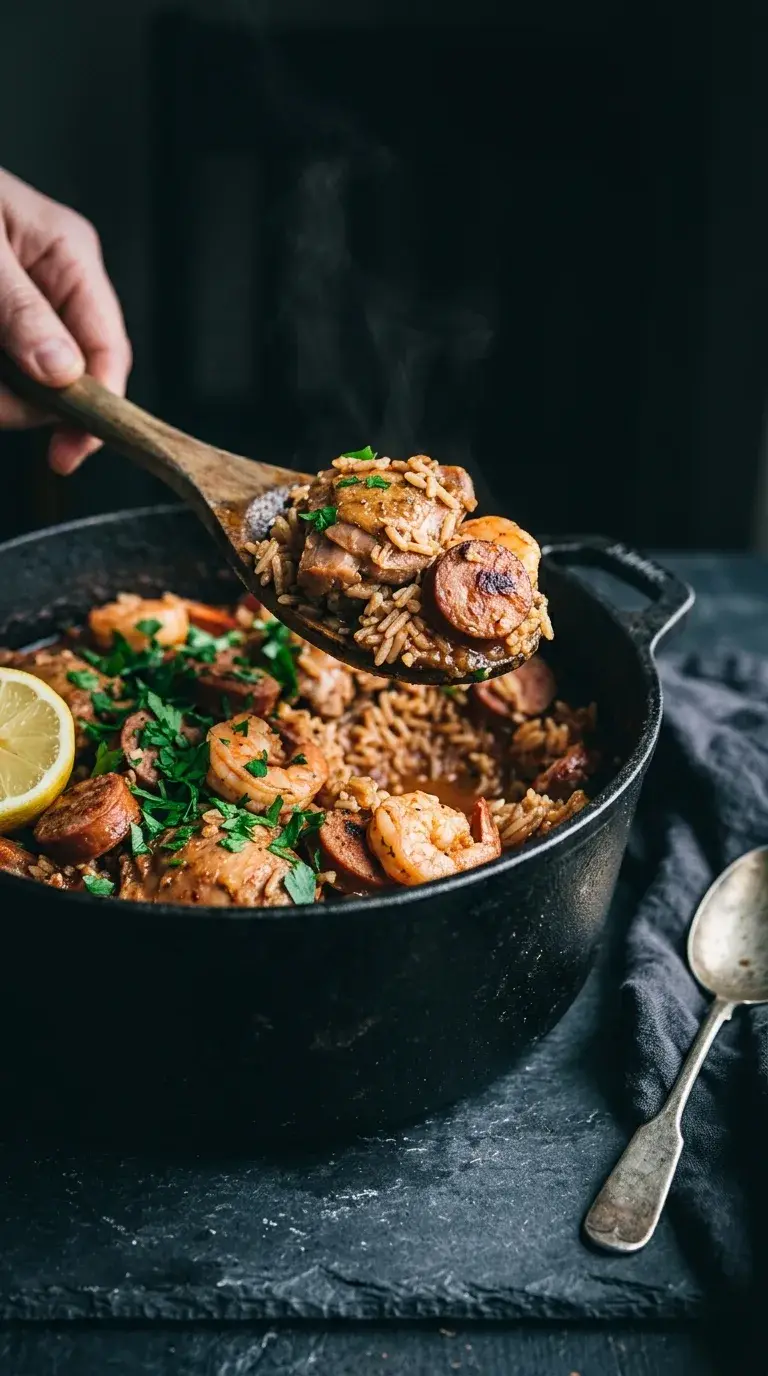
This slow cooker jambalaya is a hearty Creole dish combining chicken, smoked turkey sausage and shrimp. It relies on the holy trinity of onion, celery and bell pepper to build a savoury base. The rice cooks directly in a broth of canned diced tomatoes, tomato paste and chicken broth, absorbing the spices of smoked paprika, cumin and cayenne pepper. The result is a thick, aromatic meal with a deep red colour and a warming heat.
You must sauté the aromatics before adding them to the pot to soften the vegetables and release their natural sugars. Without this step, the onion and celery remain raw and sharp in flavour. You must also add the long-grain rice only during the final 30 minutes of cooking. Adding the rice too early makes the grains mushy and prevents the sauce from thickening correctly. Allow the dish to sit, covered, for 10 minutes before serving to let the moisture settle.
Jambalaya: Creole Chicken and Shrimp Stew
Recipe cardIngredients
Watch how it's made
Instructions
-
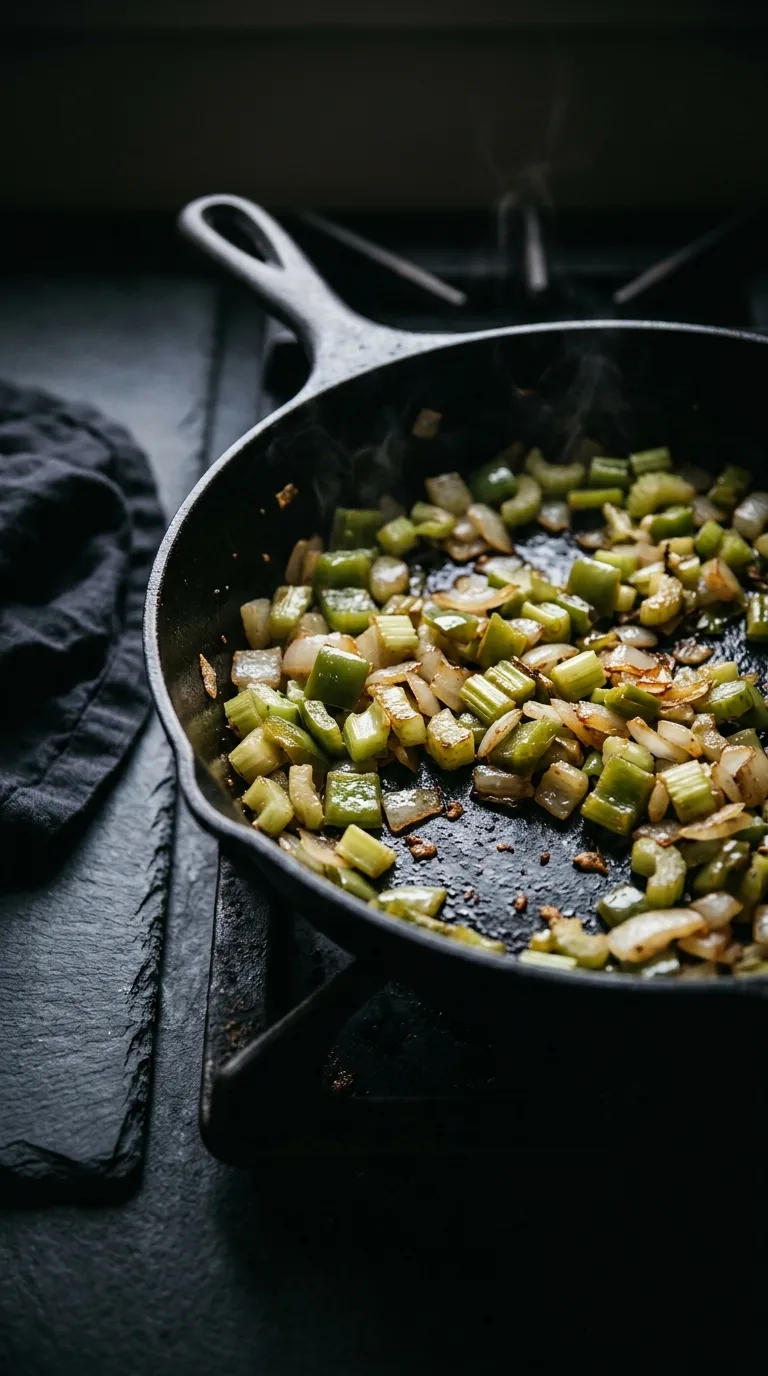
Soften the aromatics
Heat your slow cooker on the Sauté setting or use a separate pan with 1 tbsp olive oil. Sauté the onion, pepper and celery for about 5 minutes. You must soften these vegetables first to release their natural sweetness.
-
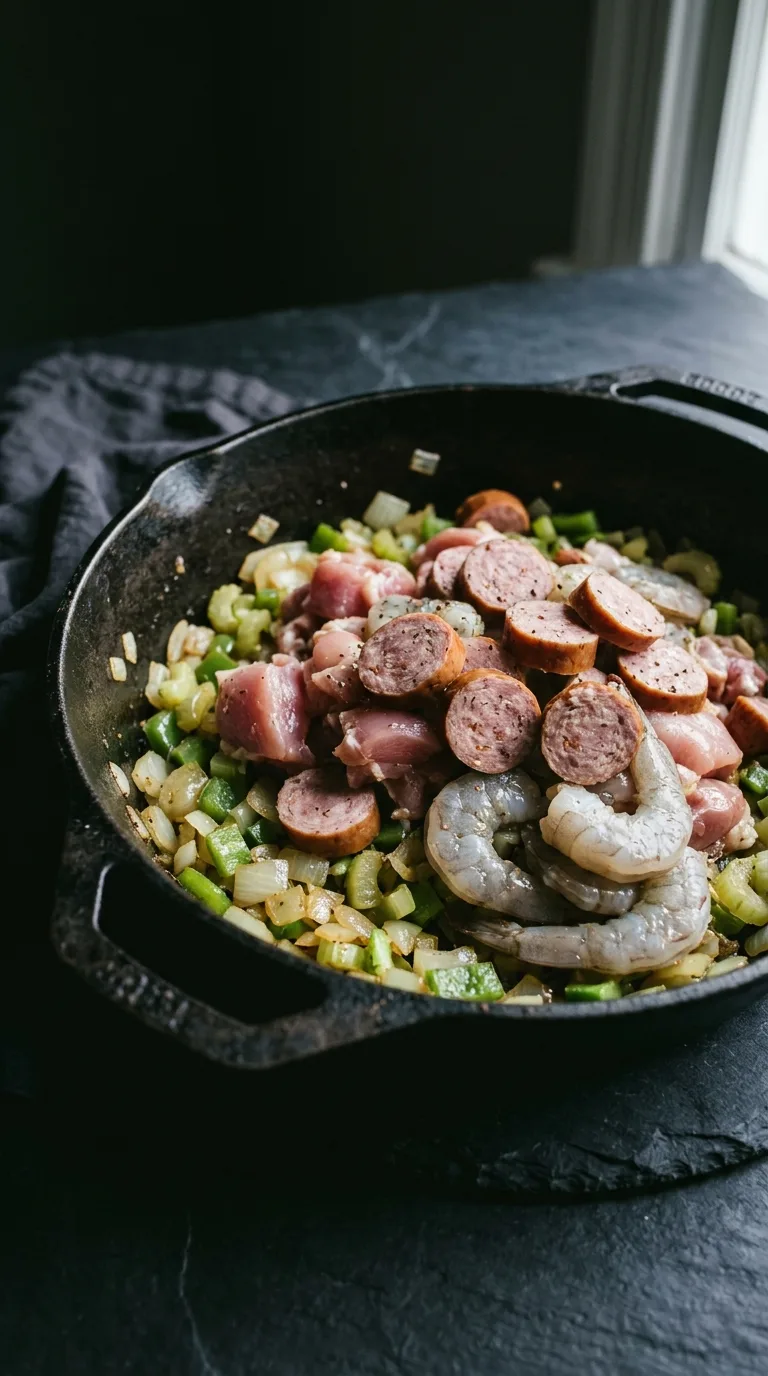
Combine the proteins
Transfer the sautéed aromatics into the slow cooker. Add the cubed chicken, sliced smoked turkey sausage and raw shrimp. Ensure the meat is evenly distributed for consistent cooking.
-
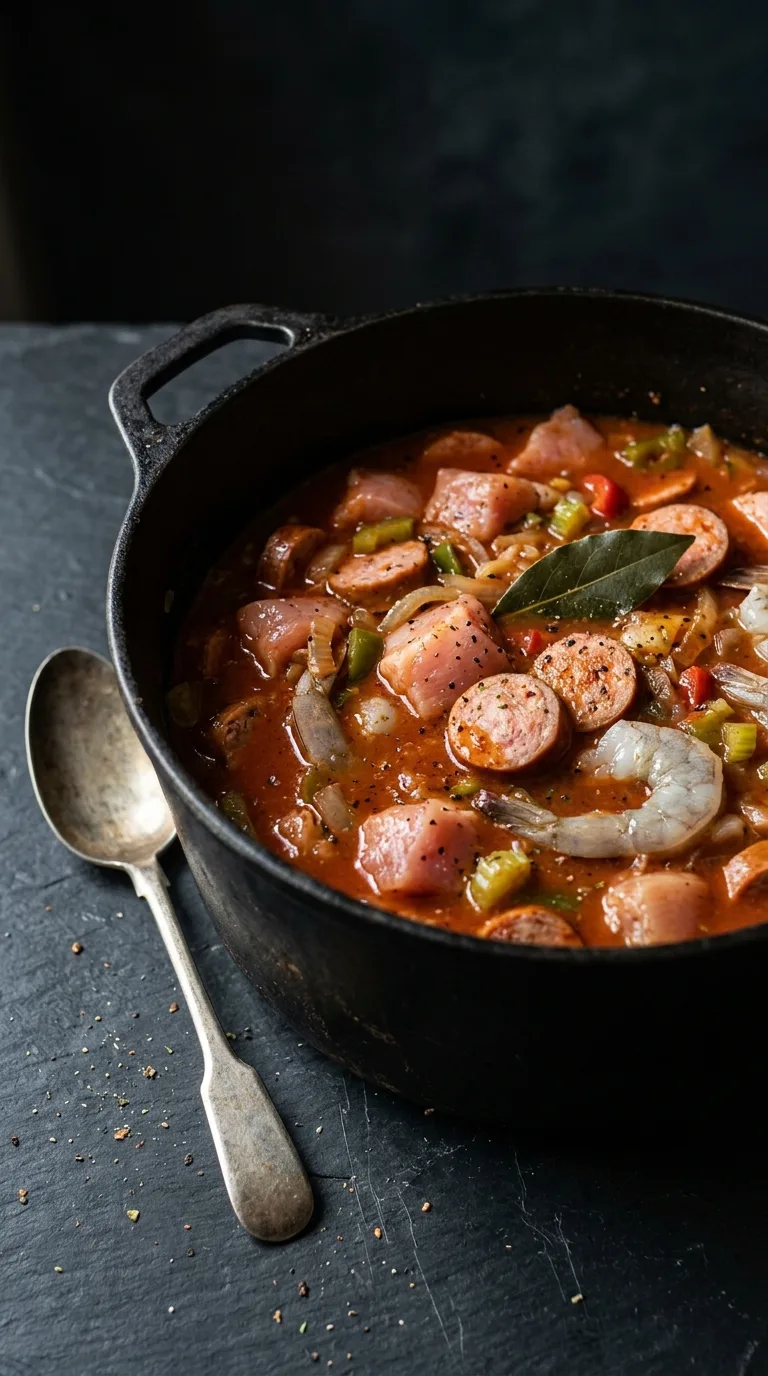
Stir in liquids
Pour in the diced tomatoes, tomato paste and chicken broth. Stir in the smoked paprika, oregano, thyme, cayenne, cumin, salt, black pepper, minced garlic and bay leaf. Mix everything thoroughly so the spices penetrate the meat.
-
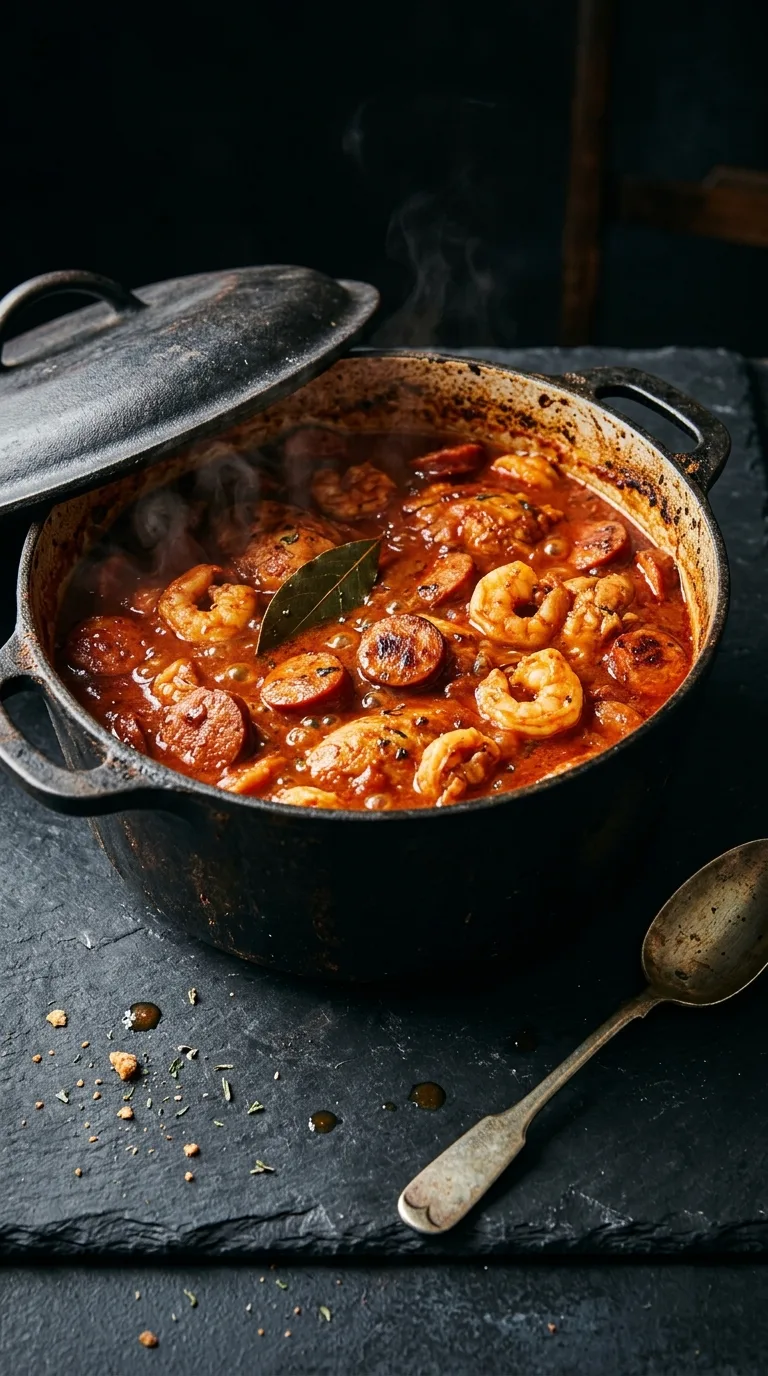
Slow cook the base
Cover the pot and cook on the low setting for 4 hours. Give the mixture a stir halfway through. This long cook time allows the collagen in the chicken to break down for a tender result.
-
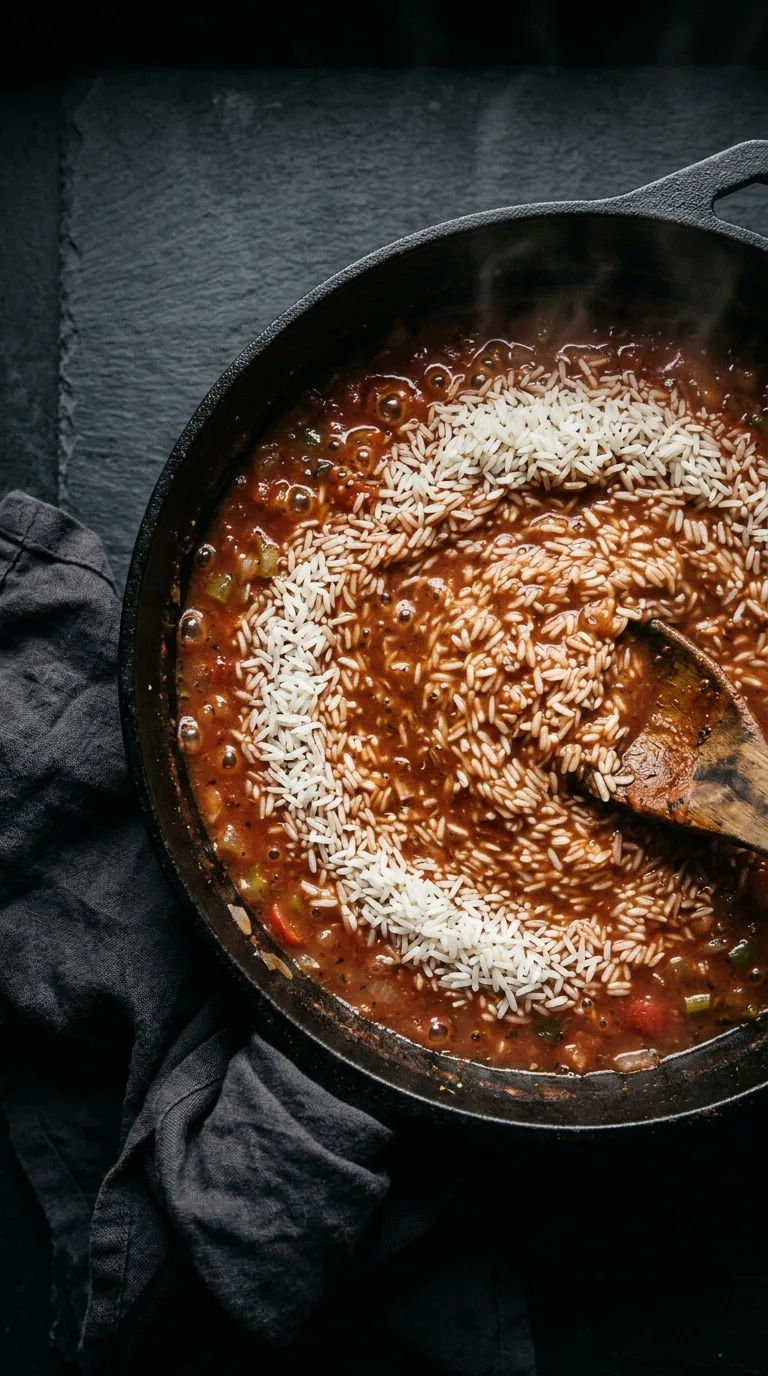
Cook the rice
Stir in the uncooked long-grain rice. Cover the pot again and continue cooking on low for 30 minutes. The rice should be tender and have absorbed the spiced broth.
-
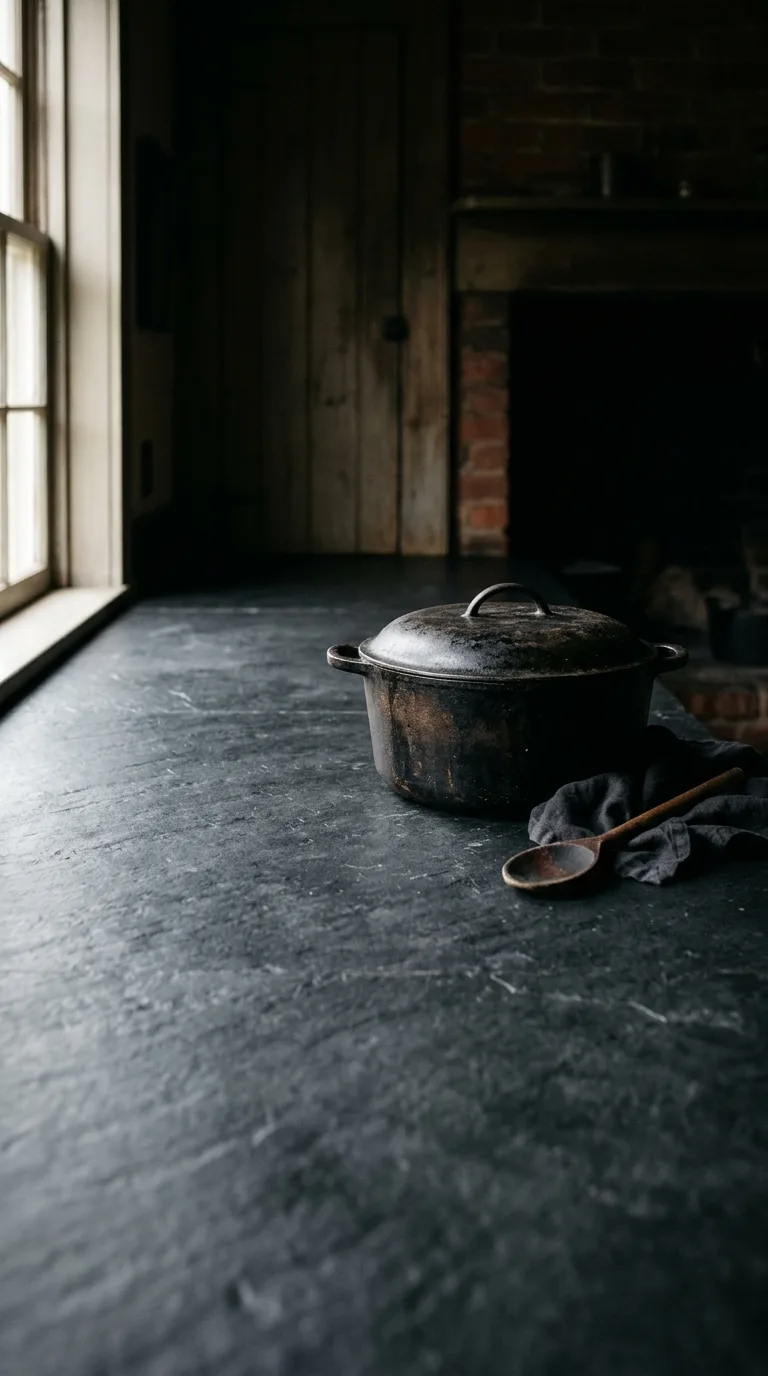
Rest the dish
Turn off the slow cooker and keep the lid on for 10 minutes. This allows the moisture to redistribute so the rice does not stick. This step ensures a fluffy texture.
-
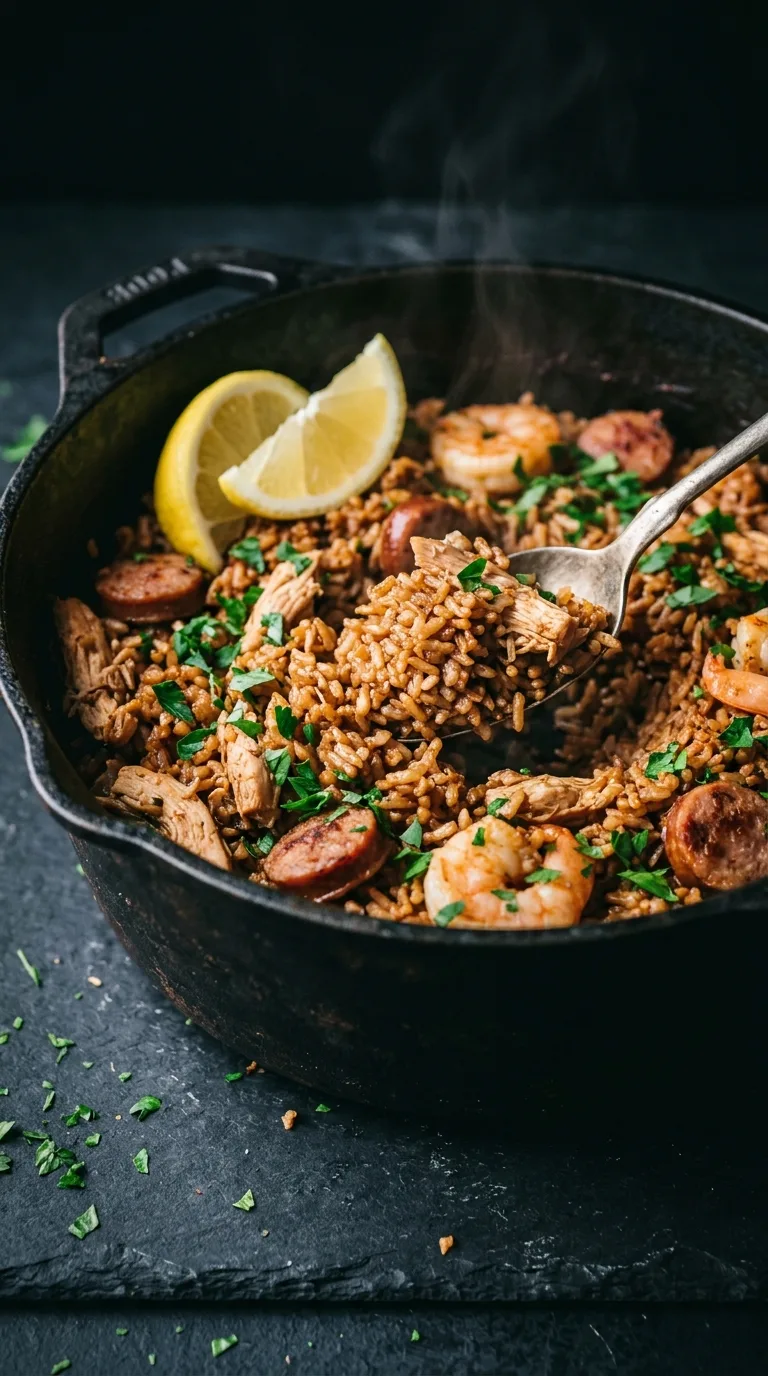
Finish and serve
Remove the bay leaf and fluff the rice with a fork. Garnish with chopped parsley. Serve with lemon wedges to provide acidity that cuts through the rich, savoury sauce.
Watch your shrimp closely during the final stages. They cook very quickly and turn rubbery if overdone. When you notice the shrimp turning pink, reduce the heat or remove the slow cooker from the low setting immediately to preserve their tender texture.
What to serve with it
Serve this meal with warm, crusty garlic bread to soak up the tomato broth. A crisp green salad dressed in a light vinaigrette provides a fresh contrast to the rich, spiced rice. For a Southern-style twist, place a fried or poached egg on top of each serving.
Storing and reheating
Store leftovers in a tightly sealed container in the fridge for 2 to 4 days. Do not leave the cooked meat and seafood at room temperature for more than 2 hours. For longer storage, freeze in a freezer-safe container for up to 3 months.
Nutrition per serving
- Calories
- 480
- Protein
- 32.5 g
- Carbs
- 38.0 g
- Fat
- 18.5 g
- Fiber
- 4.2 g
- Sugar
- 6.5 g
Estimated, and offered as a guide rather than a medical figure.
Made it? Rate it.
Questions people ask
Can I cook jambalaya in a slow cooker?
Yes. Using a slow cooker allows the rice to absorb the spiced broth slowly, which ensures the chicken and sausage remain tender while the flavours develop deeply over several hours.
What are common mistakes when making jambalaya?
Overcooking the shrimp is a frequent error. Add them at the start but monitor the heat carefully, as shrimp turn pink quickly and become rubbery if they cook for too long.
What is the secret ingredient in jambalaya?
The secret is the holy trinity of onion, celery and bell pepper. Sautéing these aromatics first creates a savoury foundation that defines the authentic Creole profile of the dish.

About the author
Mary C. Rivero
Mary C. Rivero specializes in comforting home‑cooked meals, from hearty pastas and sheet‑pan dinners to quick weeknight snacks. Her recipes feature clear, step‑by‑step directions and practical tips, helping readers create flavorful dishes with confidence and ease.