Oven Baked Eggs: Halal-Friendly Breakfast

The quality of the egg determines the success of these oven baked eggs. Select fresh eggs with strong shells to ensure the yolks stay intact during the baking process. Avoid older eggs, as they possess weaker membranes that split easily under heat, which ruins the appearance of the finished dish.
You use a muffin tin to create individually portioned servings that are savoury and fluffy. Season each cavity with salt, pepper, and dried oregano before adding the eggs and toppings. Bake at 180°C (350°F) for 12 minutes for runny yolks, or 15 minutes for firmer ones. Let the eggs rest in the tin for 2 minutes so they firm up slightly before you lift them out with a spoon. The total time is 17 minutes.
Oven Baked Eggs: Halal-Friendly Breakfast
Recipe cardIngredients
Watch how it's made
Instructions
-
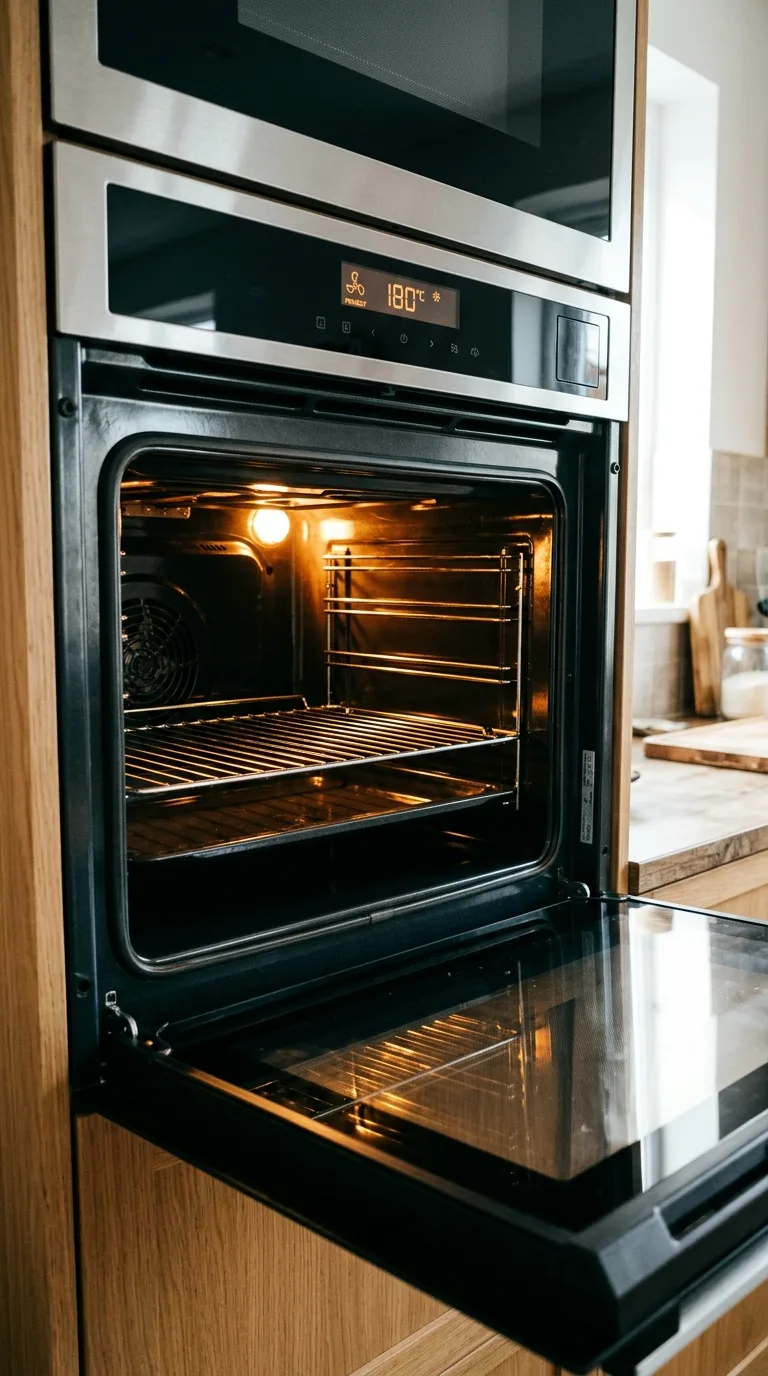
Prepare the oven
Preheat your oven to 180°C (350°F). Ensuring the oven is fully heated prevents the eggs from cooking unevenly.
-
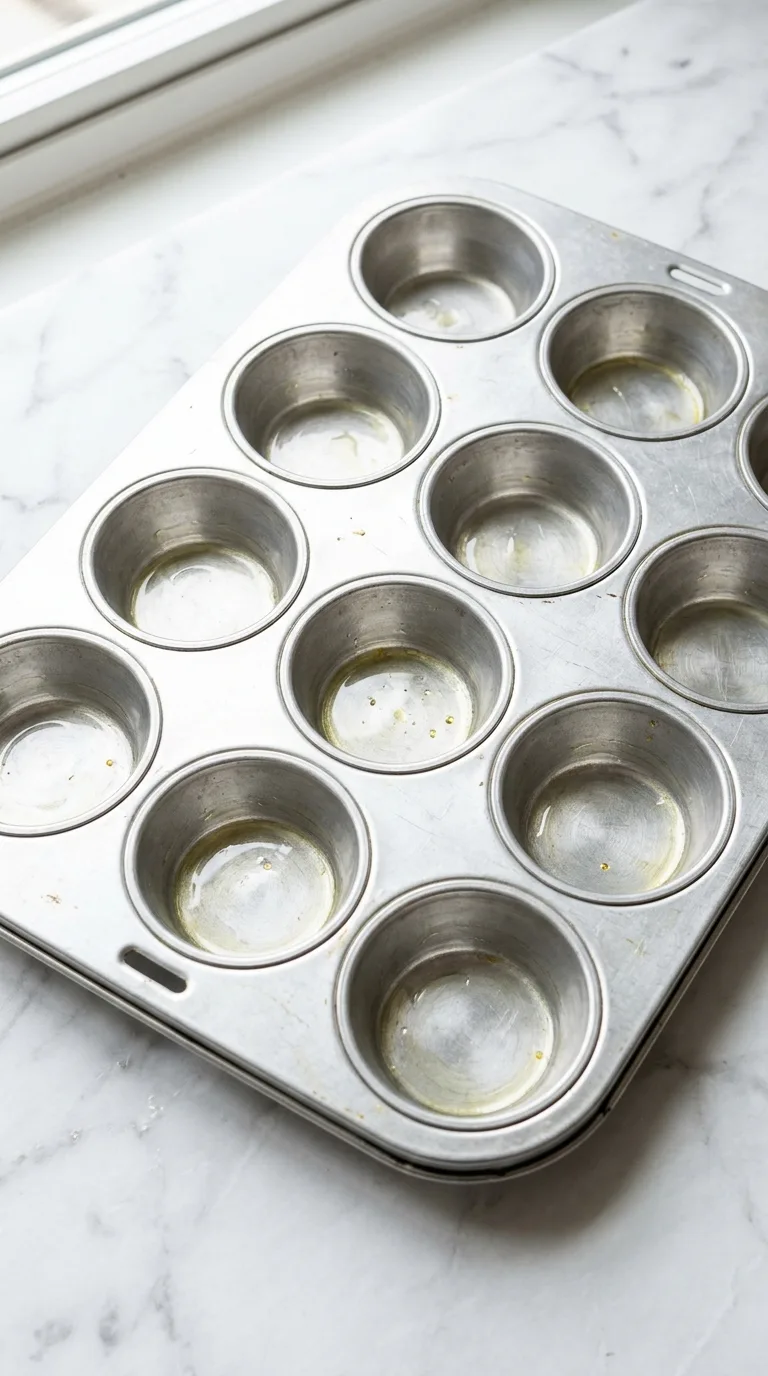
Grease the tin
Apply the olive oil or melted butter to the muffin tin. Use a cooking spray for additional coverage to ensure the eggs slide out without sticking.
-
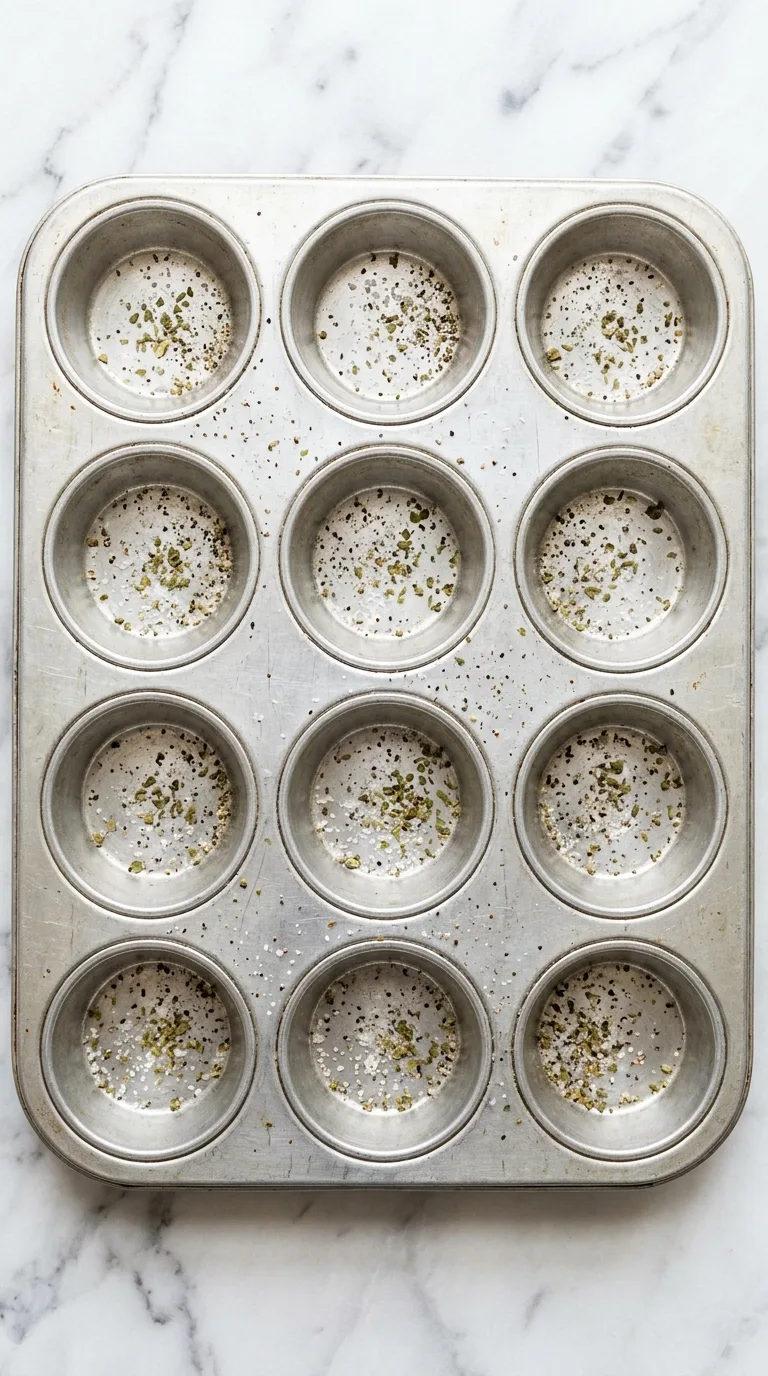
Season the cavities
Place a pinch of salt, pepper and dried oregano inside each cavity. Seasoning the tin directly ensures the flavour is infused into the base of the egg.
-
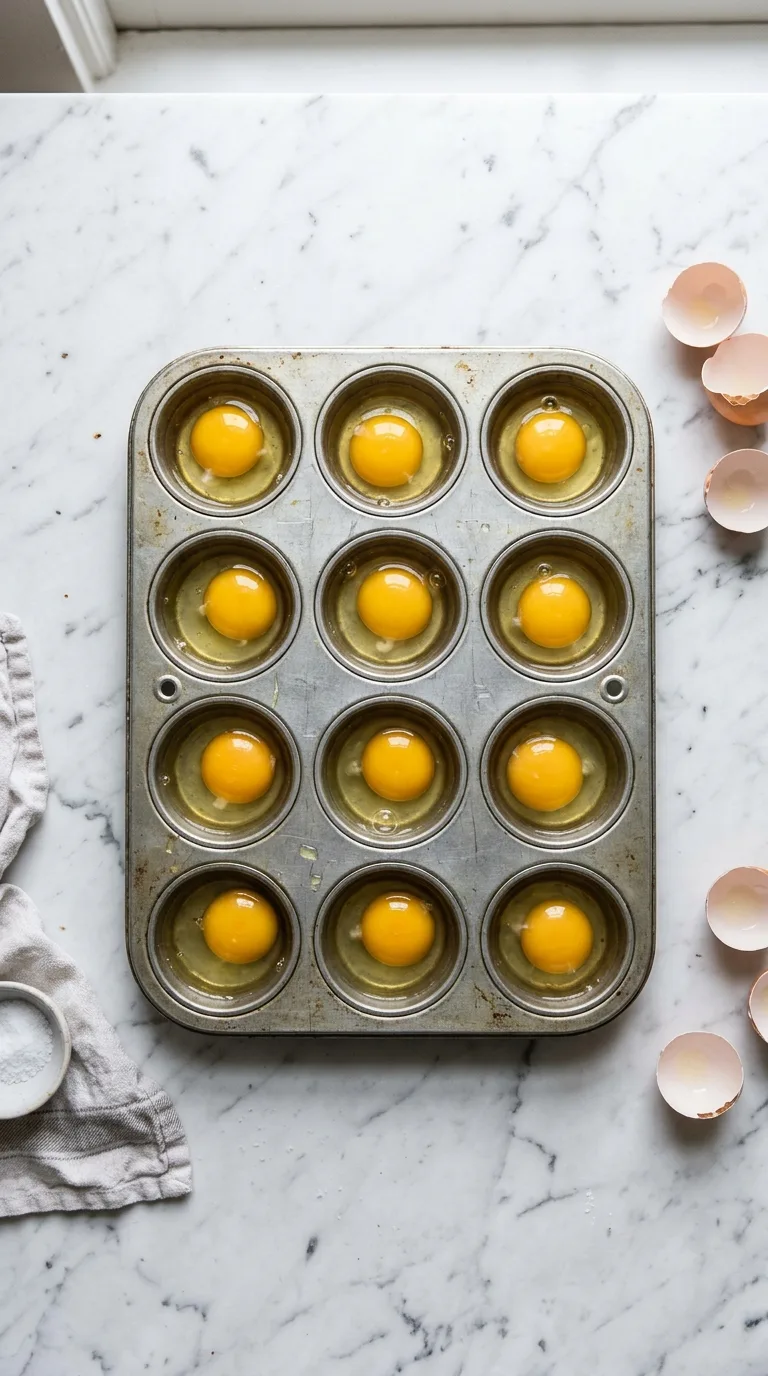
Add the eggs
Crack one egg into each cavity while keeping the yolk intact. Tap the egg on a paper towel first to remove excess liquid if you want a crispier crust.
-
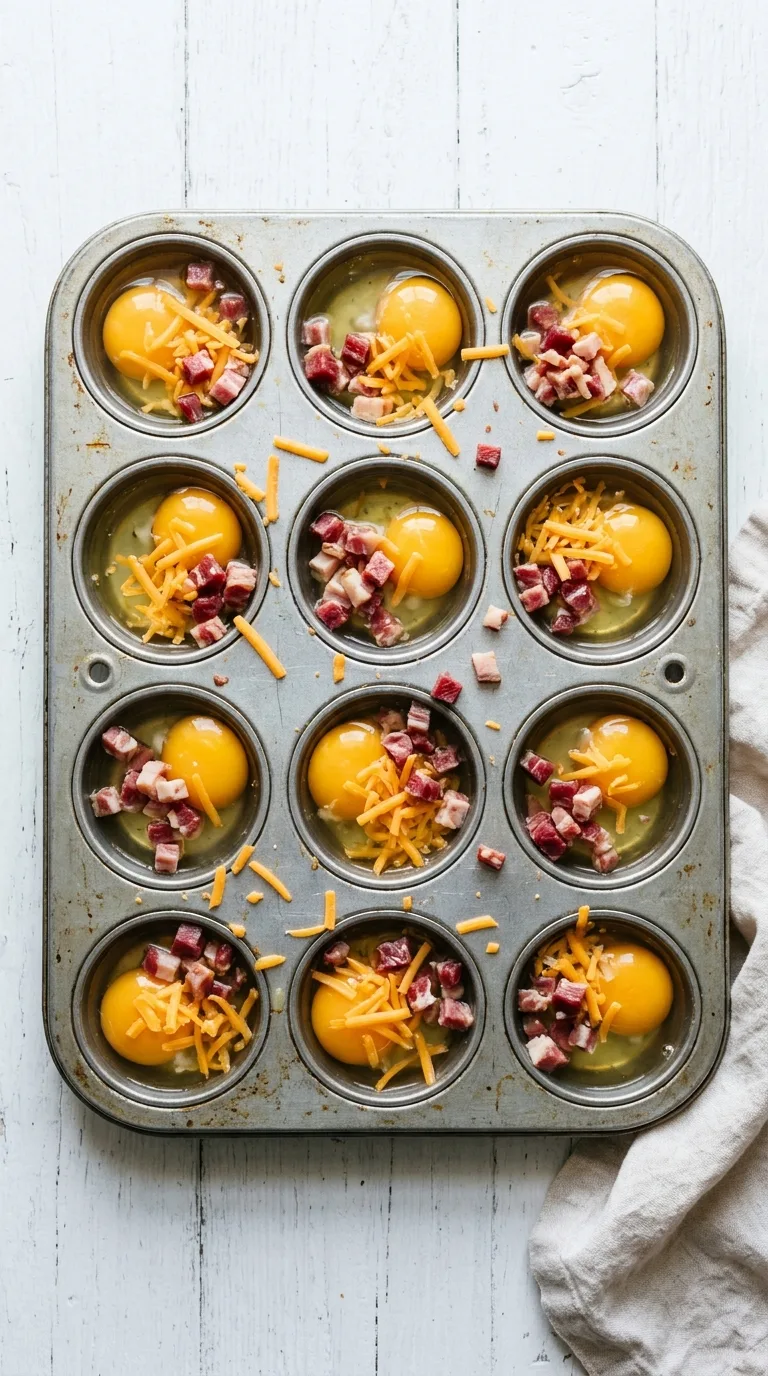
Add the toppings
Sprinkle 2.5g of grated cheddar over each egg. Scatter the diced beef bacon on top or mix it into the egg for distributed flavour.
-
Bake the eggs
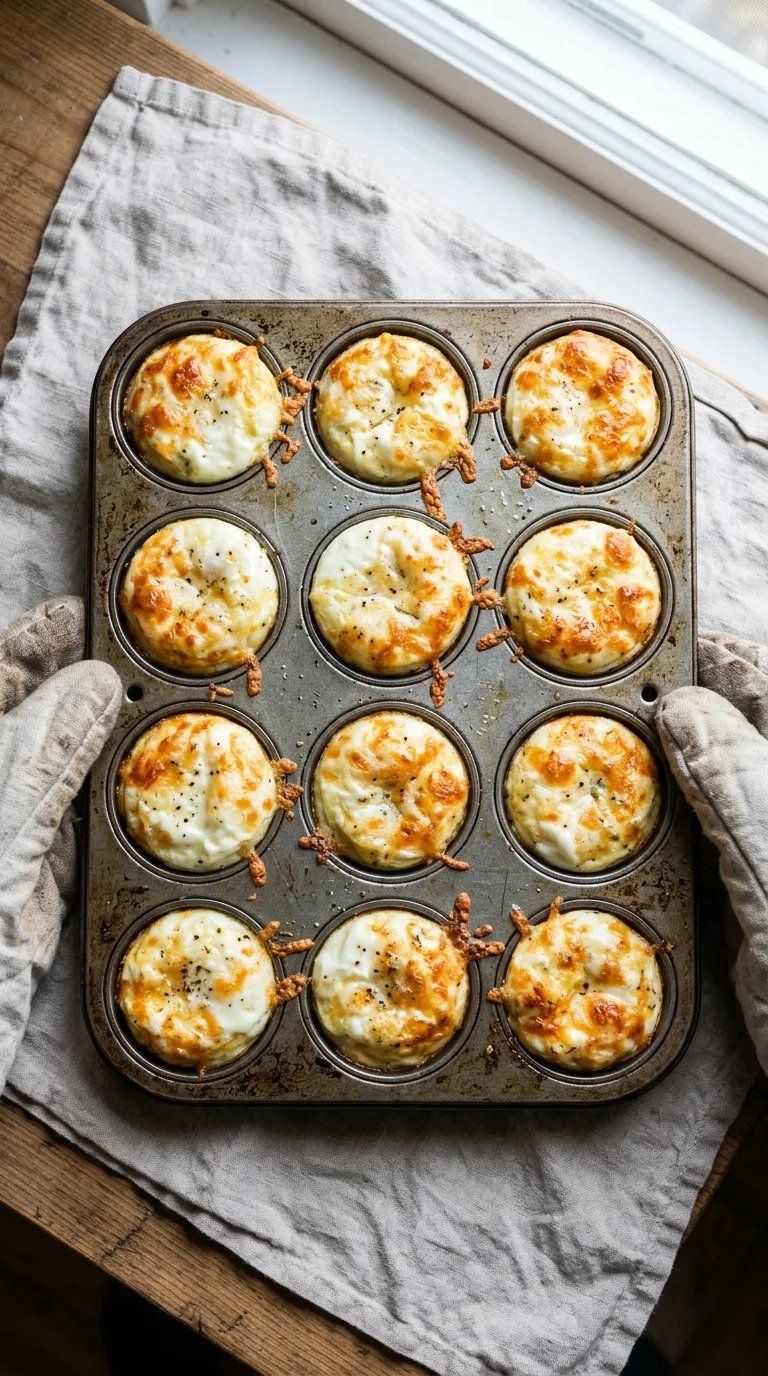
Bake for 12 minutes for runny yolks or 15 minutes for firmer yolks. Watch for the jiggle; a slight wobble indicates the yolks remain runny.
-
Rest and remove
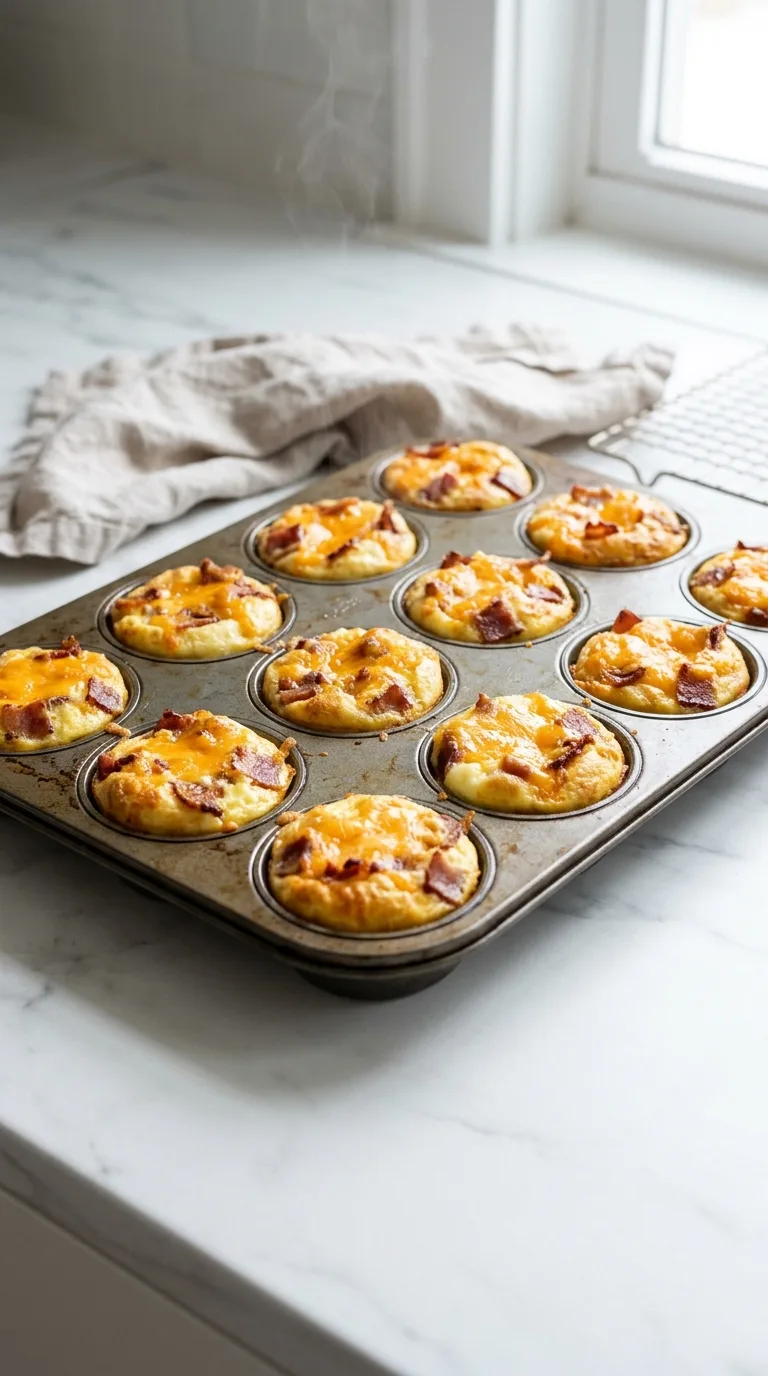
Remove the tin from the oven. Let the eggs rest for 2 minutes so they firm up slightly for easier removal.
-
Serve the eggs
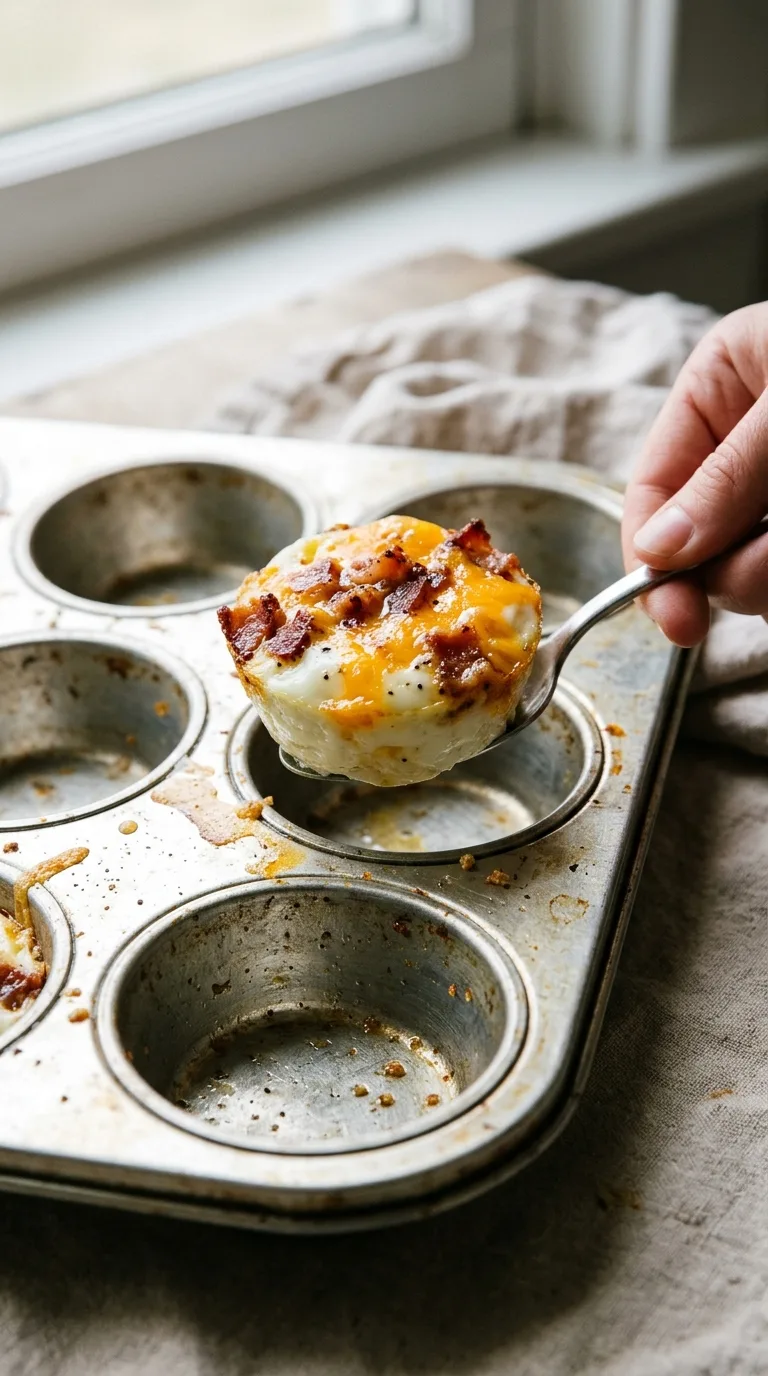
Lift each egg out using a small spoon or butter knife. Serve them immediately while hot or let them cool before packing.
Use fresh eggs to prevent the yolks from splitting during the baking process. Older eggs have weaker membranes and are more likely to break, which ruins the visual appeal of the dish. If you see a yolk break, it will cook into the white rather than staying centred.
Beef bacon substitutes
Replace beef bacon with finely diced smoked turkey to maintain a smokier flavour. Use the same quantity to ensure the salt level remains balanced. If you prefer a dairy-free version, use a plant-based cheese, though the melting point may vary and affect the final texture of the eggs.
What to serve with it
Place the baked eggs atop toasted sourdough and finish with a drizzle of olive oil and fresh parsley. For a Mediterranean style, add a scoop of chopped spinach or finely diced tomatoes. Pair the meal with sparkling water or chilled apple juice to provide a refreshing contrast to the savoury flavours.
Storing and reheating
Store eggs in an airtight container at 4°C (40°F) for up to 2 days. For long-term storage, wrap each egg in parchment paper and freeze for up to 1 month. Thaw them in the fridge overnight before reheating to preserve the structure and prevent the eggs from becoming rubbery.
Nutrition per serving
- Calories
- 95
- Protein
- 7.0 g
- Carbs
- 0.0 g
- Fat
- 6.0 g
- Fiber
- 0.0 g
- Sugar
- 0.0 g
Estimated, and offered as a guide rather than a medical figure.
Made it? Rate it.
Questions people ask
How do you cook baked eggs in the oven?
Grease a muffin tin and season each cavity before cracking in one egg. Bake at 180°C (350°F) for 12 to 15 minutes. This method ensures individual portions with consistent heat distribution for a precise set.
How long does it take to cook eggs in a 350 degree oven?
Bake for 12 minutes for runny yolks or 15 minutes for firmer yolks. The 180°C (350°F) temperature allows the whites to set slowly without overcooking the centre, keeping the yolk creamy.
How long do you bake eggs in the oven and at what temperature?
Set the oven to 180°C (350°F) and bake for 12 to 15 minutes. Use the jiggle test to check for doneness, as a slight wobble indicates the yolk is still runny.

About the author
Mary C. Rivero
Mary C. Rivero specializes in comforting home‑cooked meals, from hearty pastas and sheet‑pan dinners to quick weeknight snacks. Her recipes feature clear, step‑by‑step directions and practical tips, helping readers create flavorful dishes with confidence and ease.