Protein Sushi Roll: Halal Tuna and Vegetable Sushi
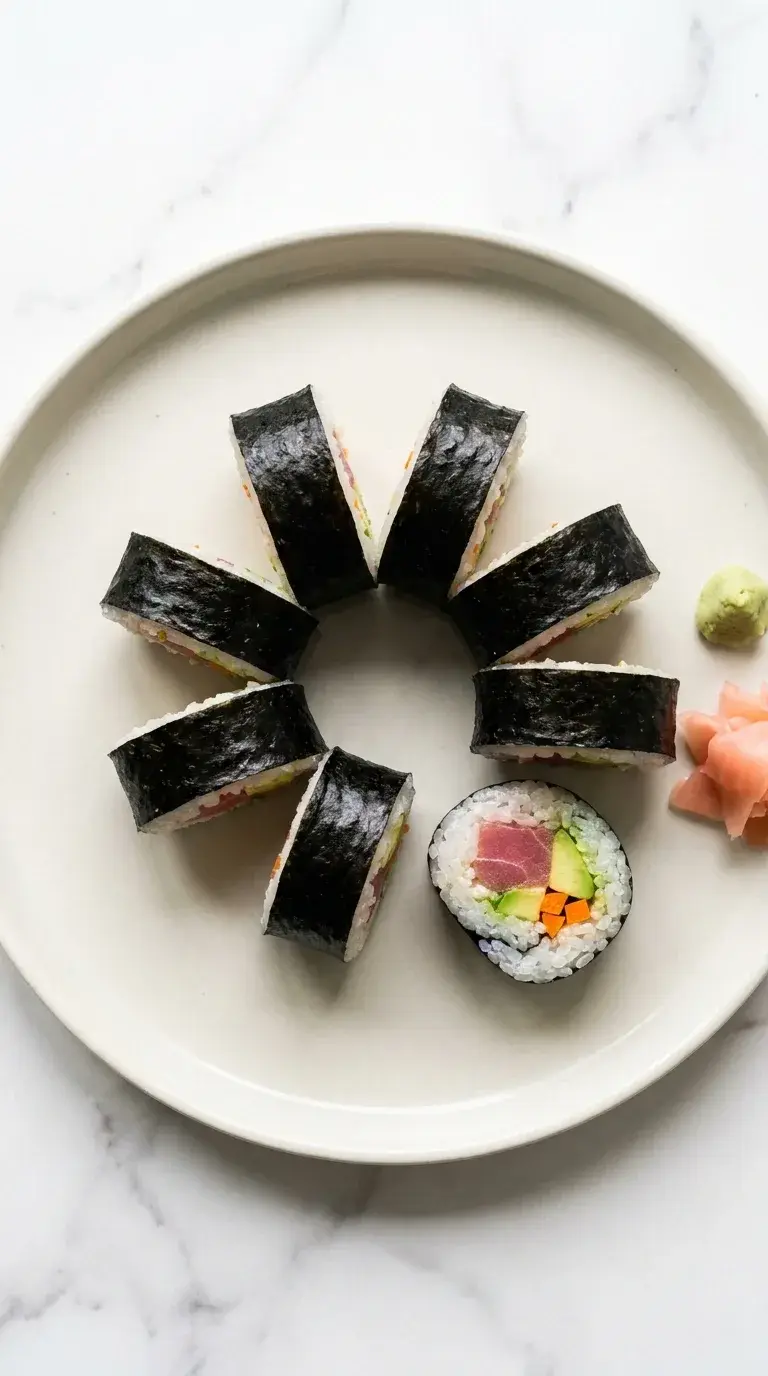
This protein sushi roll relies on the temperature of the rice to succeed. You must let the rice cool to room temperature before rolling. This ensures the avocado does not bruise. Rinse your short-grain sushi rice until the water runs clear to remove excess starch. Use a sharp knife and wipe the blade between each cut. This keeps your slices clean and prevents the nori from tearing, ensuring a tidy finish for every piece.
Protein Sushi Roll: Halal Tuna and Vegetable Sushi
Recipe cardIngredients
Watch how it's made
Instructions
-
Prepare the rice
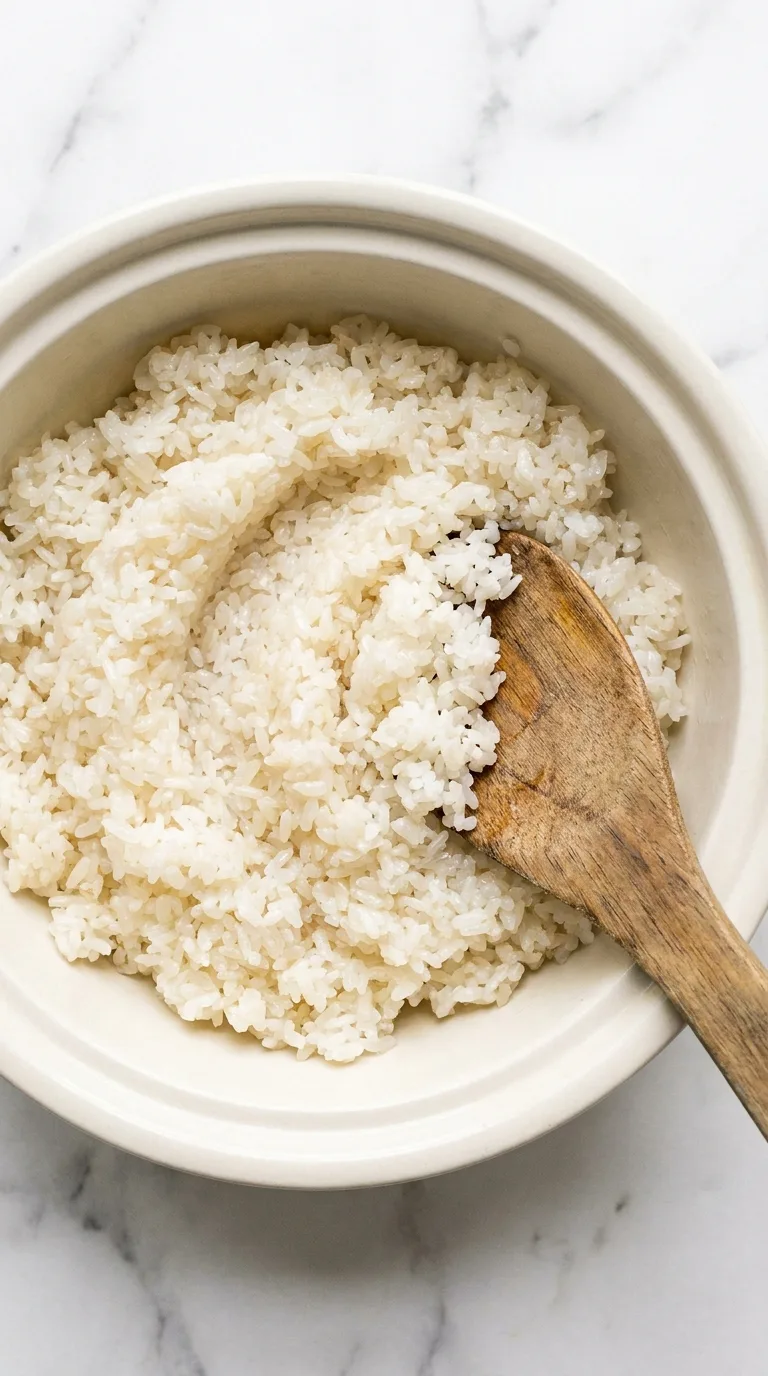
Rinse the sushi rice under cold water until the water runs clear to remove excess starch. Place the rice and 300 ml water in a rice cooker on the sushi setting. Cook for 25 minutes until the grains are fluffy.
-
Season the grains
Whisk together the rice vinegar, sugar, and salt in a small bowl until the crystals dissolve. Fold this mixture gently into the cooked rice using a wooden paddle. Let the rice cool to room temperature so the heat does not bruise the avocado.
-
Layer the nori
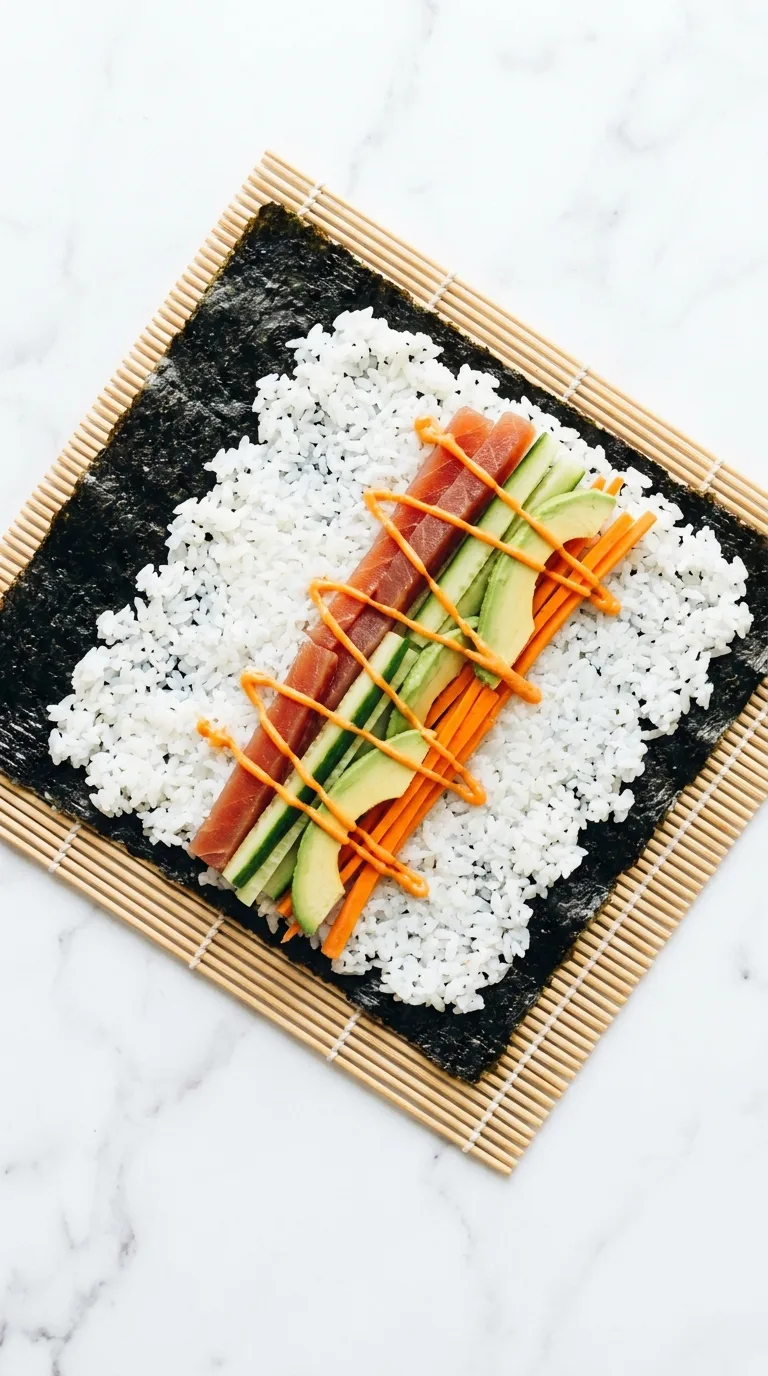
Place one nori sheet shiny side down on a bamboo mat. Wet your hands to prevent the rice from sticking to your skin. Spread 50 g of rice thinly over the sheet, leaving a 1 cm border at the top to ensure a proper seal.
-
Add the fillings
Arrange tuna, cucumber, avocado, and carrot in a line along the bottom edge. Drizzle half a tablespoon of vegan mayo and a quarter teaspoon of sriracha over the vegetables. This adds creaminess and heat to the centre of the roll.
-
Roll and seal
Lift the bottom edge of the nori using the bamboo mat. Roll tightly and apply even pressure to keep the fillings compact. Seal the top edge with a dab of water to lock the roll in place.
-
Slice and serve
Cut each roll into 8 equal pieces using a sharp knife. Wipe the blade between every cut to maintain clean edges and prevent the rice from tearing. Serve immediately with soy sauce, wasabi, and pickled ginger.
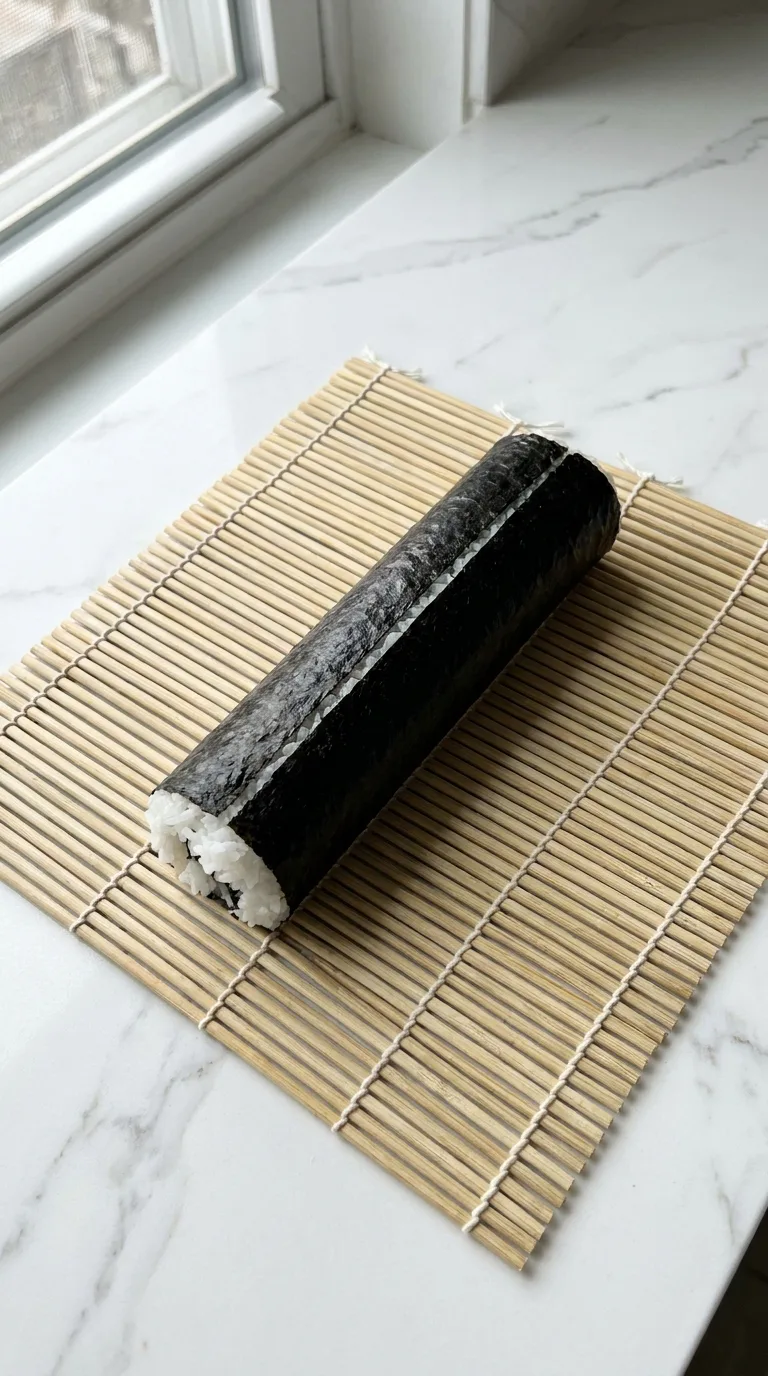
The most common error is using hot rice, which wilts the vegetables and bruises the avocado. Ensure the rice is lukewarm. Keep your knife and hands damp throughout the process; this prevents the sticky starch from clinging to your tools and tearing the delicate nori sheets.
What to serve with it
Pair these rolls with a small bowl of miso soup to create a balanced meal. You can garnish the plate with finely grated daikon radish and a drizzle of sesame oil for added aroma. A chilled glass of rose‑flavoured grape juice provides a refreshing complement to the savoury tuna and rice.
Storing and reheating
Wrap unused rolls in plastic film and keep them in the refrigerator. Consume them within 2 days to maintain optimal freshness. For longer storage, use an airtight container and freeze for up to 2 weeks. Thaw the rolls in the refrigerator for 8–10 hours before you serve them.
Getting the texture right
Keep your hands and the knife slightly wet. This prevents the sticky rice from tearing the nori sheets during the rolling process. Ensure the rice is lukewarm before adding fillings. If the rice is too hot, it will bruise the avocado and ruin the crisp texture of the cucumber.
Choosing the cut
Use halal sashimi‑grade tuna sliced into thin strips. This ensures the fish is safe to eat raw and fits evenly within the roll. Use a sharp knife to cut each roll into 8 equal pieces. Wipe the blade between every cut to ensure the slices remain clean and precise.
Nutrition per serving
- Calories
- 310
- Protein
- 24.0 g
- Carbs
- 25.0 g
- Fat
- 8.0 g
- Fiber
- 4.5 g
- Sugar
- 6.0 g
Estimated, and offered as a guide rather than a medical figure.
Made it? Rate it.
Questions people ask
What sushi roll is high in protein?
The tuna and veggie roll is high in protein. It uses fresh sashimi‑grade tuna and sushi rice to provide 24 g of protein per roll, making it suitable for those seeking a protein‑dense snack or lunch.
What is the healthiest sushi roll to order?
Rolls featuring fresh fish and raw vegetables are the healthiest choices. This version uses cucumber, avocado, and carrots, avoiding heavy fried elements or high‑sugar sauces to keep the calorie count low and the nutrient density high.
How much protein is in 8 pieces of California roll sushi?
Protein content varies by filling, but a standard roll like this one contains approximately 24 g of protein. Using tuna instead of imitation crab typically increases the protein quality and overall amount per serving.

About the author
Mary C. Rivero
Mary C. Rivero specializes in comforting home‑cooked meals, from hearty pastas and sheet‑pan dinners to quick weeknight snacks. Her recipes feature clear, step‑by‑step directions and practical tips, helping readers create flavorful dishes with confidence and ease.