Roasted Carrot and Ginger Hummus: Velvety Middle Eastern Dip
You could boil carrots for a quick purée, or you can roast them at 200°C (400°F) until the edges darken and concentrate their natural sugars. Choose the oven every time for roasted carrot and ginger hummus, because dry heat drives off excess moisture and stops the dip from turning watery. Cutting 450 g of carrots into even 2.5 cm rounds ensures every piece softens and caramelises at the same pace during the 30 minutes of roasting.
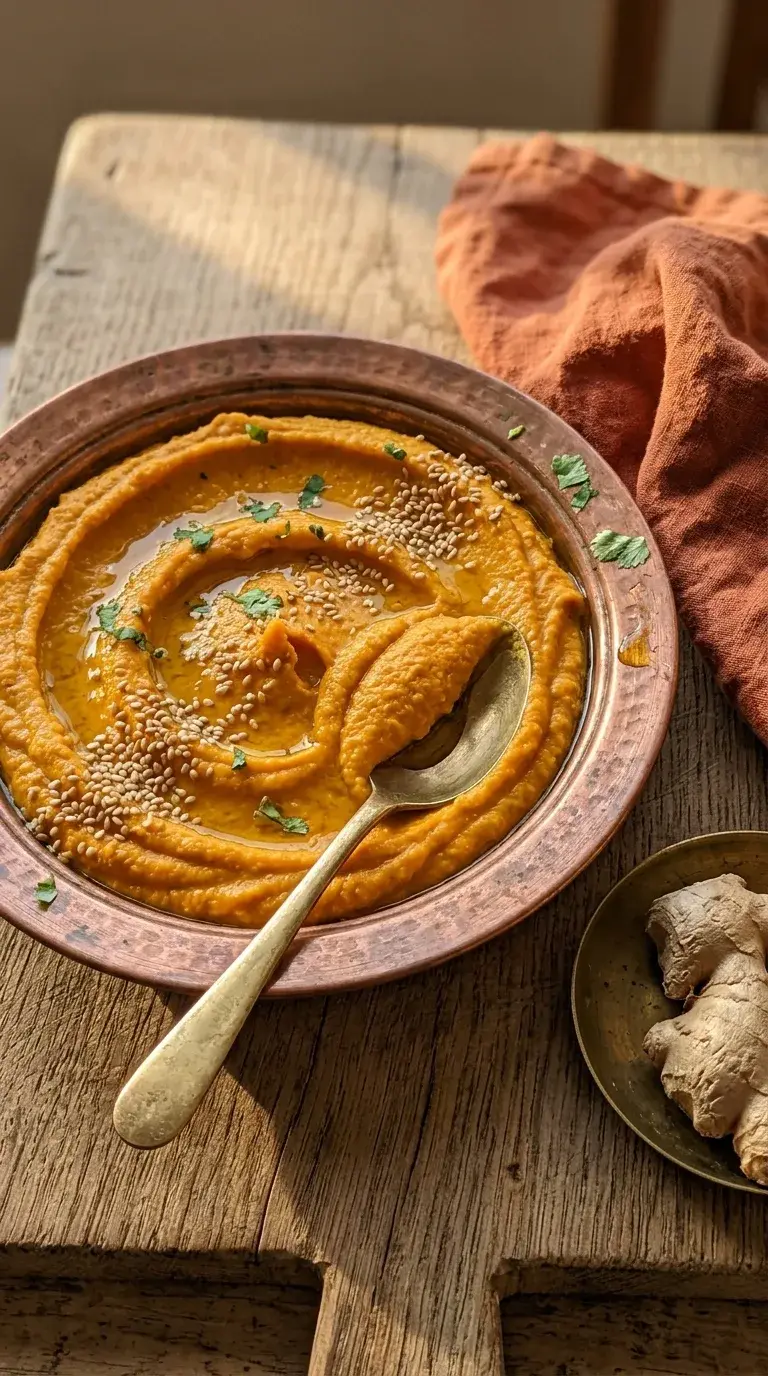
The finished dip brings together sweet roasted carrots, 15 g of finely grated fresh ginger, and a base of tahini whipped with lemon juice before the chickpeas go in. Drizzling 45 ml of ice-cold water into the food processor aerates the mixture into a pale, velvety spread, ready to serve in 55 minutes with extra virgin olive oil, toasted sesame seeds, and fresh coriander leaves.
Roasted Carrot and Ginger Hummus: Velvety Middle Eastern Dip
Recipe cardIngredients
Watch how it's made
Instructions
-
Season the carrot rounds
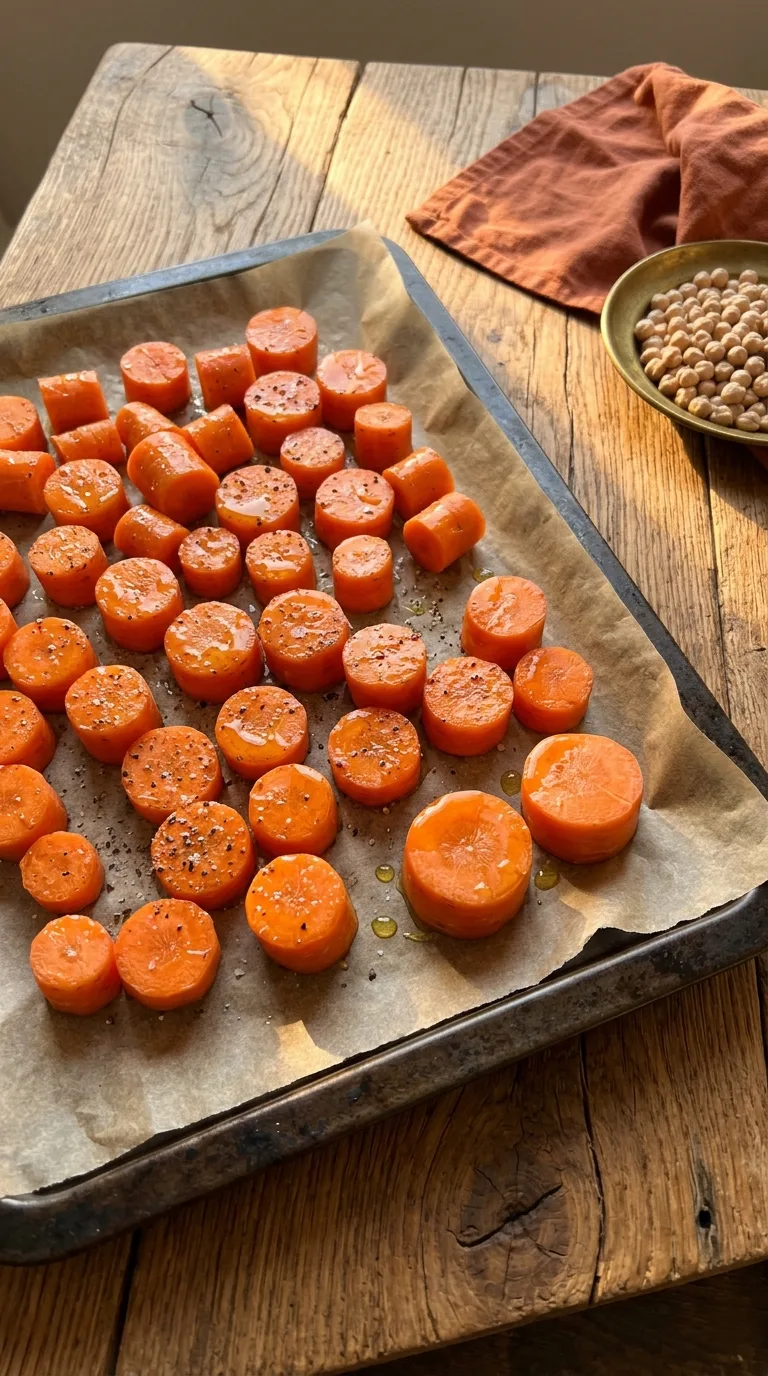
Preheat your oven to 200°C (400°F) and line a large baking tray with baking parchment so the sugars do not stick and burn. Scatter the 2.5 cm carrot rounds onto the tray, then toss them with 1.5 tablespoons of the extra virgin olive oil, 0.5 teaspoon of the fine sea salt, and the black pepper until every surface glistens. Spread the pieces into a single layer so they roast rather than steam.
-
Roast and cool the carrots
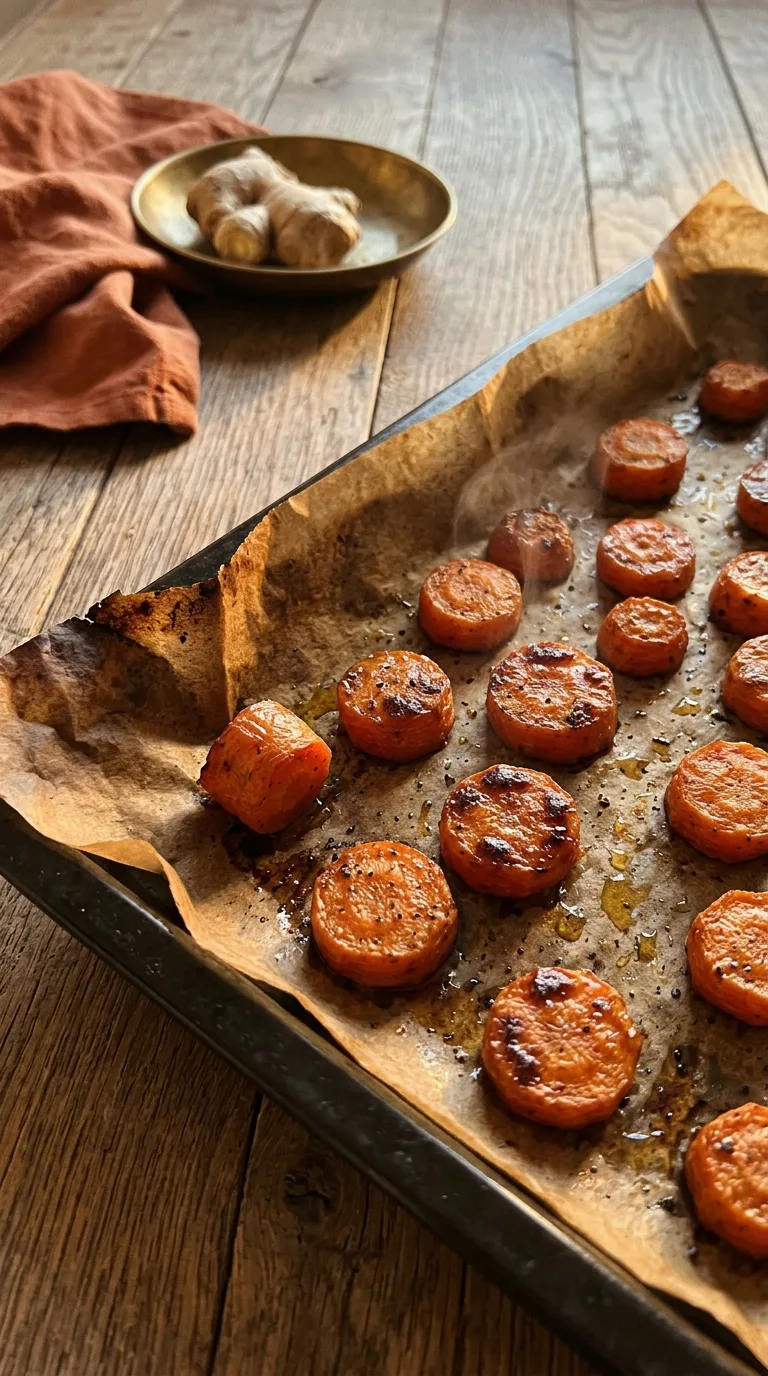
Roast the carrots in the centre of the oven for 25 to 30 minutes, turning them halfway through, until a fork slides in easily and the edges turn lightly caramelised. Remove the tray and leave the carrots to cool for 10 minutes. Cooling prevents the hot vegetables from overheating the food processor bowl and splitting the emulsion.
-
Whip the tahini and lemon
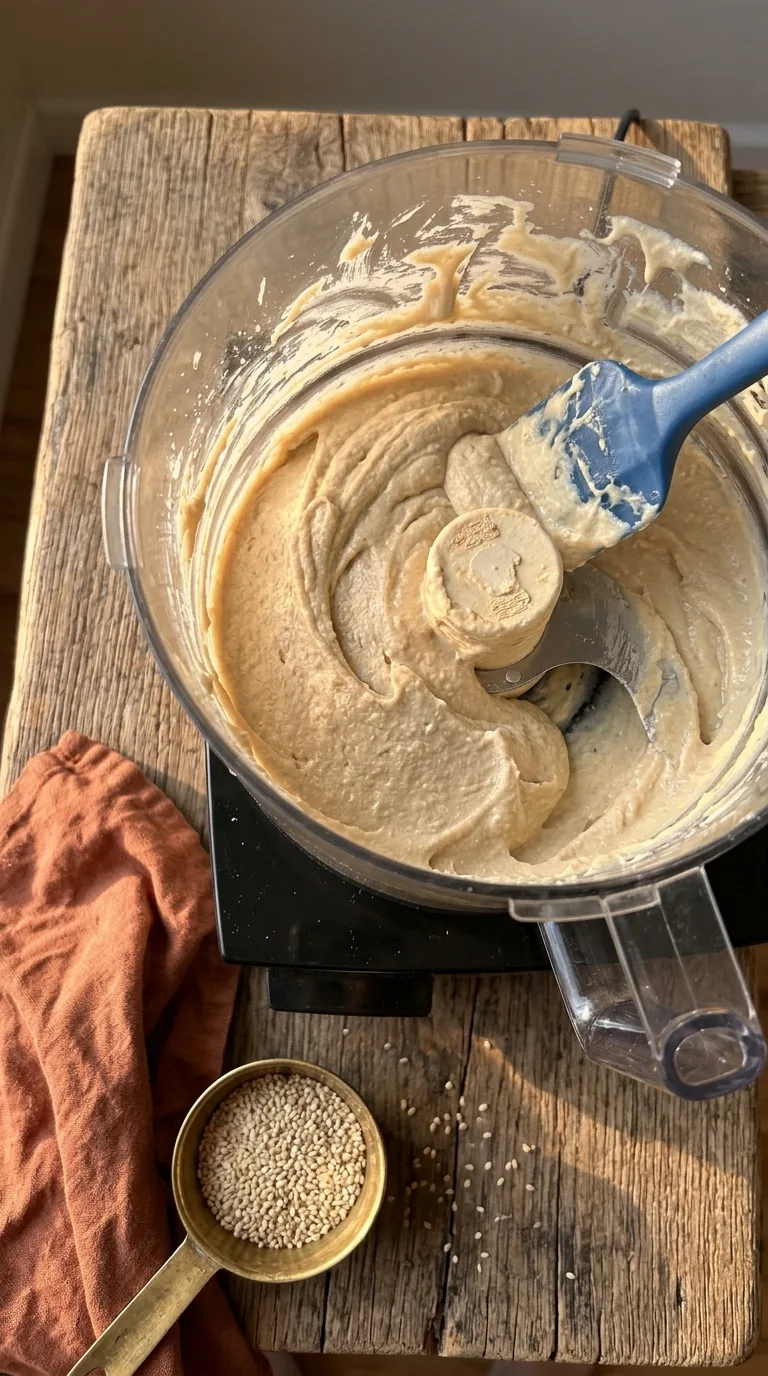
Add the 60 ml of tahini and 30 ml of freshly squeezed lemon juice to the bowl of a food processor. Process for 1 minute, stopping halfway to scrape down the sides with a silicone spatula, until the paste turns thick, pale, and whipped. Whipping the sesame paste with acid first emulsifies the oils and creates an airy base.
-
Blend the aromatics
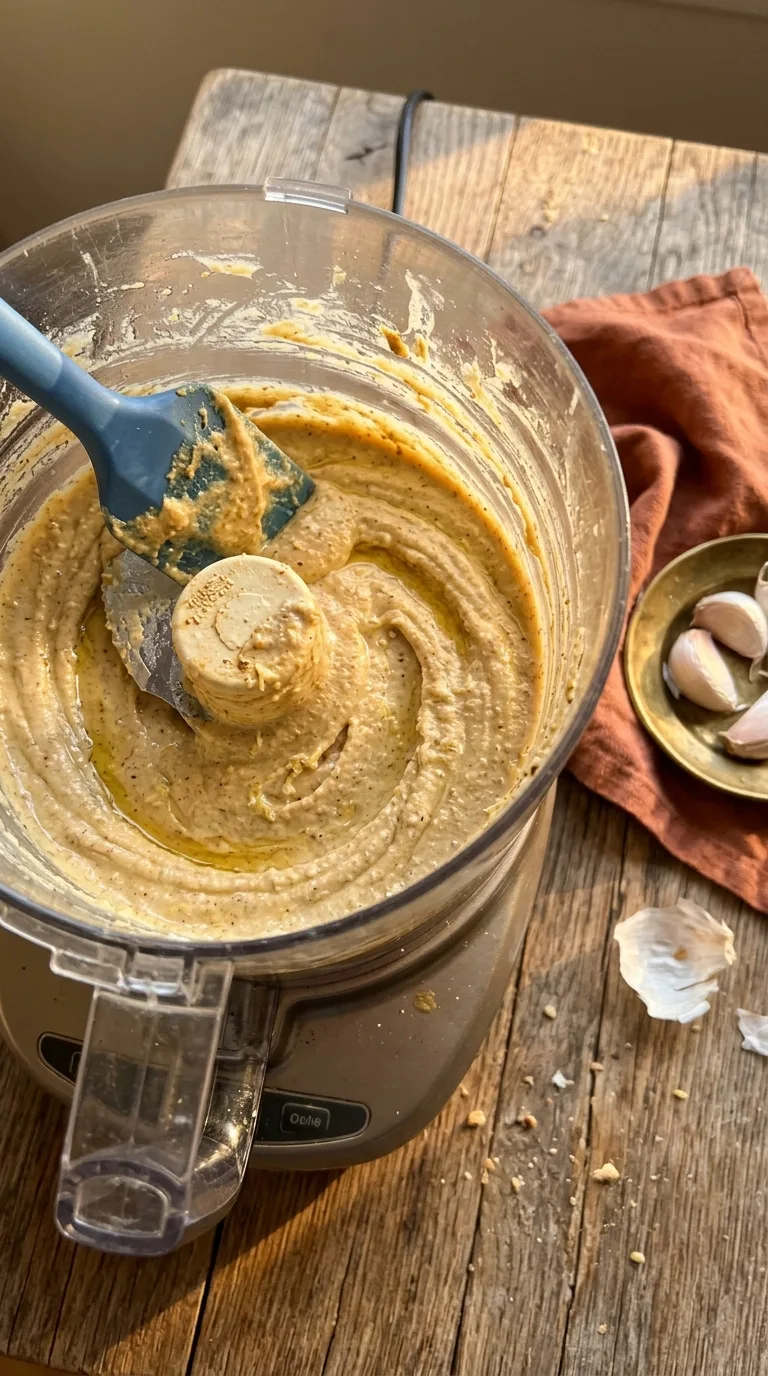
Add the remaining 1.5 tablespoons of extra virgin olive oil, the 15 g of grated fresh ginger, chopped garlic, ground cumin, and the remaining 0.5 teaspoon of fine sea salt to the whipped tahini. Blend for 30 seconds until the mixture looks smooth and smells strongly of ginger and warm spice. Processing the aromatics now distributes them evenly before the thicker chickpeas go in.
-
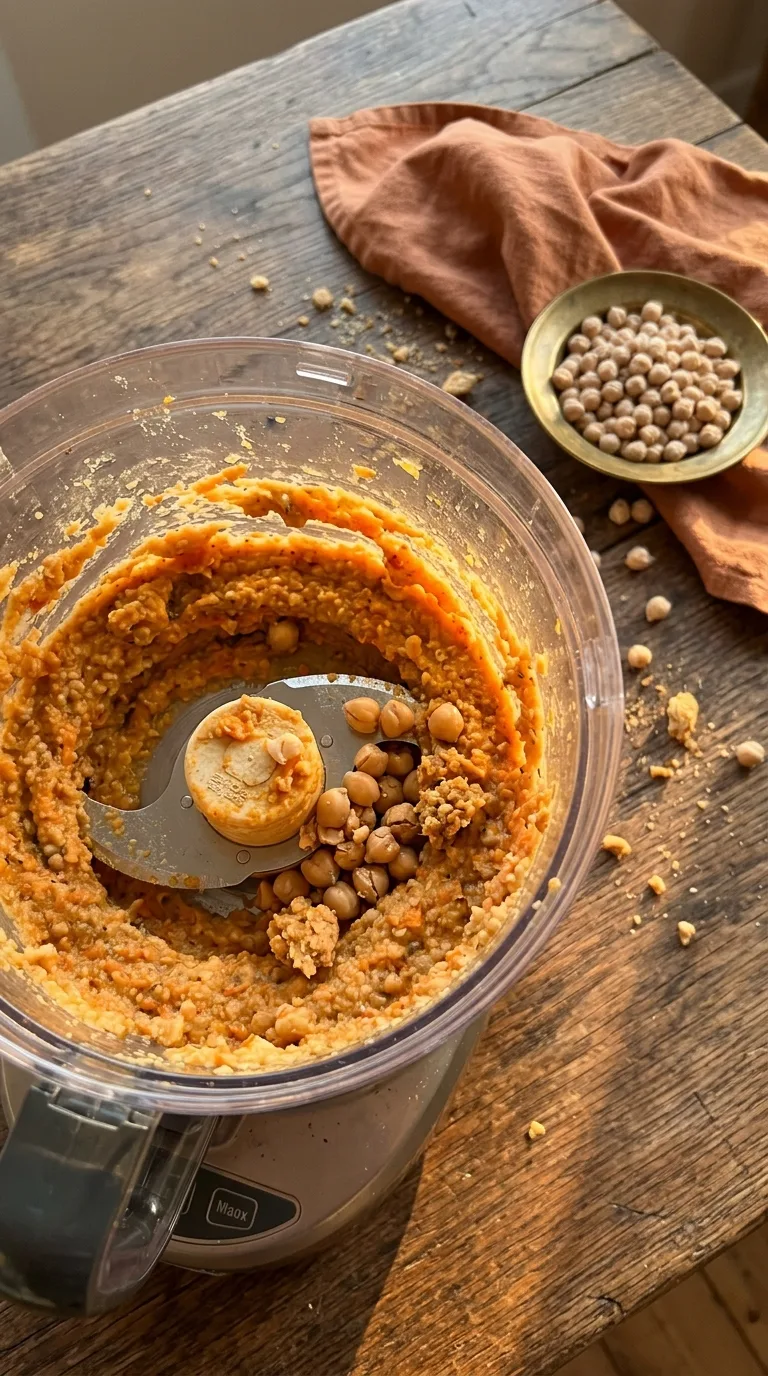
Form a coarse paste
Tip the drained chickpeas and cooled roasted carrots into the food processor bowl. Blend on high for 1 minute until the solids break down into a thick, coarse paste that clings to the sides. Breaking the chickpeas and carrots down before adding liquid stops whole chunks from dodging the blades.
-
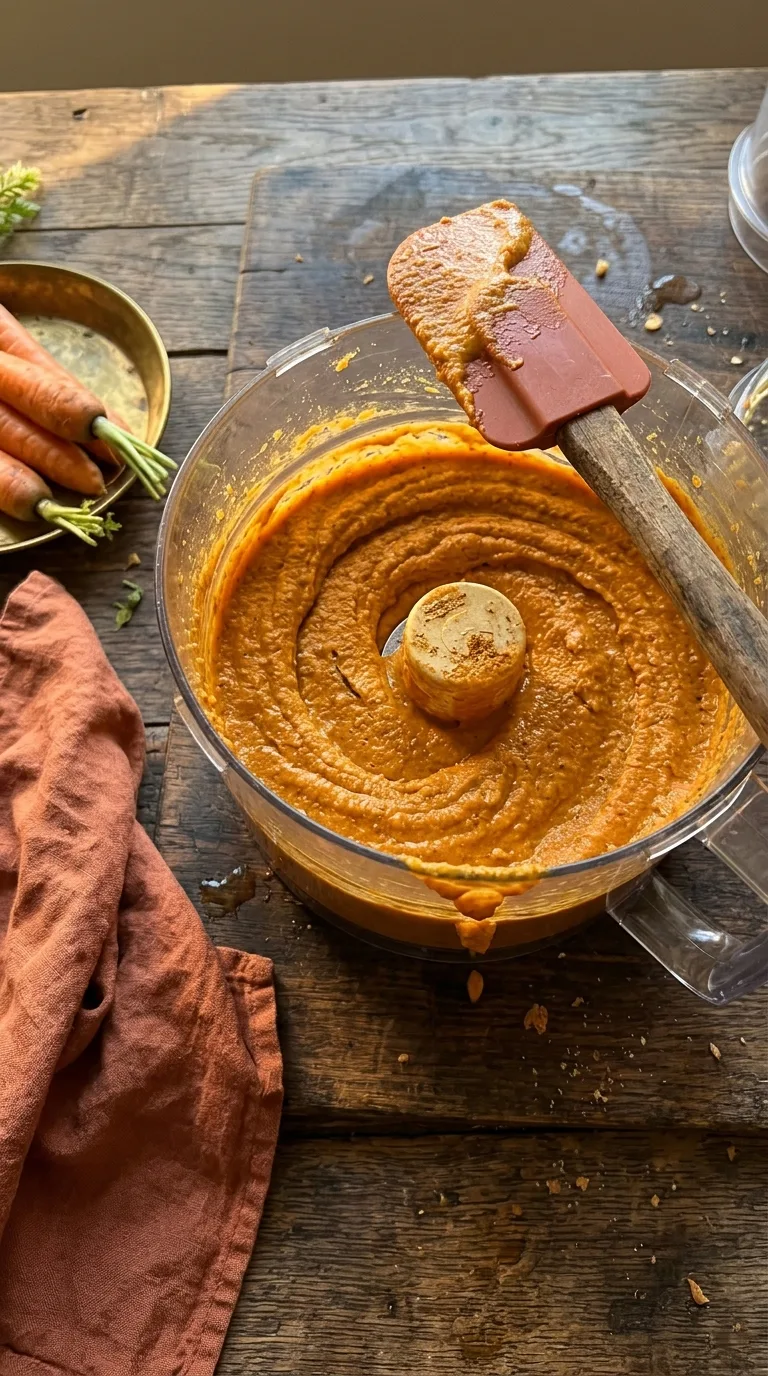
Stream in ice-cold water
With the motor running, slowly pour in the 45 ml of ice-cold water and keep blending for 2 to 3 minutes, scraping down the bowl once or twice, until the dip turns pale and completely velvety. Cold water aerates the sesame paste and gives the hummus a light, smooth body. Add an extra tablespoon of ice-cold water if you want a looser dip.
-
Swirl and garnish
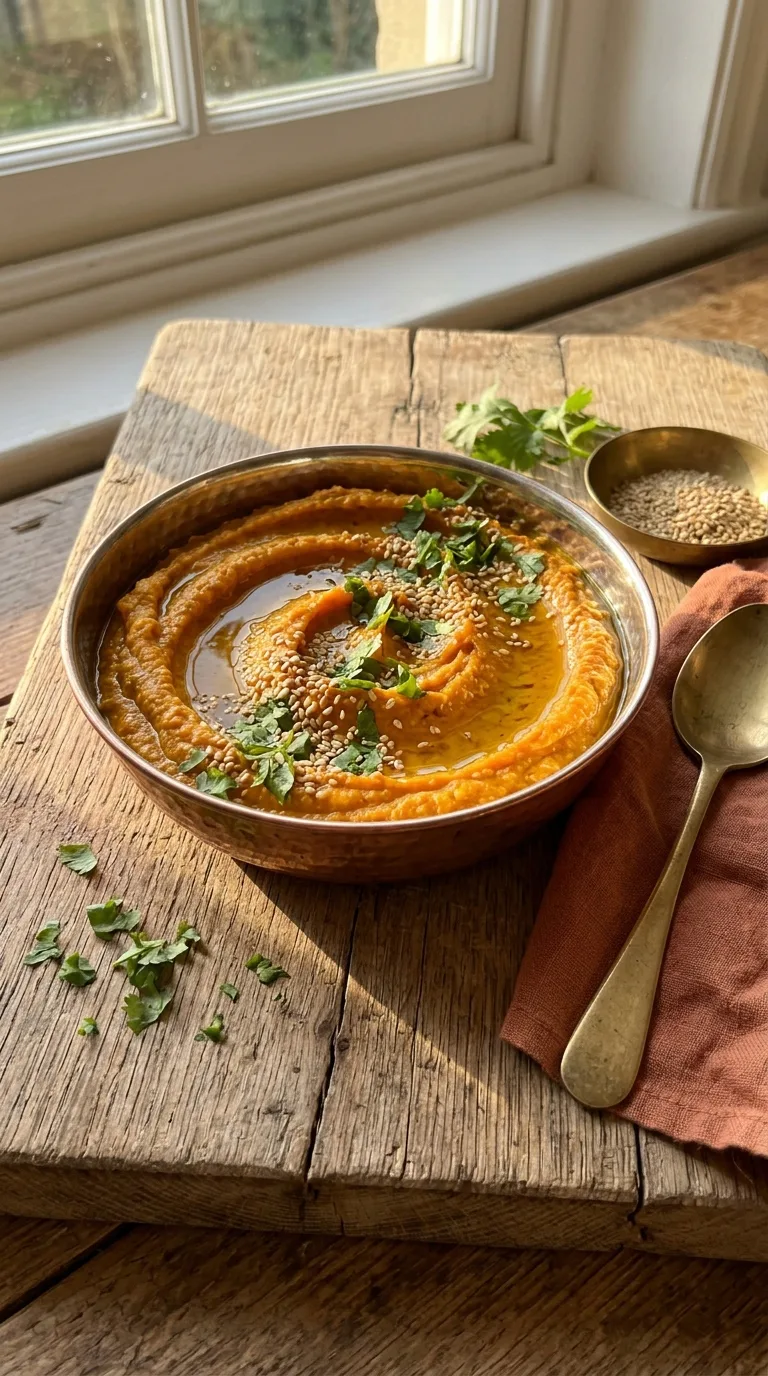
Taste the hummus and adjust with a pinch more salt or a squeeze of lemon juice if the carrot sweetness needs sharper balance. Spoon the mixture into a shallow serving bowl and drag the back of the spoon across the top to make shallow swirls. Drizzle generously with extra virgin olive oil, then scatter over the toasted sesame seeds and chopped fresh coriander leaves.
Unstirred tahini leaves thick oil at the top and dry paste at the bottom, which makes hummus split or turn chalky. Stir the jar thoroughly before measuring, and watch the processor when the lemon juice hits: the paste will seize into a stiff clump first, then whip smooth and pale after 1 minute.
What to serve with it
Serve the dip with warm flatbreads, toasted pitta triangles, or crisp seeded crackers for scooping. You can also arrange it on a mezze board beside cucumber batons, radish halves, marinated olives, and falafel, or spread it inside grain bowls and halal wraps topped with grilled chicken or roasted halloumi.
Storing and reheating
Never leave the hummus at room temperature for more than 2 hours. Transfer leftovers to an airtight container and refrigerate for up to 5 days. For longer keeping, freeze it in an airtight container topped with a thin layer of olive oil for up to 3 months, then thaw overnight in the fridge and stir well before serving.
Nutrition per serving
- Calories
- 195
- Protein
- 5.2 g
- Carbs
- 16.4 g
- Fat
- 12.6 g
- Fiber
- 4.8 g
- Sugar
- 4.2 g
Estimated, and offered as a guide rather than a medical figure.
Made it? Rate it.
Questions people ask
Why did my tahini turn thick and clumpy when I added the lemon juice?
That reaction is normal and shows the emulsion starting. Lemon juice pulls moisture into the sesame paste, making it seize before it loosens. Keep the food processor running for the full 1 minute and scrape down the sides halfway through until the mixture turns pale, smooth, and whipped.
Do I need to peel the chickpea skins before blending?
No, you can blend the drained chickpeas straight from the tin and still get a smooth dip. If you want an even silkier finish, rub the rinsed chickpeas gently in a clean tea towel to slip off their translucent outer skins before adding them to the food processor.
Can I use ground ginger instead of fresh ginger root?
No, use the 15 g of finely grated fresh ginger. Fresh ginger brings bright, zesty heat and moisture that balance the sweet caramelised carrots, whereas dried ground ginger tastes dusty and muted in an uncooked blend.
Can I freeze roasted carrot and ginger hummus?
Yes, this dip freezes well for up to 3 months. Pack it into a freezer-safe airtight container and pour a thin layer of extra virgin olive oil over the surface to block freezer burn, then thaw overnight in the refrigerator and stir thoroughly before serving.
About the author
Mary C. Rivero
Mary C. Rivero specializes in comforting home‑cooked meals, from hearty pastas and sheet‑pan dinners to quick weeknight snacks. Her recipes feature clear, step‑by‑step directions and practical tips, helping readers create flavorful dishes with confidence and ease.