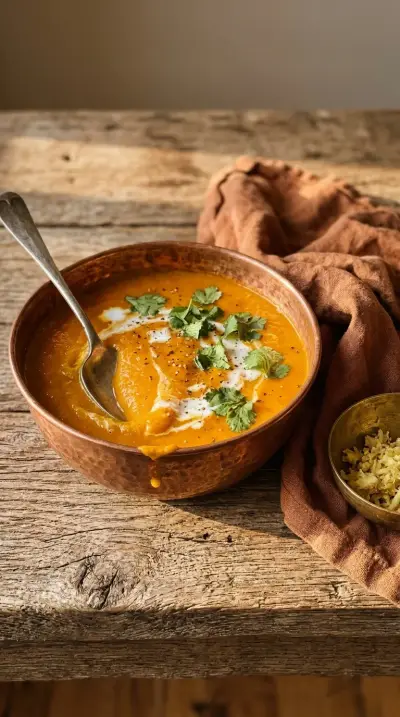
Roasted Carrot Ginger Turmeric Soup: Asian-Style Puree
Many Asian-style vegetable purees rely on simmering ingredients in a pot to extract flavour. In this roasted carrot ginger turmeric soup, you roast the carrots at 220°C (425°F) before adding the vegetable broth. Use this method to caramelise the natural sugars in the root vegetables. This creates a concentrated sweetness that simmering alone cannot achieve.
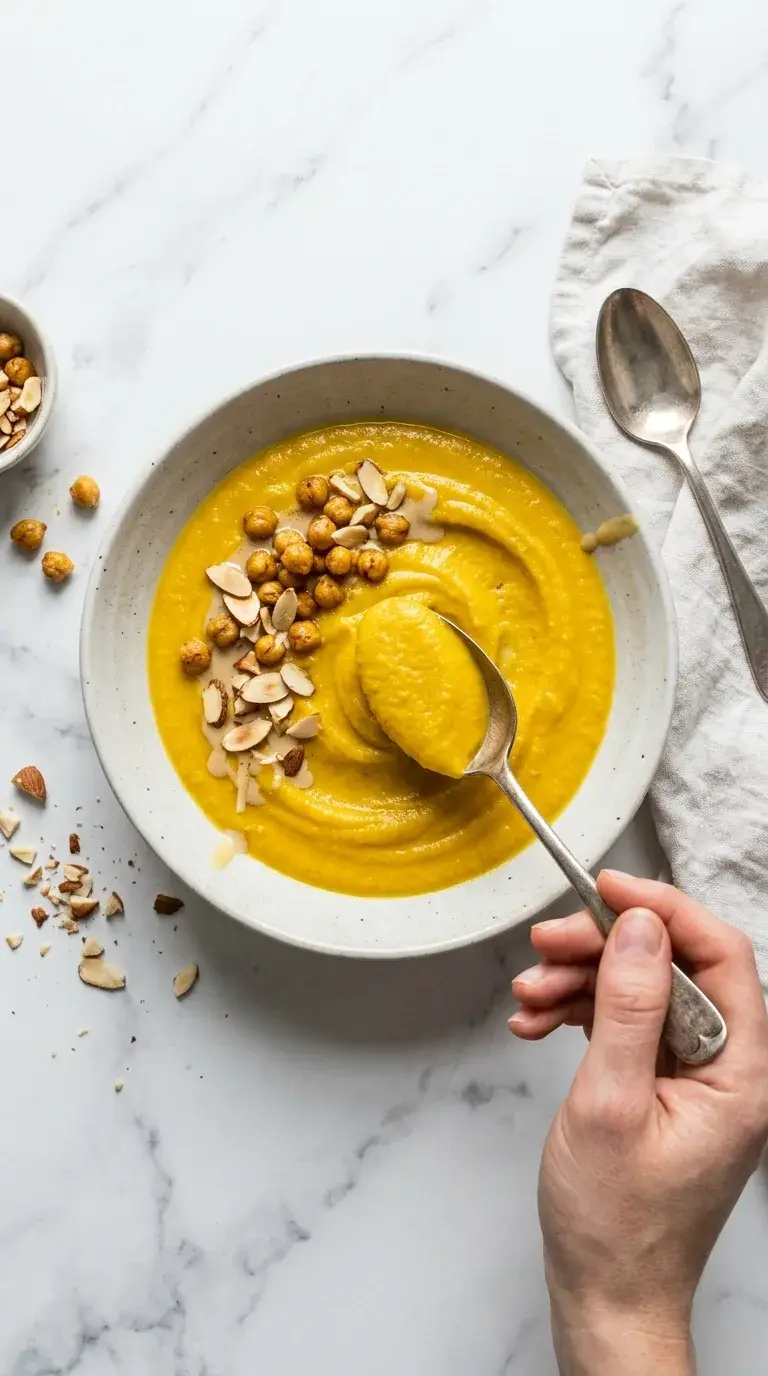
The result is a velvety, bright yellow soup with a nutty finish. You achieve this by stirring in tahini and honey after the carrots are blended smooth. Roast the chickpeas for 10 minutes to provide a crisp contrast to the smooth texture of the puree. Add the fresh parsley, cilantro and lime juice at the end to keep the flavours sharp and fresh.
Roasted Carrot Ginger Turmeric Soup: Asian-Style Puree
Recipe cardIngredients
Watch how it's made
Instructions
-
Prepare and roast carrots
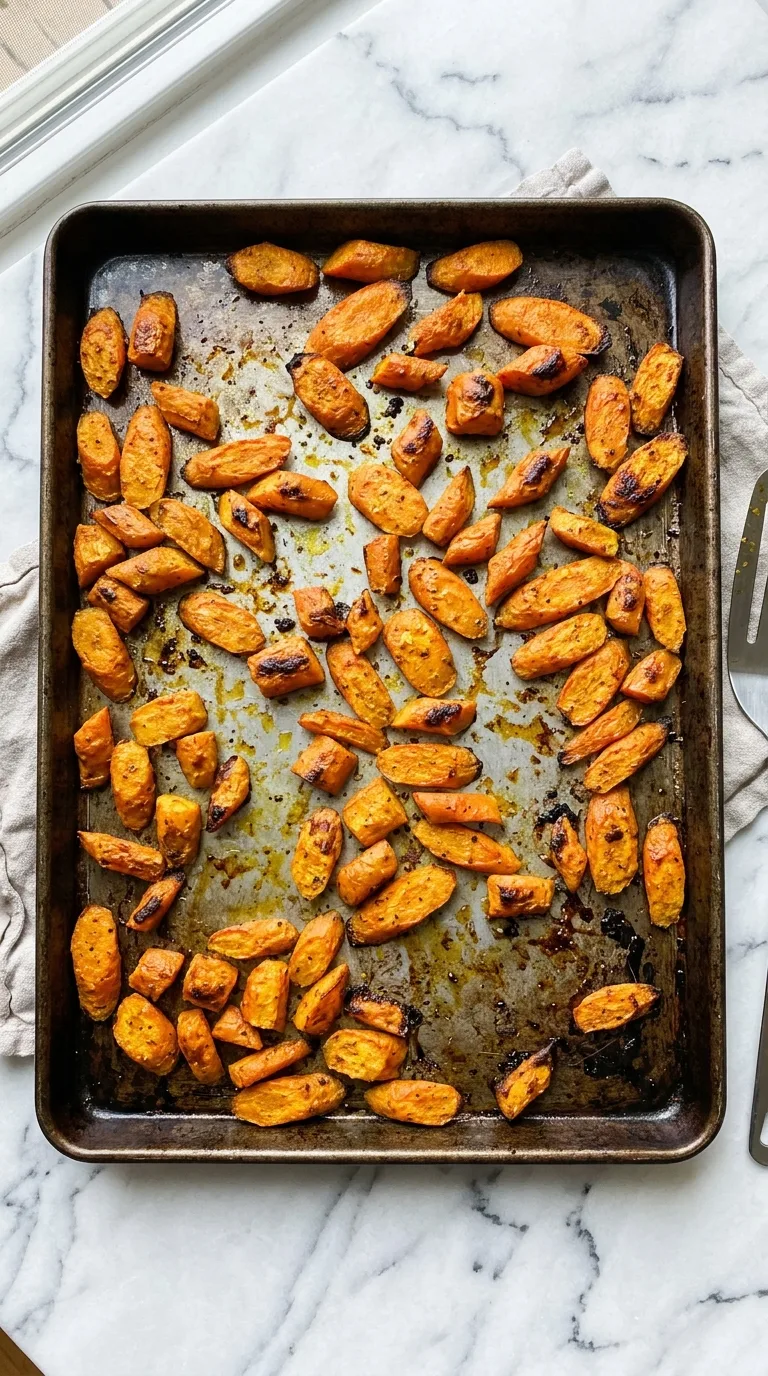
Preheat your oven to 220°C (425°F). Toss the carrots with rapeseed oil, turmeric, ginger, and salt in a mixing bowl until evenly coated. Spread them in a single layer on a tray and roast for 20-25 minutes until golden brown. High heat caramelises the sugars for a deeper flavour.
-
Crisp the chickpeas
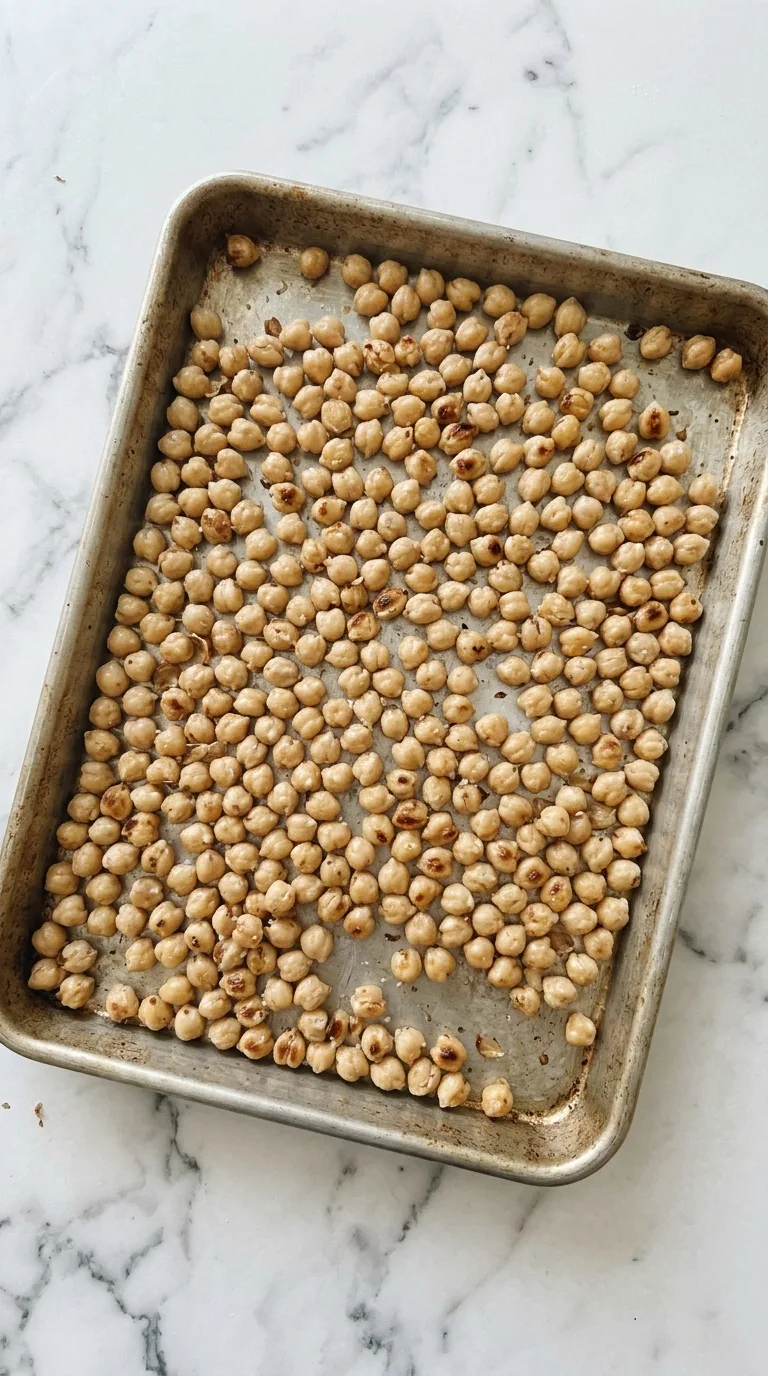
Toss the drained chickpeas with a teaspoon of oil and a pinch of salt. Spread them on a separate baking tray. Roast for 10 minutes until they are crispy. This provides a necessary texture contrast to the smooth soup.
-
Simmer the base
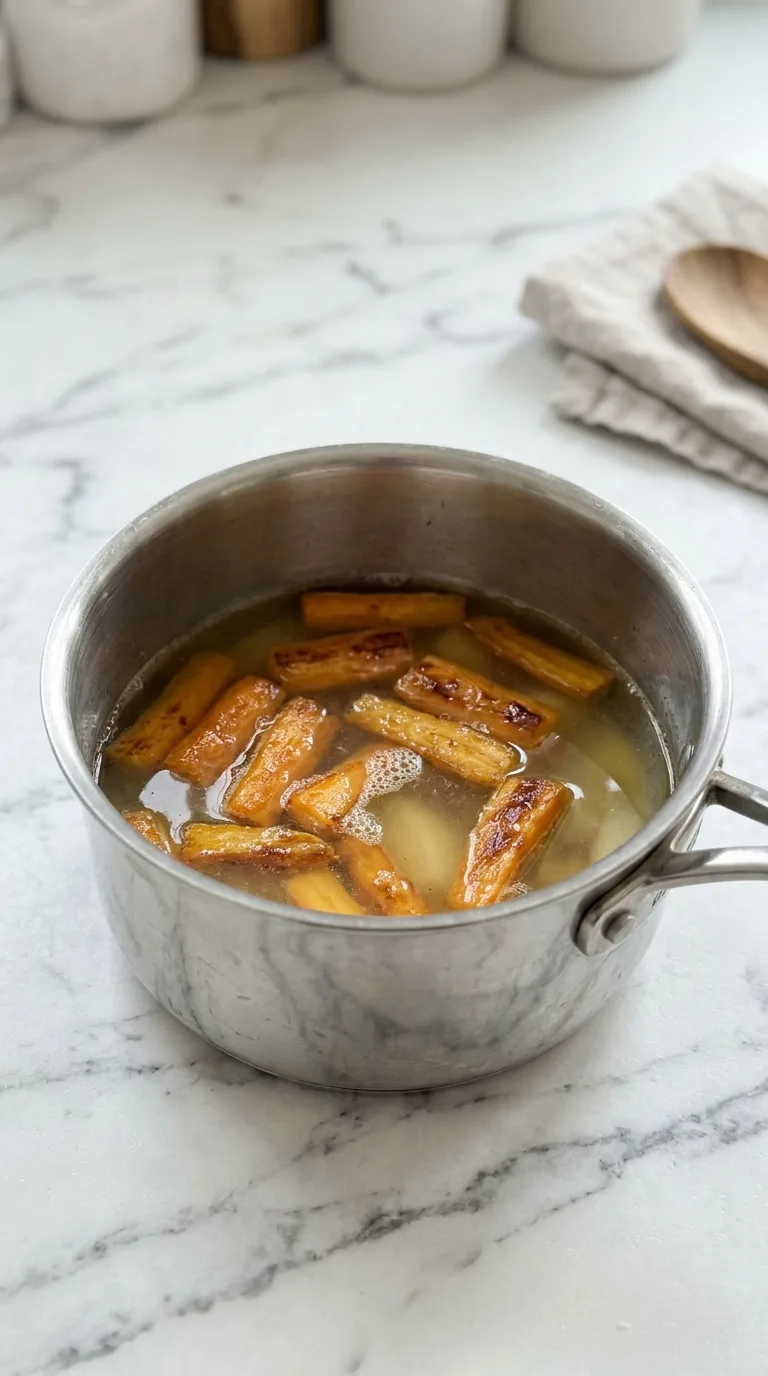
Transfer the roasted carrots to a medium saucepan and pour in the vegetable broth. Bring the mixture to a gentle simmer. Reduce the heat and simmer for 15 minutes to allow the flavours to meld together.
-
Puree the soup
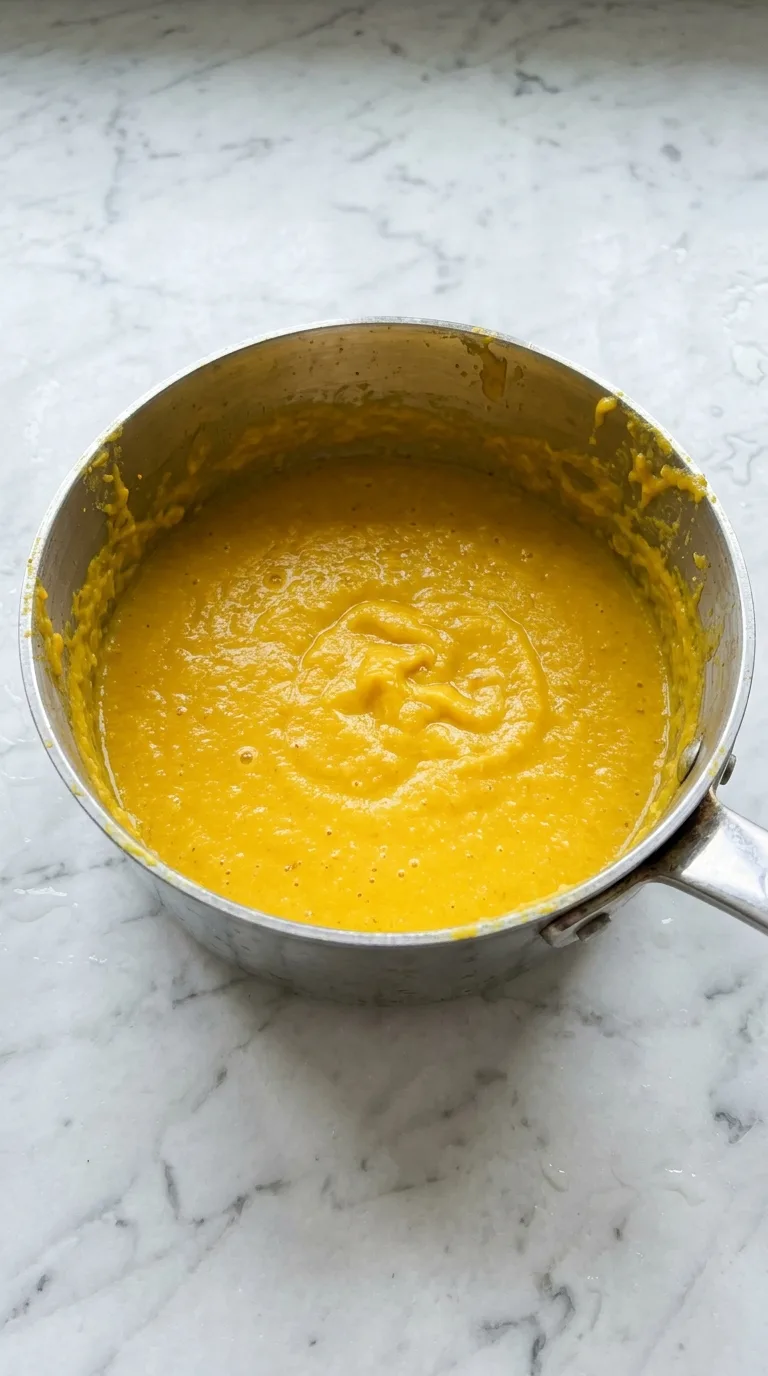
Use an immersion blender to puree the soup until smooth. Alternatively, transfer the mixture to a countertop blender in batches. Ensure no large chunks remain to achieve a velvety consistency.
-
Finish the flavour
Stir in the toasted almonds, honey, tahini, parsley, cilantro, and lime juice. Add a little more broth if the soup is too thick. These additions balance the earthy turmeric with acidity and sweetness.
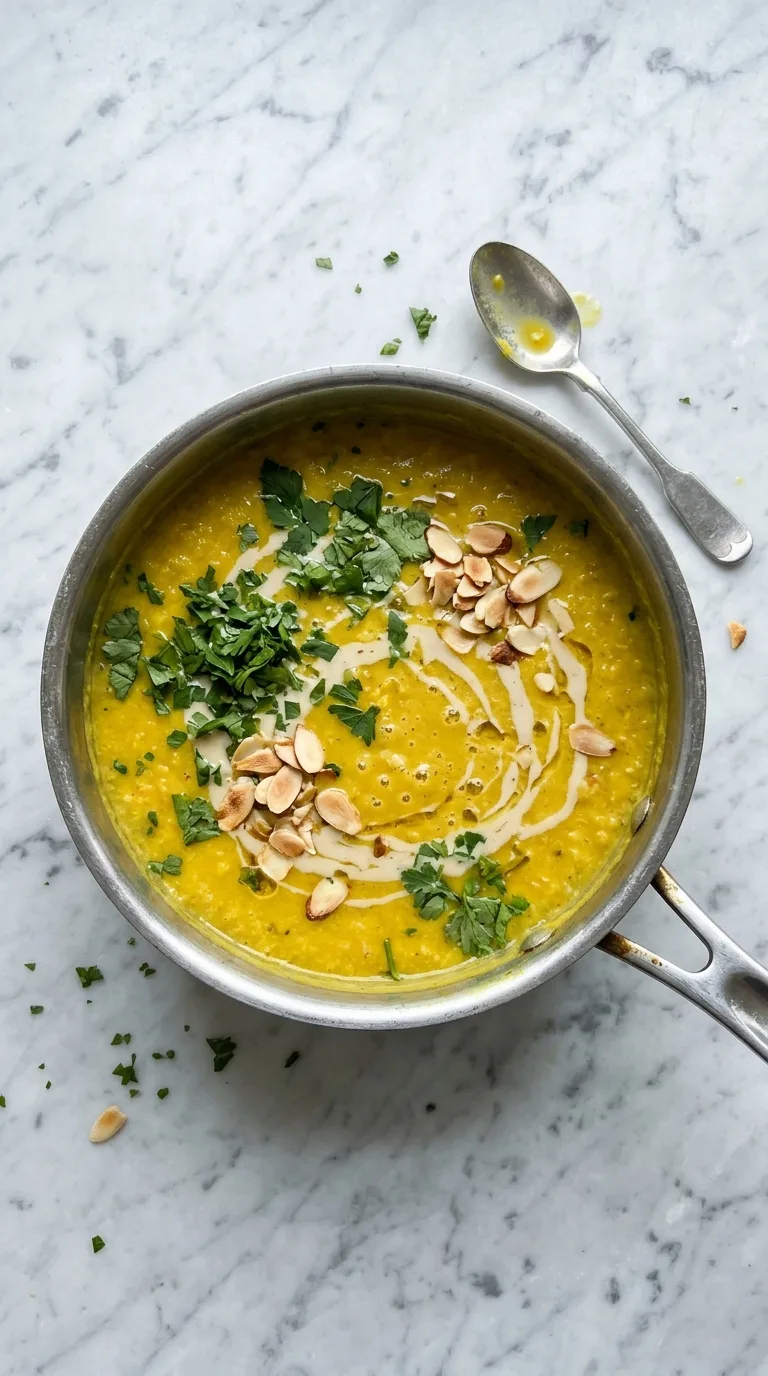
-
Season and serve
Taste the soup and add more salt or lime juice if required. Pour into bowls and top with a generous spoonful of roasted chickpeas. Garnish with fresh herbs and almond slivers for a professional finish.
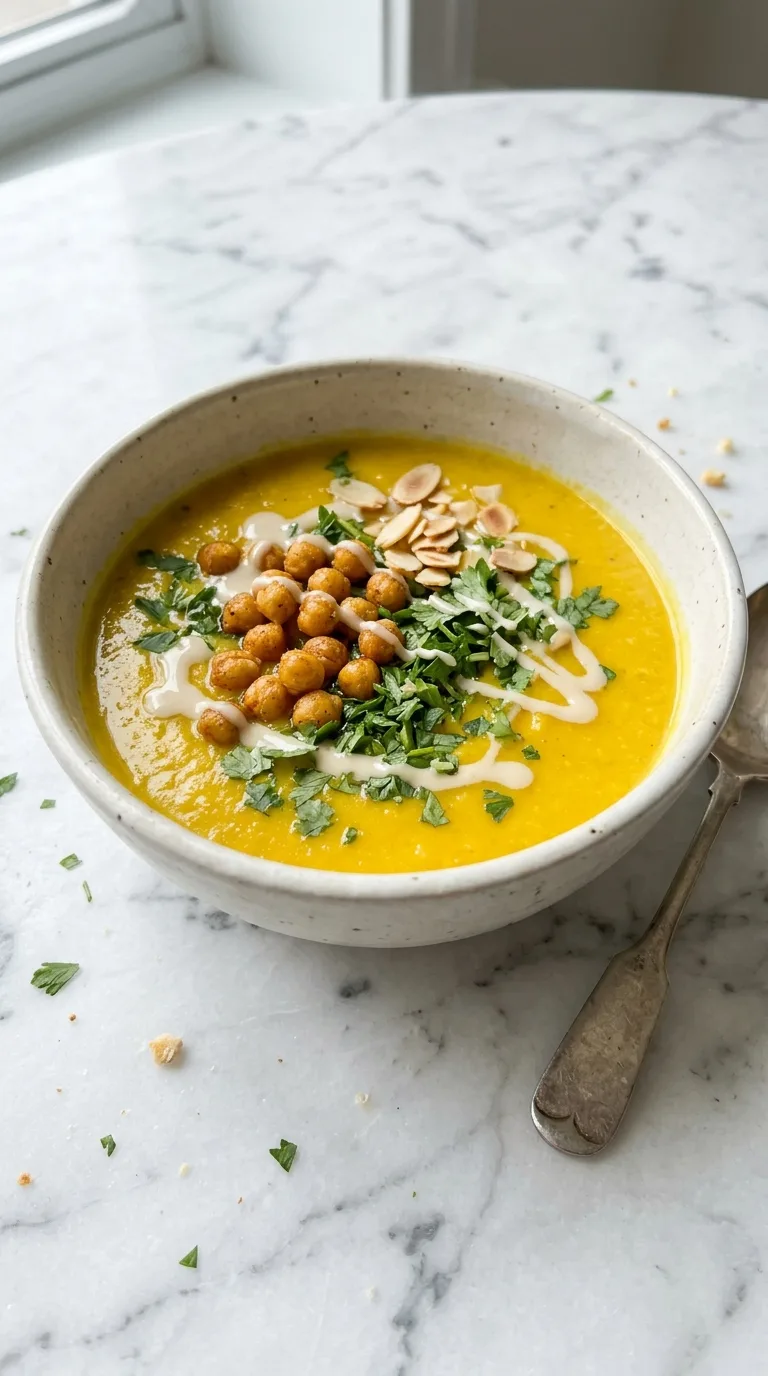
Ensure your carrots are spread in a single layer on the baking tray. If you crowd the pan, the vegetables will steam instead of roast. You will notice a lack of golden-brown colour and a softer texture if the pan is too full.
How it differs from the traditional method
Roasting the carrots at 220°C (425°F) caramelises their sugars. This creates a deeper, sweeter flavour than simmering raw carrots in broth. Use the traditional boiling method if you prefer a lighter, more delicate taste and a faster cooking time without using the oven.
Storing and reheating
Refrigerate the soup in an airtight container for up to 4 days. Leave small portions uncovered for no more than 2 hours. For longer storage, freeze in single-serve portions for up to 2 months. Thaw your portion overnight in the fridge before you reheat it.
Nutrition per serving
- Calories
- 215
- Protein
- 7.4 g
- Carbs
- 24.2 g
- Fat
- 11.8 g
- Fiber
- 6.1 g
- Sugar
- 9.5 g
Estimated, and offered as a guide rather than a medical figure.
Made it? Rate it.
Questions people ask
What do carrot, ginger, and turmeric do for your body?
These ingredients provide high levels of beta-carotene, vitamin C, and anti-inflammatory properties. Turmeric helps reduce inflammation, while carrots and ginger support immune function and overall wellbeing through their concentrated nutrient profiles.
What are some common mistakes when making carrot soup?
Avoid overcrowding the baking tray. If the carrots are too close, they steam instead of roasting, which prevents the sugars from caramelising and reduces the depth of the final flavour.
How do I make this soup vegan?
Replace the 15 ml of honey with maple syrup. This substitution maintains the subtle nutty sweetness and smoothness of the soup while ensuring every ingredient is plant-based.

About the author
Mary C. Rivero
Mary C. Rivero specializes in comforting home‑cooked meals, from hearty pastas and sheet‑pan dinners to quick weeknight snacks. Her recipes feature clear, step‑by‑step directions and practical tips, helping readers create flavorful dishes with confidence and ease.