Roasted Carrot Parsnip Ginger Soup: Creamy Root Purée

Good roasted carrot parsnip ginger soup depends on the parsnips you pick at the shop. Choose firm, medium-sized roots with smooth cream skin and a crisp snap, because smaller roots stay sweet and tender throughout. Put back oversized, woody parsnips with deep cracks or soft spots, as their thick central cores turn fibrous and leave a grainy texture even after blending. Pair them with bright, firm carrots and fresh root ginger with tight, glossy skin rather than shrivelled knobs.
Roasting the 2.5 cm vegetable chunks at 200°C (400°F) caramelises their natural sugars into deep golden-brown edges before they touch the stock. You then simmer the browned roots with softened onion, ginger, garlic, ground cumin, and ground coriander, puréeing everything until velvety and finishing with orange juice and coconut milk or double cream.
Roasted Carrot Parsnip Ginger Soup: Creamy Root Purée
Recipe cardIngredients
Watch how it's made
Instructions
-
Season and spread the roots
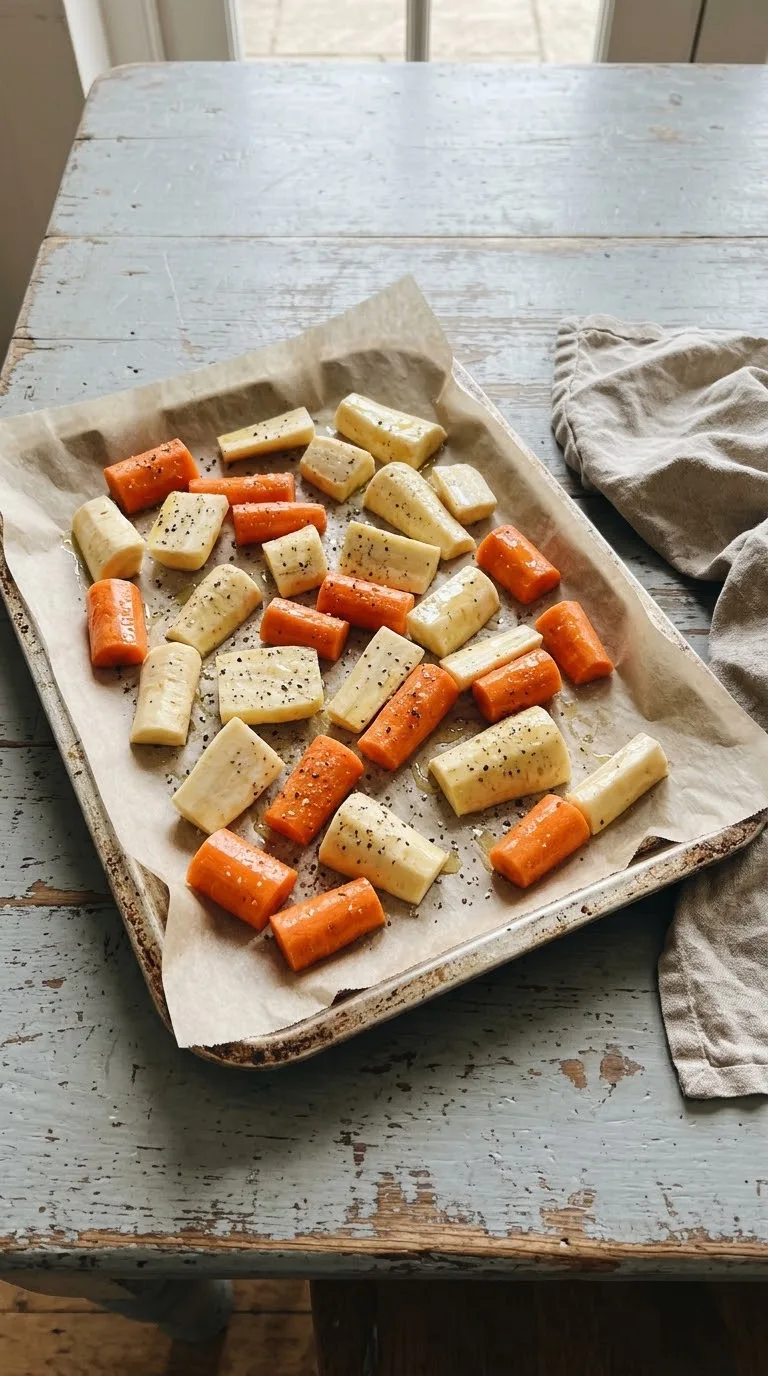
Preheat your oven to 200°C (400°F) and line a large baking tray with baking parchment. Put the 2.5 cm chunks of carrots and parsnips onto the tray, drizzle with 2 tablespoons of olive oil, and sprinkle over 0.5 teaspoon of fine sea salt and 0.25 teaspoon of black pepper. Toss thoroughly with your hands so oil coats every surface, then spread the pieces into a single layer without overcrowding so they roast rather than steam.
-
Roast until deeply caramelised
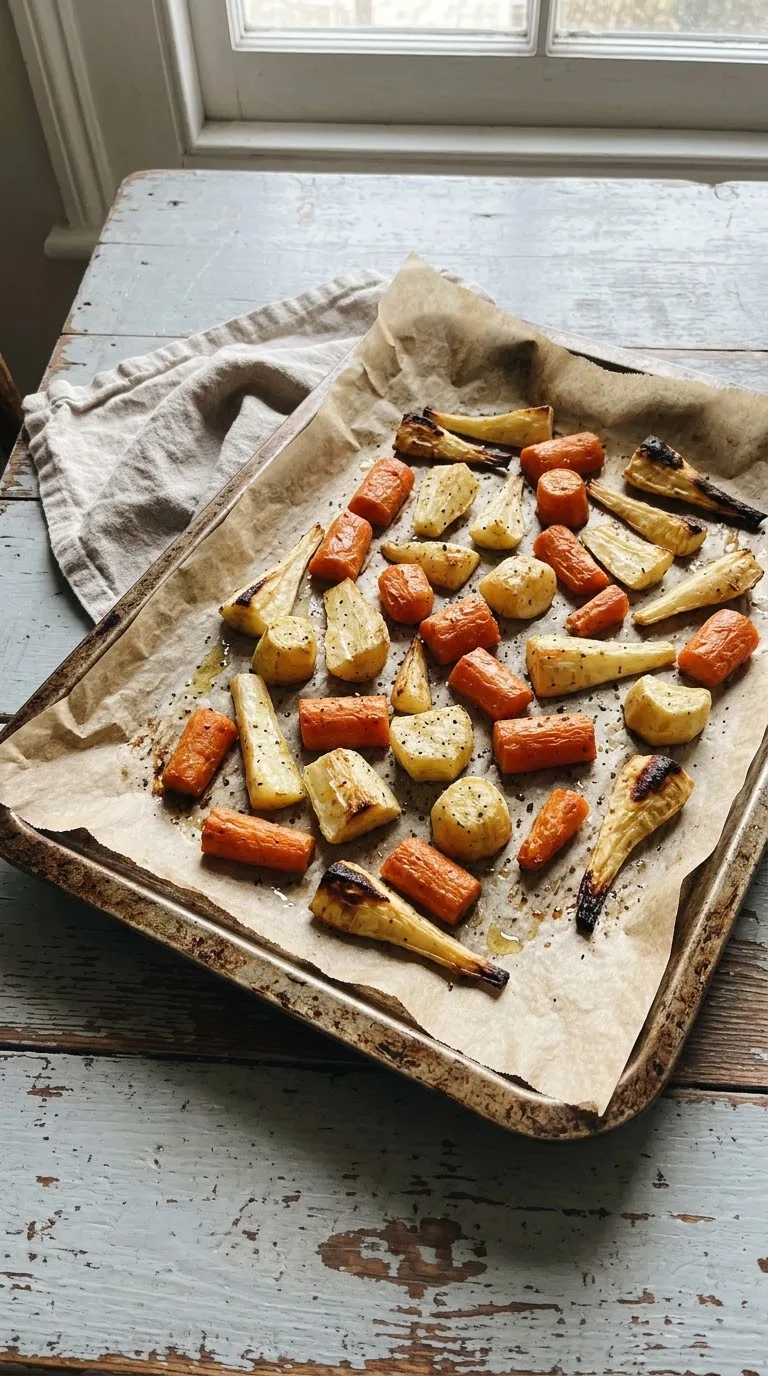
Roast the carrots and parsnips in the centre of the oven for 30 to 35 minutes, turning them halfway through with a spatula. Pull the tray out once the pieces are fork-tender and spotted with deep golden-brown edges, because caramelising their natural sugars builds the main body of flavour in the soup.
-
Soften the onion base
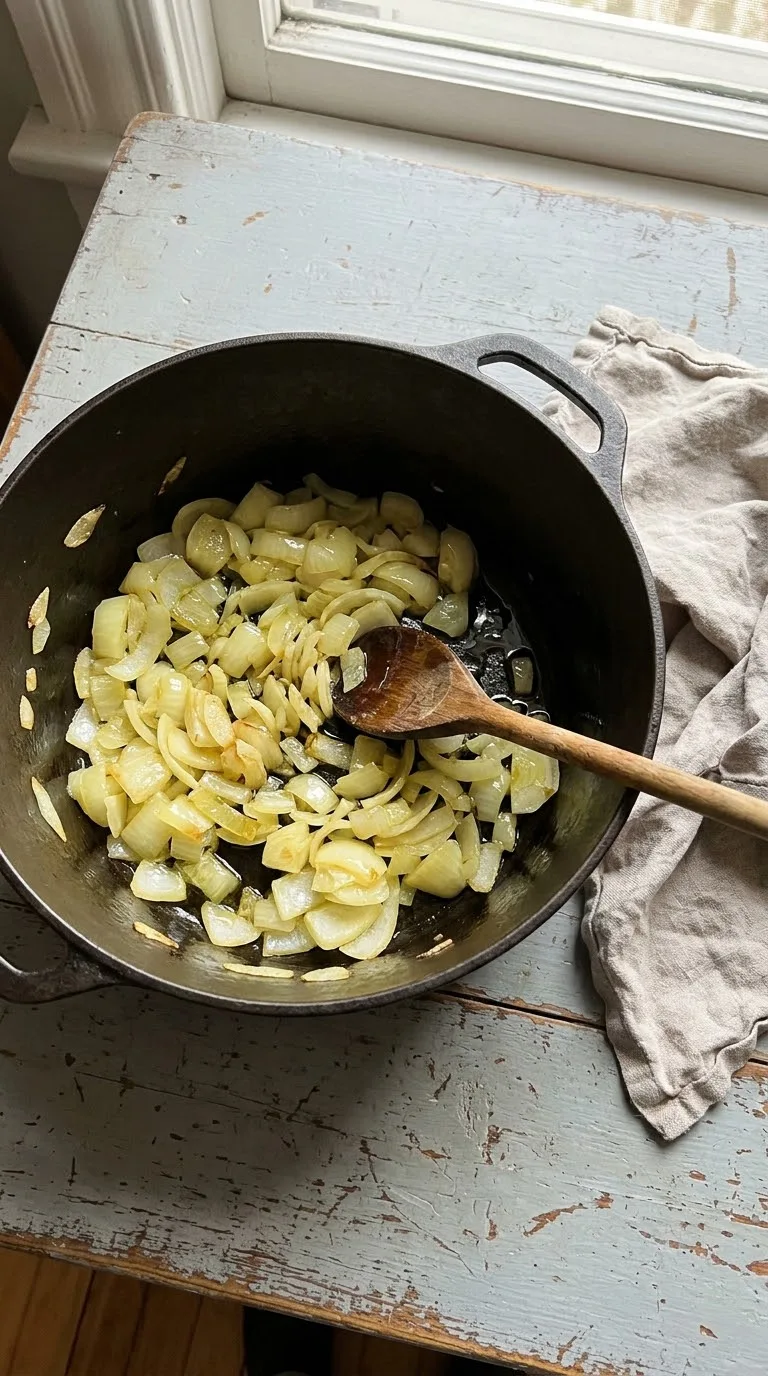
When the vegetables have about 10 minutes of roasting time left, heat the remaining 1 tablespoon of olive oil in a large heavy-based saucepan over medium heat. Add the roughly chopped yellow onion and cook for 6 to 8 minutes, stirring occasionally, until the pieces turn soft and translucent without browning.
-
Bloom the ginger and spices
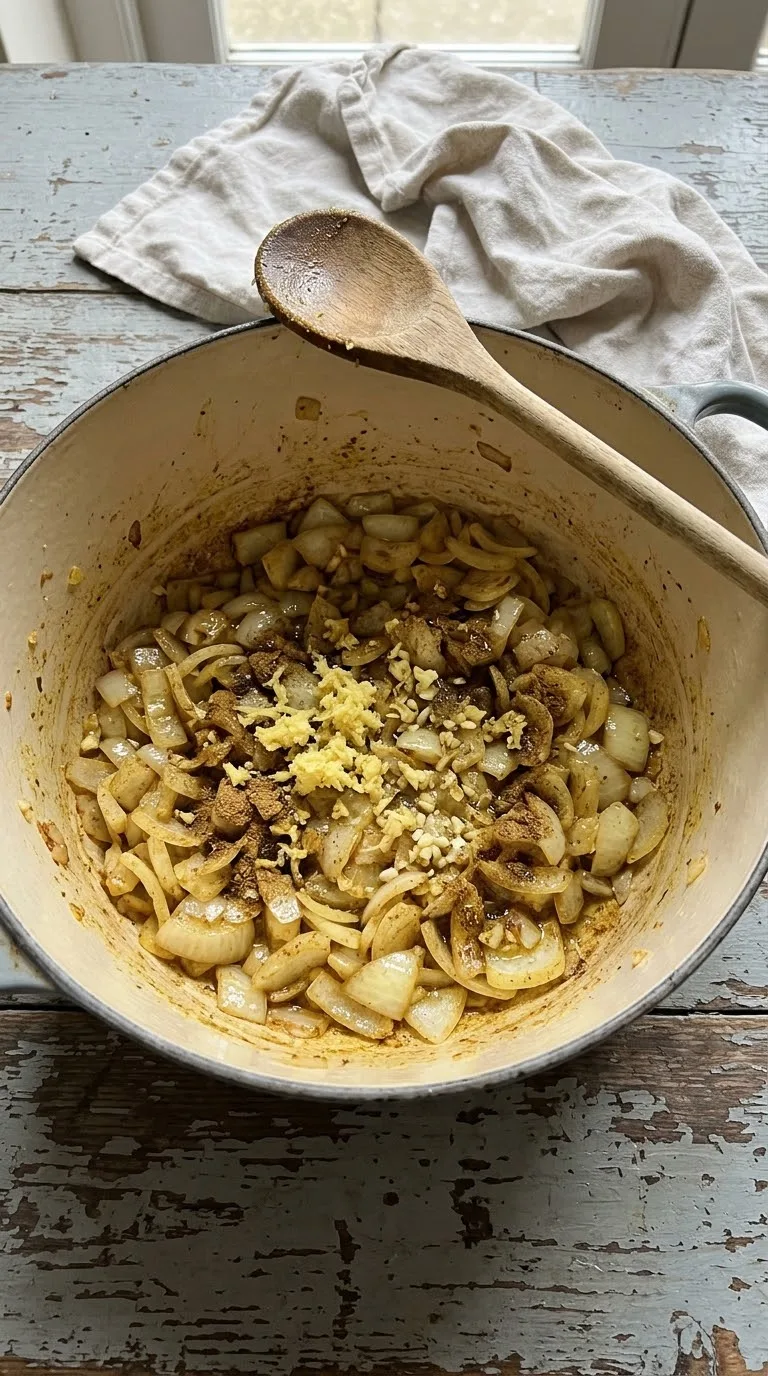
Stir the grated fresh ginger, garlic, ground cumin, and ground coriander into the softened onions. Cook for 1 to 2 minutes until the spices smell warm and fragrant, stirring constantly so the garlic does not catch and turn bitter.
-
Simmer with vegetable stock
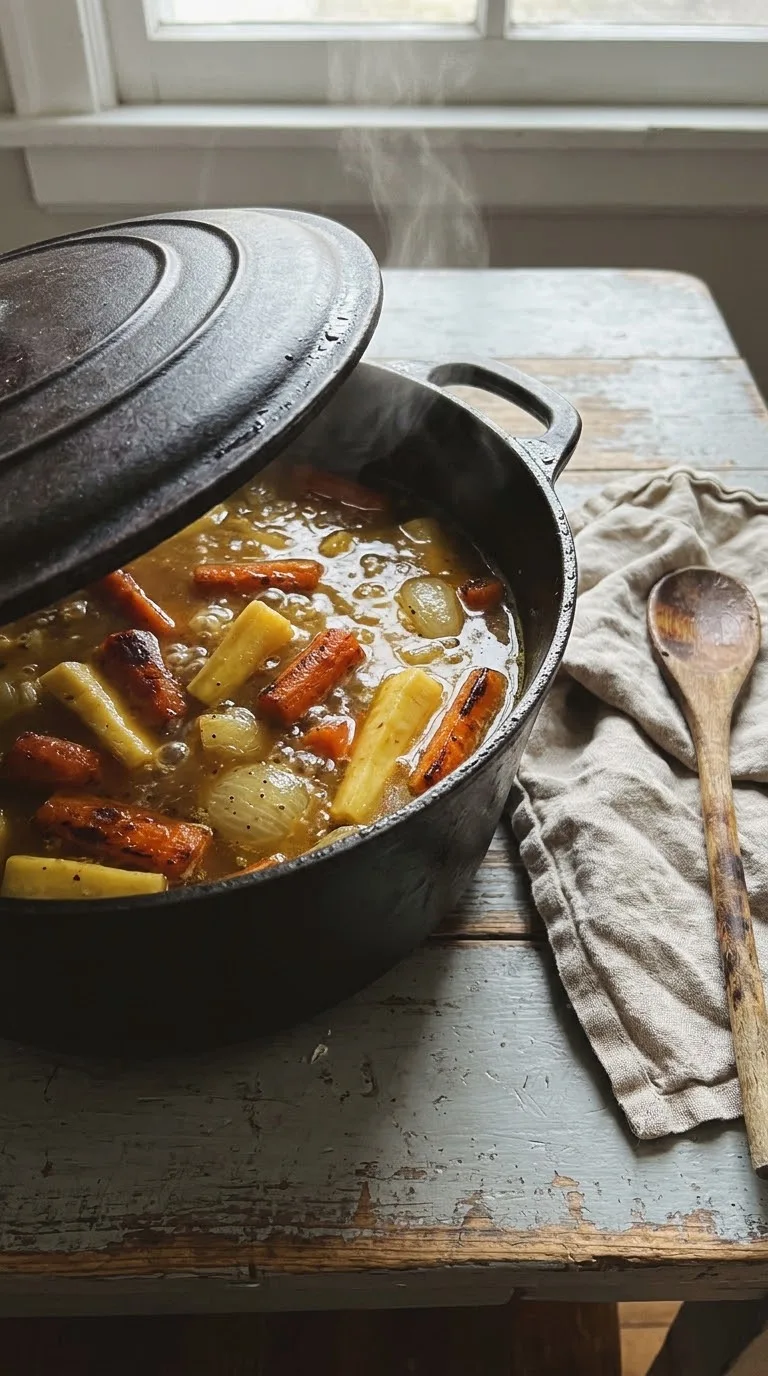
Tip the hot roasted carrots and parsnips straight from the baking tray into the saucepan with the aromatics. Pour in the 1000 ml of vegetable stock along with the remaining 0.5 teaspoon of salt and 0.25 teaspoon of black pepper, bring to a gentle boil over medium-high heat, then lower the heat, cover with a lid, and simmer for 10 minutes so the flavours meld.
-
Purée until completely smooth
Take the saucepan off the heat and purée the soup with an immersion stick blender until completely smooth and velvety. If you use a countertop blender, work in batches with the lid vent slightly open and covered by a clean tea towel so trapped steam escapes safely.

-
Finish and serve hot
Stir in the freshly squeezed orange juice and the coconut milk or double cream, then warm gently over low heat for 2 minutes without letting the soup boil. Taste and adjust with extra salt and pepper, ladle into warmed bowls, and finish each portion with a swirl of coconut milk or cream, chopped fresh coriander leaves, and a twist of black pepper.

Overcrowding the baking tray traps steam and prevents the carrots and parsnips from browning. If your vegetables look pale and wet at the 20-minute mark instead of sizzled and golden at the edges, spread them onto a second tray and extend roasting until dark golden spots appear.
Parsnips and what to use instead
Parsnips bring a distinct sweet, earthy nuttiness that defines this soup, so do not skip them. If you cannot find fresh parsnips, replace the 450 g with extra carrots or peeled sweet potato. Your soup will lose its peppery floral depth and taste sweeter, though the velvety texture stays intact.
What to serve with it
Pair this smooth purée with warm crusty sourdough bread or toasted flatbreads brushed with olive oil and za'atar for dipping. Top each bowl with toasted pumpkin seeds or crispy chickpeas for crunch, and add a crisp green salad dressed with sharp lemon vinaigrette to balance the roasted sweetness.
Storing and reheating
Cool the soup completely to room temperature within 2 hours of cooking, then store it in an airtight container in the fridge for up to 4 days. For longer storage, freeze portions in freezer-safe containers with 2 cm of headspace for up to 3 months, thawing overnight before reheating gently on the hob.
Nutrition per serving
- Calories
- 285
- Protein
- 4.2 g
- Carbs
- 34.5 g
- Fat
- 15.8 g
- Fiber
- 8.6 g
- Sugar
- 15.4 g
Estimated, and offered as a guide rather than a medical figure.
Made it? Rate it.
Questions people ask
Can I use ground ginger instead of fresh root ginger?
No, use fresh root ginger rather than dried powder. Freshly grated ginger releases bright citrus oils that cut through the sweet roasted carrots and parsnips, whereas dried ground ginger tastes dusty and muted in a blended purée.
Why must I remove the centre core from thick parsnips?
Thick parsnips develop a tough, woody core that does not soften during roasting or simmering. Slicing out that fibrous centre prevents stringy bits from surviving the blender, ensuring your finished soup has a completely velvety consistency.
Should I use coconut milk or double cream?
Use coconut milk if you want a dairy-free, vegan soup with a subtle tropical richness, or choose double cream for a heavier, classic dairy finish. Both enrich the purée equally without curdling when warmed gently over low heat.

About the author
Mary C. Rivero
Mary C. Rivero specializes in comforting home‑cooked meals, from hearty pastas and sheet‑pan dinners to quick weeknight snacks. Her recipes feature clear, step‑by‑step directions and practical tips, helping readers create flavorful dishes with confidence and ease.