Slow Cooker Turkey Breast: Herbed Roast with Gravy
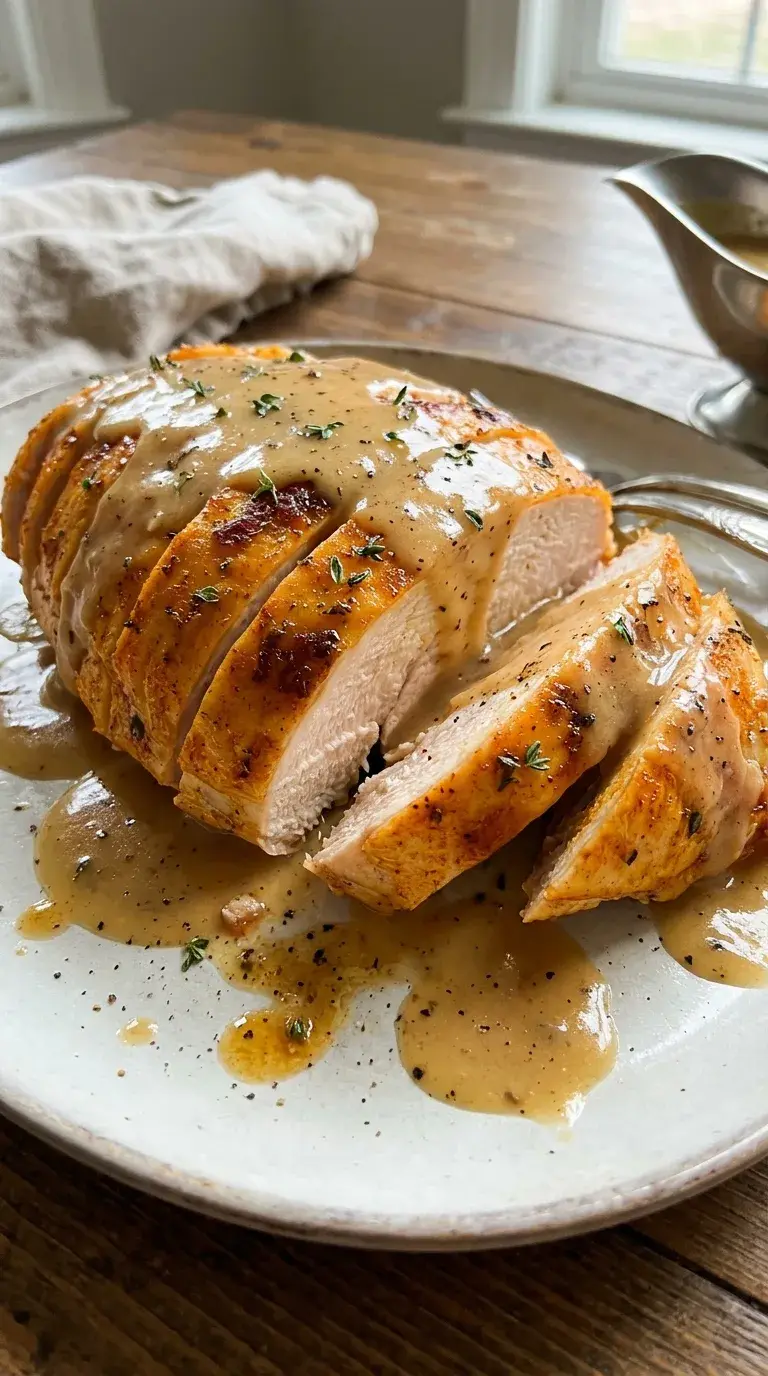
This slow cooker turkey breast uses a paprika-thyme rub and a bed of aromatics to maintain moisture. You must use an instant-read meat thermometer to ensure the thickest part of the breast reaches 74°C (165°F) without over-cooking. Let the meat rest for 15 minutes before slicing. This allows the juices to redistribute through the fibres. Finish the dish with a butter-flour gravy made from the cooking liquid to add a savoury depth.
Slow Cooker Turkey Breast: Herbed Roast with Gravy
Recipe cardIngredients
Instructions
-
Prepare the meat
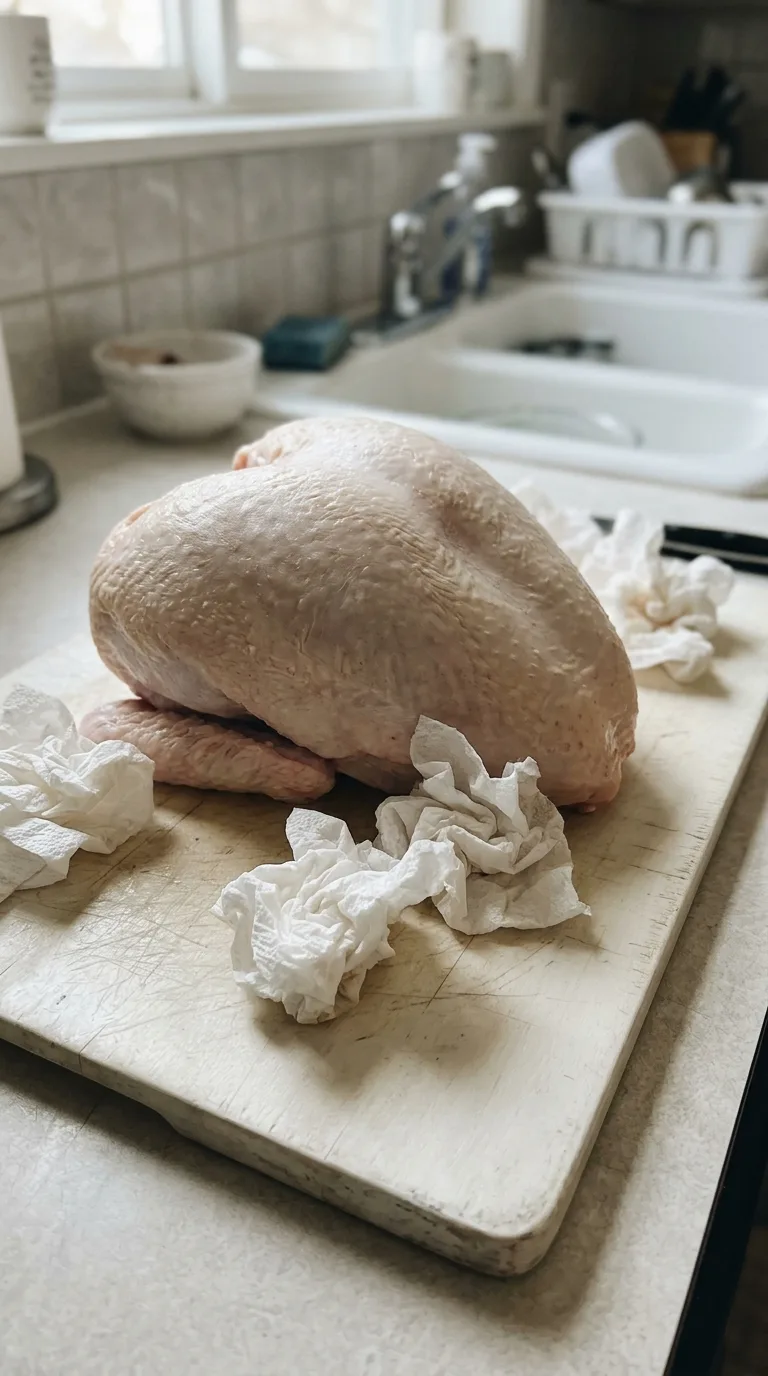
Let the turkey breast sit at room temperature for 15 minutes. Pat the skin dry with paper towels. Removing surface moisture ensures the rub adheres and the skin can later be crisped.
-
Make the rub
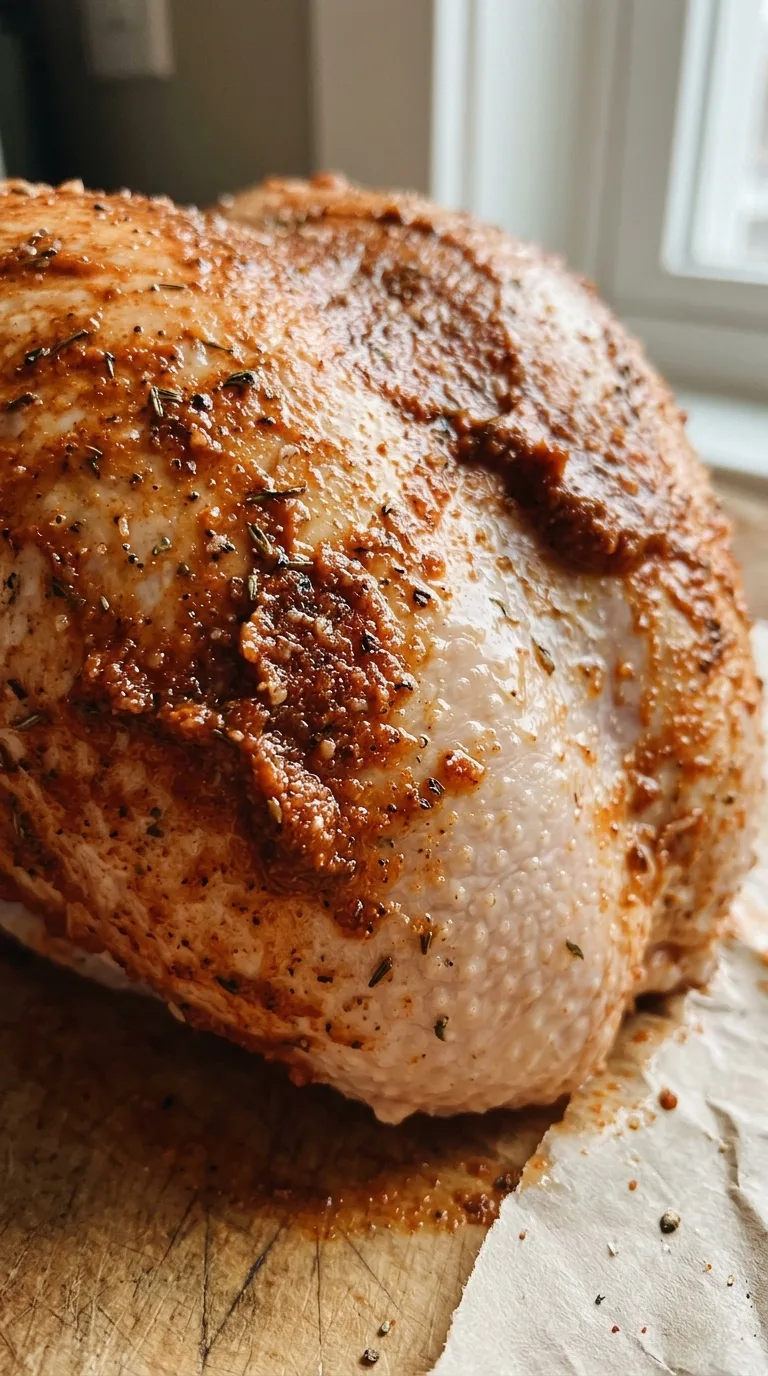
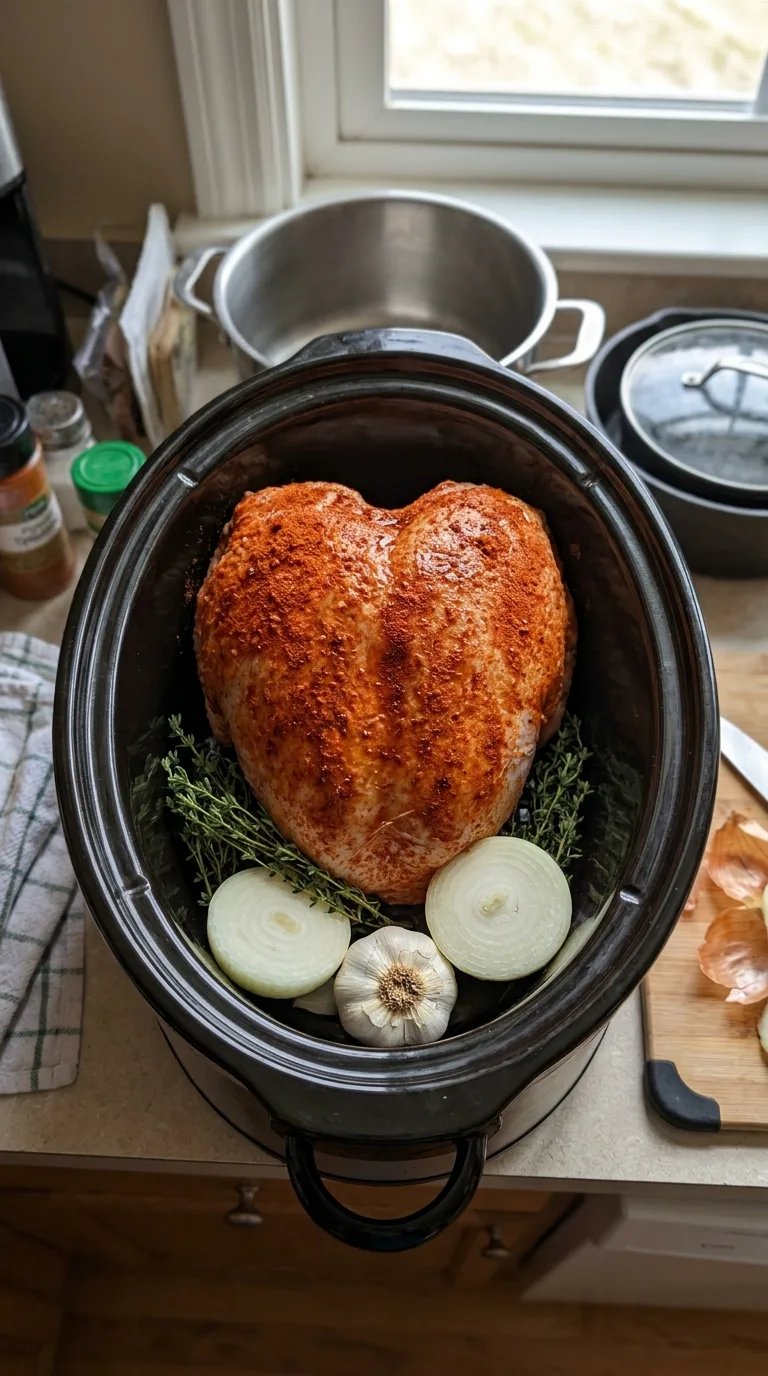
Combine the salt, pepper, garlic powder, onion powder, paprika and olive oil in a small bowl. Mix until it forms a thick paste. Rub this paste over the entire breast, including the inside.
-
Set the cooker
Place the halved onion, whole garlic head and thyme sprigs at the bottom of the slow cooker. Lay the turkey on top with the skin-side up. These aromatics create a savoury bed that flavours the meat from below.
-
Slow cook the turkey
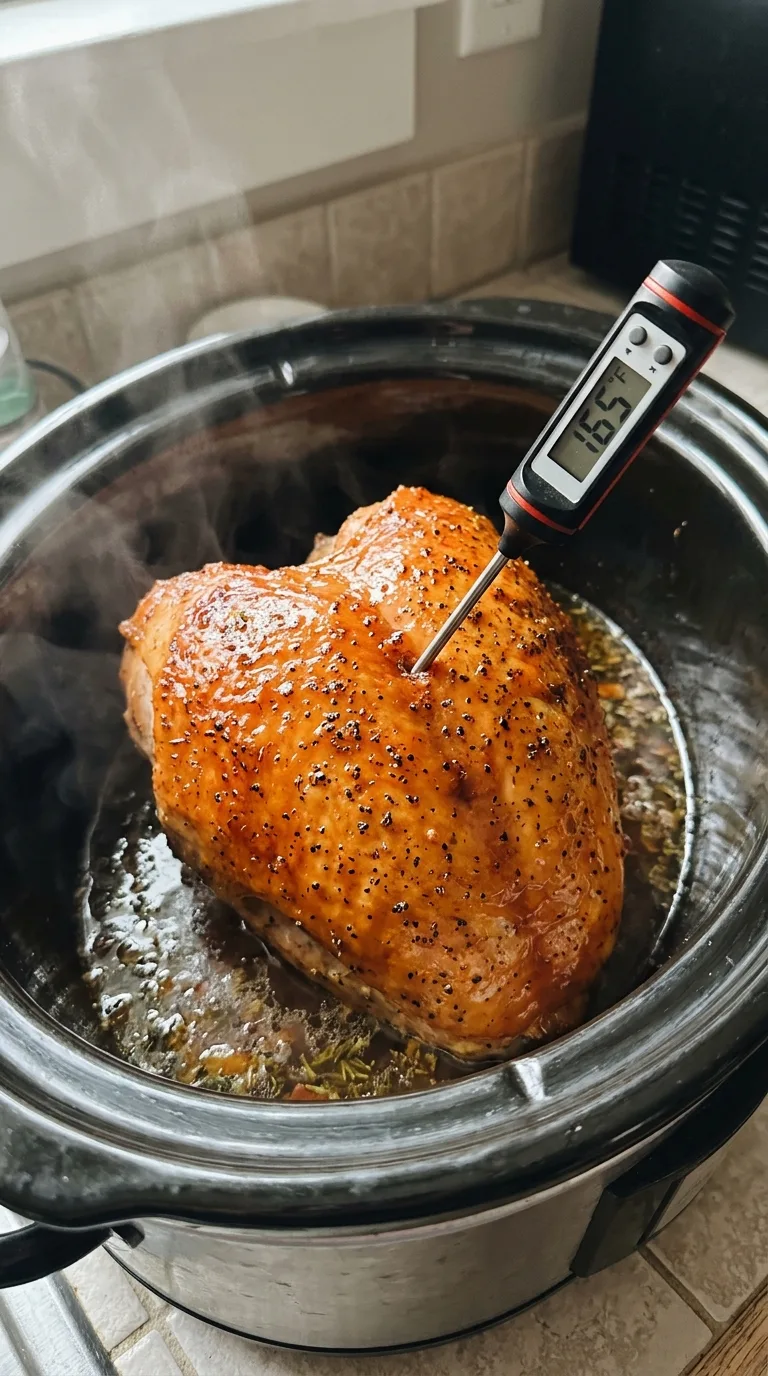
Pour 250 ml broth around the meat, taking care not to pour it over the rub. Close the lid and set to low. Cook for 5 hours until the thickest part reaches 74°C (165°F).
-
Rest the meat
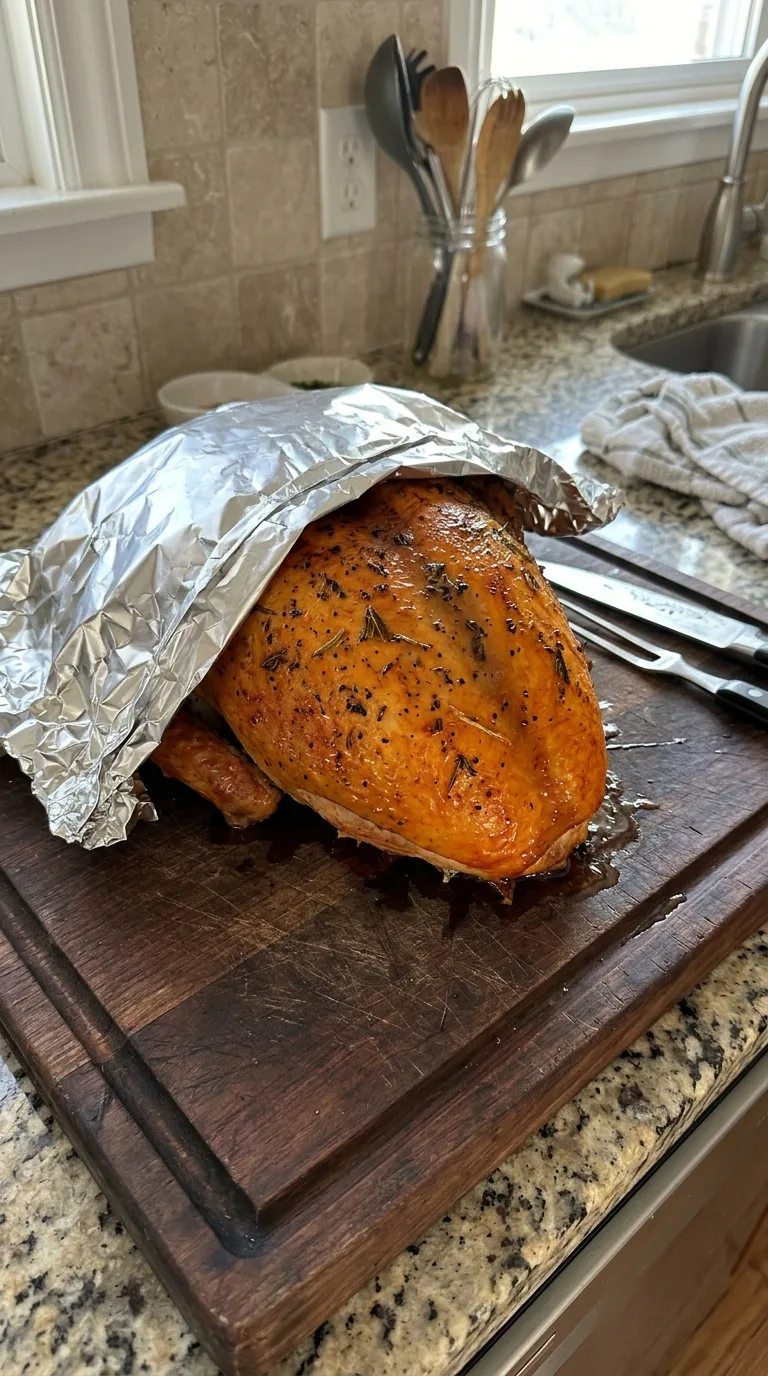
Transfer the turkey to a cutting board and cover loosely with foil. Let it rest for 15 minutes. This allows the juices to redistribute so the meat stays moist when sliced.
-
Whisk the gravy
Melt 56 g butter in a saucepan over medium heat and whisk in 30 g flour for 1 minute. Gradually stir in 200 ml of the cooking liquid until smooth. Season with salt and pepper before pouring over the meat.
Check the internal temperature only in the thickest part of the breast. Avoid the bone, as it conducts heat differently and will give you a false reading. If the temperature rises too quickly, you risk over-cooking and drying out the meat.
What to serve with it
Pair the turkey with creamy mashed sweet potatoes and lightly sautéed green beans. Add a spoonful of cranberry sauce or a drizzle of honey-barbecue reduction to complement the savoury profile. Plate the meat at room temperature to let the juices redistribute, then garnish with fresh thyme or lemon zest for a bright finish.
Storing and reheating
Store leftovers in the fridge for up to 4 days. Do not leave cooked turkey uncovered for more than 2 hours to prevent bacterial growth. For longer storage, wrap the meat tightly in plastic and freeze for up to 3 months. Thaw it in the refrigerator overnight before reheating.
Getting the texture right
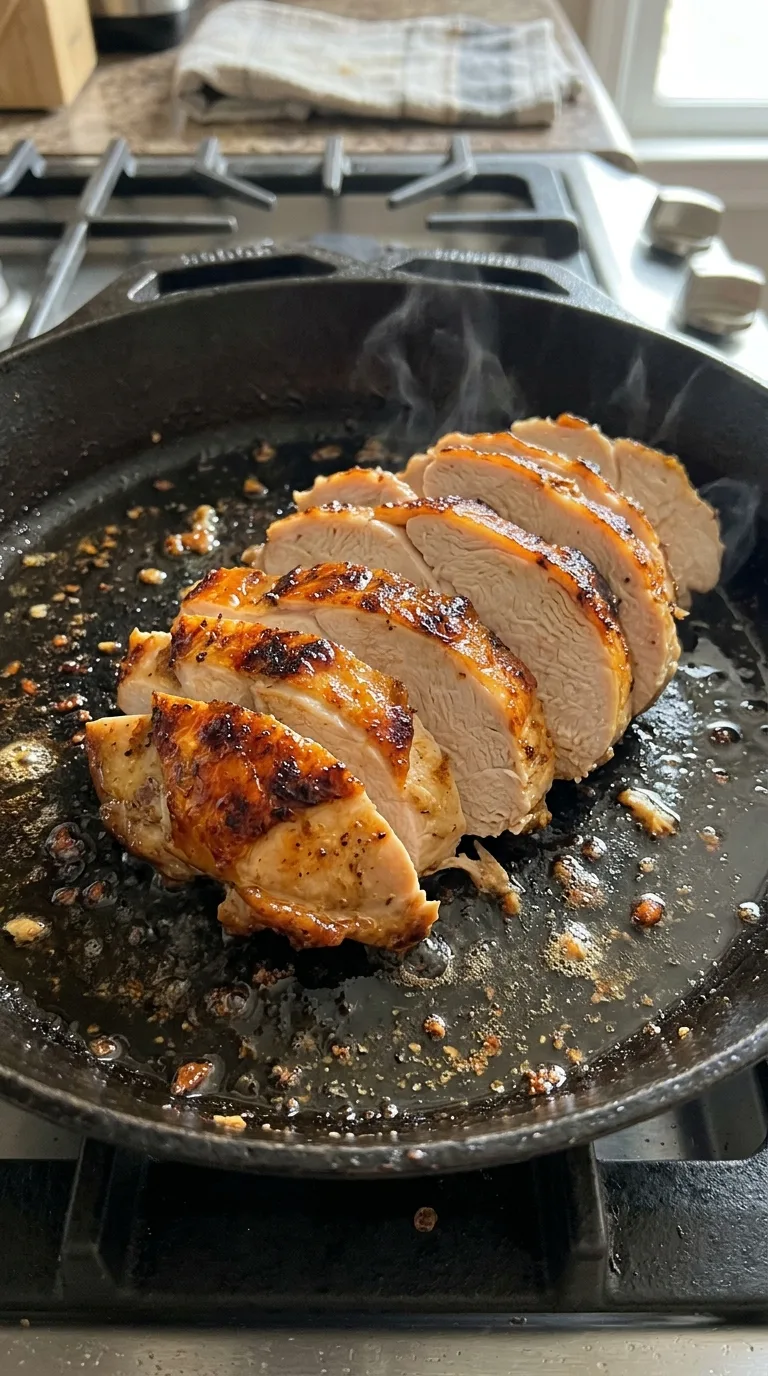
Use an instant-read meat thermometer in the thickest part of the breast to ensure it reaches 74°C (165°F). Let the meat rest for 15 minutes under foil so the juices settle. To achieve a golden colour, sear the sliced meat in a hot pan or under a broiler.
Choosing the cut
Use a 2000 g turkey breast, whether bone-in or boneless. Bone-in cuts often retain more moisture during the long cooking process. Ensure the meat sits at room temperature for 15 minutes before rubbing to ensure the heat penetrates the centre of the meat evenly and efficiently.
Nutrition per serving
- Calories
- 480
- Protein
- 42.5 g
- Carbs
- 6.2 g
- Fat
- 24.1 g
- Fiber
- 0.8 g
- Sugar
- 2.1 g
Estimated, and offered as a guide rather than a medical figure.
Made it? Rate it.
Questions people ask
Is turkey breast good in the slow cooker?
Yes. The low, moist heat of the slow cooker prevents the lean breast meat from drying out. This method ensures the turkey stays tender and juicy while allowing the herbed rub to penetrate the meat deeply.
How much liquid do I need for crockpot turkey breast?
Use 250 ml of chicken or turkey broth. Pour it around the meat rather than over it. This creates a steaming environment that cooks the turkey without washing away the savoury rub from the skin.
Is it better to cook a turkey breast in the crockpot on high or low?
Use the low setting for 5 hours. Cooking on low breaks down the connective tissues more gently, which results in a more tender texture and prevents the meat from becoming tough or rubbery.

About the author
Mary C. Rivero
Mary C. Rivero specializes in comforting home‑cooked meals, from hearty pastas and sheet‑pan dinners to quick weeknight snacks. Her recipes feature clear, step‑by‑step directions and practical tips, helping readers create flavorful dishes with confidence and ease.