Turkey Broth: Rich Halal Stock
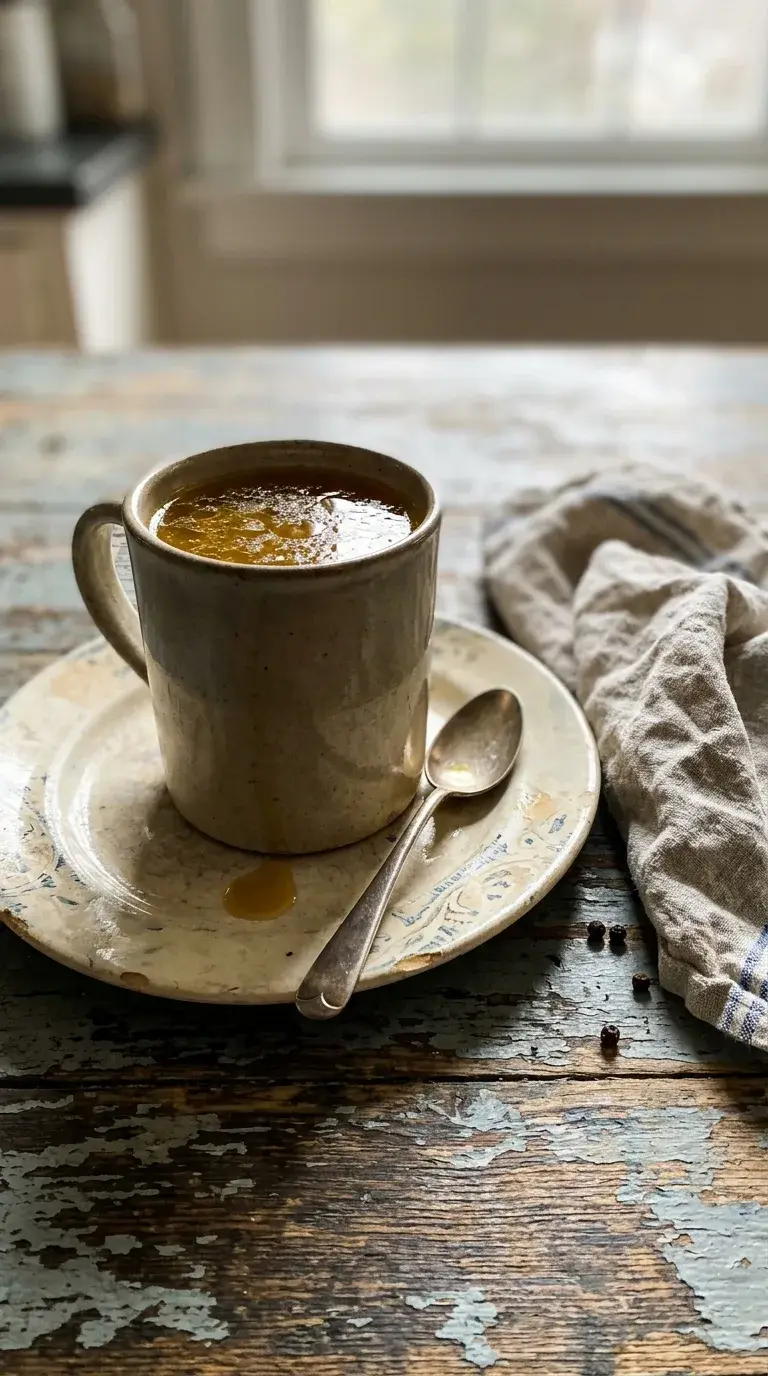
Traditional stocks require constant monitoring on a stovetop to maintain a gentle simmer. This slow cooker turkey broth replaces active tending with a steady, low heat for 10 hours. You use a slow cooker to keep the temperature stable without lifting the lid. This method ensures the liquid does not boil rapidly, which prevents the broth from becoming cloudy while it extracts minerals from the bones.
The result is a savoury liquid that sets into a gelled consistency after 1 hour in the refrigerator. You achieve this by cooking the carcass until it reaches 95°C, which confirms that the collagen has released. Add 5 ml of apple cider vinegar at the start. The acid helps draw gelatin and minerals from the turkey bones to produce a richer, more nutritious stock. Break the carcass into bite-sized pieces to maximise the surface area for better flavour extraction.
Turkey Broth: Rich Halal Stock
Recipe cardIngredients
Instructions
-
Prepare the carcass
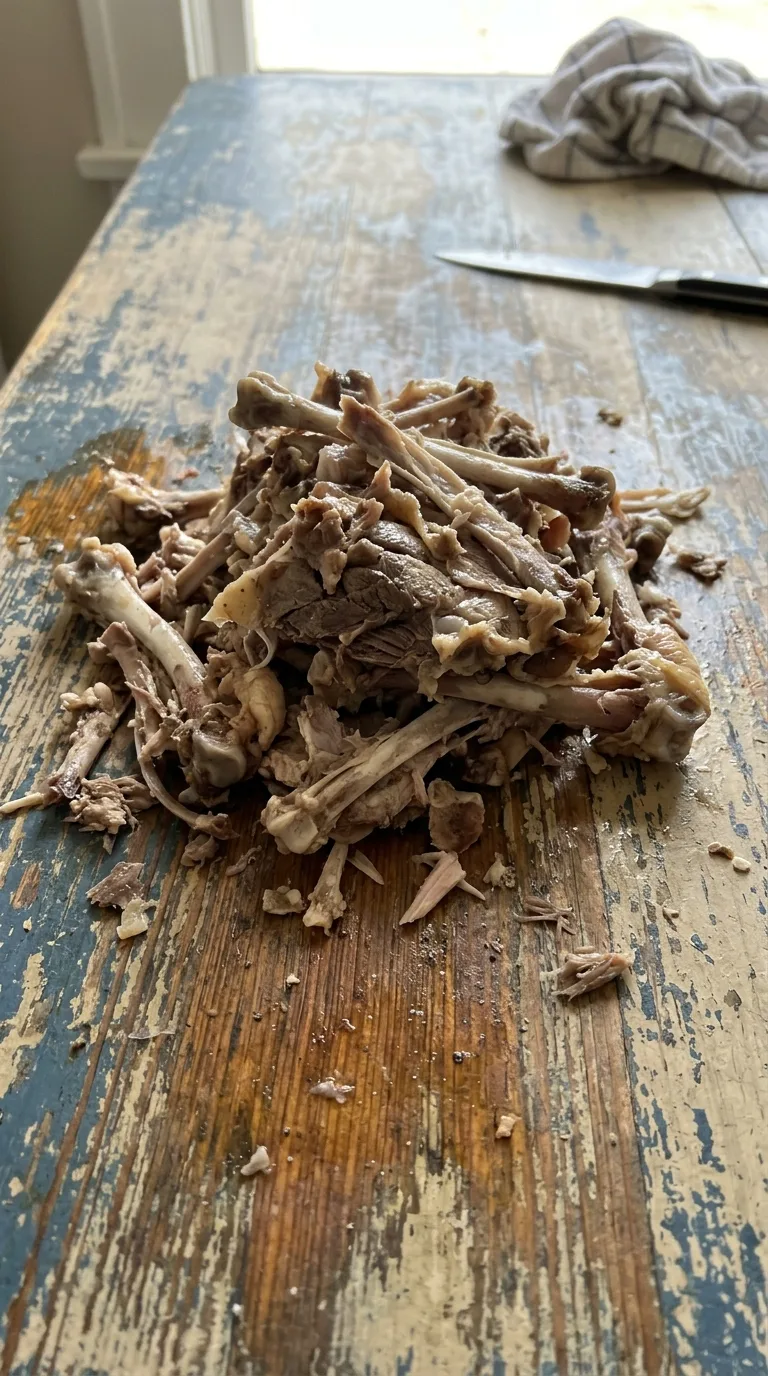
Break your leftover turkey carcass into bite-sized pieces. You must ensure every bone and morsel has maximum surface area. This allows the broth to release flavour faster.
-
Prep the vegetables
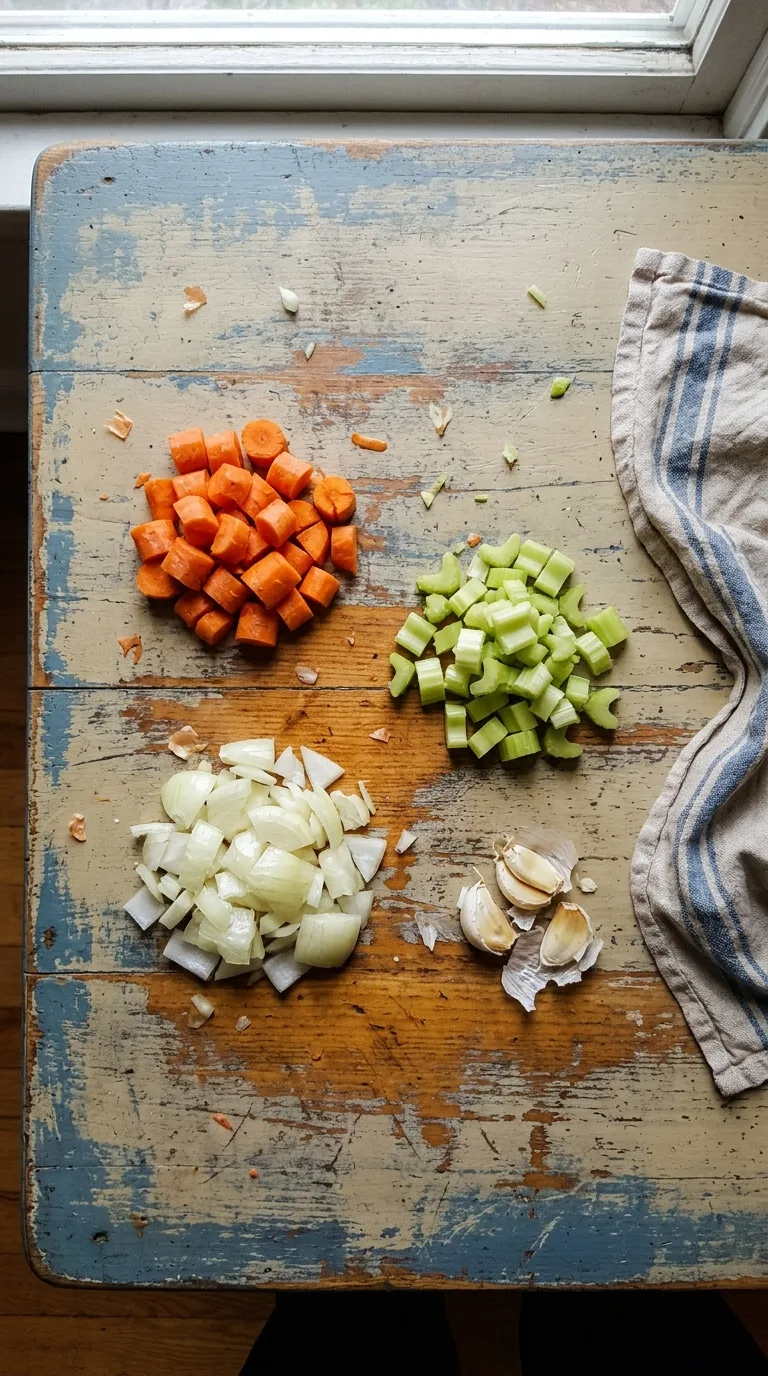
Dice the carrots, celery, and onion into roughly 2 cm chunks. Lightly smash the garlic cloves. These uniform sizes ensure the vegetables infuse the liquid evenly.
-
Combine the ingredients
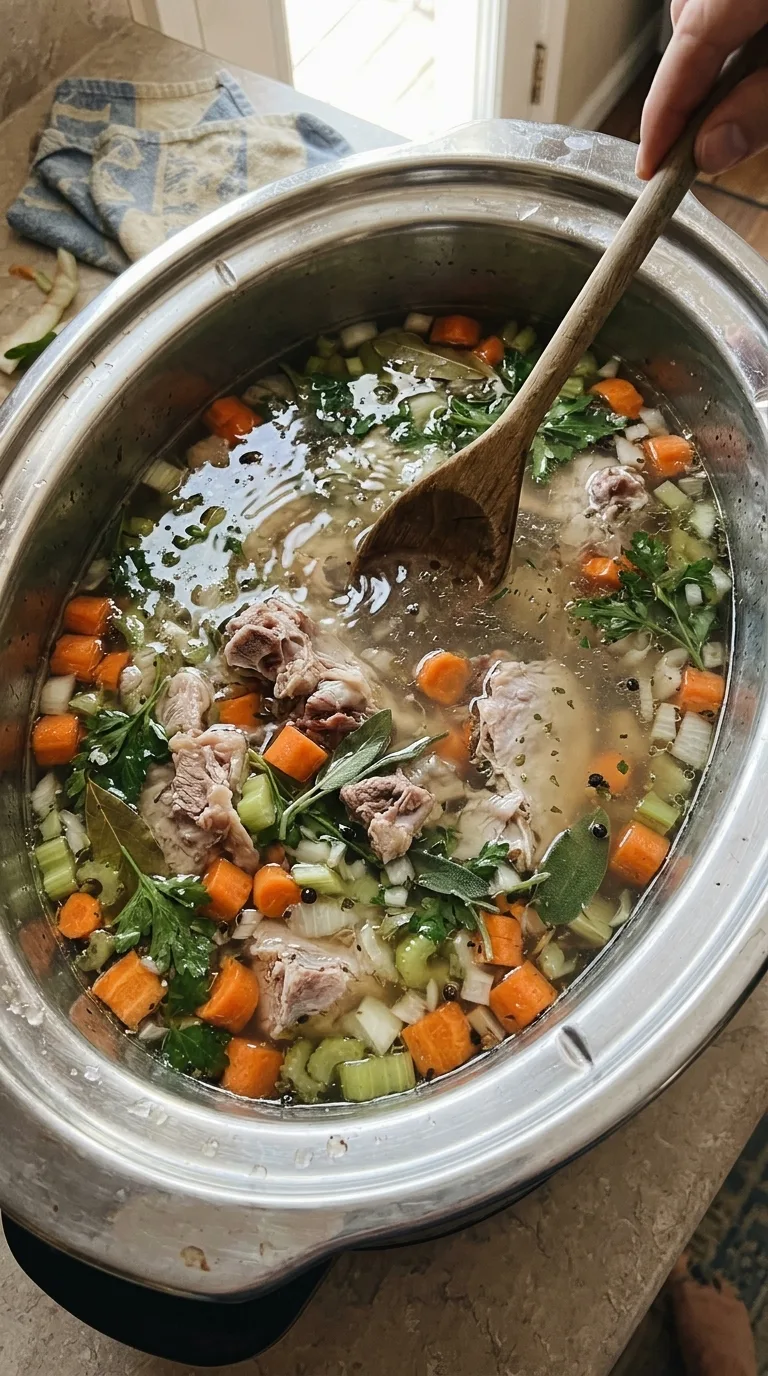
Place the turkey carcass, vegetables, parsley, sage, bay leaf, and peppercorns into the slow cooker. Pour in 4 l of filtered water and 5 ml of apple cider vinegar. Stir gently to combine.
-
Slow cook the broth
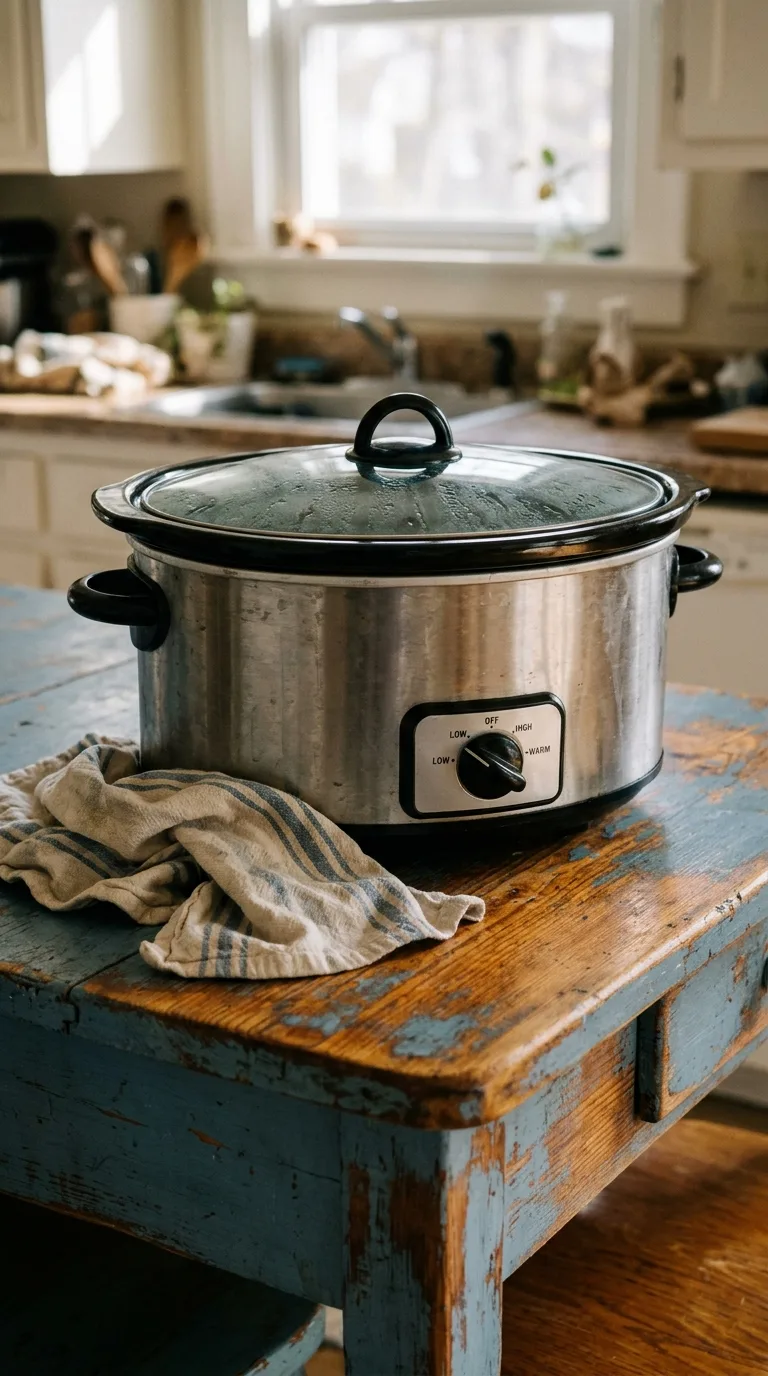
Close the lid and set the slow cooker to LOW (190°C). Cook for 10 hours. Do not lift the lid so that you keep the internal temperature stable.
-
Verify the collagen
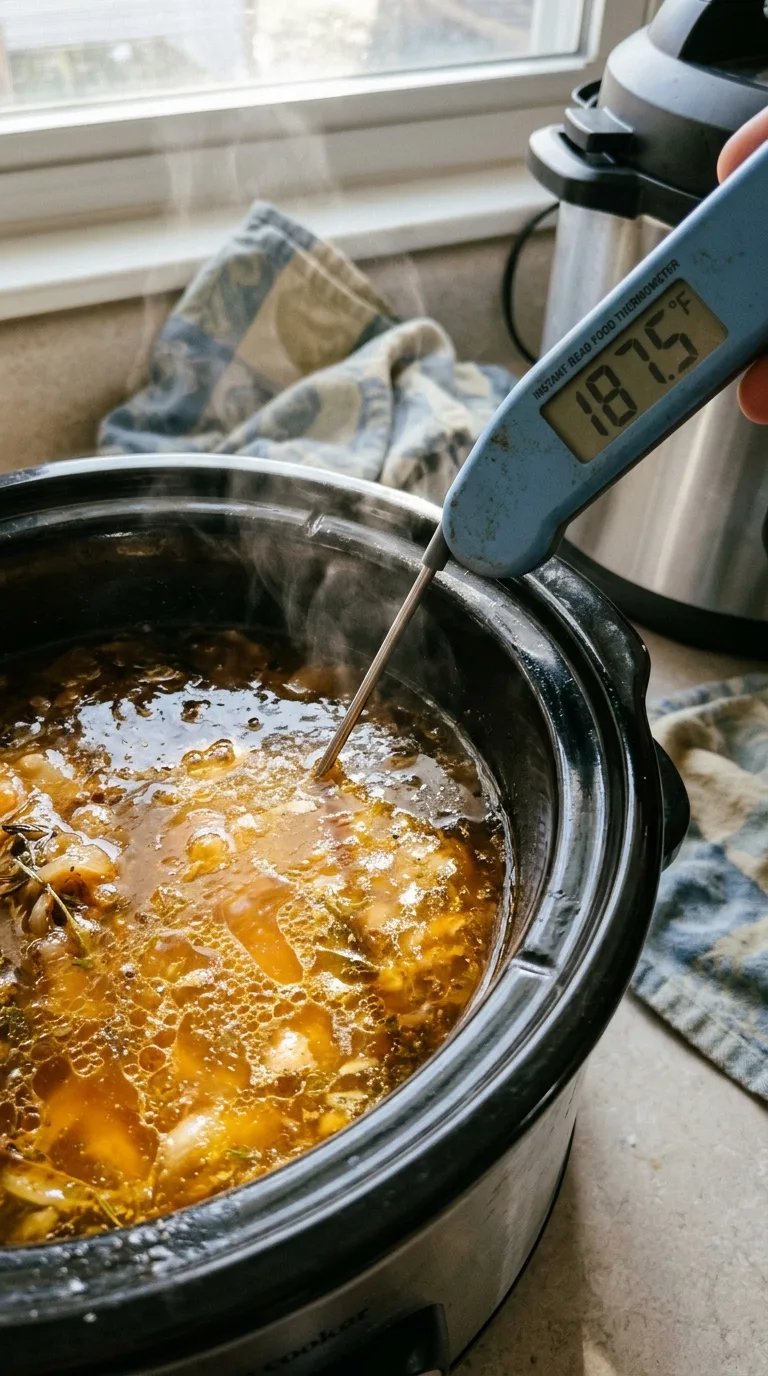
Use a thermometer after 8 to 9 hours to confirm the internal temperature has reached 95°C. This specific temperature confirms the collagen has released from the bones. Leave it to finish the full 10 hours.
-
Cool and strain
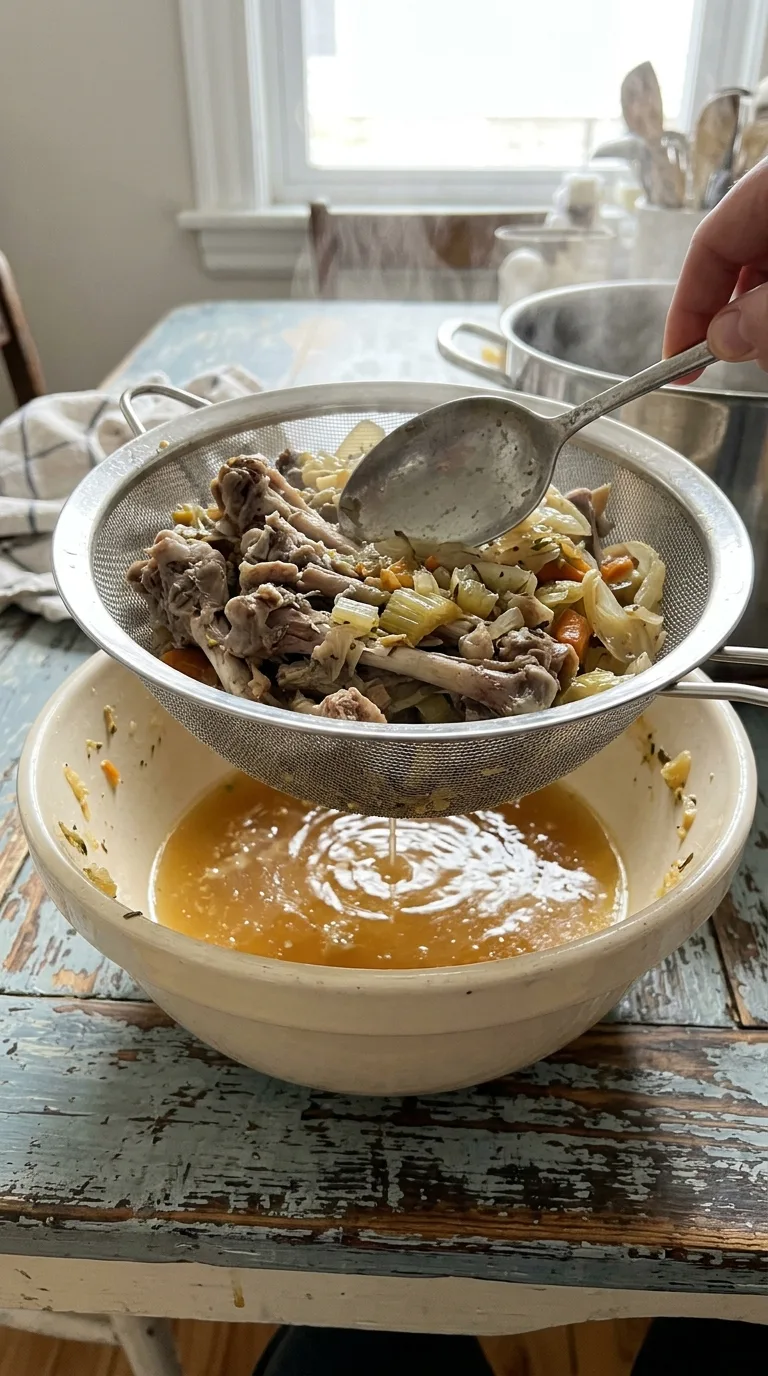
Turn off the cooker and let the broth sit uncovered for 10 minutes. Strain the liquid through a fine-mesh strainer into a large bowl. Press the solids with a spoon to extract all remaining flavour.
-
Clarify the liquid
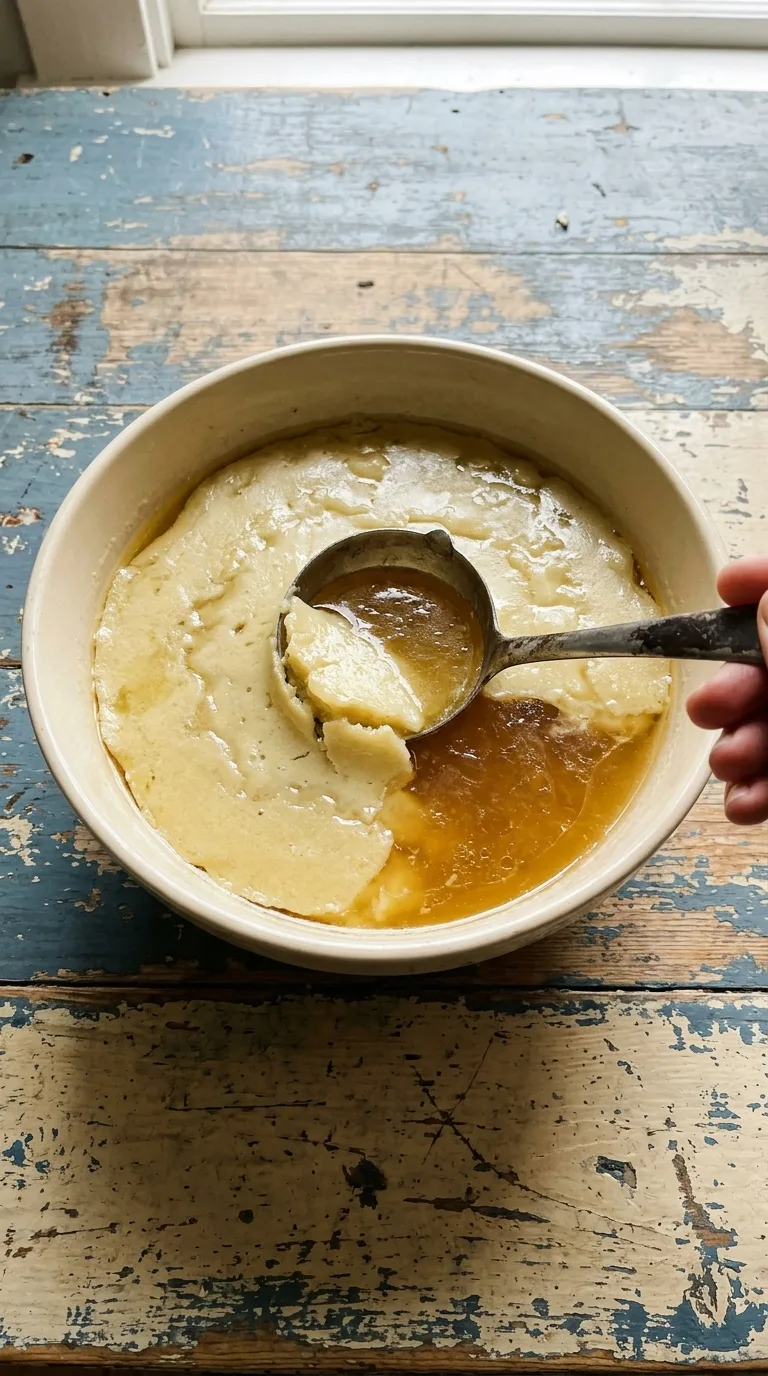
Let the strained broth cool to room temperature. You will see a thick layer of fat rise to the surface. Skim this off with a ladle or spoon to clarify the broth.
-
Store the broth
Transfer the broth to airtight containers and refrigerate. After 1 hour, the liquid will set into a gelled consistency. You can store the broth in the freezer for up to 3 months.
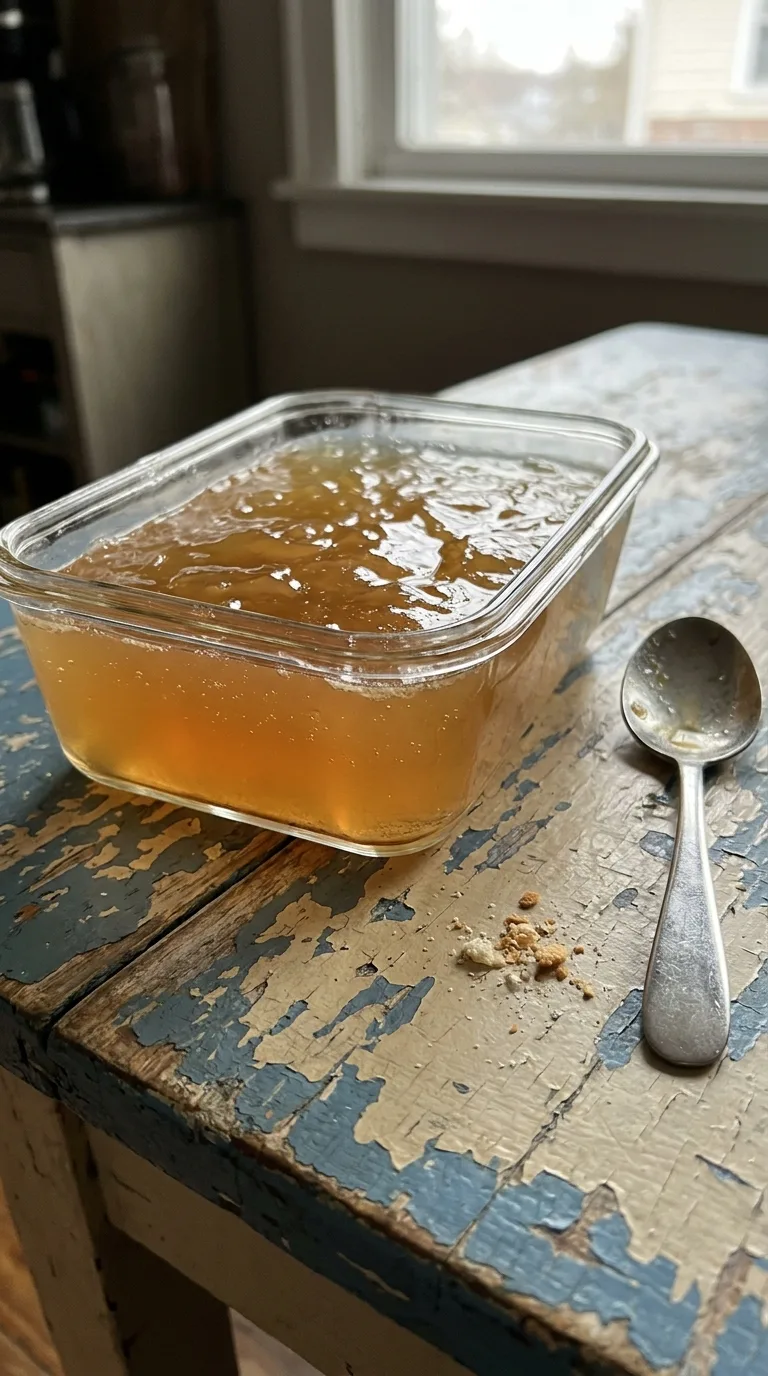
If your broth remains a thin liquid after cooling in the fridge, you likely did not reach 95°C during the cook. This indicates the collagen has not fully broken down. Ensure your slow cooker maintains a steady heat to achieve the correct gelled consistency.
How it differs from the traditional method
Using a slow cooker maintains a stable, low temperature for 10 hours, which efficiently extracts collagen without boiling the broth. Stovetop methods are faster but require constant monitoring to prevent evaporation. A slow cooker produces a more consistent gelled consistency, though roasting bones first adds a deeper amber colour.
Storing and reheating
Refrigerate the broth within 2 hours of cooking. Store it in a sealed container in the fridge for 2 to 4 days. For longer storage, freeze the broth for up to 3 months. Thaw it in the refrigerator overnight and reheat it to 74°C (165°F) before using.
Nutrition per serving
- Calories
- 45
- Protein
- 6.2 g
- Carbs
- 2.1 g
- Fat
- 1.5 g
- Fiber
- 0.4 g
- Sugar
- 0.8 g
Estimated, and offered as a guide rather than a medical figure.
Made it? Rate it.
Questions people ask
Can I use a different vinegar if I do not have apple cider vinegar?
Yes. Use white vinegar or lemon juice. The acid is necessary to draw minerals and gelatin from the turkey bones, which ensures the broth becomes rich and develops a gelled texture when cooled.
Why did my broth not turn into a gel in the fridge?
This usually happens if the bones were not cooked long enough or lacked enough collagen. Ensure the internal temperature reaches 95°C to confirm the collagen has released into the liquid.
Can I add salt at the beginning of the cooking process?
No. Add salt at the end to taste. Adding salt too early can make the final broth overly salty as the liquid reduces and concentrates over the 10 hour cook time.

About the author
Mary C. Rivero
Mary C. Rivero specializes in comforting home‑cooked meals, from hearty pastas and sheet‑pan dinners to quick weeknight snacks. Her recipes feature clear, step‑by‑step directions and practical tips, helping readers create flavorful dishes with confidence and ease.