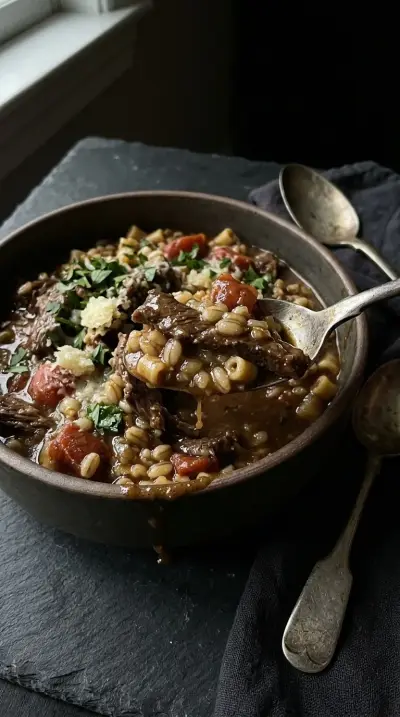
Beef Barley Risotto: Hearty Italian Grain Bowl
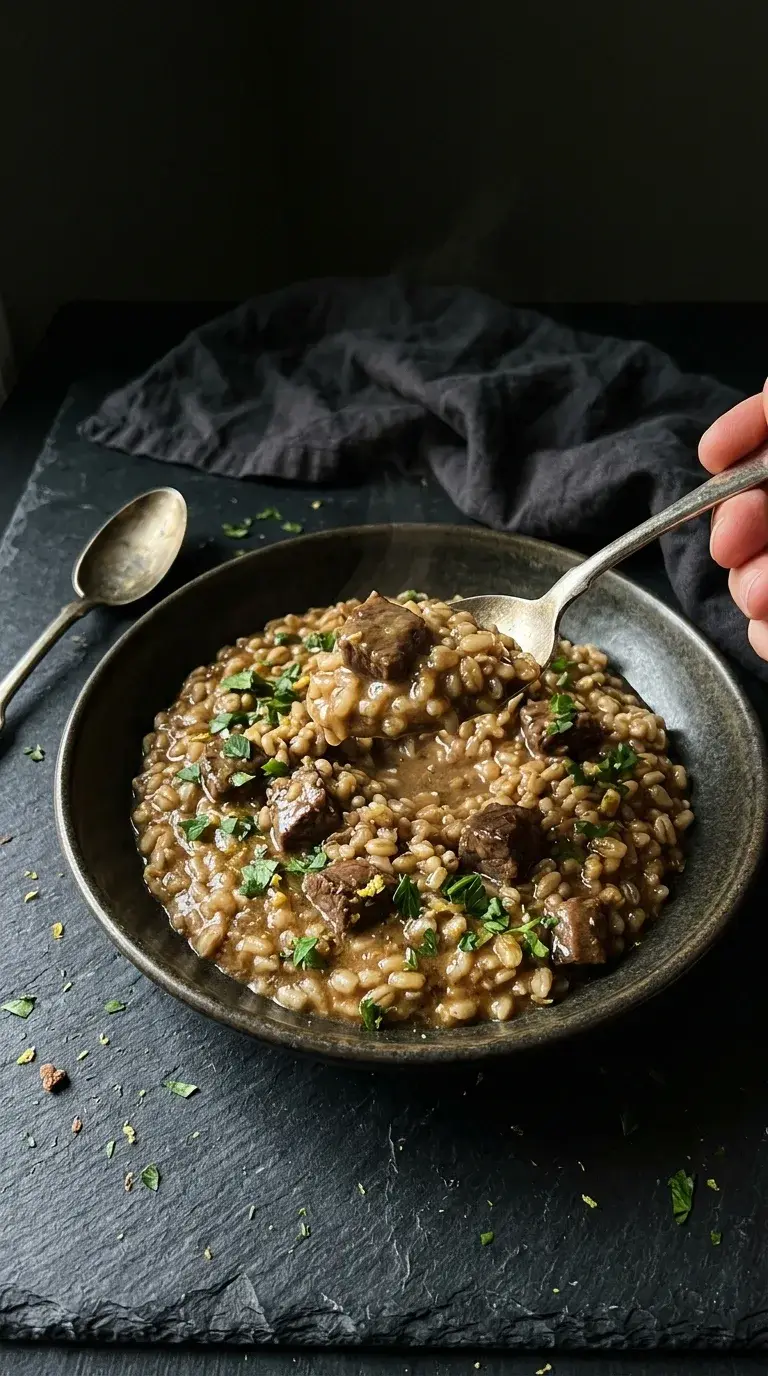
This beef barley risotto relies on the starch of the pearl barley to create a thick, creamy texture. Toast the grains in olive oil before adding liquid to develop a nutty flavour. Add the beef stock one ladle at a time and stir at a steady rhythm. This ensures the grains release their starch without becoming mushy. Finish the dish with butter and Parmesan to bind the ingredients into a cohesive, savoury meal.
Beef Barley Risotto: Hearty Italian Grain Bowl
Recipe cardIngredients
Instructions
-
Warm the stock
Heat the beef stock in a small saucepan over low heat until it is just simmering. Keep it at this gentle simmer throughout the recipe. Warm liquid prevents the barley temperature from dropping when you add it, ensuring an even cook.

-
Toast the barley
Heat 1 tablespoon of olive oil in a large Dutch oven over medium heat. Add the pearl barley and stir frequently for 2–3 minutes. Toast until the grains turn a pale golden colour and release a nutty aroma to deepen the final flavour.

-
Soften the aromatics
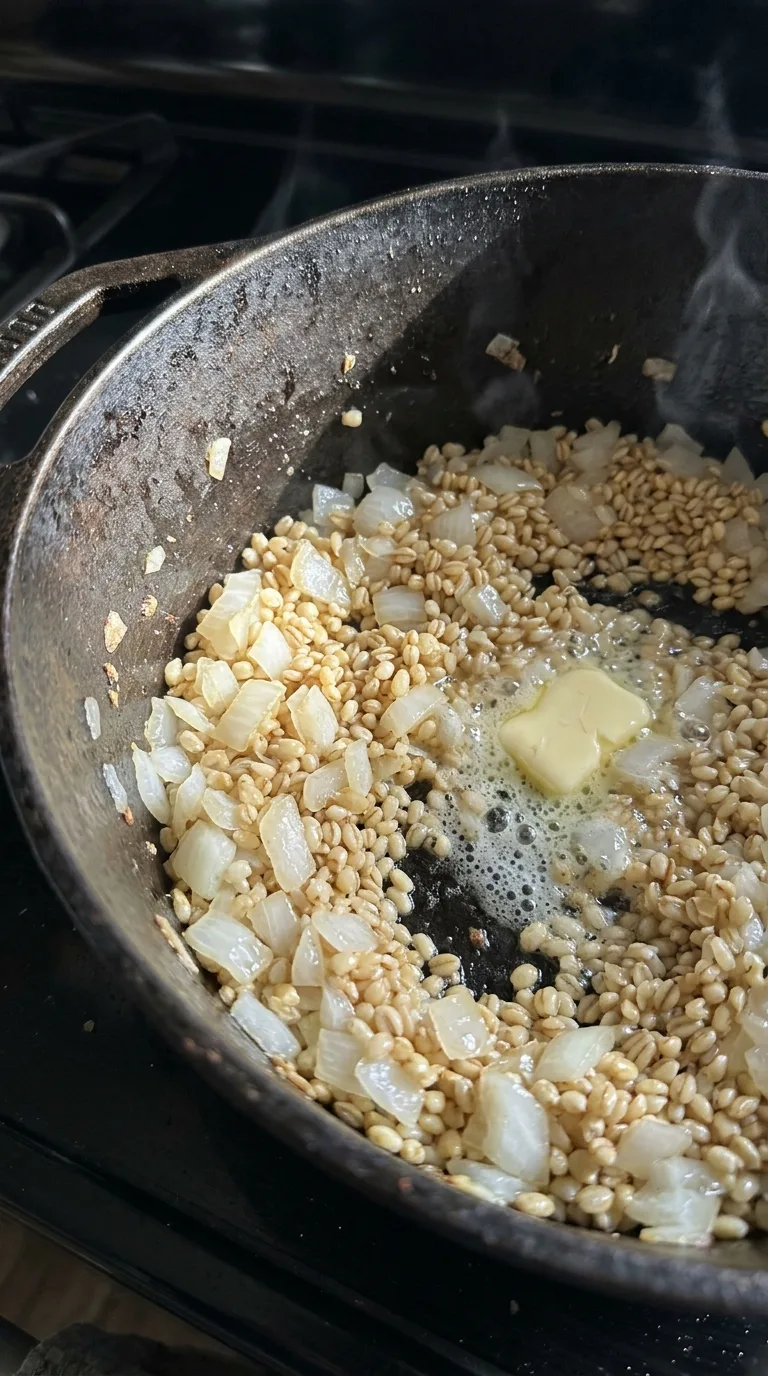
Stir in 1 tablespoon of butter and the chopped onion. Cook for 3–4 minutes until the onion is translucent and soft. Do not let the onion brown, as this changes the delicate savoury profile of the dish.
-
Infuse the oil
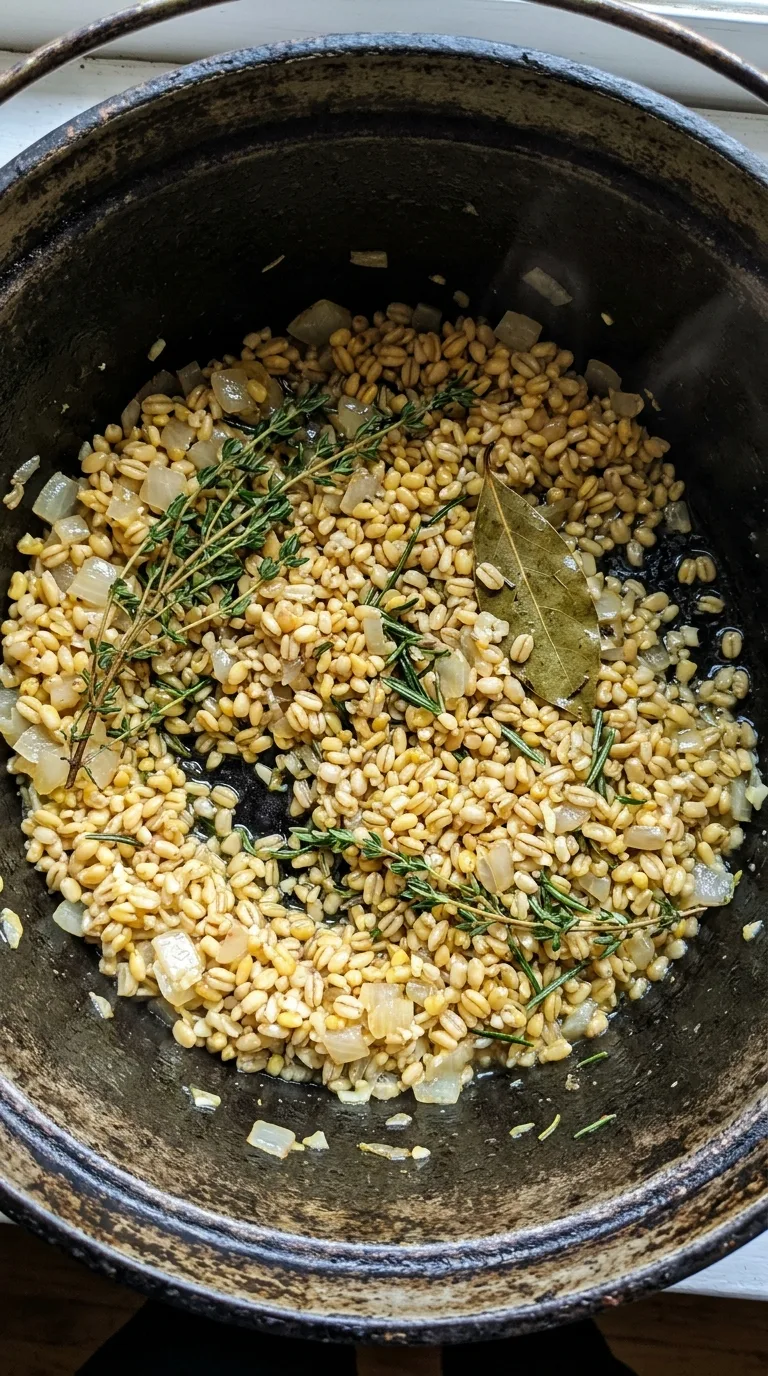
Stir in the minced garlic, thyme, rosemary, and the bay leaf. Cook for 1 minute. This allows the herbs to perfume the oil and onion mixture before the other ingredients are added.
-
Sear the beef
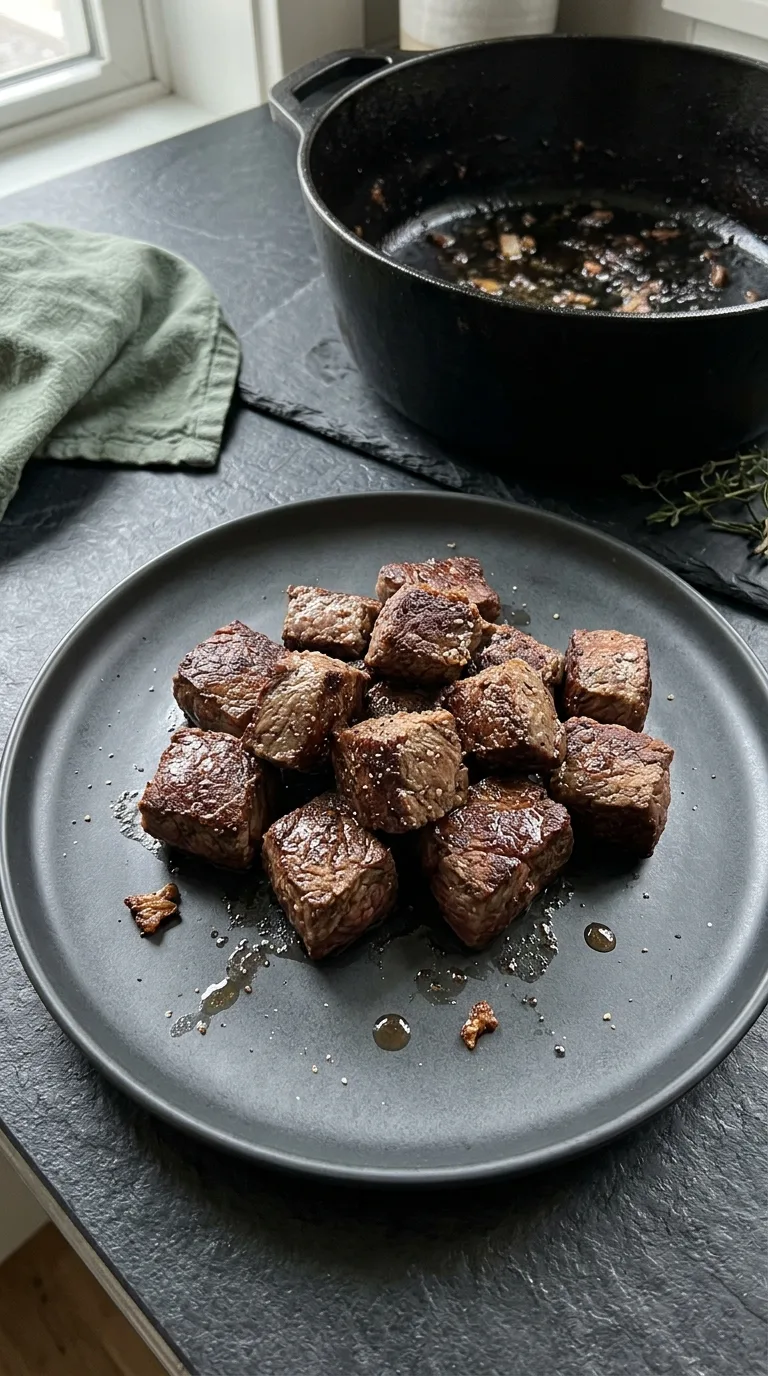
Add the beef cubes and brown them on all sides for 2–3 minutes per side. Seek a deep brown surface, but do not burn the meat. Transfer the beef to a plate, leaving the juices in the pot to flavour the grains.
-
Deglaze and thicken
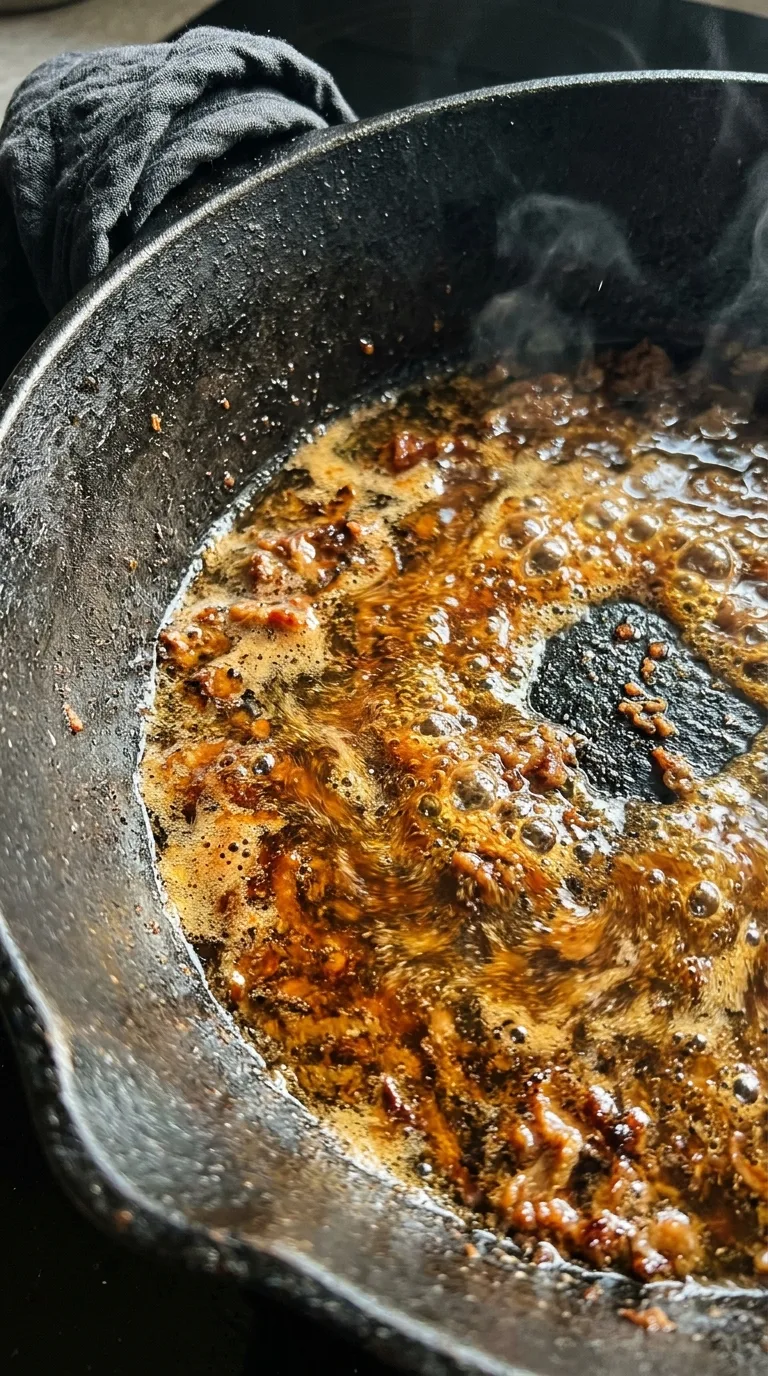
Pour in the apple juice and scrape the bottom of the pan to loosen the browned bits. Reduce the liquid for 1–2 minutes. This step incorporates the caramelised proteins back into the sauce for a richer taste.
-
Simmer the barley
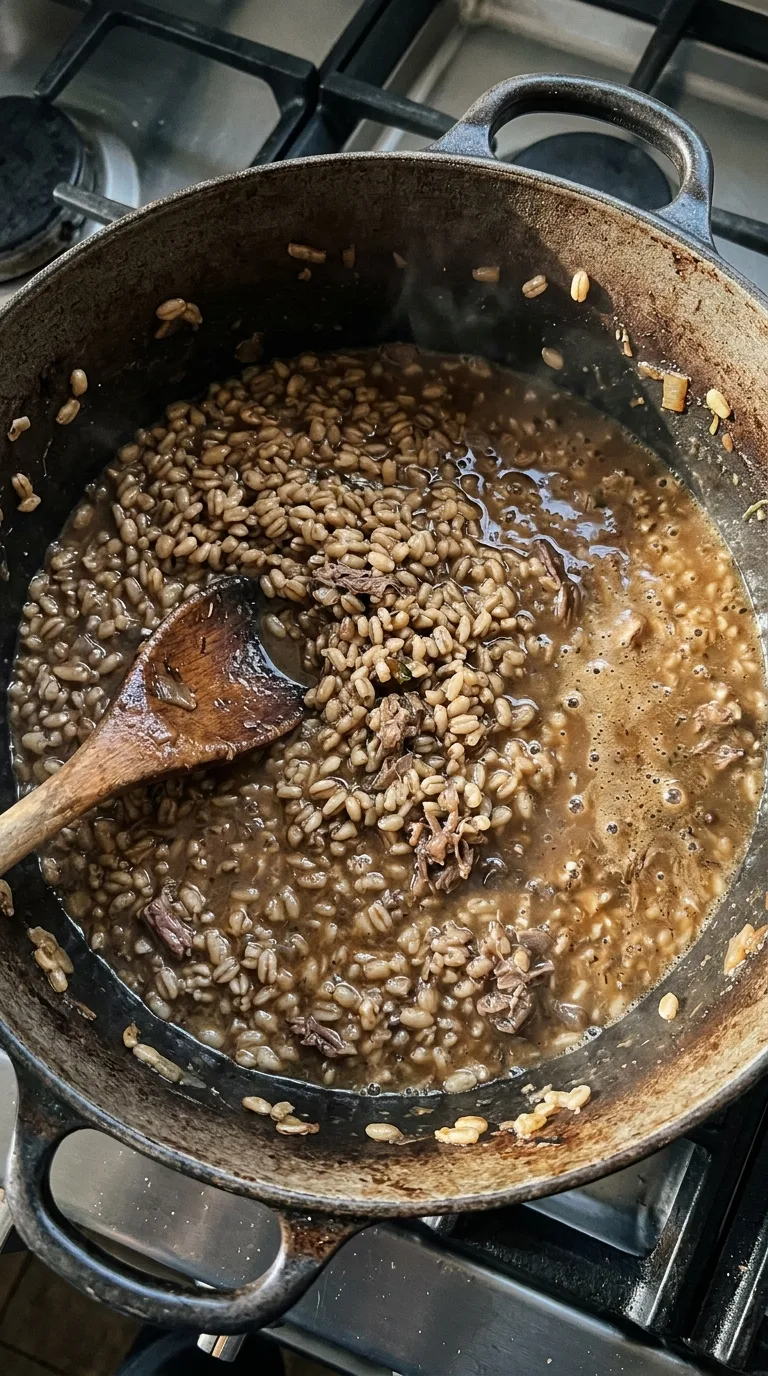
Add the warm beef stock one ladle (approx. 125 ml) at a time, stirring constantly. Wait until the liquid is nearly absorbed before adding the next ladle. Continue for 12–14 ladles until the barley is tender and the consistency is creamy like a soup.
-
Finish and season
Stir the seared beef back into the pot with the remaining butter and Parmesan. Remove the bay leaf. Add salt and black pepper last to avoid over-salting as the liquid reduces.
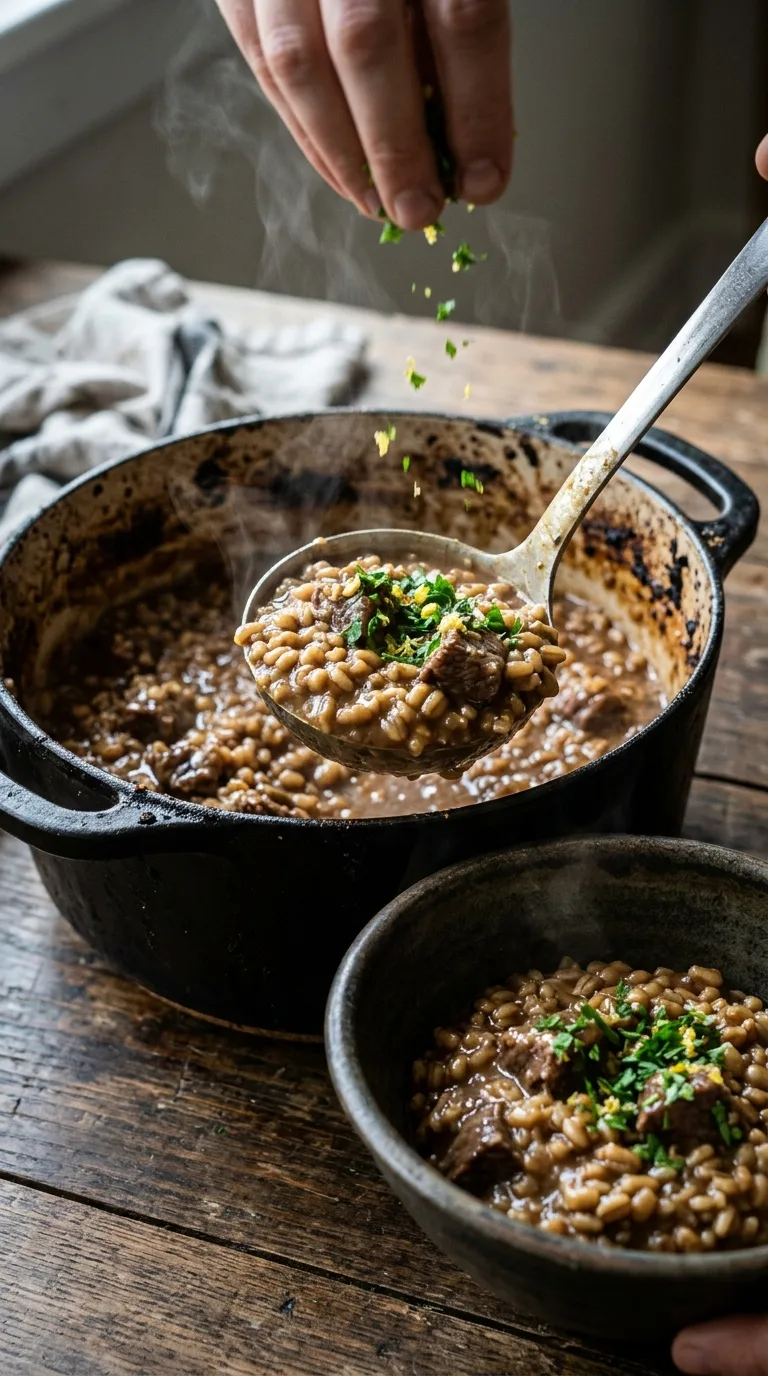
Stir the barley at a steady rhythm of about two seconds per stir. If you stir too aggressively or too infrequently, the grains may become mushy rather than creamy. Maintain the stock at a gentle simmer to prevent the beef from toughening and the barley from over-cooking.
What to serve with it
Serve this dish beside a crusty whole-grain baguette or toasted sourdough to capture the rich sauce. Accompany the meal with lightly sautéed green beans or a fresh mixed salad tossed in olive oil and lemon vinaigrette to provide a bright contrast to the savoury beef and barley.
Storing and reheating
Store leftovers in an airtight container in the refrigerator for up to three days. For longer storage, freeze the risotto for up to three weeks. Thaw overnight in the fridge and reheat gently over low heat, adding a splash of beef stock to loosen the consistency if necessary.
Getting the texture right
Stir the grains at a steady rhythm of about two seconds per stir. This allows the barley to release starch without becoming mushy. Rest the finished risotto for 2 minutes before plating to help the flavours marry and the texture firm up slightly for a better mouthfeel.
Choosing the cut
Use beef fillets cut into 2 cm cubes to ensure the meat remains tender during the browning process. Brown the cubes on all sides for 2 to 3 minutes until deep brown. This creates a savoury crust that adds depth to the final dish through the pan juices.
Nutrition per serving
- Calories
- 480
- Protein
- 24.5 g
- Carbs
- 42.0 g
- Fat
- 21.0 g
- Fiber
- 8.5 g
- Sugar
- 6.0 g
Estimated, and offered as a guide rather than a medical figure.
Made it? Rate it.
Questions people ask
Can you use barley for risotto?
Yes. Pearl barley contains enough starch to create a creamy consistency similar to Arborio rice. It offers a nuttier flavour and a chewier texture that holds up well during the slow addition of stock.
Is barley risotto better than rice?
It depends on the desired texture. Barley provides more fibre and a heartier bite than traditional rice. It is a superior choice for those seeking a more filling, rustic meal with a distinct nutty profile.
What is forbidden risotto?
Forbidden risotto refers to a version made with black rice. It is not the same as this barley version, as black rice has a different nutrient profile and a much deeper, purple-black colour after cooking.

About the author
Mary C. Rivero
Mary C. Rivero specializes in comforting home‑cooked meals, from hearty pastas and sheet‑pan dinners to quick weeknight snacks. Her recipes feature clear, step‑by‑step directions and practical tips, helping readers create flavorful dishes with confidence and ease.