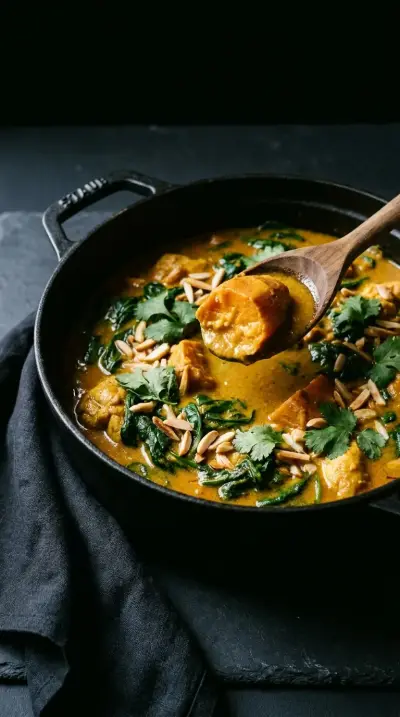
Chicken and Sweet Potato Yellow Curry: Indian Coconut Stew
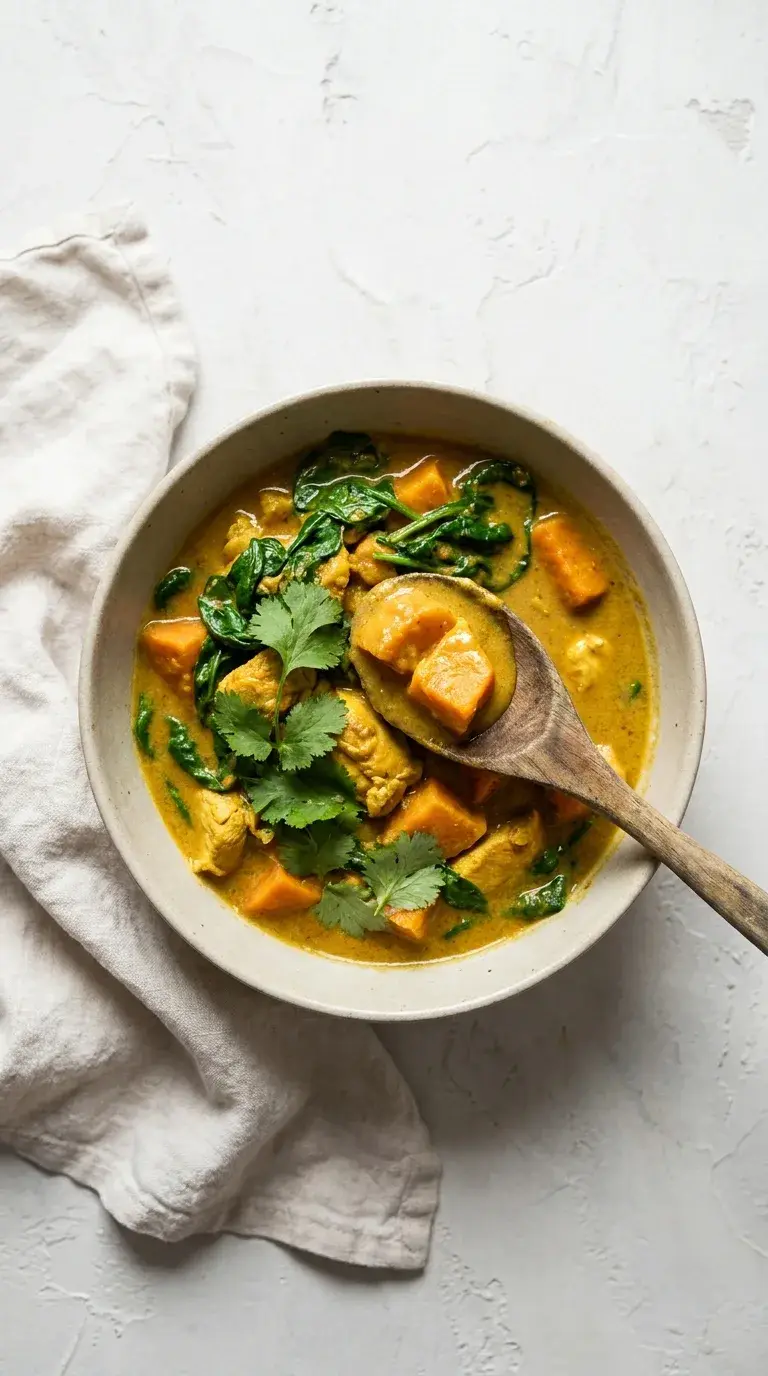
Indian curries often rely on slow-simmered bases to build depth. This chicken and sweet potato yellow curry adapts that approach for a faster home kitchen by using a concentrated yellow curry paste and a heavy-bottomed Dutch oven. Using coconut oil to sear the meat ensures an even brown colour and a rich base. This method saves time without sacrificing the complex profile of the aromatics.
You get a thick, golden sauce and tender vegetables. Sauté the spices for at least a minute to bloom them; this releases the oils and creates the necessary depth. Stir in 10 ml (2 teaspoons) of fresh lime juice at the end to cut through the richness of the coconut milk. Let the dish rest for 5 minutes before scooping to allow the flavours to settle.
Chicken and Sweet Potato Yellow Curry: Indian Coconut Stew
Recipe cardIngredients
Watch how it's made
Instructions
-
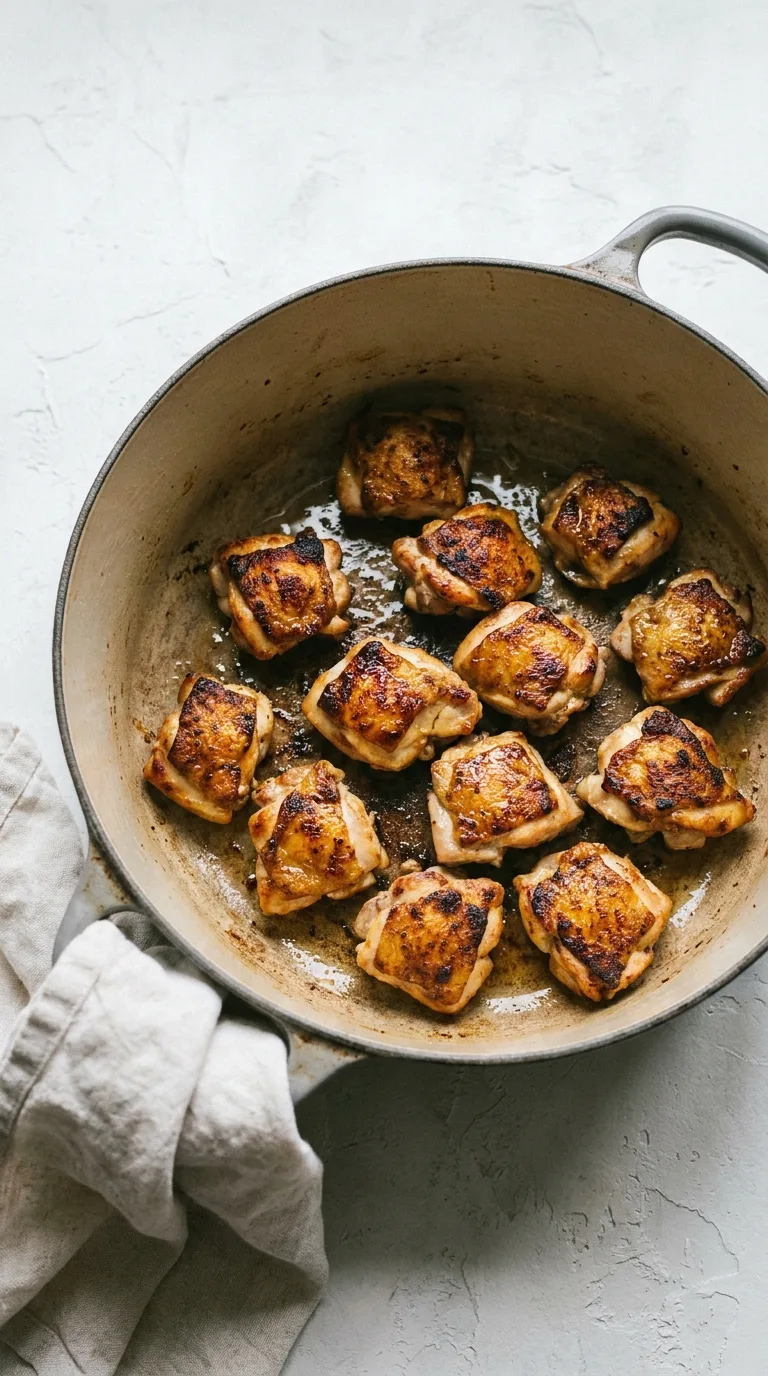
Sear the chicken
Season the chicken pieces with salt and pepper. Heat 15 ml (1 tbsp) coconut oil in a 2‑litre Dutch oven over medium heat. Sear the chicken for about 5 minutes until golden brown on all sides to lock in the moisture. Remove the chicken and set it aside.
-
Saute the vegetables
Add the sliced onion, minced garlic, carrot, and sweet potato cubes to the same pot. Saute for 2 minutes. Cook until the onions become translucent to ensure a soft base for the sauce.
-
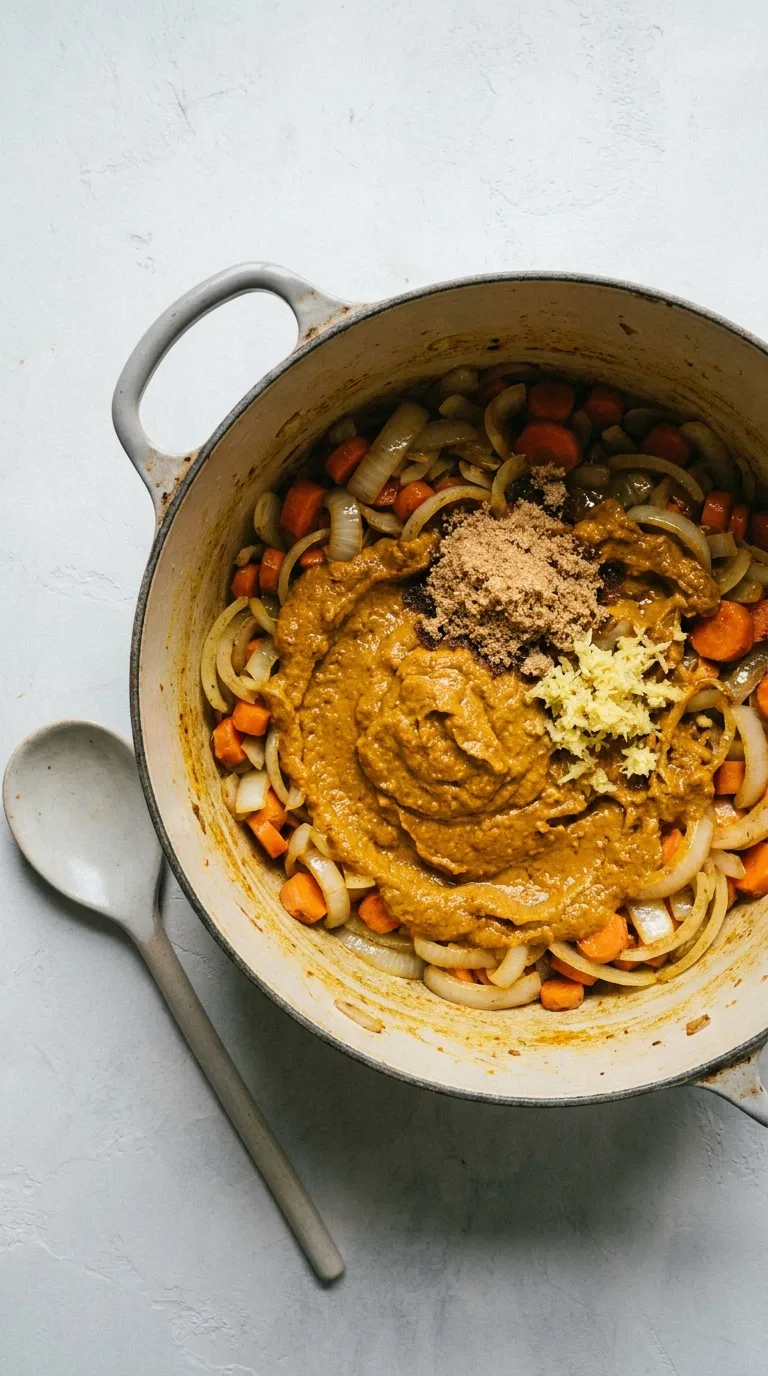
Bloom the spices
Stir in the yellow curry paste, brown sugar, ground ginger, and fish sauce. Cook for 1 minute while stirring constantly. This step allows the spices to bloom and deglazes the pan to incorporate all the browned bits.
-
Simmer the curry
Return the chicken to the pot. Pour in the coconut milk and vegetable broth. Bring the liquid to a gentle simmer, reduce heat to low, and cover for 20 minutes. This ensures the sweet potatoes are tender and the sauce has thickened.
-
Finish the sauce
Squeeze 10 ml (2 teaspoons) of fresh lime juice over the dish. Stir in the fresh spinach leaves for about 30 seconds until they wilt. Add salt and black pepper to taste at the end to maintain the correct balance.
-
Verify and serve
Check that the chicken’s internal temperature reaches at least 74°C (165°F) using a thermometer. Transfer the curry to a serving dish and garnish with coriander and scallion whites. Serve hot over basmati rice or with naan.
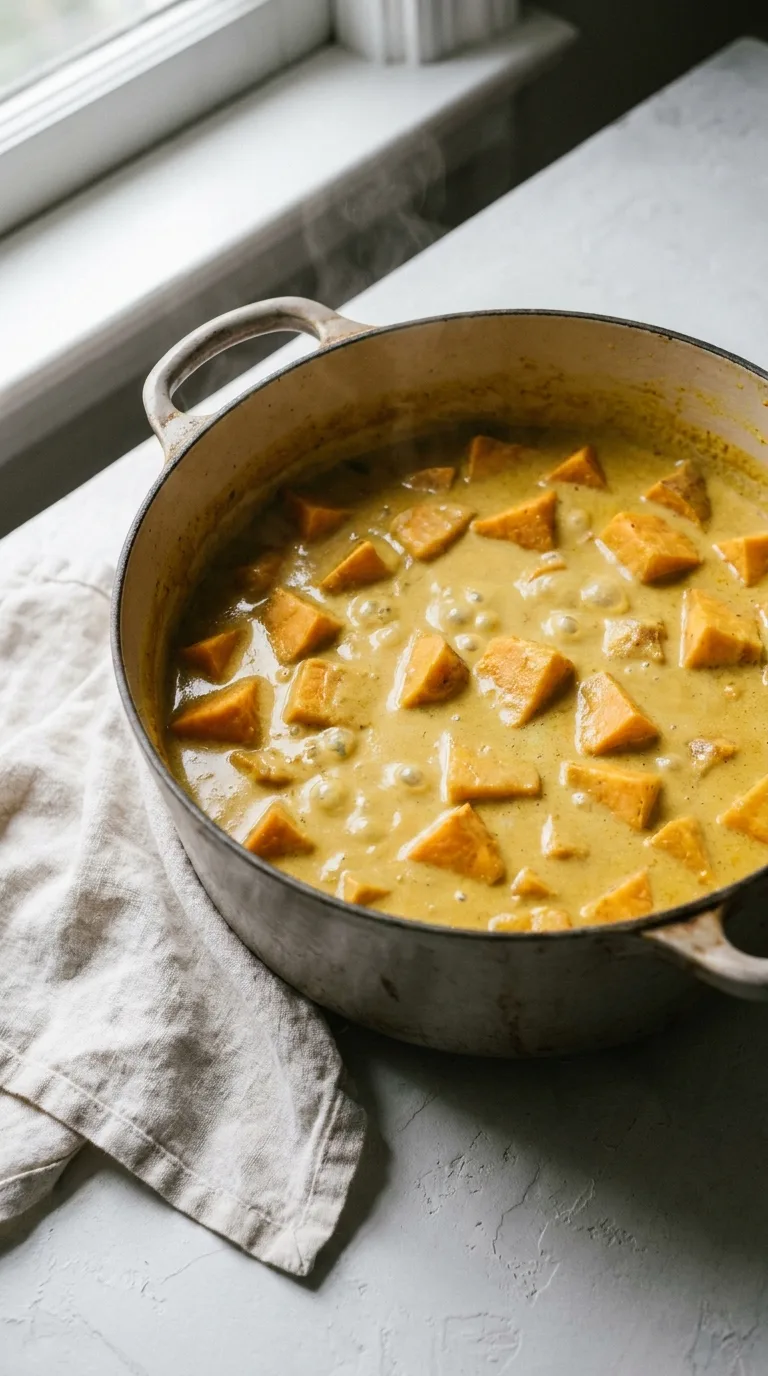
If the sauce remains too thin after simmering, remove the lid during the last 5 minutes of cooking. This allows the liquid to reduce and thicken. Ensure you do not overcook the sweet potatoes, or they will break apart and make the curry grainy.
How it differs from the traditional method
This version uses a pre-made yellow curry paste for speed. Traditional Indian curries often rely on whole toasted spices ground by hand for a sharper profile. Use the traditional method if you have the time to toast and grind your own spices for a more complex aroma.
Storing and reheating
Let the curry cool to room temperature before storing it in an airtight container for up to 3 days. You can freeze it in a freezer-proof container for up to 2 months. Thaw the dish overnight in the refrigerator before reheating it on the stove.
Nutrition per serving
- Calories
- 410
- Protein
- 32.5 g
- Carbs
- 24.0 g
- Fat
- 21.2 g
- Fiber
- 6.5 g
- Sugar
- 12.0 g
Estimated, and offered as a guide rather than a medical figure.
Made it? Rate it.
Questions people ask
Do sweet potatoes go with curry chicken?
Yes. The natural sweetness of the potato balances the savoury notes of the yellow curry paste and the saltiness of the fish sauce. This creates a rounded flavour profile that complements the lean chicken breast.
Can you cook sweet potatoes and chicken together?
Yes. You can simmer them in the same pot because the 20 minutes of cooking time is sufficient to soften 2 cm cubes of sweet potato while ensuring the chicken reaches 74°C (165°F) without overcooking.
Do you cook sweet potatoes before adding to curry?
No. You saute the sweet potato cubes with the aromatics first to develop a light sear. They then cook through in the coconut milk and broth, which allows them to absorb the curry flavours.

About the author
Mary C. Rivero
Mary C. Rivero specializes in comforting home‑cooked meals, from hearty pastas and sheet‑pan dinners to quick weeknight snacks. Her recipes feature clear, step‑by‑step directions and practical tips, helping readers create flavorful dishes with confidence and ease.