Split Pea Korma: Creamy Indian Yellow Split Pea Curry
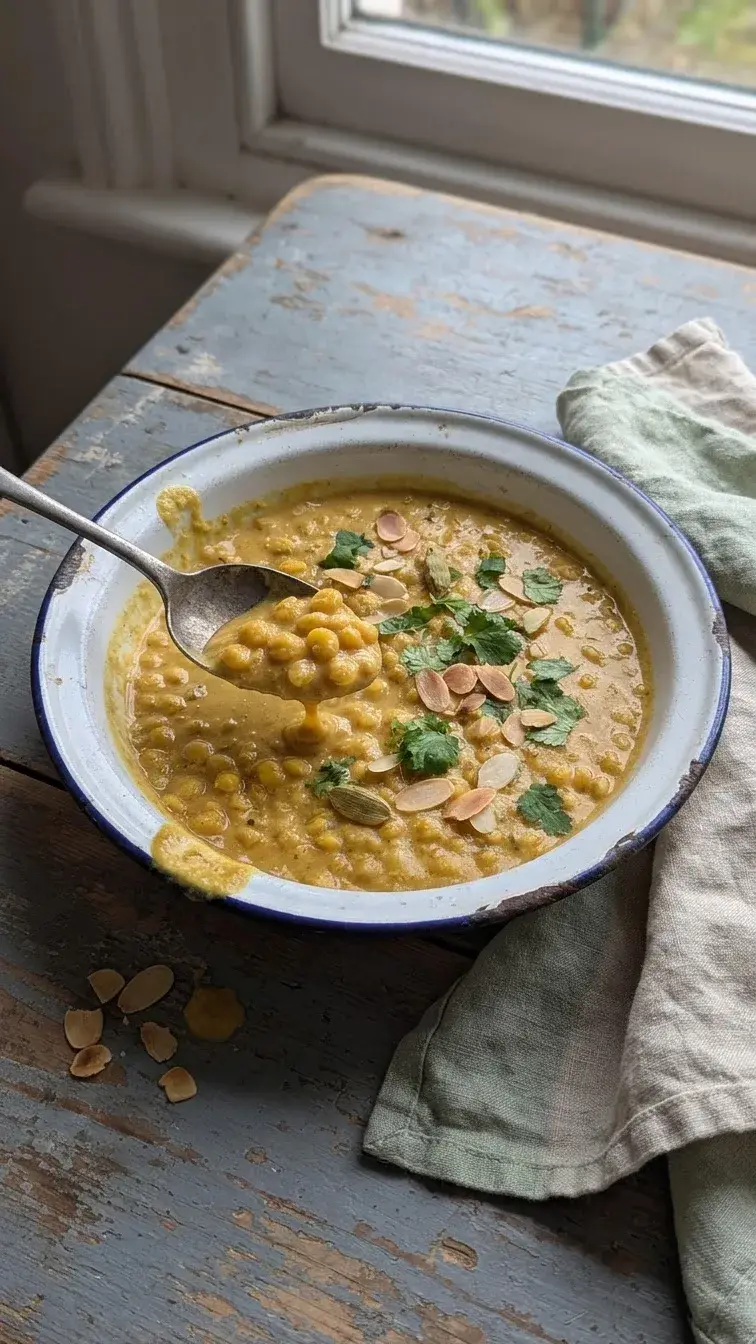
A good split pea korma stands or falls on the dried yellow split peas you choose. Pick up bags of bright, uniform yellow split peas with intact, smooth halves so they soften evenly during the 30 minutes of soaking and hold a pleasant bite when simmered. Put back any bag filled with chalky, cracked fragments or excessive dust at the bottom, as broken pieces turn into a grainy paste before the centres cook through.
You fry lightly crushed green cardamom pods, a cinnamon stick, and bay leaves in ghee before building a thick tomato and onion masala. Once the peas absorb the vegetable stock, you take the pan off the heat to stir in blended cashew cream and room-temperature full-fat natural Greek-style yoghurt so the sauce turns velvety without splitting, finished with fresh coriander and toasted flaked almonds.
Split Pea Korma: Creamy Indian Yellow Split Pea Curry
Recipe cardIngredients
Watch how it's made
Instructions
-
Soak peas and cashews
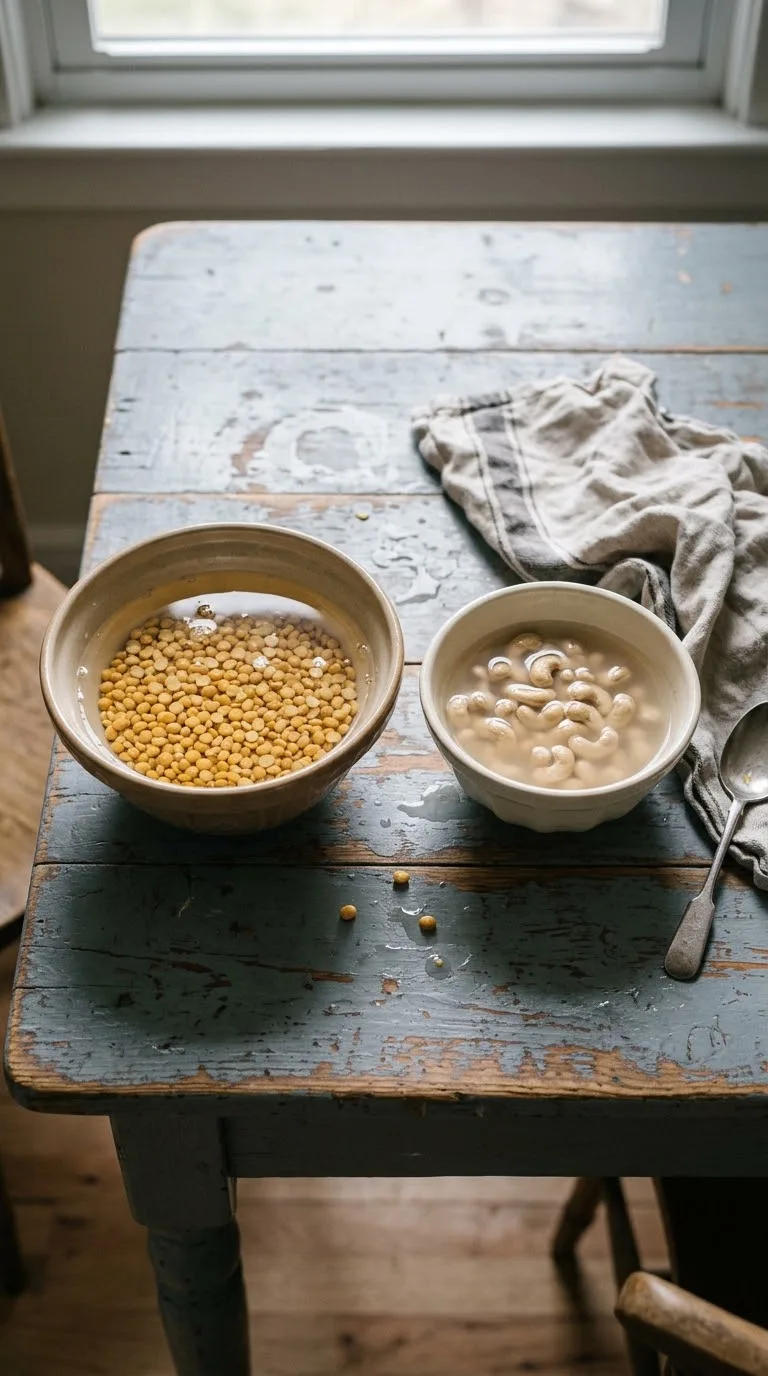
Place the rinsed yellow split peas in a medium mixing bowl and cover them generously with cold water for 30 minutes so the skins soften and the centres cook evenly. At the same time, put the raw unsalted cashew nuts in a small heatproof bowl, pour over the 120 ml boiling water, and leave them to soak for 30 minutes until plump.
-
Blend the cashew cream
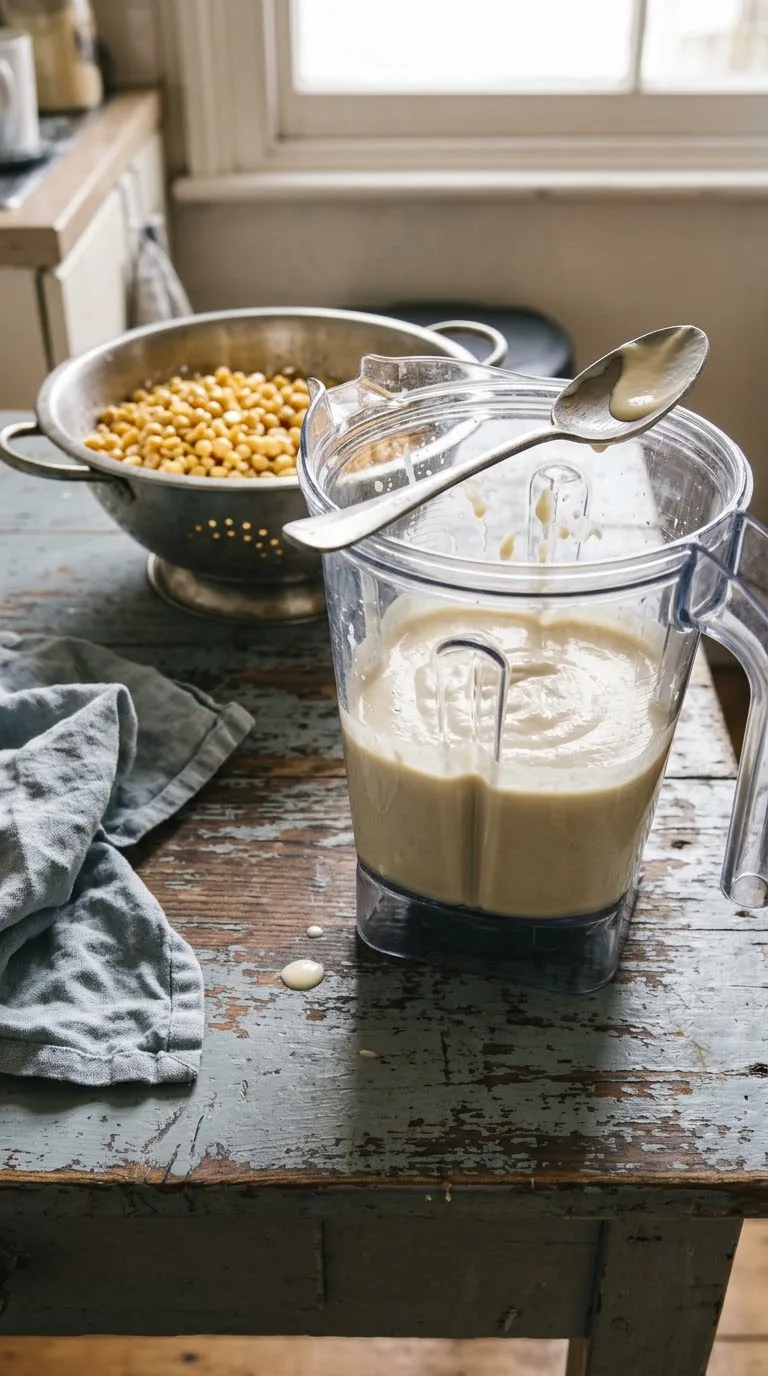
Drain the soaked split peas thoroughly in a colander and set them aside. Tip the soaked cashews and their soaking water into a high-speed blender and blend on high for 1 to 2 minutes until completely smooth, eliminating any gritty texture that would make the sauce grainy.
-
Temper the whole spices
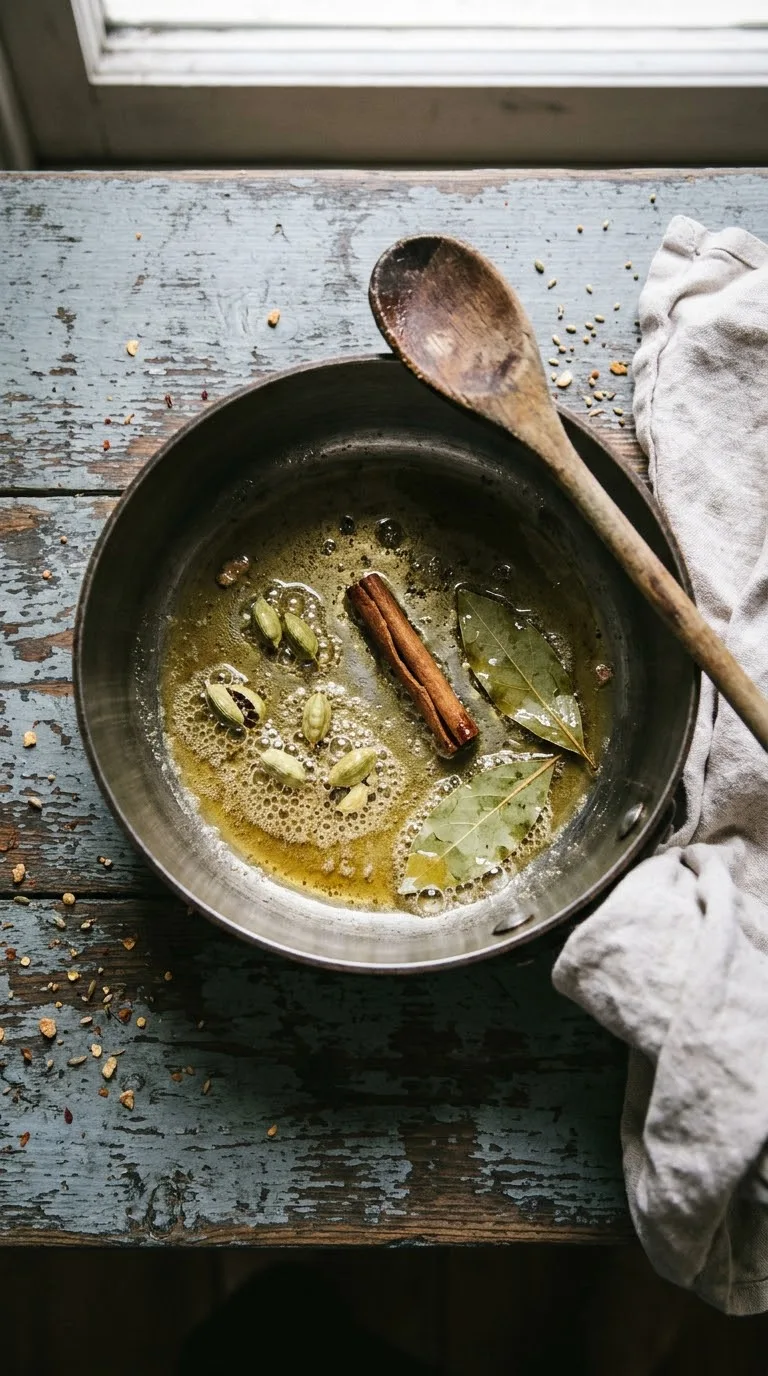
Heat the 2 tbsp ghee or neutral vegetable oil in a large heavy-based saucepan over medium heat until shimmering. Add the lightly crushed green cardamom pods, cinnamon stick, and bay leaves, frying for 45 seconds until the pods puff up and release their essential oils into the fat.
-
Soften the onions and aromatics
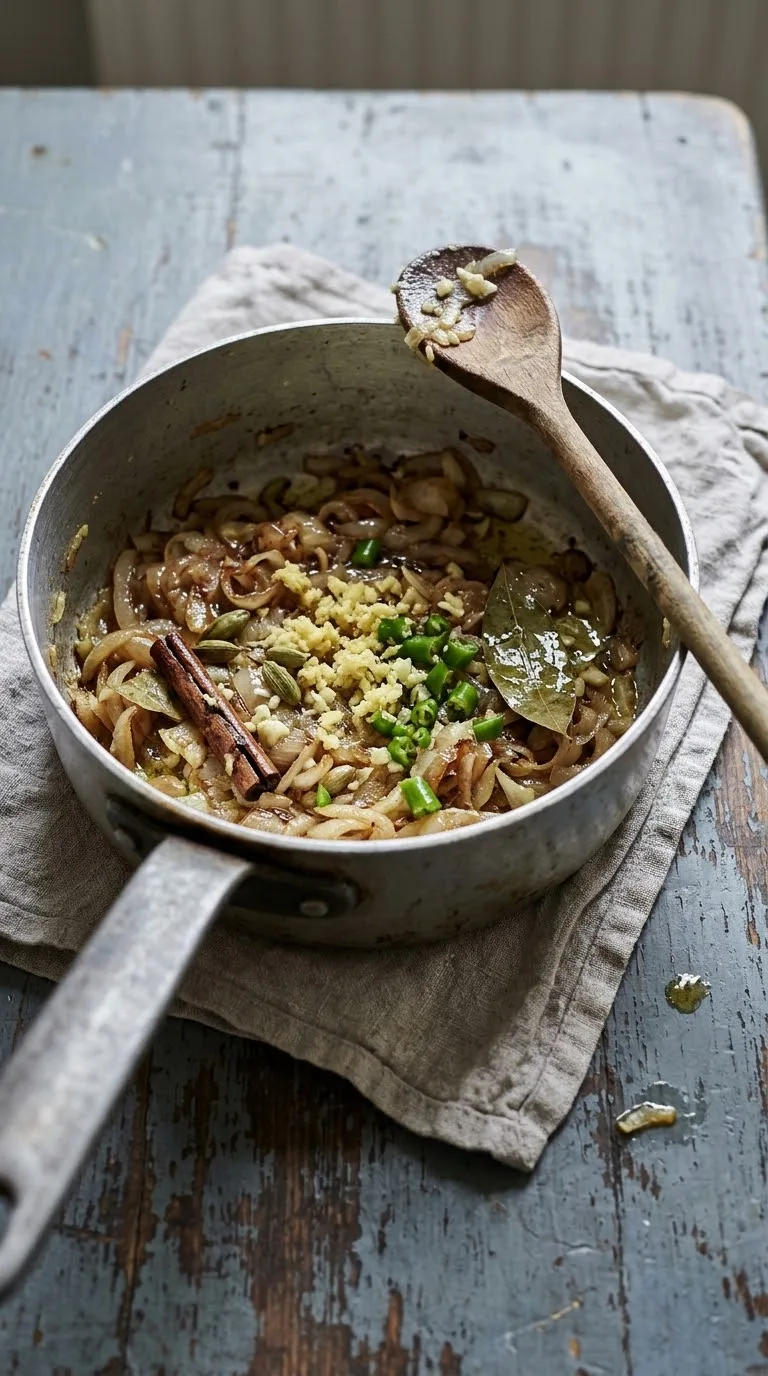
Add the finely chopped brown onions and cook over medium heat for 10 to 12 minutes, stirring regularly until they turn soft, translucent, and lightly golden at the edges. Stir in the grated ginger, minced garlic, and chopped green chilli for 1 to 2 minutes until the raw aroma fades, watching closely so the garlic does not scorch.
-
Build the tomato masala
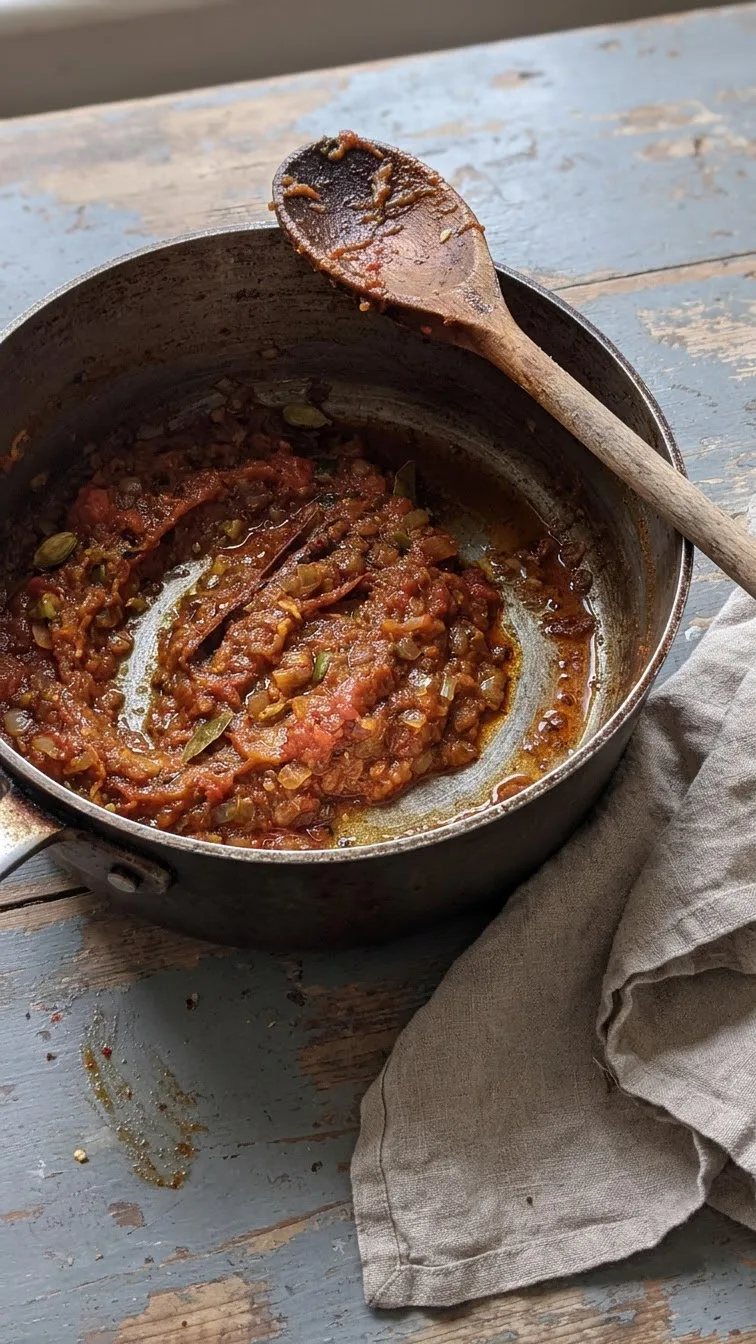
Lower the heat slightly and add the ground cumin, ground coriander, ground turmeric, and Kashmiri chilli powder, stirring constantly for 30 seconds to toast them without burning. Add the finely chopped tomatoes and cook for 4 to 5 minutes until they break down into a thick, glossy paste.
-
Simmer the split peas
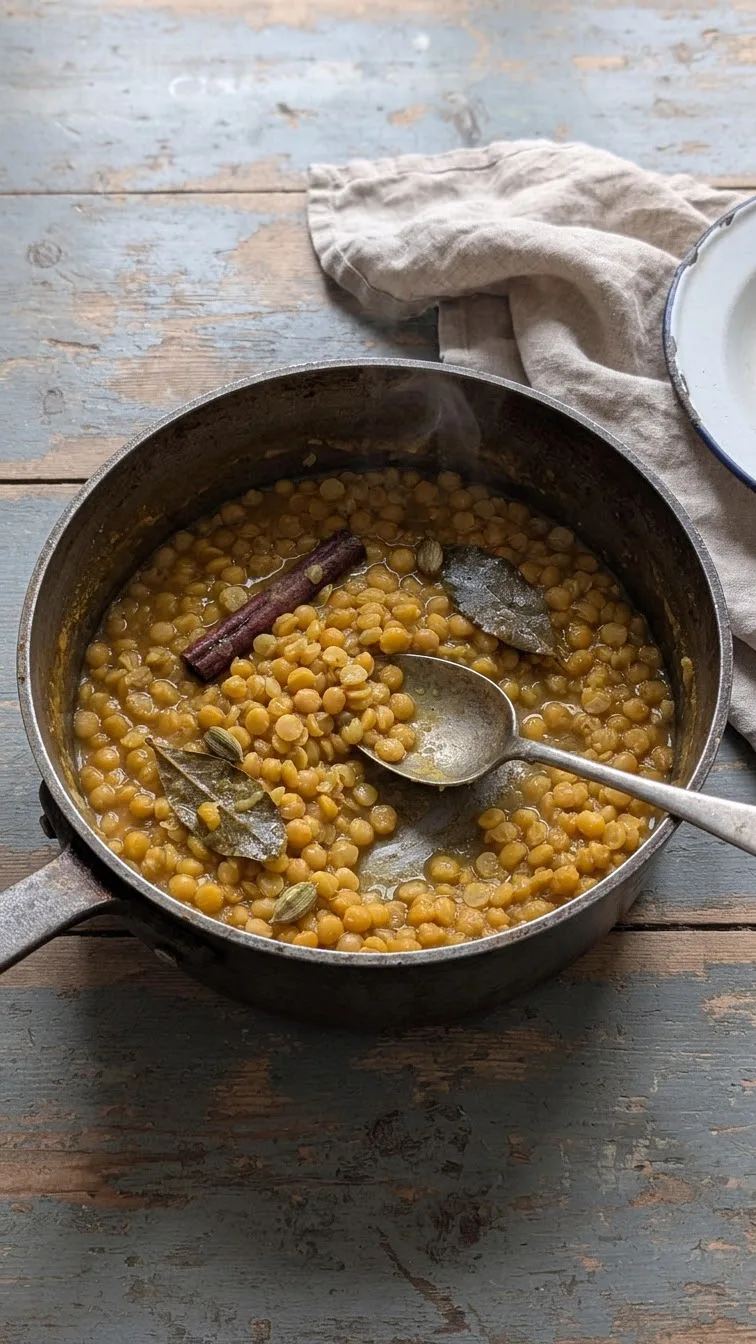
Tip the drained yellow split peas into the pan, stir well to coat them in the masala, and pour in the 750 ml vegetable stock with the 1 tsp fine sea salt. Bring to a gentle boil over medium-high heat, then reduce the heat to low, cover with a tight-fitting lid, and simmer for 25 to 30 minutes, stirring occasionally, until the peas are tender with a pleasant bite and most of the stock is absorbed.
-
Enrich with cashew and yoghurt
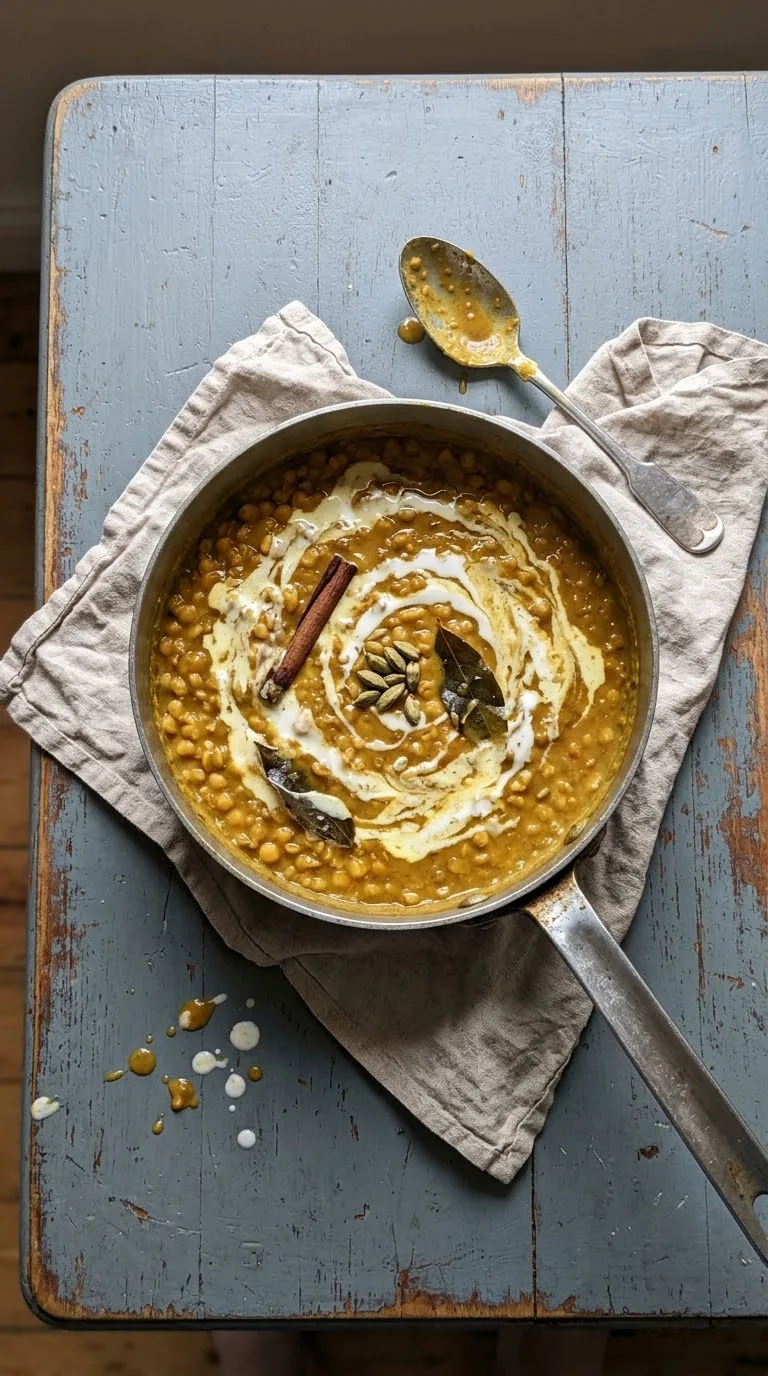
Remove the pan from the heat and leave it to cool for 2 minutes so the dairy does not split on contact with boiling liquid. Stir in the smooth cashew cream, room-temperature Greek-style yoghurt, and garam masala until the korma turns a rich golden colour, then return to very low heat for 2 to 3 minutes to warm through without boiling.
-
Fold in herbs and serve
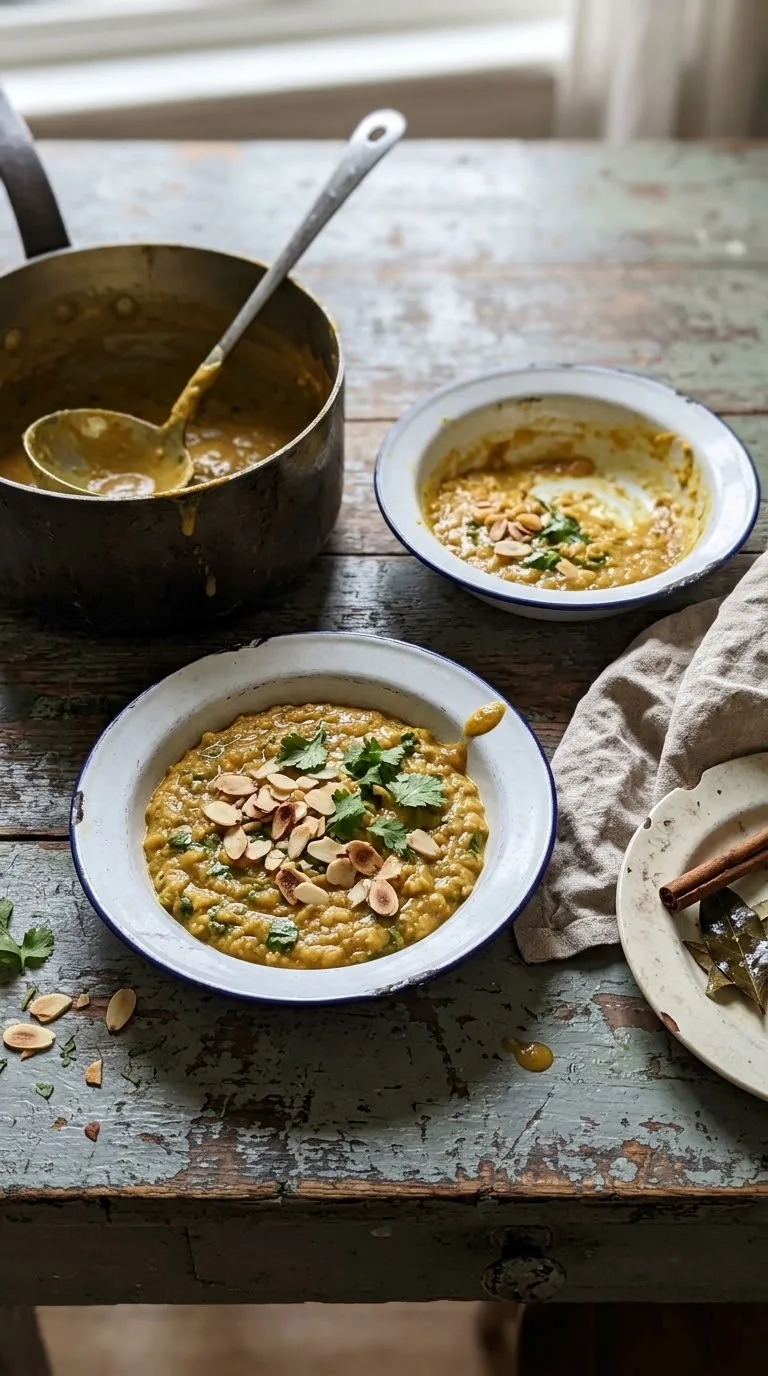
Fold the roughly chopped fresh coriander leaves through the curry and fish out the cinnamon stick and bay leaves if you prefer. Ladle the split pea korma into warm bowls and scatter over the lightly toasted flaked almonds and extra coriander leaves before serving.
Adding cold yoghurt directly to boiling curry causes the dairy proteins to tighten and split into grainy curds. Bring the Greek-style yoghurt to room temperature first, take the pan off direct heat for 2 minutes before stirring it in, and never let the sauce bubble once enriched.
Yellow split peas and what to use instead
Dried yellow split peas hold their shape after 30 minutes of soaking and 25 to 30 minutes of simmering, giving this curry a firm, distinct bite. If you cannot find them, chana dal works in the same way. Do not substitute red lentils, as they collapse completely into a smooth purée rather than keeping distinct tender grains.
What to serve with it
Serve this korma alongside fluffy steamed basmati rice scented with green cardamom pods and cloves to soak up the creamy sauce. Warm garlic naan, soft chapatis, or flaky layered parathas work equally well for scooping up the peas. Add cucumber and mint raita plus sliced pickled red onion to balance the warm spices.
Storing and reheating
Do not leave this yoghurt-enriched korma at room temperature for more than 2 hours. Cool leftovers completely and store in an airtight container in the fridge for up to 4 days, or freeze for up to 3 months. Defrost overnight in the fridge and reheat gently over low heat with a splash of water so the sauce stays smooth.
Nutrition per serving
- Calories
- 425
- Protein
- 18.5 g
- Carbs
- 47.0 g
- Fat
- 18.2 g
- Fiber
- 15.6 g
- Sugar
- 6.4 g
Estimated, and offered as a guide rather than a medical figure.
Made it? Rate it.
Questions people ask
Can I make this split pea korma vegan?
Yes, swap the 2 tablespoons of ghee for neutral vegetable oil and replace the 120 g full-fat natural Greek-style yoghurt with an unsweetened plant-based Greek-style yoghurt. Let the pan cool off the heat before stirring in the plant yoghurt so it blends smoothly without splitting.
Why did my yoghurt curdle when I stirred it into the korma?
Yoghurt curdles when cold dairy hits boiling liquid, causing the proteins to tighten and separate. Always bring the 120 g Greek-style yoghurt to room temperature first, take the saucepan off the heat for 2 minutes before stirring it in, and warm through gently without boiling.
Do I really need to soak the dried yellow split peas first?
Yes, soaking the 250 g dried yellow split peas in cold water for 30 minutes softens their outer skins before cooking. Without soaking, the outside layers turn mushy during simmering while the centres stay hard and chalky.

About the author
Mary C. Rivero
Mary C. Rivero specializes in comforting home‑cooked meals, from hearty pastas and sheet‑pan dinners to quick weeknight snacks. Her recipes feature clear, step‑by‑step directions and practical tips, helping readers create flavorful dishes with confidence and ease.