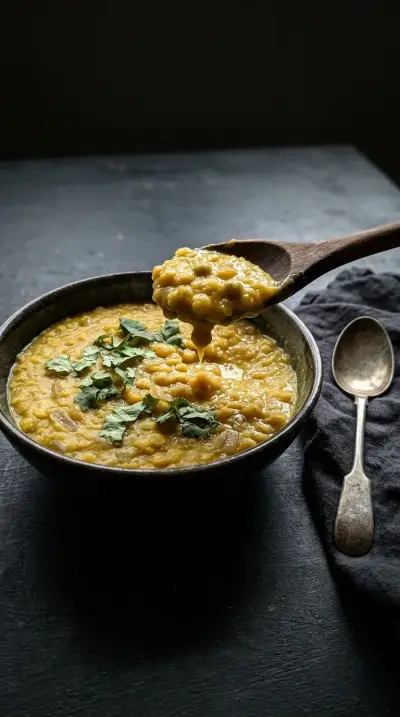
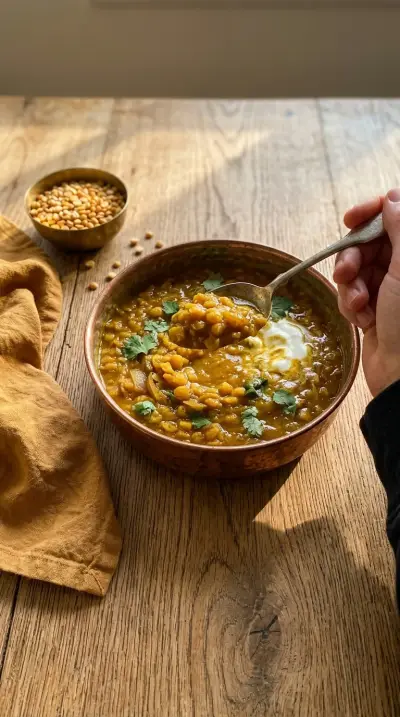
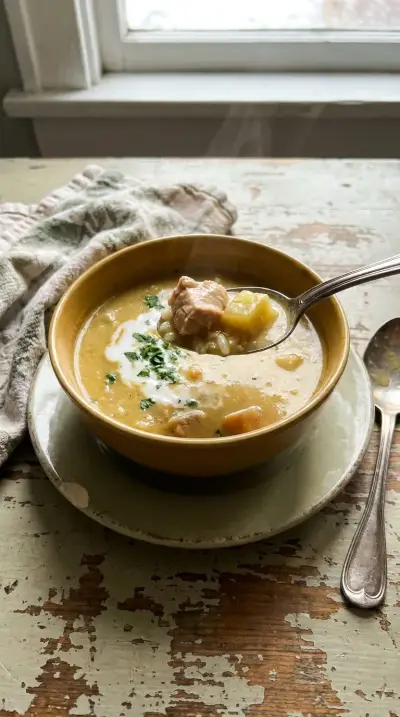
Kitchari: Indian Split Pea and Rice Porridge
Yellow split peas form the base of this split pea kitchari. Select dried peas that are bright in colour and free from shrivelled grains or debris. Put back any packets with a dull, greyish tint or a musty smell, as these will not soften properly during the 35 minutes of simmering. Rinse them in a fine-mesh sieve until the water runs clear to remove excess starch and impurities.
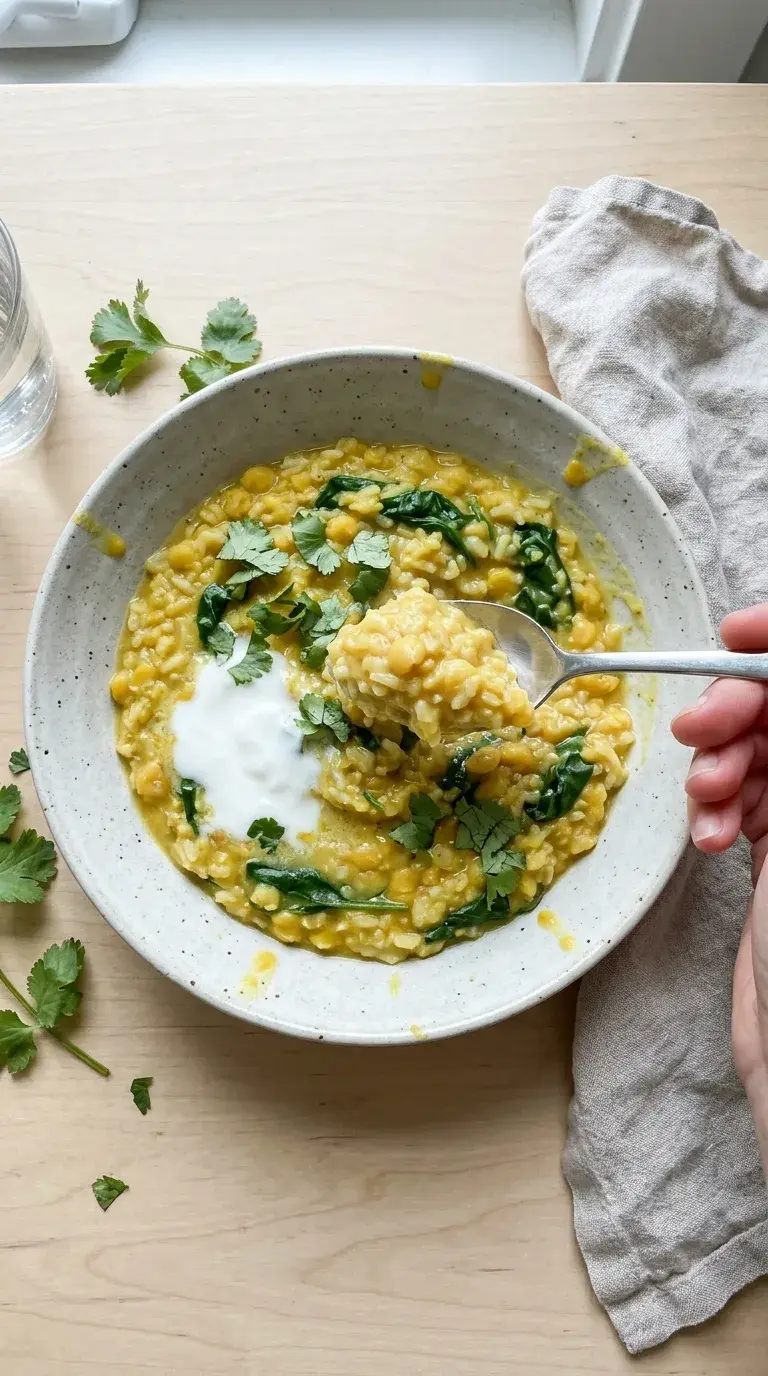
This Indian one-pot dish combines 200 g yellow split peas and 100 g basmati rice with a blend of turmeric, cumin, and mustard seeds. You will produce a thick, porridge-like consistency that is rich in plant-based protein and fibre. Stir in fresh spinach during the final 5 minutes to add colour and texture. Let the pot rest for 5 minutes with the lid on to allow the savoury flavours to meld before you serve it with coconut yogurt.
Kitchari: Indian Split Pea and Rice Porridge
Recipe cardIngredients
Instructions
-
Prepare the grains
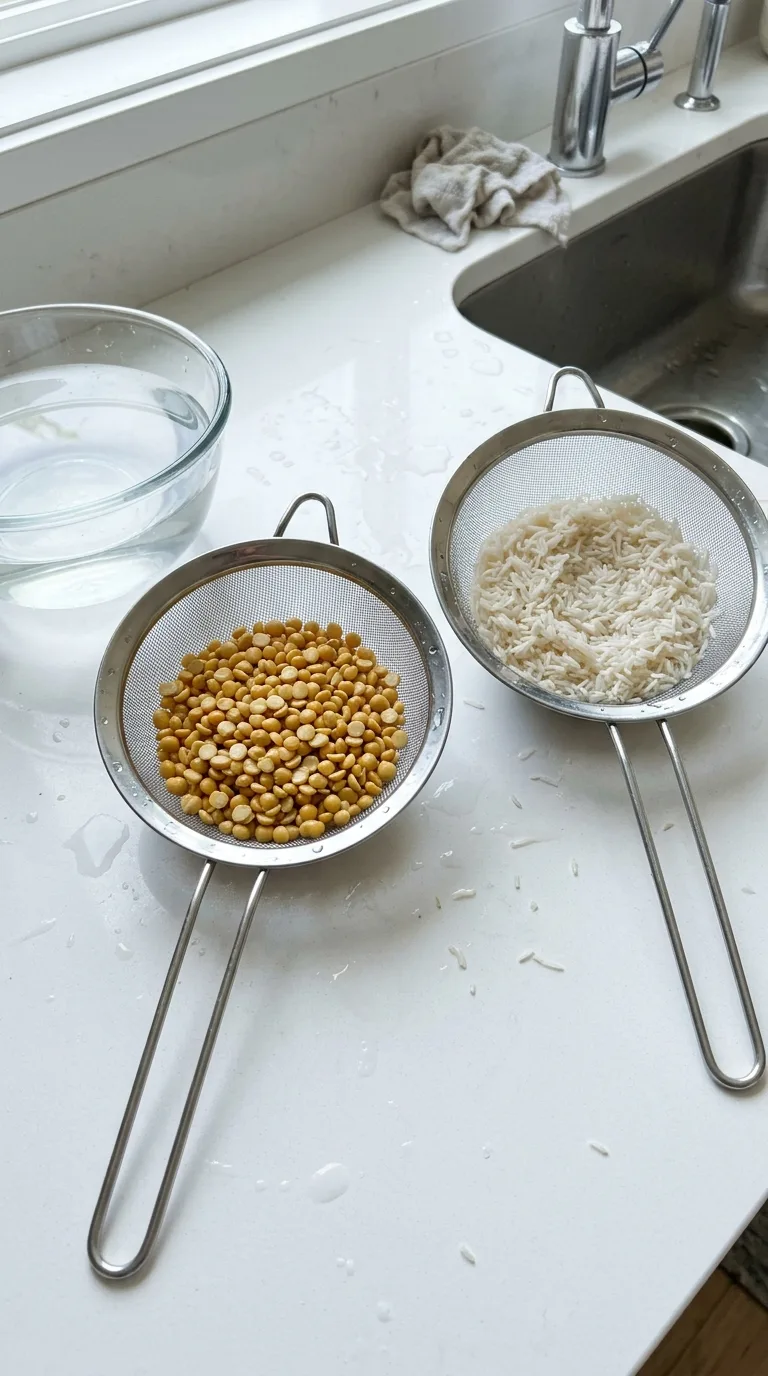
Rinse the yellow split peas and basmati rice in a sieve until the water runs clear. Soak the peas for 30 minutes and the rice for 15 minutes to reduce total cooking time. Drain them thoroughly before use.
-
Toast the seeds
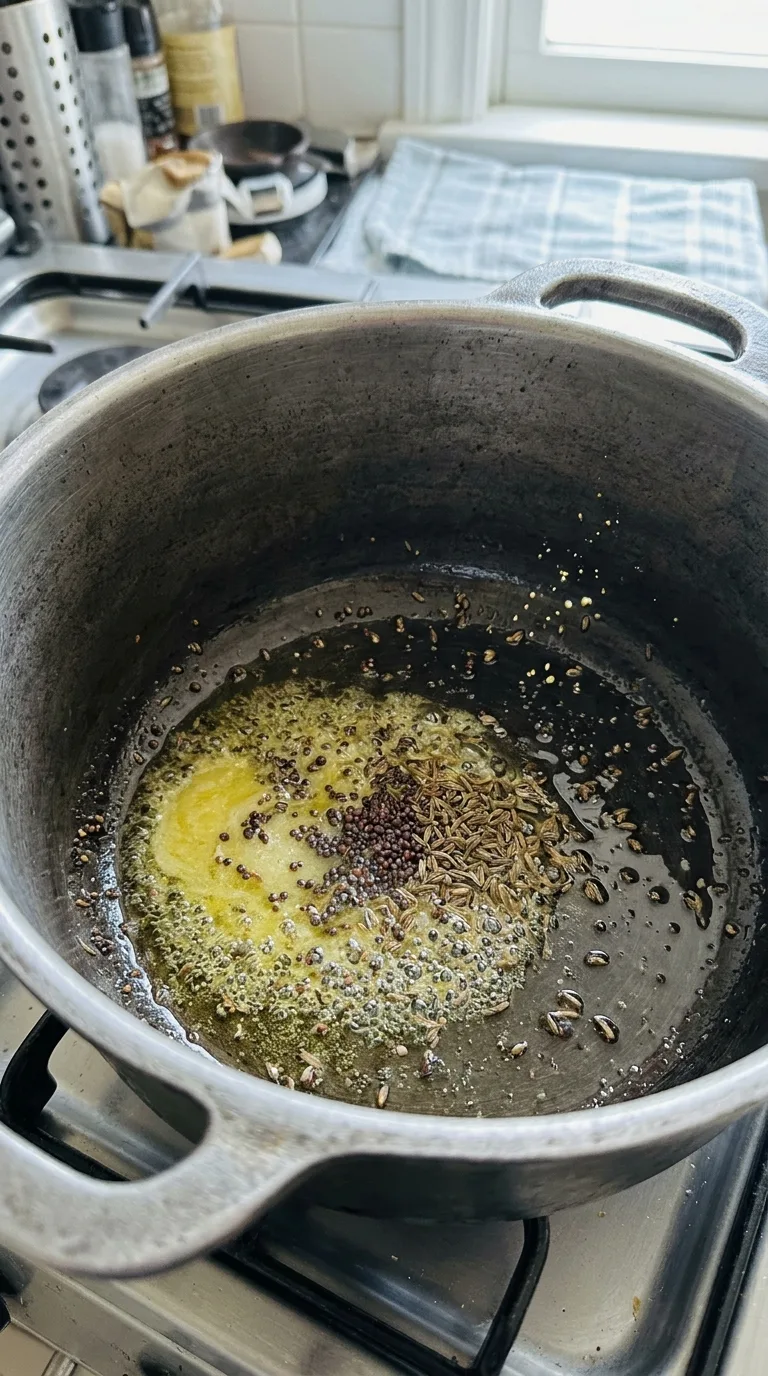
Heat 1 tbsp of ghee in a large heavy-bottomed pot over medium heat. Add mustard and cumin seeds. Fry for 30 seconds until they pop to release a nutty aroma.
-
Sauté the aromatics
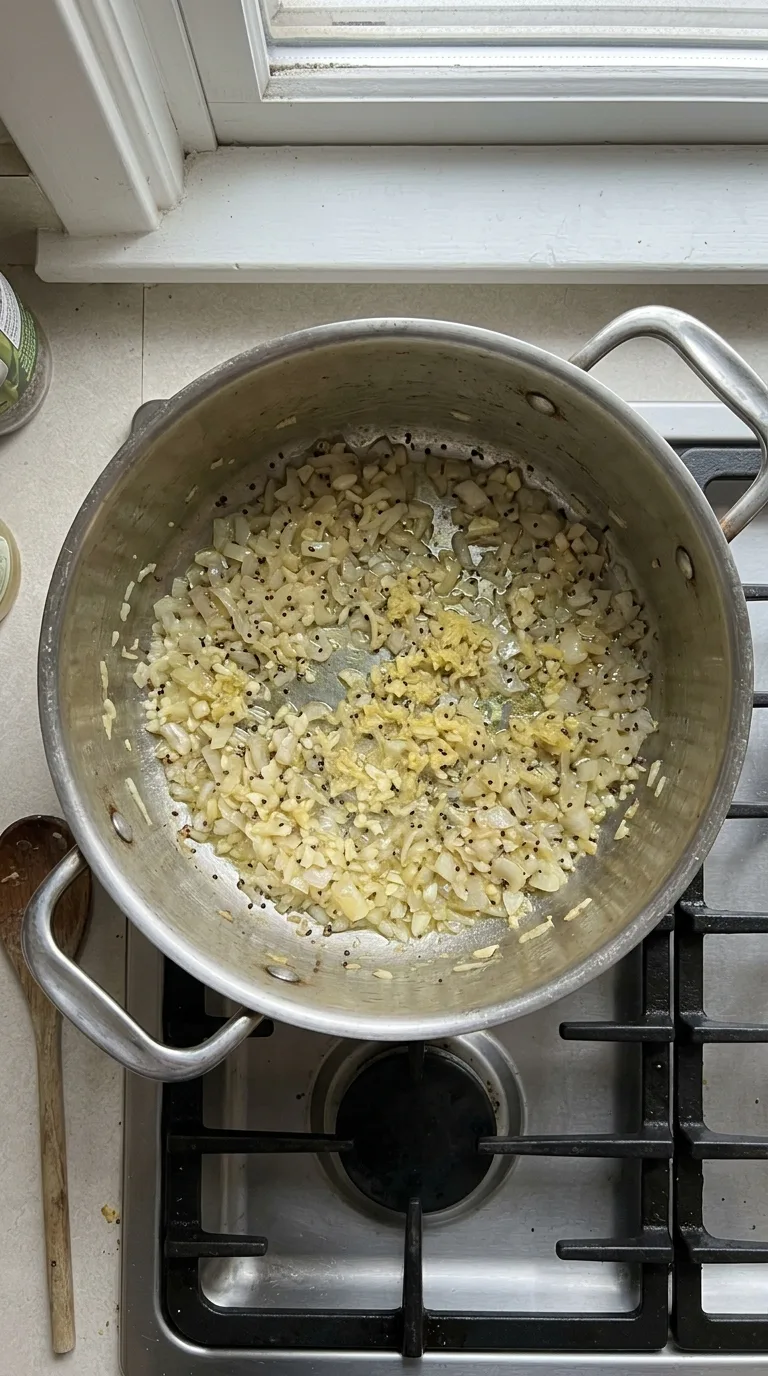
Stir in the asafoetida, minced garlic, grated ginger, and finely chopped onion. Sauté until the onion turns translucent and fragrant. This builds the base savoury layer of the dish.
-
Bloom the spices
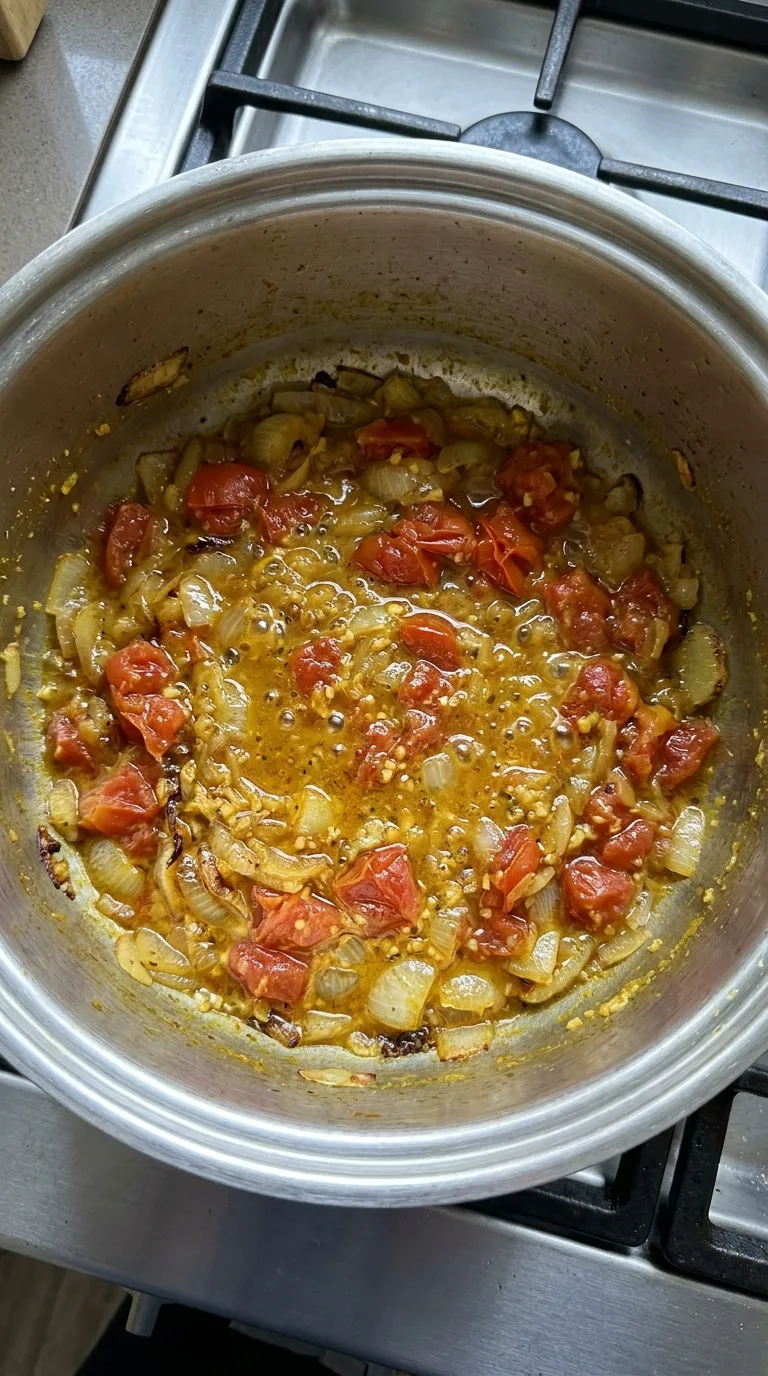
Add the diced tomato, turmeric powder, coriander powder, and salt. Cook for 2 minutes. This allows the tomato to soften and the spices to mingle and intensify in flavour.
-
Simmer the kitchari
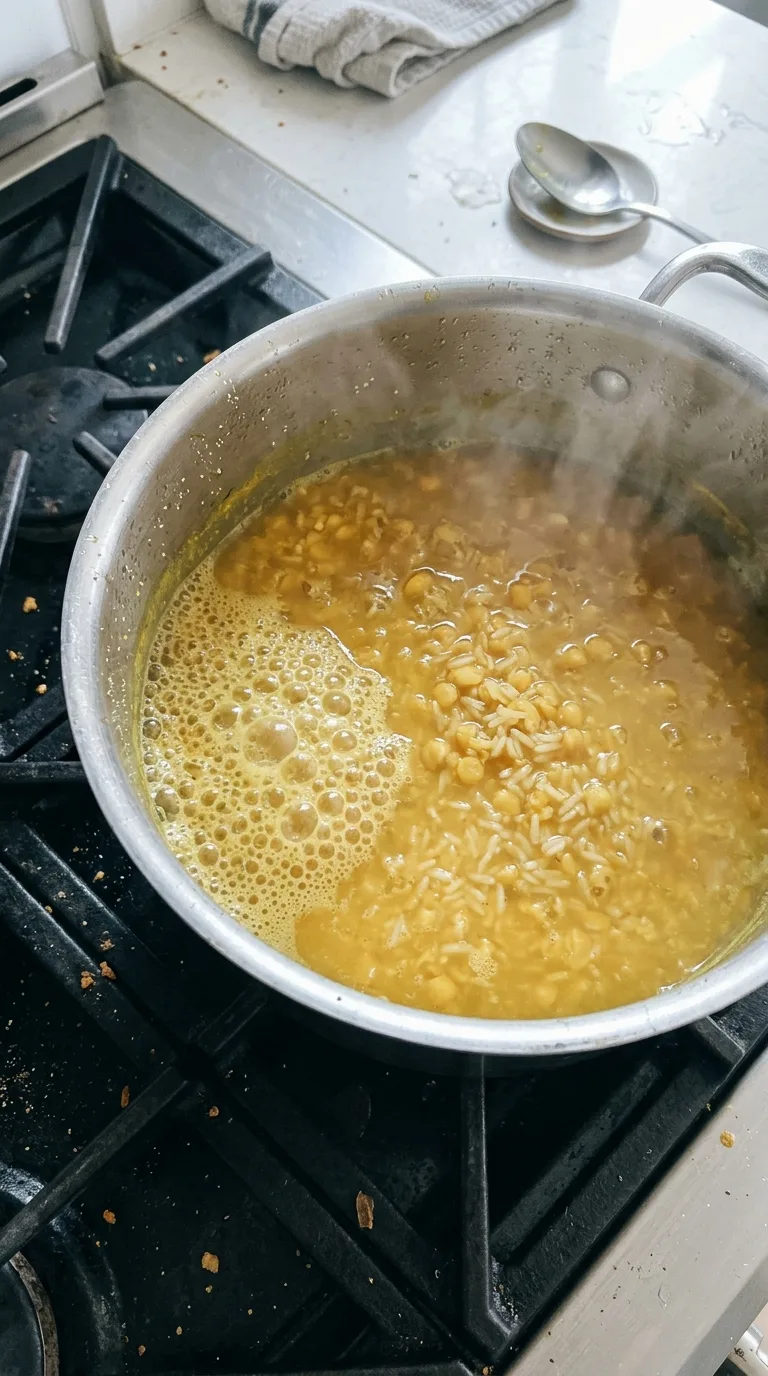
Stir in the split peas and rice to coat them in the spice mixture. Pour in 1500 ml of water and bring to a gentle boil. Cover and simmer on low heat for 35 minutes until the peas are tender.
-
Wilt the spinach
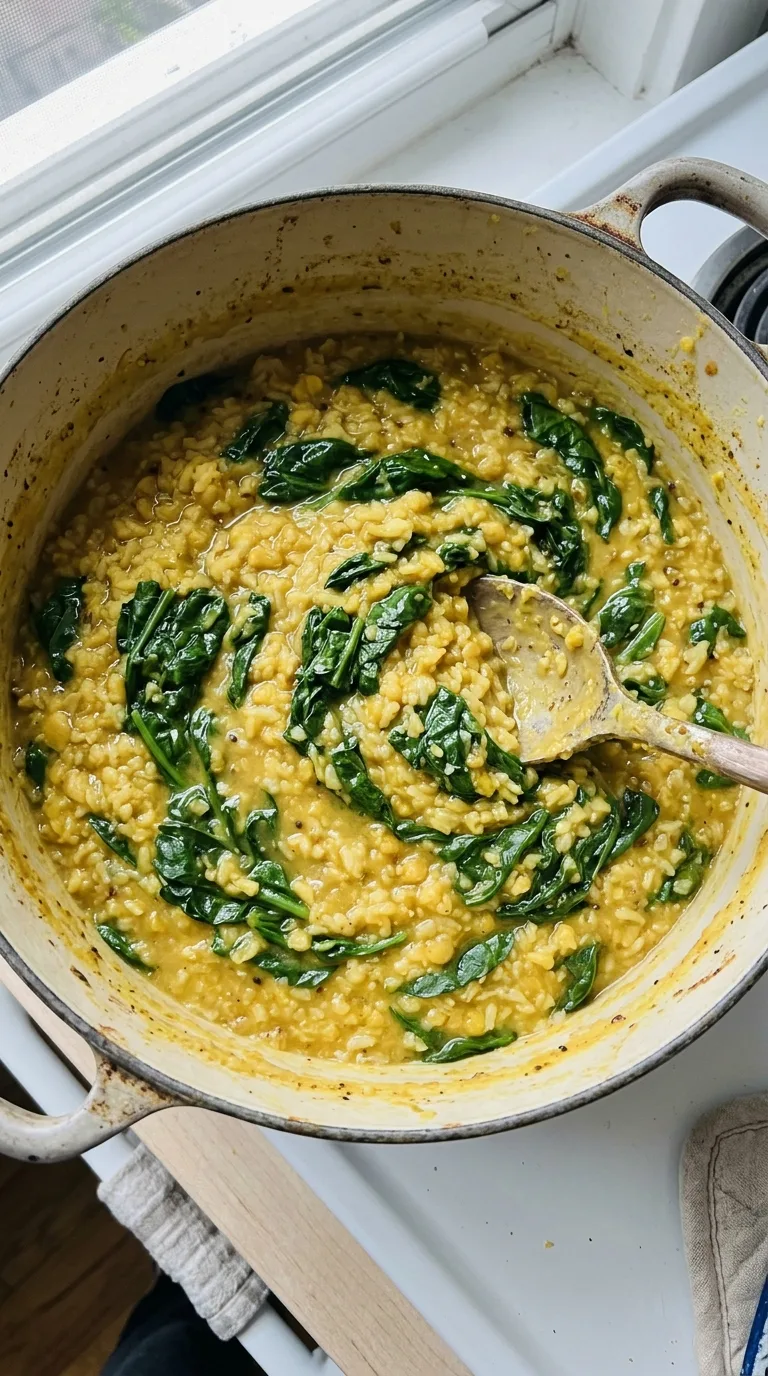
Stir in the chopped spinach during the final 5 minutes of simmering. Cover the pot again. This ensures the greens soften without losing their bright colour.
-
Rest and serve
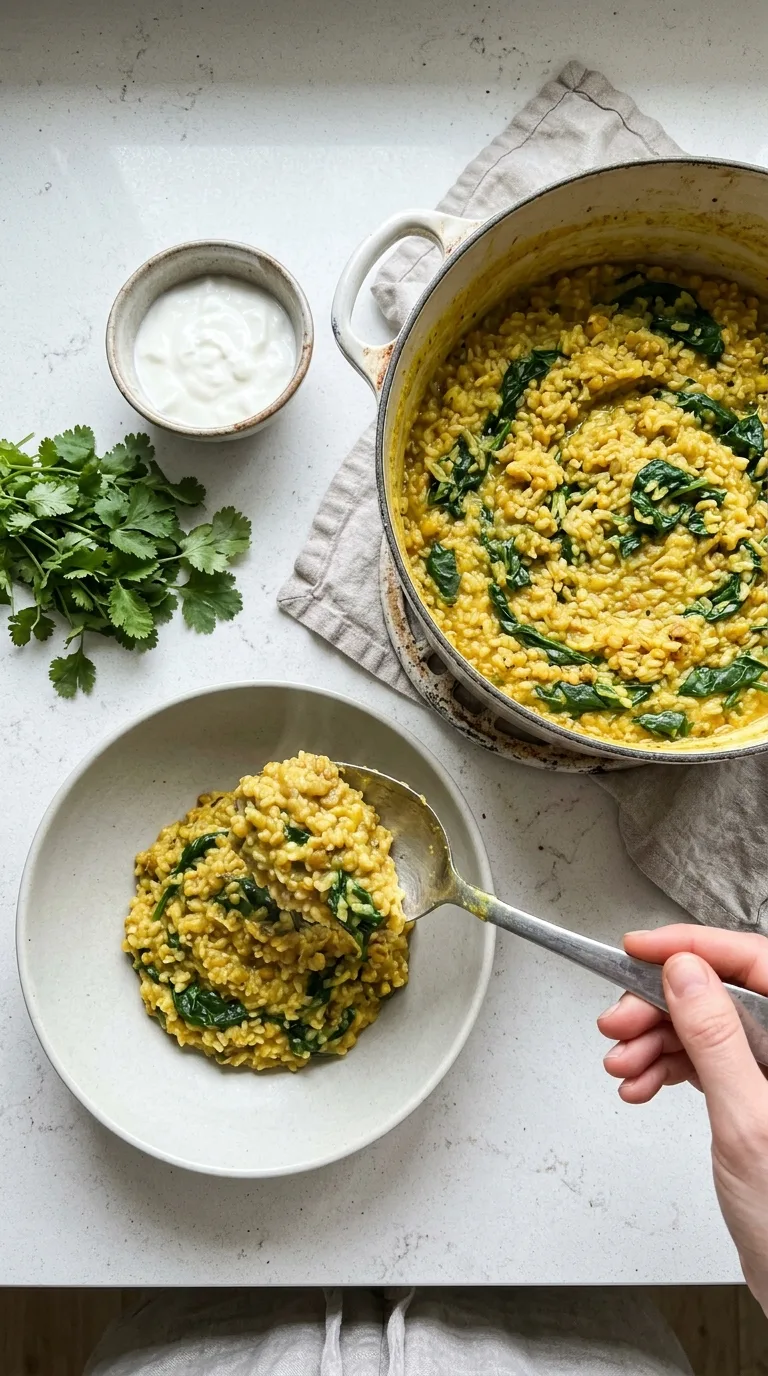
Turn off the heat and leave the lid on for 5 minutes. This resting period allows the remaining flavours to meld. Garnish with fresh coriander and coconut yogurt before serving hot.
Avoid using a thin pot, which causes uneven heating and splattering. If the kitchari looks too dry before the peas are tender, add a splash of water. If it is too thin, simmer uncovered for a few minutes to reduce the liquid and thicken the consistency.
Substituting Ghee
Use coconut oil or a neutral vegetable oil if ghee is unavailable. Ghee provides a distinct nutty flavour and high smoke point for frying spices. Using oil maintains the texture but removes the rich, buttery depth characteristic of traditional Indian cooking. Do not use butter for the initial frying.
What to serve with it
Pair this dish with warm naan or whole-wheat roti to scoop up the thick grains. For a refreshing contrast, serve it with a chilled cucumber raita or a ripe tomato salad. You can also sprinkle toasted almond slivers or pine nuts on top to add a subtle crunch.
Storing and reheating
Cool the kitchari to room temperature, then refrigerate in an airtight container for up to 4 days. For longer storage, freeze individual portions in freezer-proof containers for up to 3 months. Thaw overnight in the fridge and reheat with a splash of water or broth to restore the consistency.
Nutrition per serving
- Calories
- 285
- Protein
- 12.4 g
- Carbs
- 38.2 g
- Fat
- 7.1 g
- Fiber
- 9.5 g
- Sugar
- 4.8 g
Estimated, and offered as a guide rather than a medical figure.
Made it? Rate it.
Questions people ask
Can I use mung beans instead of yellow split peas?
Yes. Replace the yellow split peas with 200 g of mung beans. This variation results in a slightly different texture and a sweeter flavour while maintaining the same water ratio and cooking time.
How do I make the kitchari creamier?
Stir in 100 ml of coconut milk or a spoonful of plain yoghurt after the final 5 minutes of simmering. This adds fat and thickness to the base without overcooking the rice and peas.
Why do I need to soak the split peas and rice?
Soaking reduces the total simmering time by about 10 minutes. It ensures the split peas soften evenly and helps them retain a firmer texture rather than becoming completely mushy during the boil.

About the author
Mary C. Rivero
Mary C. Rivero specializes in comforting home‑cooked meals, from hearty pastas and sheet‑pan dinners to quick weeknight snacks. Her recipes feature clear, step‑by‑step directions and practical tips, helping readers create flavorful dishes with confidence and ease.