Oven Baked Okra: Mediterranean Vegetable Appetiser
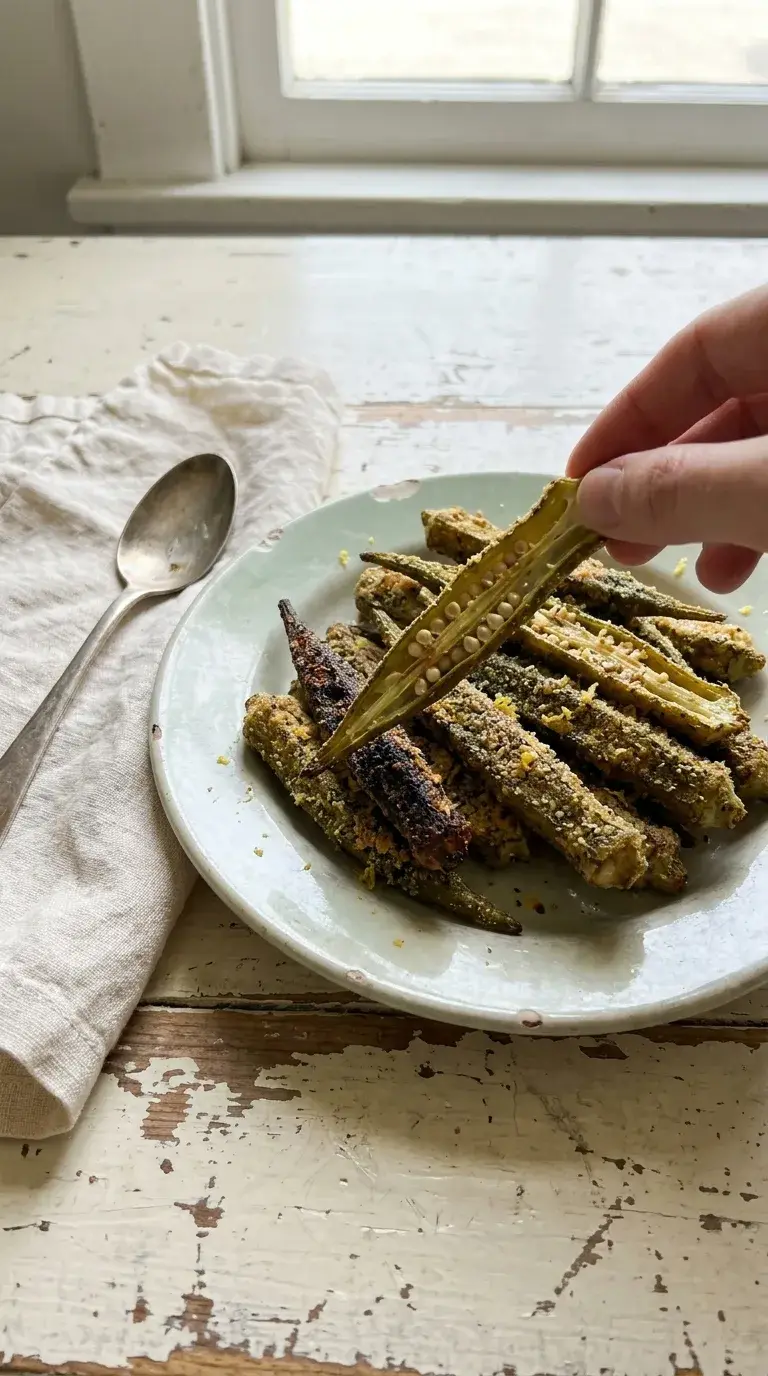
Select fresh okra pods that feel firm and snap easily. Avoid any pods that feel soft, rubbery, or show dark brown spots. To make a successful batch of oven baked okra, you must pat the vegetables very dry with paper towels after rinsing. Excess moisture creates slime during the baking process, which prevents the edges from crisping.
This Mediterranean dish uses a high temperature of 220°C (425°F) to roast the pods in olive oil, paprika, and Parmesan. You will bake the okra for 12 minutes, flip the rows, and bake for 4 more minutes before a short 2-minute broil. The result is a savoury, crisp texture with a bright finish of lemon zest. It takes 28 minutes from start to serve.
Oven Baked Okra: Mediterranean Vegetable Appetiser
Recipe cardIngredients
Instructions
-
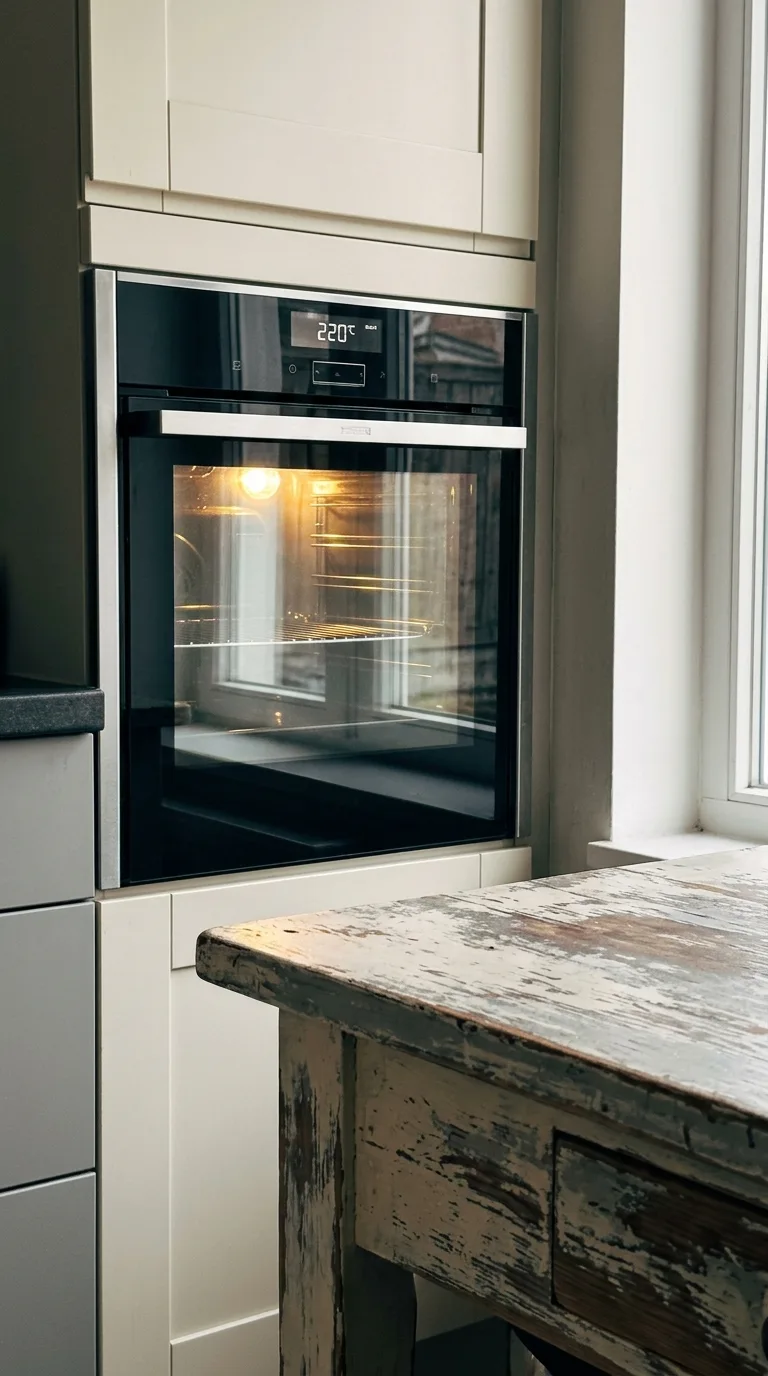
Heat the oven
Preheat your oven to 220°C (425°F). Ensure the oven is fully heated before adding the vegetables to ensure an immediate sear.
-
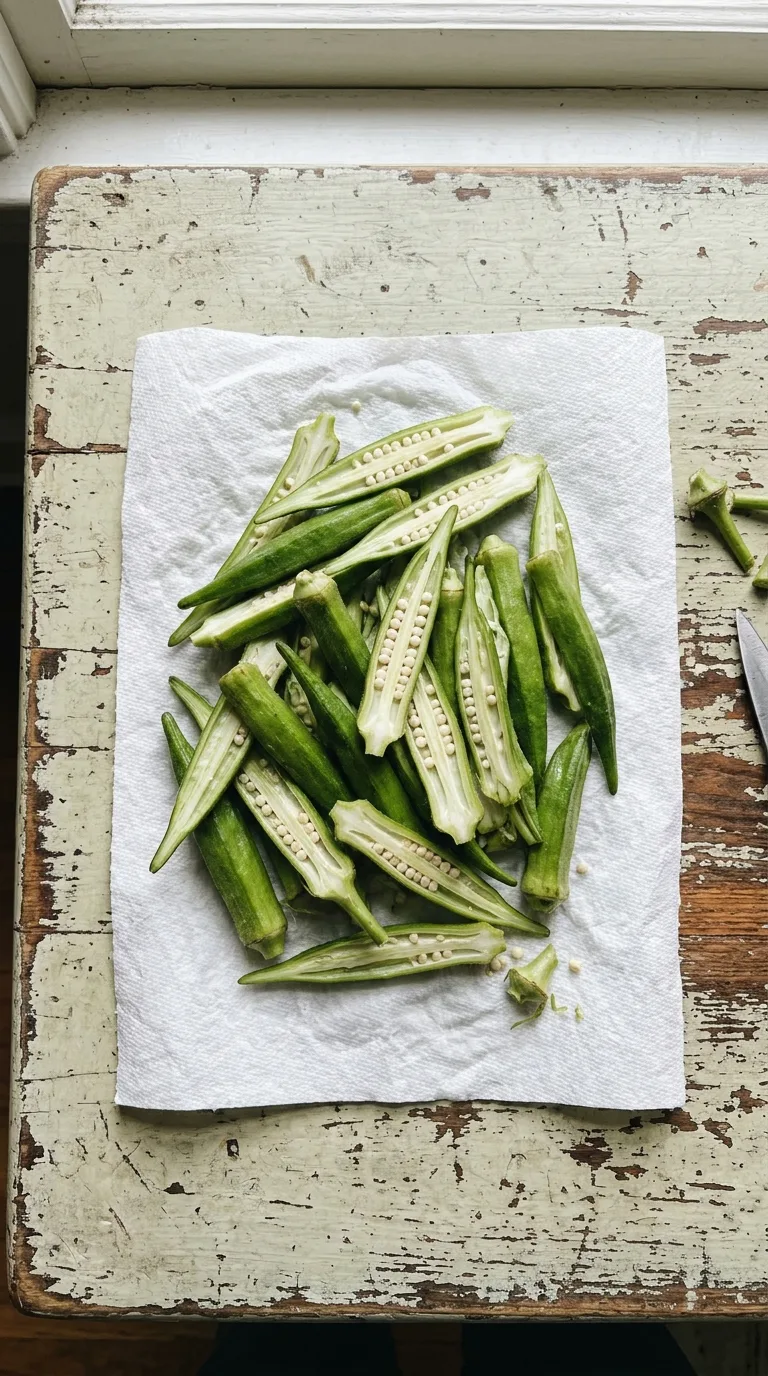
Prepare the okra
Rinse the okra under cold water and pat them very dry with paper towels. Cut the pods into 1.5-cm lengthwise halves, keeping the seeds on the bottom for a slight crunch.
-
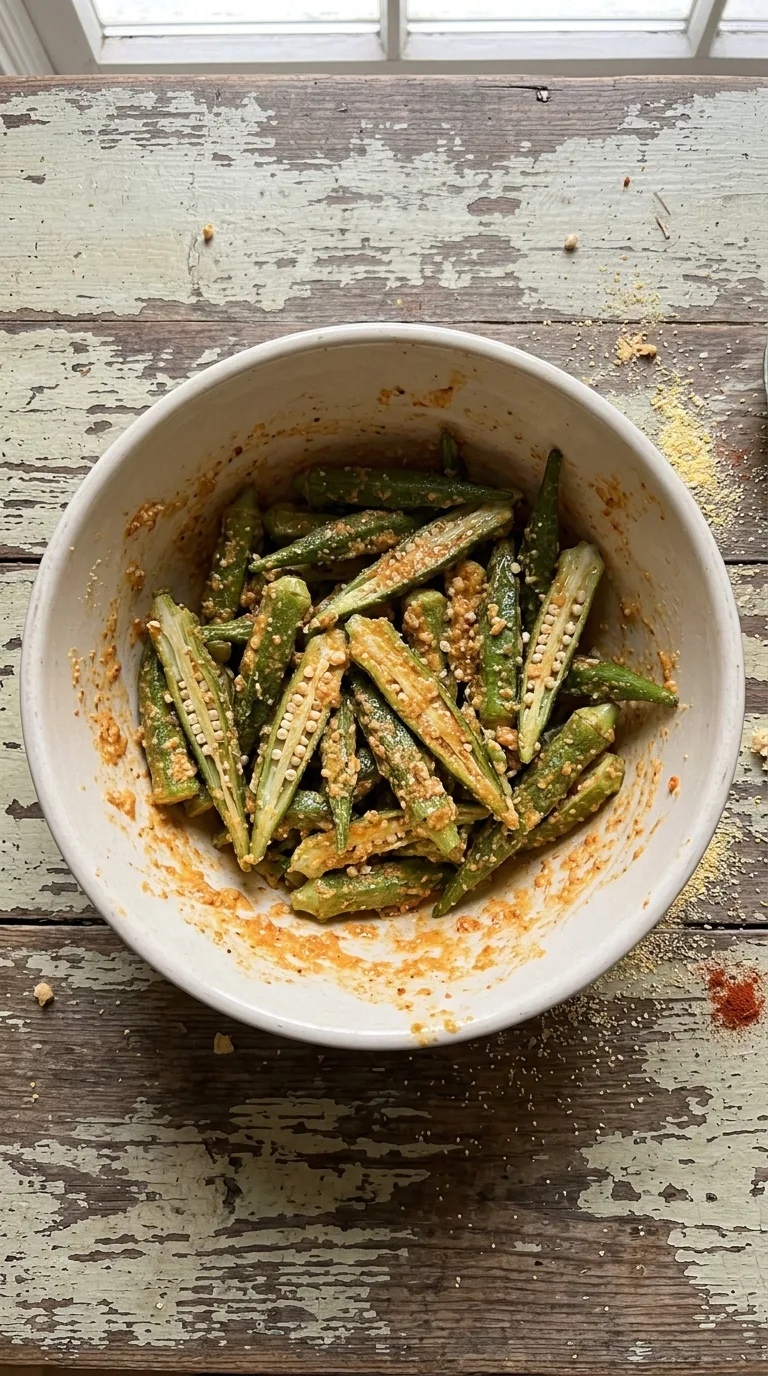
Coat the vegetables
Whisk together olive oil, salt, pepper, paprika, and the optional cornmeal and Parmesan in a large bowl. Toss the okra gently until every piece is evenly coated in the oil and seasoning.
-
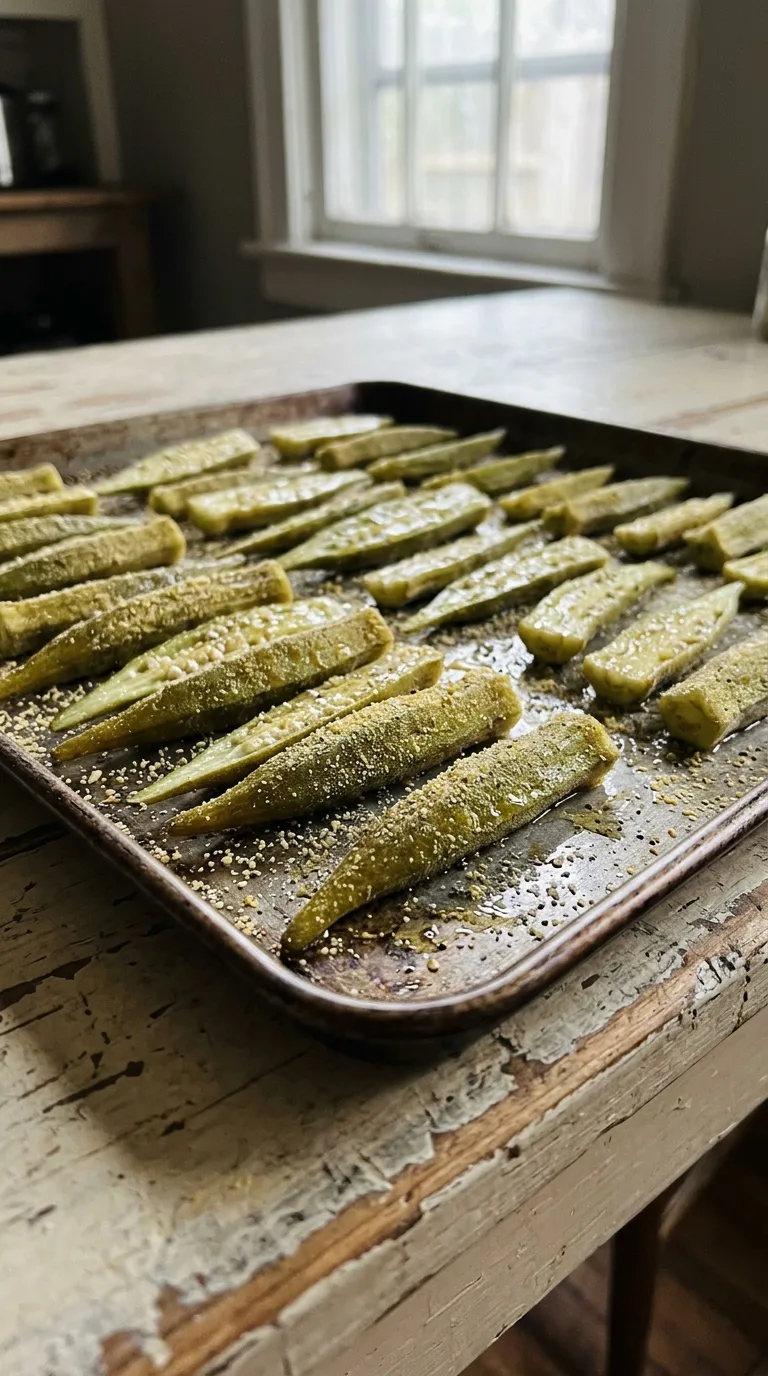
Arrange the tray
Spread the okra in a single, even layer on a baking sheet with the seed-side down. Leave space between the pieces to allow air circulation, which is necessary for crisping.
-
Bake the okra
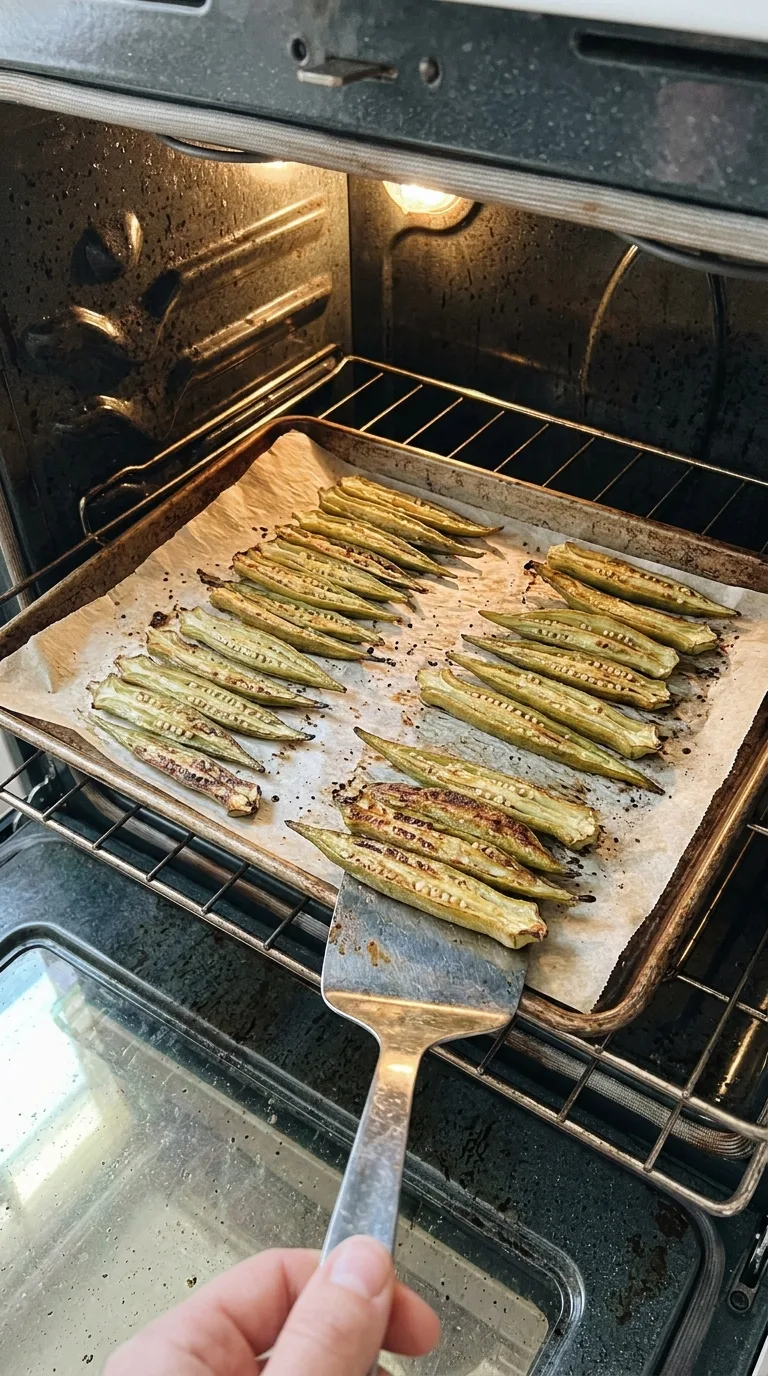
Bake for 12 minutes, then flip the rows with a spatula. Bake for another 4 minutes until the edges look golden-brown.
-
Broil for finish
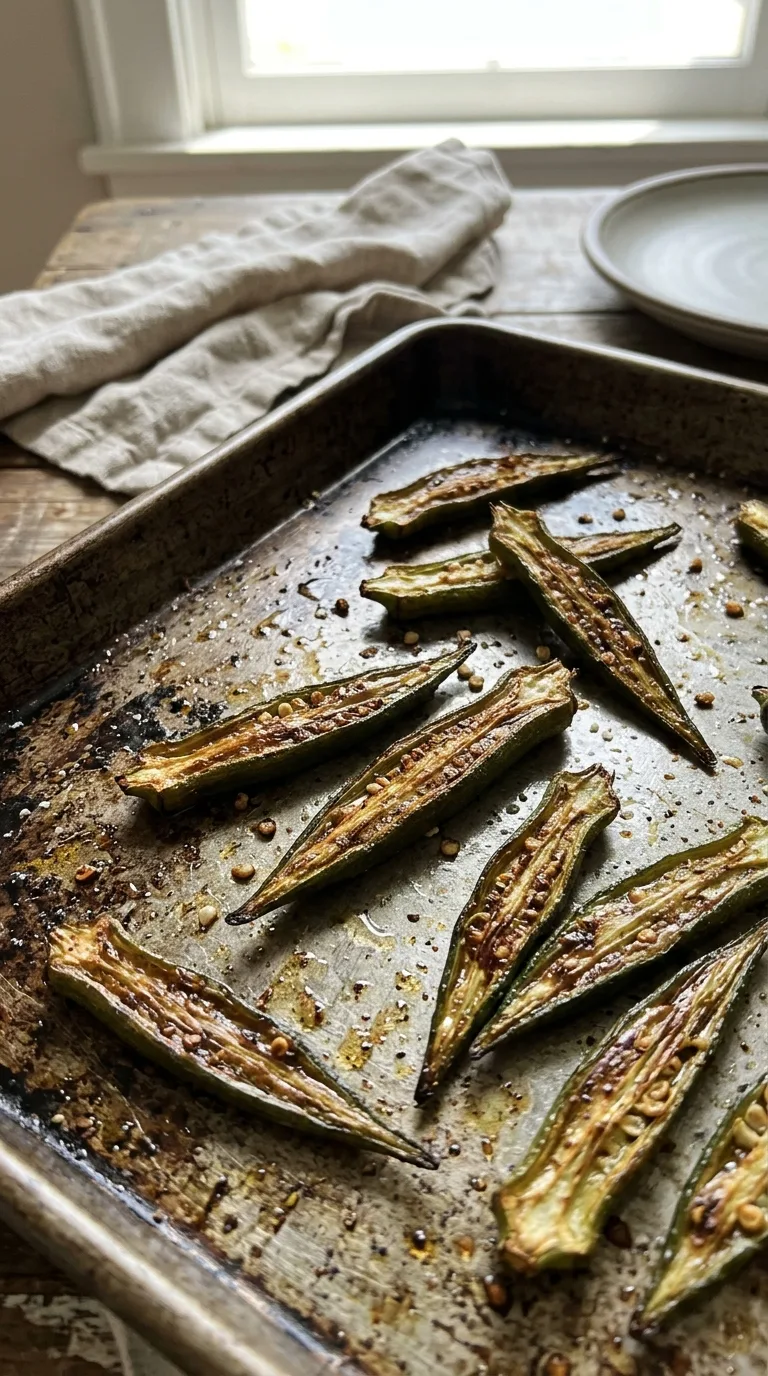
Switch the oven to broil and cook for 2 minutes. Watch the tray closely to prevent burning until the surface achieves a deep, crisp finish.
-
Rest and garnish
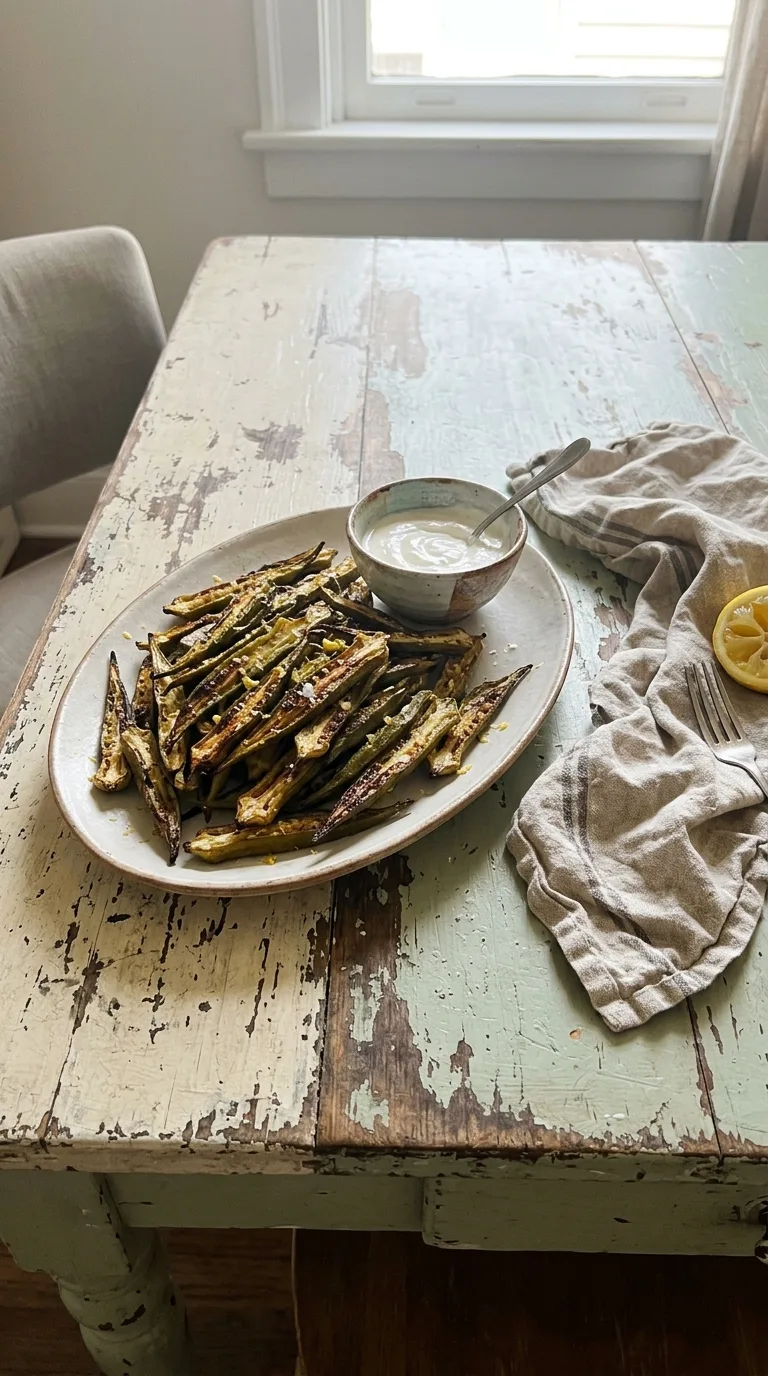
Remove the sheet from the oven and let the okra rest for 2 minutes. Sprinkle with lemon zest if desired before transferring to a platter.
Dry the okra thoroughly with paper towels before tossing them in oil. Excess moisture is the main cause of slime during baking. If the okra looks damp after coating, you will get a steamed texture rather than a crisp finish.
Cornmeal Substitutes
Use polenta or finely ground rice flour if cornmeal is unavailable. These alternatives provide a similar grit that helps the oil adhere to the okra. Using a fine flour instead will result in a softer crust rather than the distinct, grainy crunch that cornmeal provides to the finish.
What to serve with it
Pair this dish with a chilled cucumber-mint yoghurt dip or creamy garlic hummus to balance the heat of the paprika. For a different presentation, place the roasted pieces on warm toasted baguette slices to create a savoury bruschetta. Add chilli flakes or a balsamic glaze for additional flavour.
Storing and reheating
Store leftovers in an airtight container in the fridge for 2 to 4 days. For longer storage, keep them in the freezer for up to 3 months. To restore the crunch, reheat them in the oven at 200°C (400°F) rather than using a microwave.
Nutrition per serving
- Calories
- 115
- Protein
- 3.2 g
- Carbs
- 6.8 g
- Fat
- 8.5 g
- Fiber
- 2.1 g
- Sugar
- 2.4 g
Estimated, and offered as a guide rather than a medical figure.
Made it? Rate it.
Questions people ask
What temperature do you bake okra at?
Bake the okra at 220°C (425°F). This high heat is necessary to roast the vegetable quickly and evaporate moisture, which ensures the edges caramelise and become crisp rather than steaming and turning soft.
Can you bake okra instead of frying?
Yes. Baking at high temperatures with a light coating of oil and cornmeal creates a texture similar to frying. This method reduces the amount of fat used while maintaining a satisfying crunch.
Which is the best way to cook okra?
High-heat roasting or broiling is the best way to avoid a slimy texture. By using a single layer on a baking sheet and drying the pods thoroughly, you ensure the vegetable crisps effectively.

About the author
Mary C. Rivero
Mary C. Rivero specializes in comforting home‑cooked meals, from hearty pastas and sheet‑pan dinners to quick weeknight snacks. Her recipes feature clear, step‑by‑step directions and practical tips, helping readers create flavorful dishes with confidence and ease.