Roasted Butternut Carrot Ginger Soup: Spiced Vegetable Puree
Good roasted butternut carrot ginger soup starts with a dense, heavy butternut squash that feels solid for its size. Pick a squash with matte, pale tan skin and a thick neck, since the neck holds the most flesh and fewest seeds. Put back any squash with soft spots, deep bruises, or a shiny green rind that signals it was picked too early and will taste watery rather than sweet.
You cut 1 kg of butternut squash into 2.5 cm cubes and 500 g of carrots into 2 cm rounds so the denser carrots soften at the same pace. Roasting them at 200°C (400°F) concentrates their natural sugars before you simmer them with 30 g of fresh ginger root, ground cumin, ground turmeric, and 1 litre of halal vegetable stock. Pureeing the pot with 120 ml of full-fat coconut milk and fresh lemon juice gives you a smooth, deeply savoury soup ready in 1 hour 5 minutes.
Roasted Butternut Carrot Ginger Soup: Spiced Vegetable Puree
Recipe cardIngredients
Instructions
-
Coat and spread the vegetables
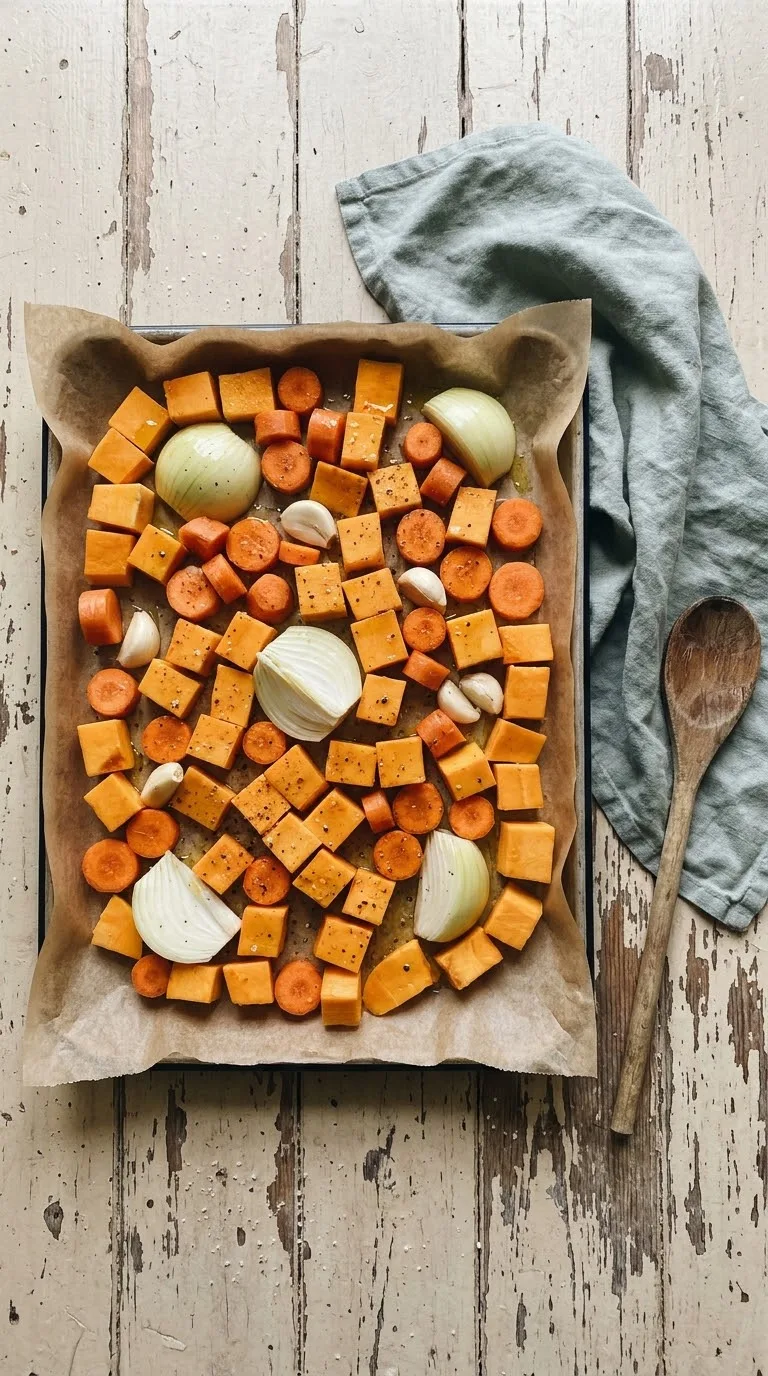
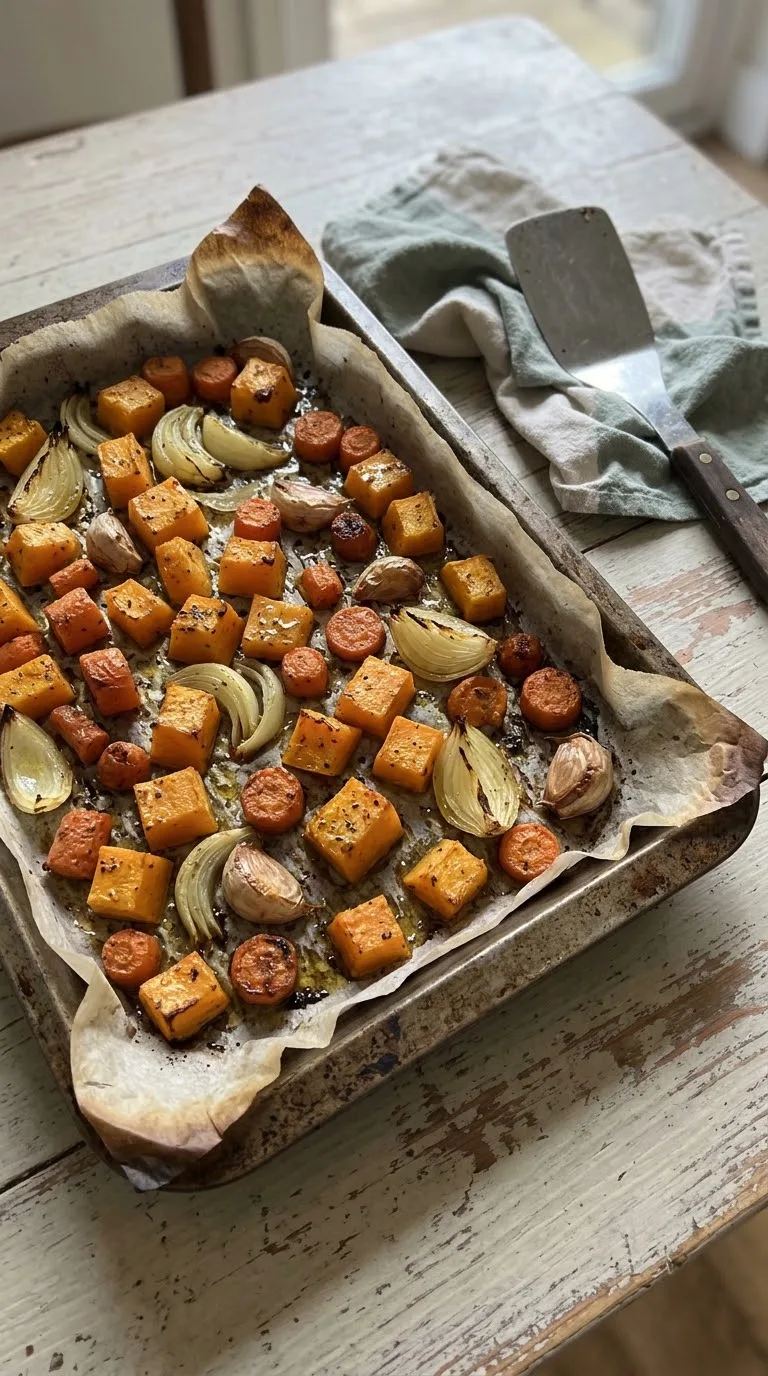
Preheat your oven to 200°C (400°F) and line a large rimmed baking tray with baking parchment. Pile the 2.5 cm butternut squash cubes, 2 cm carrot rounds, onion wedges, and whole garlic cloves onto the tray, then toss with 2 tablespoons of the olive oil, 1/2 teaspoon of the fine sea salt, and 1/2 teaspoon of black pepper until glossy. Spread everything into a single layer with space between the pieces so dry heat circulates and browns the edges instead of trapping steam.
-
Roast until caramelised
Slide the tray onto the centre shelf of the oven and roast for 35 to 40 minutes, turning the pieces halfway through with a spatula. Pull the tray out when a fork slides easily into the thickest carrot round and the squash edges show deep golden-brown patches. Those browned edges carry the concentrated natural sugars that keep the finished soup rich rather than flat.
-
Bloom the ginger and spices
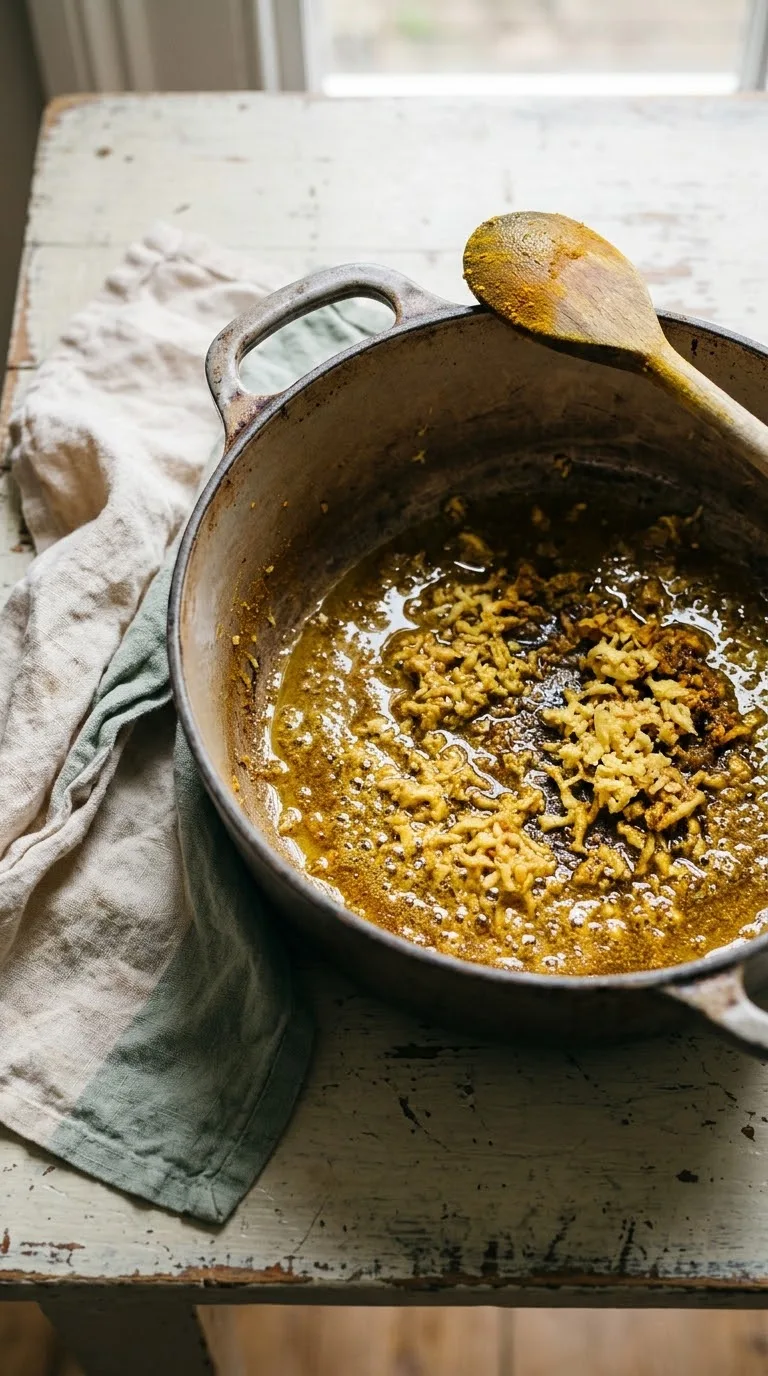
During the final 5 minutes of roasting, warm the remaining 1 tablespoon of olive oil in a large heavy-bottomed saucepan over medium heat. Add the 30 g of grated fresh ginger root, 1/2 teaspoon of ground cumin, and 1/4 teaspoon of ground turmeric, stirring constantly for 1 minute until the oil turns golden and smells warm and sharp. Toasting the spices in fat unlocks oil-soluble aromatics that plain simmering cannot draw out.
-
Simmer with vegetable stock
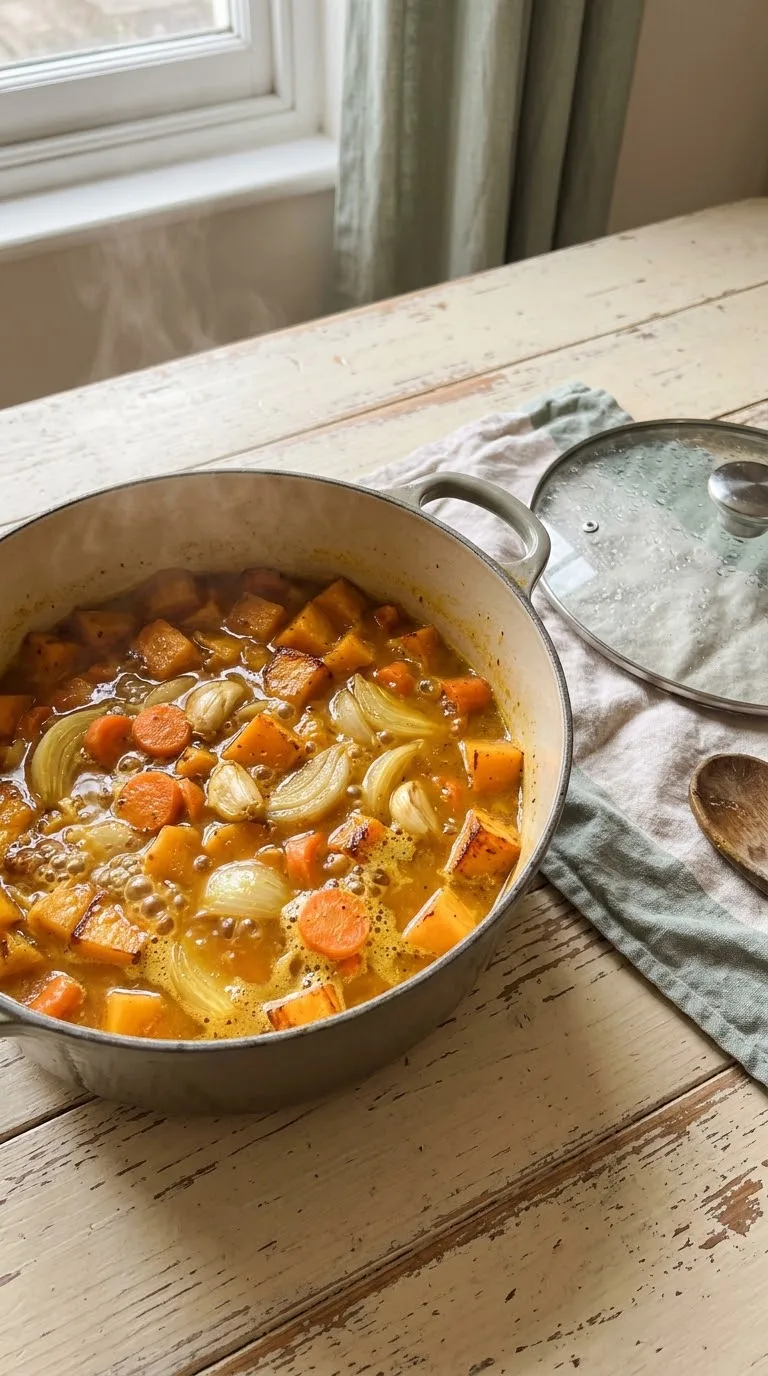
Tip the roasted butternut squash, carrots, onion, and soft whole garlic cloves straight from the parchment into the saucepan with the toasted spices. Pour in the 1 litre of halal vegetable stock and add the remaining 1/2 teaspoon of fine sea salt. Bring the pot to a gentle boil over medium-high heat, then drop the heat to low, cover with a lid, and simmer for 10 minutes so the roasted vegetables soften completely and release their sweetness into the broth.
-
Puree until smooth
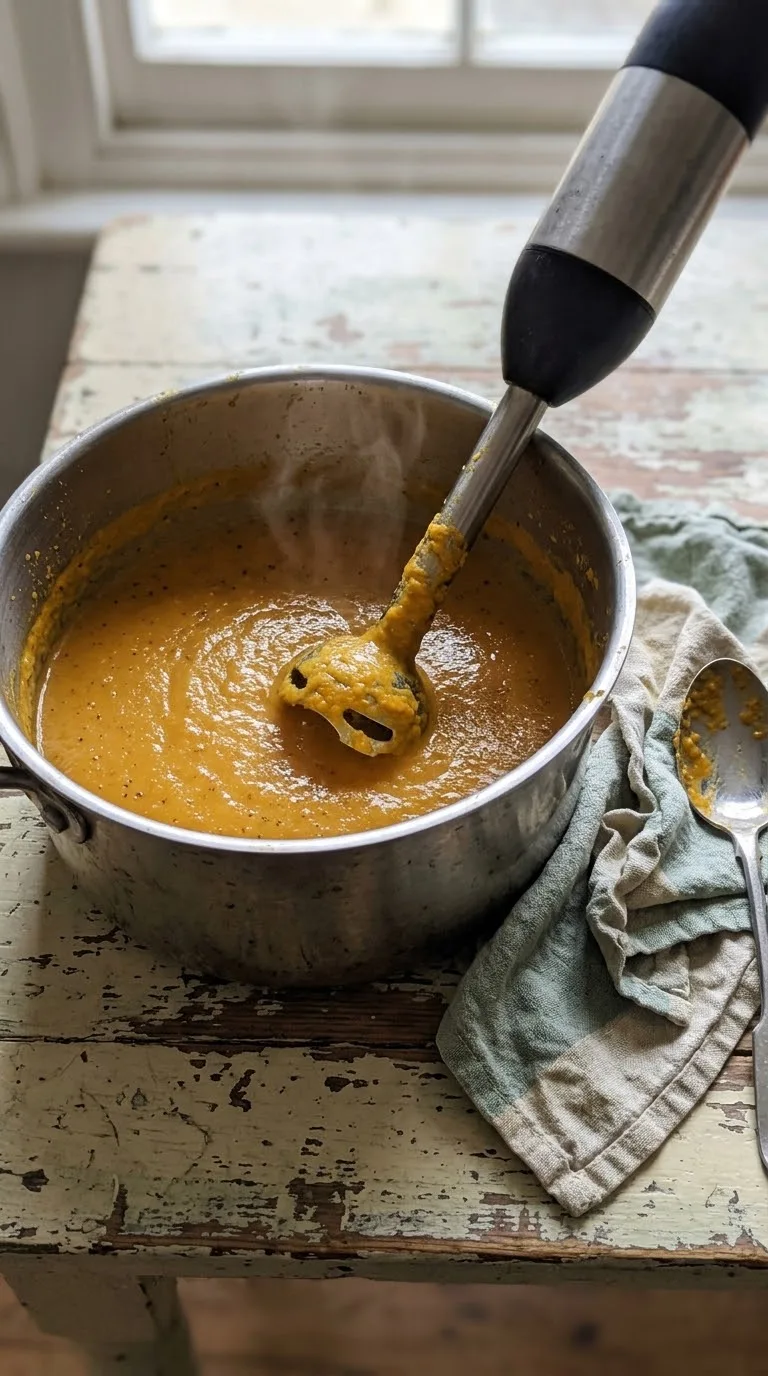
Take the saucepan off the heat and blend the soup directly in the pot with an immersion stick blender until completely smooth and free of any fibrous carrot bits. If you use a countertop blender, let the pot cool for 5 minutes first, remove the centre cap from the blender lid, and hold a folded tea towel over the opening so trapped steam escapes without blowing the lid off.
-
Stir in coconut milk and lemon
Pour the 120 ml of full-fat coconut milk and 1 tablespoon of freshly squeezed lemon juice into the smooth puree and stir until the colour turns a uniform pale burnt orange. The lemon juice cuts through the sweetness of the squash and carrots so the ginger stands out clearly. Taste the soup and adjust with a pinch more salt or pepper, or thin it with a splash of warm water or extra vegetable stock if it coats the spoon too thickly.
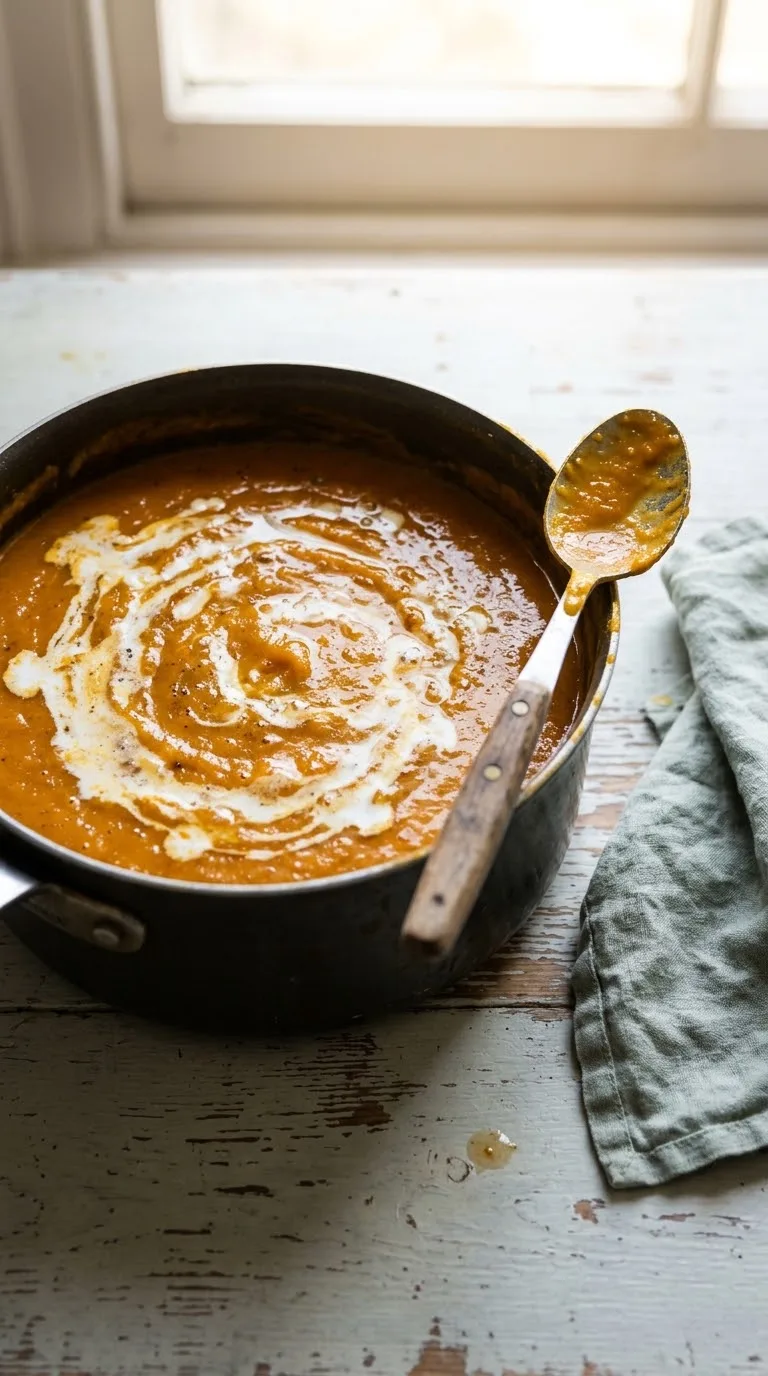
-
Ladle and garnish to serve
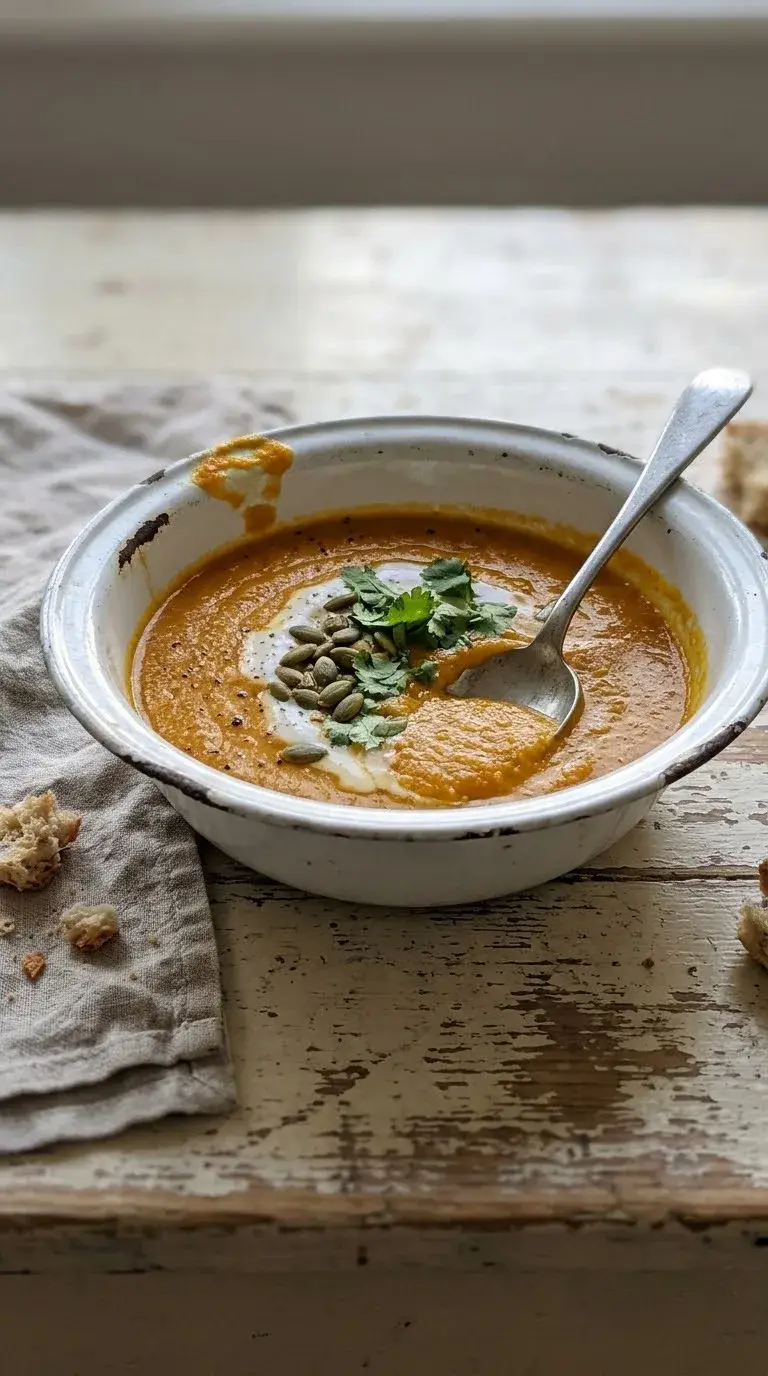
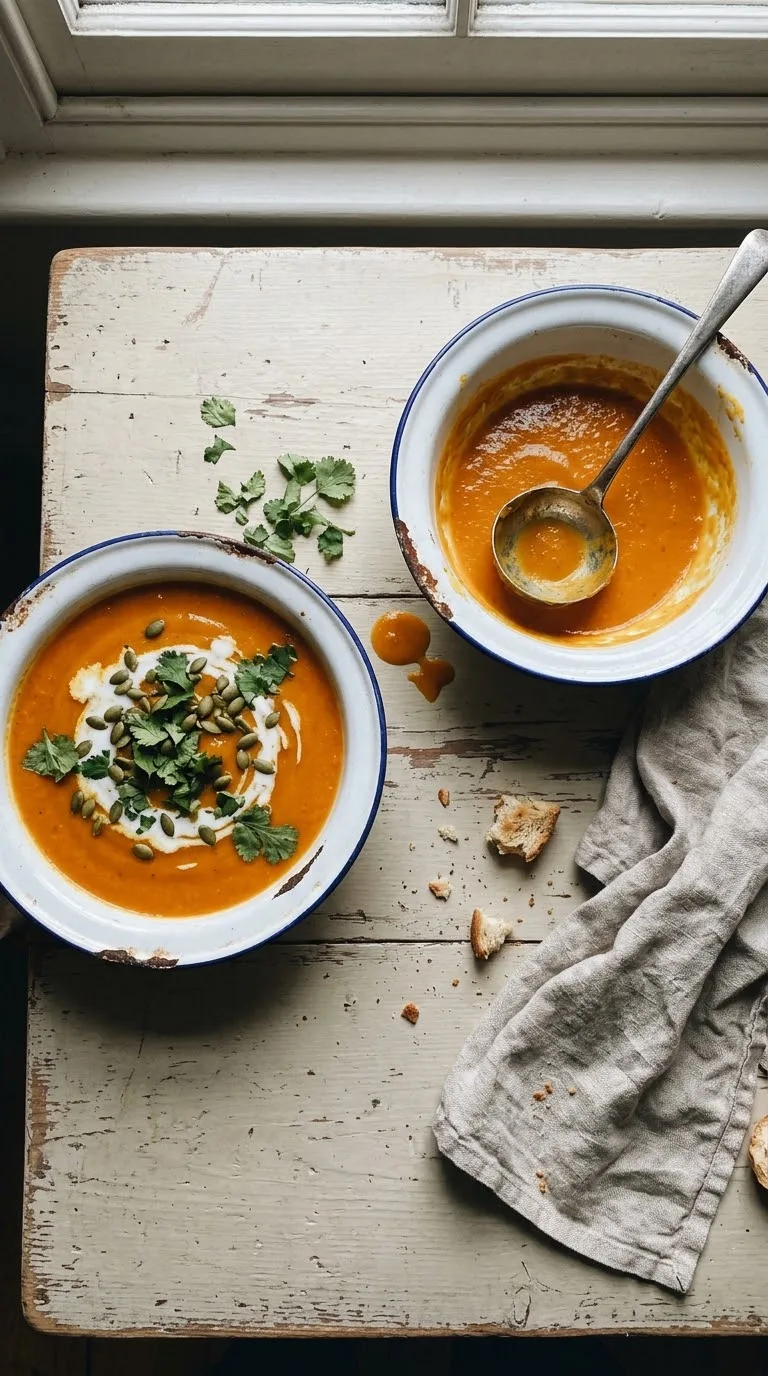
Ladle the hot soup into warmed bowls so it holds its heat at the table. Swirl a little extra coconut milk across the surface of each bowl, then scatter the 2 tablespoons of roasted pumpkin seeds and 2 tablespoons of roughly chopped fresh coriander leaves over the top before serving.
Overcrowding the baking tray is the main reason this soup tastes watery instead of deeply savoury. If the vegetables touch and pile up, they release moisture and steam pale rather than caramelising; if you see liquid pooling around them halfway through roasting, split the batch onto a second lined tray right away.
Butternut squash and what to use instead
If you cannot find butternut squash, replace the 1 kg with peeled sweet potatoes or red kuri squash cut into the same 2.5 cm cubes. Sweet potatoes soften slightly faster and yield a denser, earthier puree, while red kuri squash matches the nutty sweetness closely without needing any change to the roasting time.
What to serve with it
Serve this soup alongside thick slices of warm crusty sourdough bread or toasted garlic flatbreads for dipping into the velvety puree. For a lighter lunch, pair a smaller bowl with a crisp green salad tossed in a lemon-tahini dressing, or swap the roasted pumpkin seeds for spiced roasted chickpeas to add extra crunch and plant-based protein.
Storing and reheating
Cool the soup completely to room temperature within 2 hours of cooking, then seal it in an airtight container in the refrigerator for up to 4 days. For longer storage, freeze portions in freezer-safe containers leaving 2.5 cm of headspace for up to 3 months, thaw overnight in the fridge, and reheat gently on the hob with a splash of stock.
Nutrition per serving
- Calories
- 215
- Protein
- 4.2 g
- Carbs
- 27.5 g
- Fat
- 11.4 g
- Fiber
- 5.8 g
- Sugar
- 9.6 g
Estimated, and offered as a guide rather than a medical figure.
Made it? Rate it.
Questions people ask
Can I use ground ginger instead of fresh ginger root?
No, do not substitute ground ginger for the 30 g of fresh ginger root. Fresh ginger gives the soup its sharp, bright heat when bloomed in olive oil, whereas dried ginger tastes dusty and muted against sweet roasted squash.
Why are the carrots cut smaller than the butternut squash?
Slice the carrots into 2 cm rounds while cutting the butternut squash into 2.5 cm cubes because carrots are denser. Equal-sized pieces leave the carrots firm when the squash is already soft and caramelised at 200°C (400°F).
Does the coconut milk split if I freeze and reheat the soup?
No, the 120 ml of full-fat coconut milk stays stable in the freezer for up to 3 months. Thaw the soup overnight in the refrigerator and warm it gently over medium-low heat rather than boiling rapidly, which keeps the texture smooth.

About the author
Mary C. Rivero
Mary C. Rivero specializes in comforting home‑cooked meals, from hearty pastas and sheet‑pan dinners to quick weeknight snacks. Her recipes feature clear, step‑by‑step directions and practical tips, helping readers create flavorful dishes with confidence and ease.