Split Pea Puree: Creamy Herb and Olive Oil Side Dish
Most home cooks add salt too early or rush the simmer when making split pea puree, which leaves the skins tough and turns the mash chalky and grainy. If you pull the saucepan off the heat while the yellow split peas still hold their shape, no amount of blending will smooth out the grit.
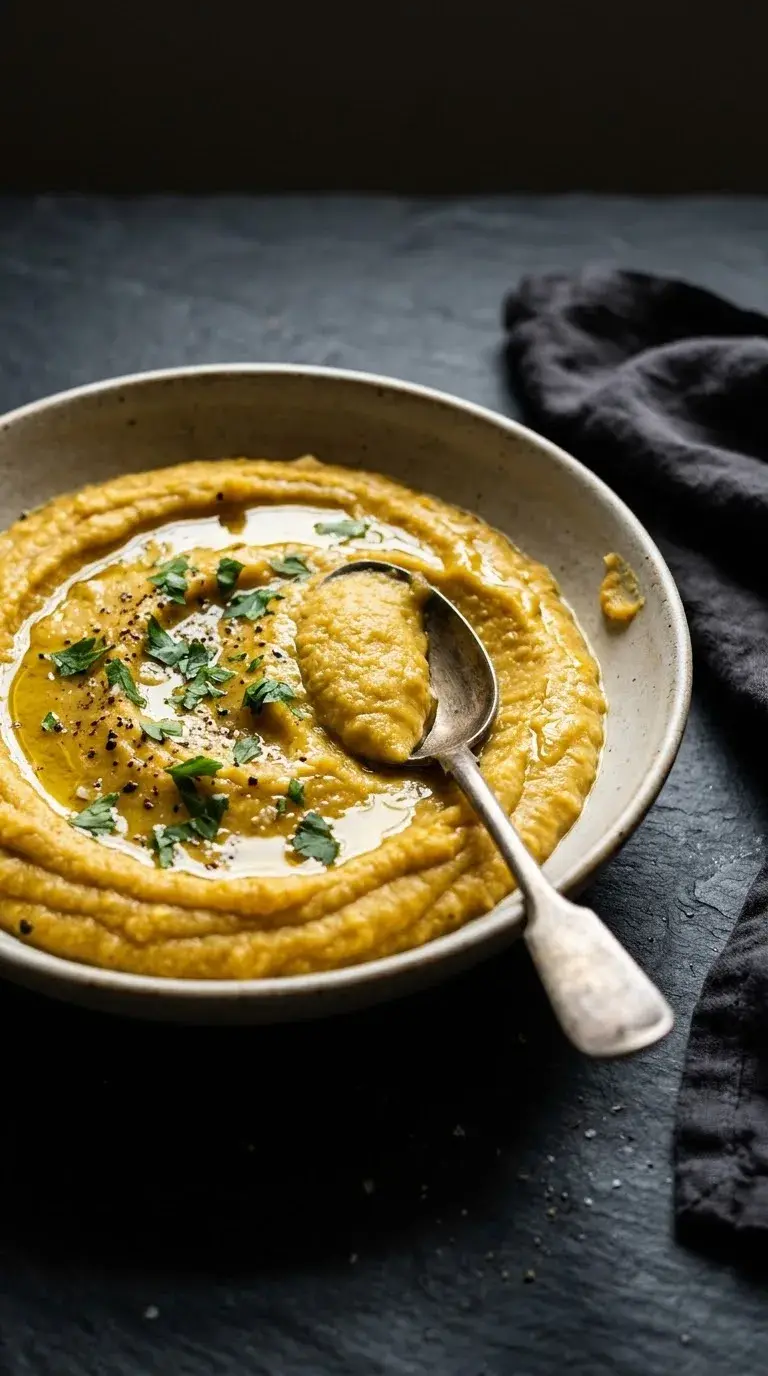
This dish is a comforting, savoury side made from 300 g yellow split peas simmered slowly in 1 litre vegetable stock with brown onion, carrot, celery, bay leaf, and fresh thyme. When cooked properly, the peas break down completely and blend with 15 ml extra virgin olive oil and 15 ml fresh lemon juice into a smooth, glossy puree that holds soft spoon swirls without needing any dairy.
The deciding step happens at the end of the 35 to 40 minutes gentle simmer and during blending. Test the peas between your fingers to ensure they crush effortlessly, then emulsify the remaining olive oil into the hot mash for 2 minutes so the mixture turns velvety rather than stiff.
Split Pea Puree: Creamy Herb and Olive Oil Side Dish
Recipe cardIngredients
Watch how it's made
Instructions
-
Rinse the yellow split peas
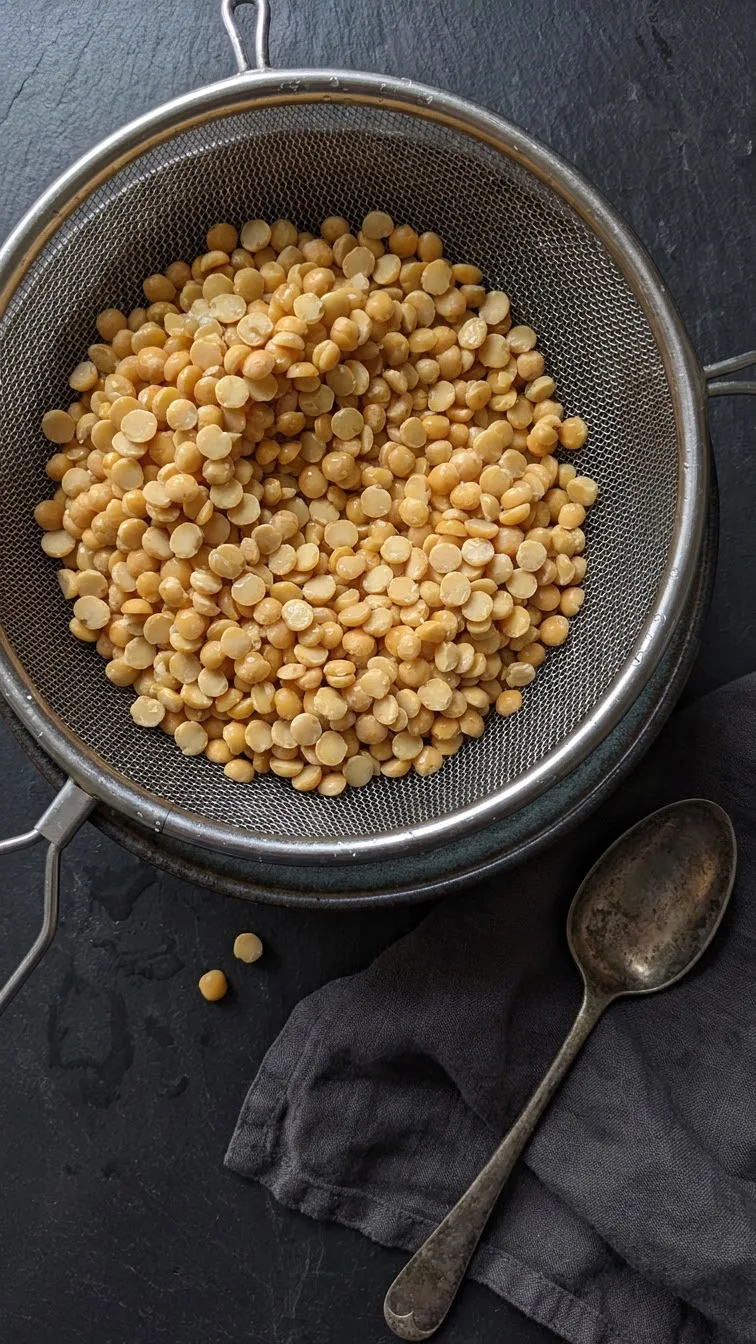
Place the 300 g yellow split peas in a fine-mesh sieve and rinse them thoroughly under cold running water for 1 minute until the water runs clear. Pick out any stray grit or discoloured peas and set the sieve aside to drain. Washing away surface starch stops the pot from boiling over later.
-
Soften the aromatic vegetables
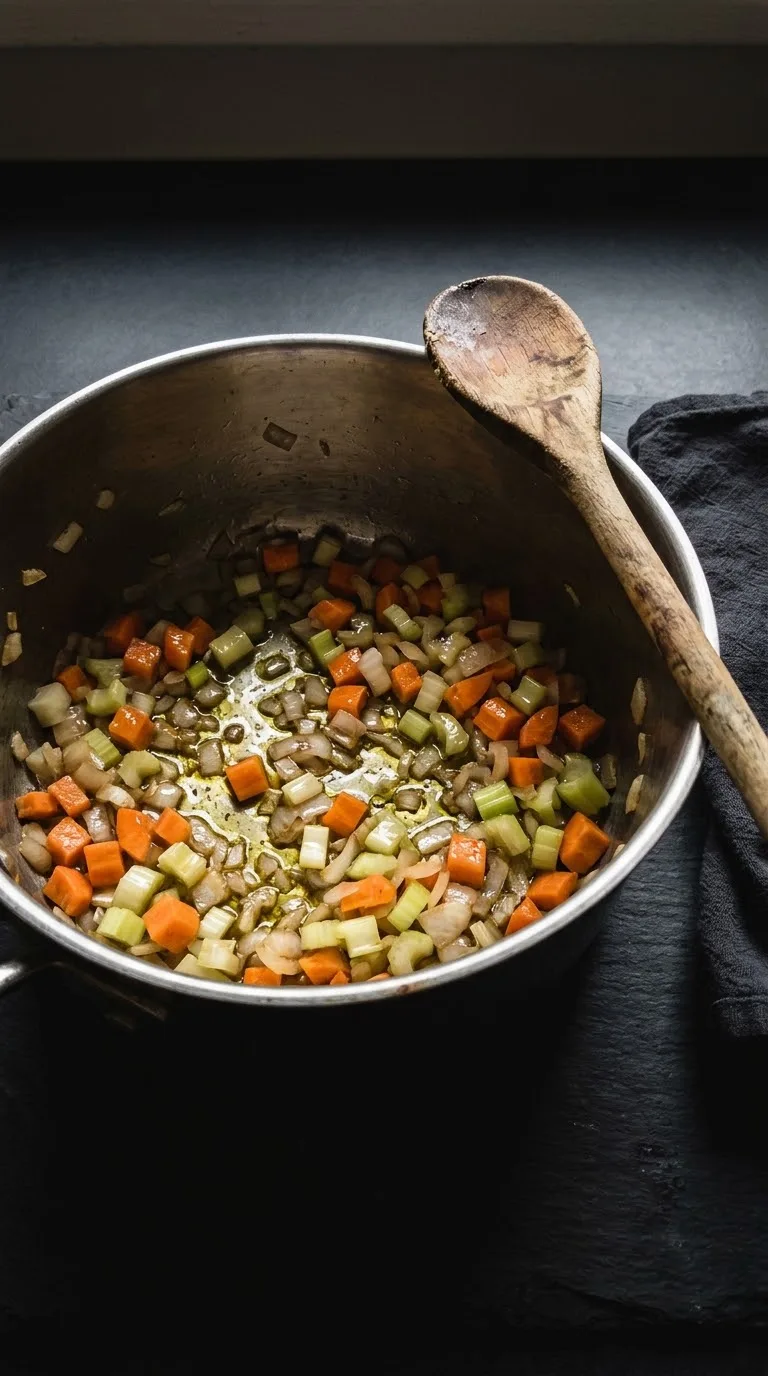
Heat 30 ml of the extra virgin olive oil in a large heavy-bottomed saucepan over medium heat until it shimmers. Add the finely chopped onion, diced carrot, and diced celery, and cook for 6 to 8 minutes while stirring occasionally. Stop once the onion turns translucent and soft without browning, so the base stays sweet rather than sharp.
-
Bloom garlic and oregano
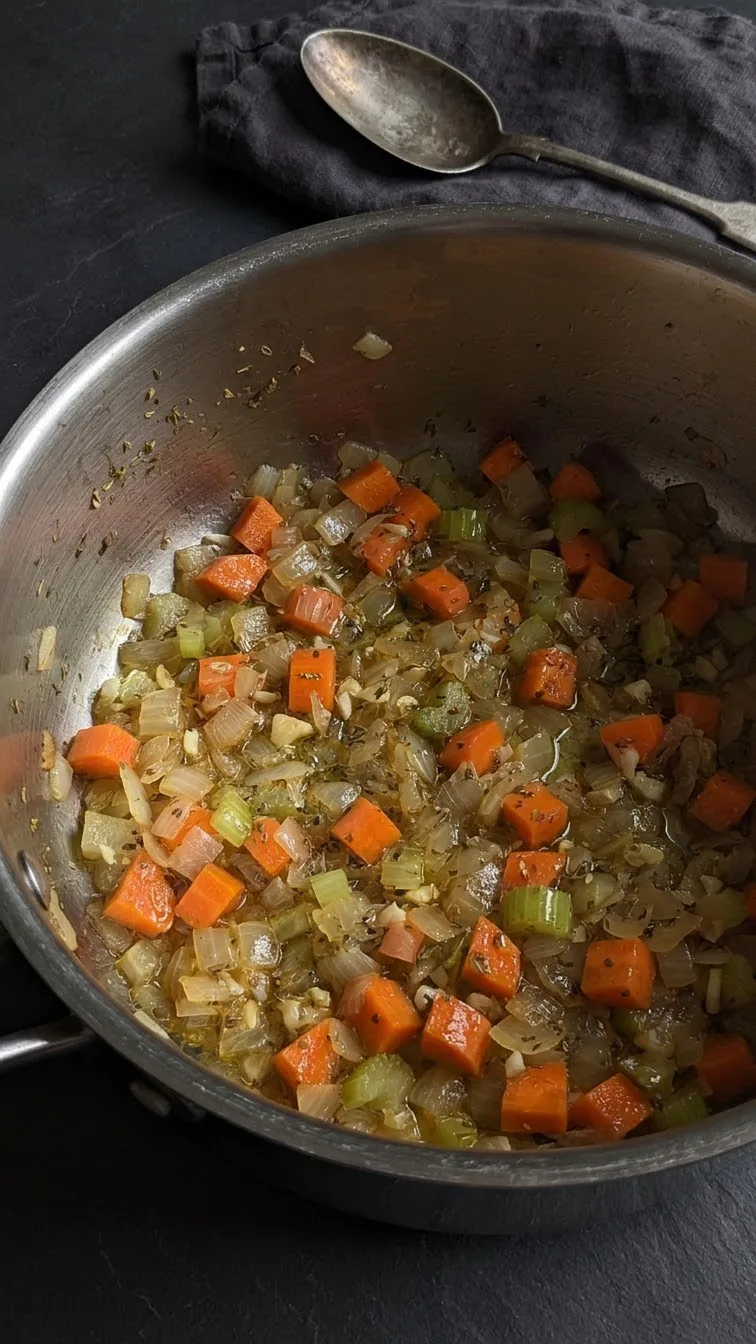
Stir in the minced garlic and 1 teaspoon dried oregano, cooking for 1 minute until fragrant. Watch the pan closely and keep stirring so the garlic does not brown, because burnt garlic turns the entire puree bitter.
-
Coat peas and add stock
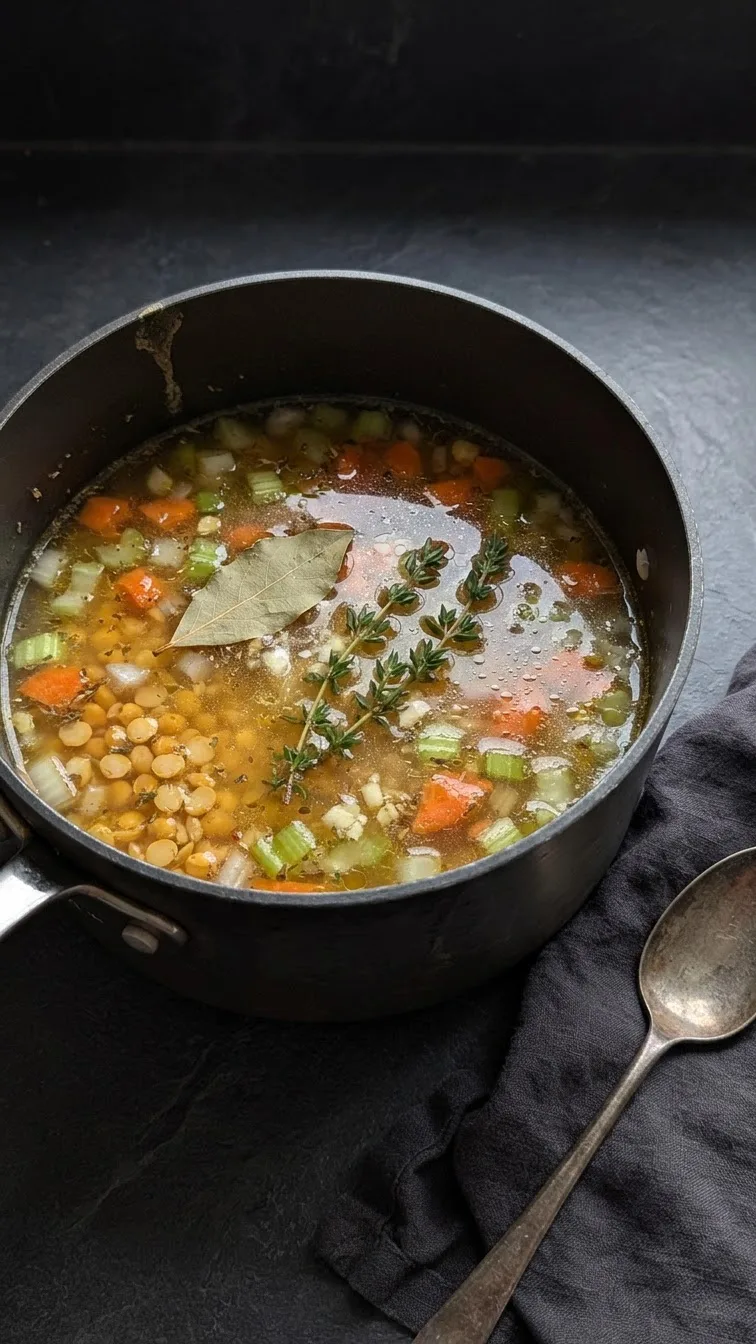
Tip the drained yellow split peas into the saucepan and stir well for 1 minute to coat every pea in the aromatic oil and vegetables. Pour in the 1 litre vegetable stock, then drop in the bay leaf and 2 sprigs fresh thyme. Coating the peas in oil first helps them heat evenly and carry flavour.
-
Boil and skim the foam
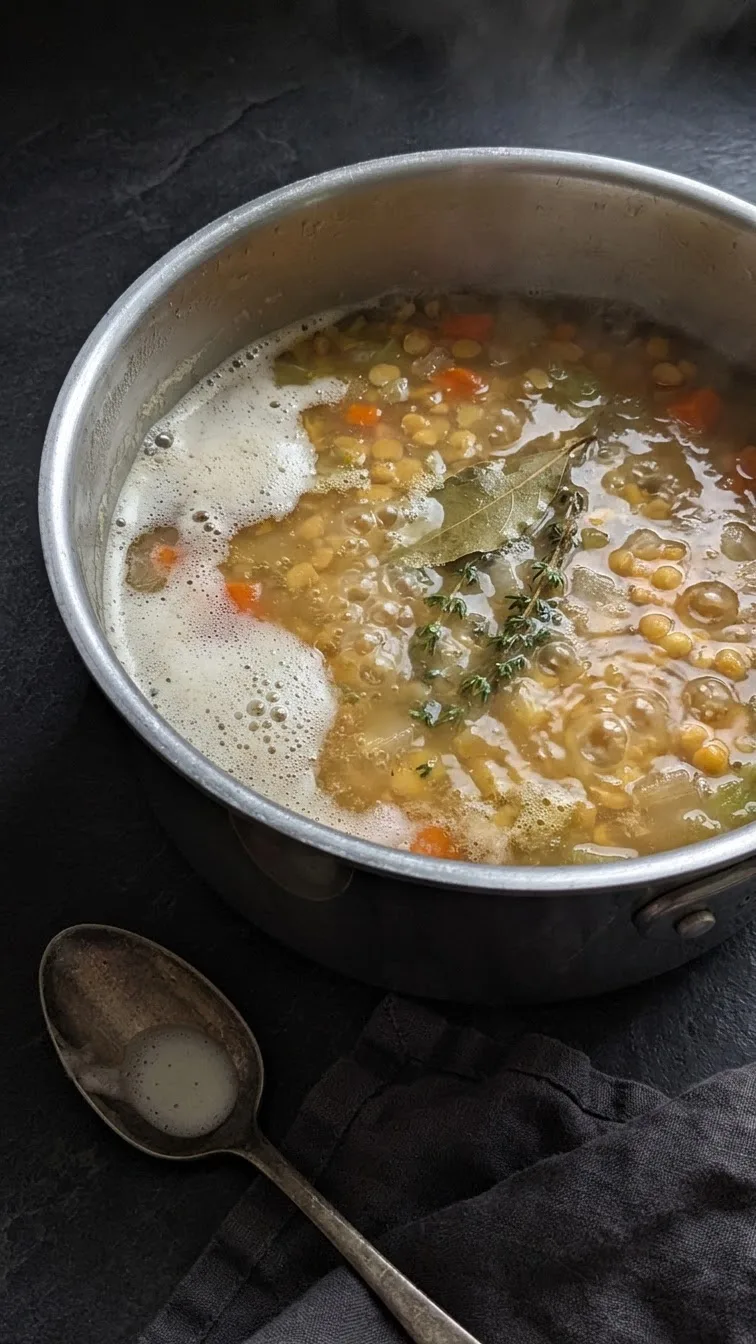
Increase the heat to high and bring the liquid to a vigorous boil. Use a spoon to skim off any white foam that rises to the surface, as removing these proteins gives you a cleaner flavour and prevents boil-overs. Immediately reduce the heat to low so the pot holds a gentle simmer.
-
Simmer until completely tender
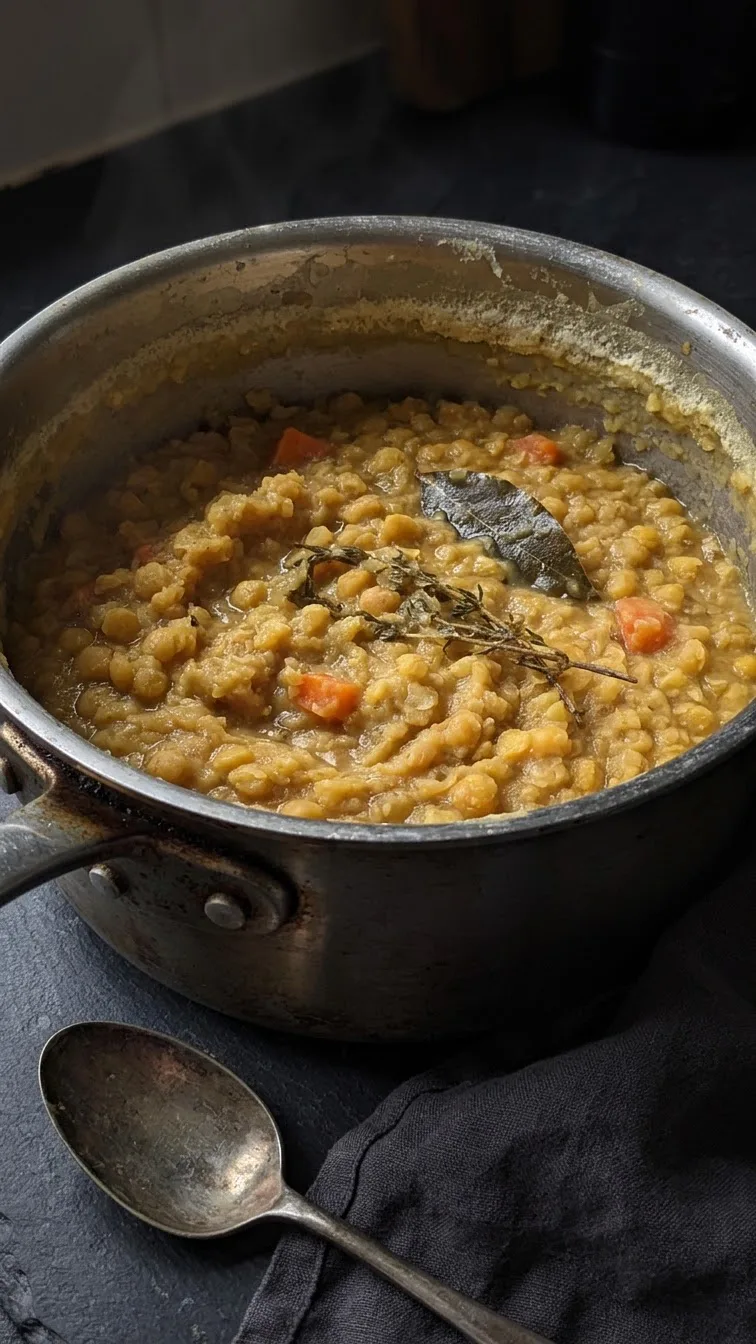
Cover the saucepan with a tight-fitting lid and simmer gently for 35 to 40 minutes, stirring occasionally to stop the peas from catching on the base. Test a pea between your fingers; it should squash effortlessly with zero chalky resistance, and most of the stock should be absorbed.
-
Cool and blend until glossy
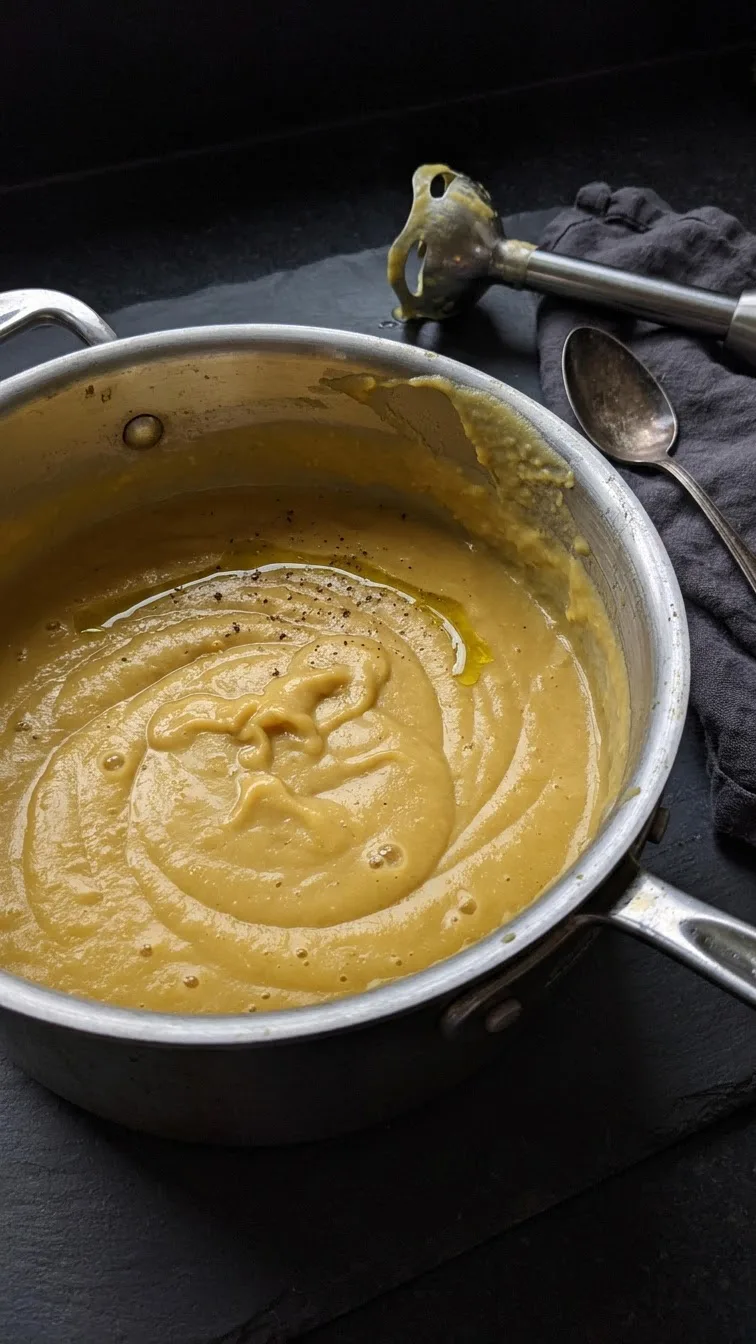
Take the saucepan off the heat, discard the bay leaf and woody thyme stems, and let the mixture stand uncovered for 5 minutes to cool slightly. Add the remaining 15 ml extra virgin olive oil, 15 ml fresh lemon juice, 1 teaspoon fine sea salt, and 0.5 teaspoon freshly ground black pepper, then blend for 2 minutes until completely smooth. Emulsifying the oil at the end gives a velvety sheen without dairy; whisk in 30 ml to 60 ml warm water if the puree is too thick.
-
Season, swirl, and serve
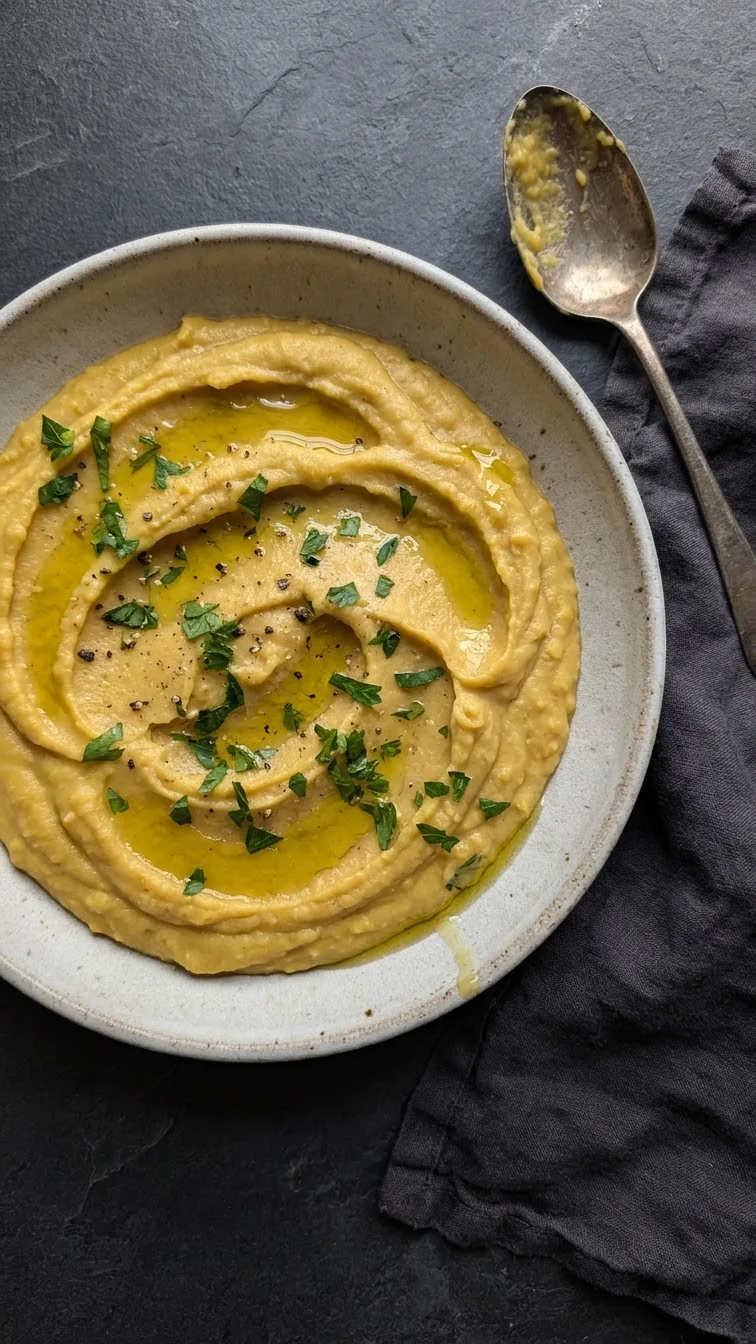
Taste the warm puree and adjust the seasoning with extra fine sea salt, black pepper, or fresh lemon juice if needed. Spoon it into a shallow serving bowl, drag the back of a spoon across the top to make ridges, and finish with a generous drizzle of extra virgin olive oil and 2 tablespoons finely chopped fresh flat-leaf parsley.
If the puree feels grainy or chalky after blending, the split peas did not simmer long enough before you added the lemon juice and salt. Acid and salt firm up pulse skins, so always crush a pea between your fingers to check that it is completely soft before you blend and season.
What goes wrong and why
Chalky, grainy puree happens when you add salt or lemon juice too early, or blend before the peas break down. Acid and salt toughen pulse skins during cooking. Crush a pea between your fingers after 35 to 40 minutes; it must squash effortlessly with zero resistance before you blend and season.
What to serve with it
Serve the puree warm beside grilled lamb chops, roasted chicken, or pan-seared sea bass in place of mashed potatoes. You can also top it with caramelised red onions, toasted pine nuts, and crispy beef rashers, or serve it at room temperature as a meze dip with warm flatbreads, Kalamata olives, and cucumber batons.
Storing and reheating
Never leave cooked split pea puree at room temperature for more than 2 hours. Cool leftovers completely and store them in an airtight container in the refrigerator for up to 4 days, or freeze for up to 3 months leaving a 2 cm expansion gap. Reheat gently over low heat with a splash of water.
Nutrition per serving
- Calories
- 385
- Protein
- 18.8 g
- Carbs
- 51.2 g
- Fat
- 11.6 g
- Fiber
- 19.8 g
- Sugar
- 8.4 g
Estimated, and offered as a guide rather than a medical figure.
Made it? Rate it.
Questions people ask
Do I need to soak yellow split peas overnight before cooking?
No, yellow split peas do not need soaking. Because they are hulled and split, they cook through in 35 to 40 minutes. Rinse them thoroughly under cold running water for 1 minute to remove surface starch so the saucepan does not boil over.
Can I use green split peas instead of yellow split peas?
Yes, you can substitute green split peas at the same 300 g weight. Green split peas have a slightly grassier, sweeter flavour and produce a pale sage colour, though they take a few extra minutes of gentle simmering to break down completely smooth.
Why did my split pea puree turn thick after sitting in the bowl?
Split pea starches continue absorbing moisture and firming up as the mash cools down. Whisk in 30 ml to 60 ml warm water or vegetable stock over low heat to restore its glossy, spoonable consistency before serving.

About the author
Mary C. Rivero
Mary C. Rivero specializes in comforting home‑cooked meals, from hearty pastas and sheet‑pan dinners to quick weeknight snacks. Her recipes feature clear, step‑by‑step directions and practical tips, helping readers create flavorful dishes with confidence and ease.