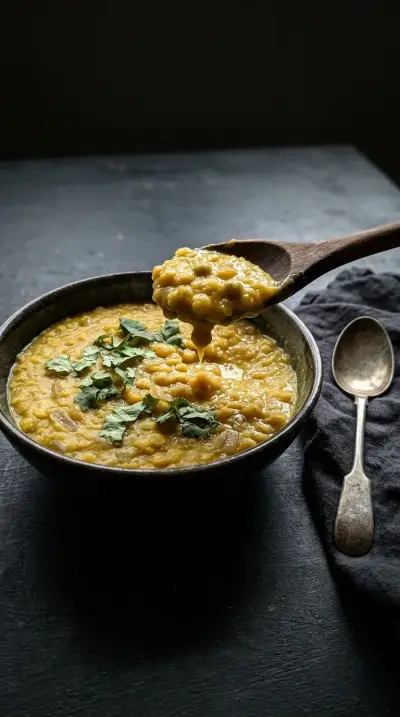
Split Pea Curry: Indian Spiced Pulse Stew
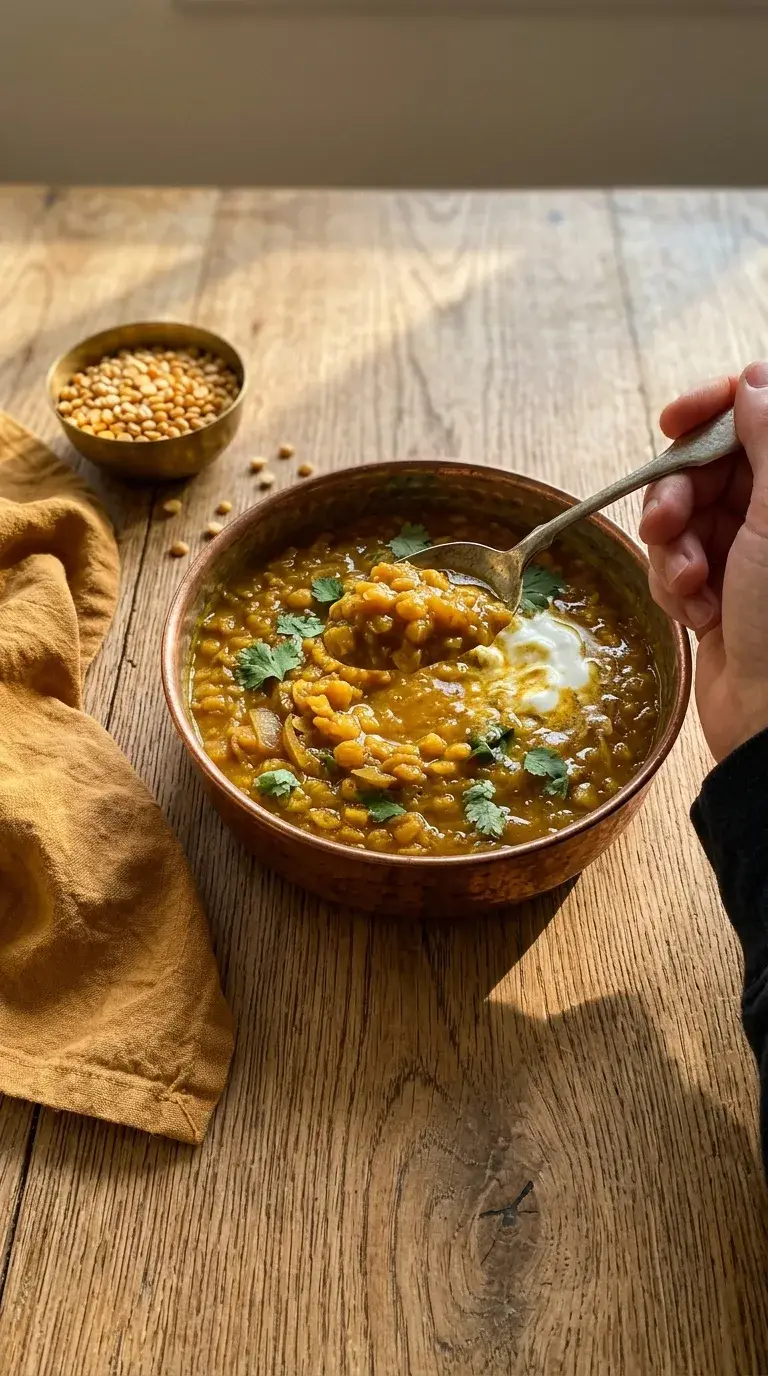
Traditional Indian pulse dishes often require hours of slow simmering to soften the legumes. This split pea curry uses yellow split peas to reduce the cook time to 45 minutes while maintaining a deep depth of flavour. You use olive oil to sauté the aromatics, which provides a neutral base that allows the turmeric and garam masala to remain the primary notes of the dish.
The result is a thick, savoury stew with a velvety consistency. You decide the final texture in step 7 by using an immersion blender to partially blend the peas. Stir in the fresh lemon juice and chopped coriander at the very end. This prevents the acid from affecting the cooking process and ensures the fresh herbs do not lose their bright colour and scent under high heat.
Split Pea Curry: Indian Spiced Pulse Stew
Recipe cardIngredients
Instructions
-
Prepare the peas
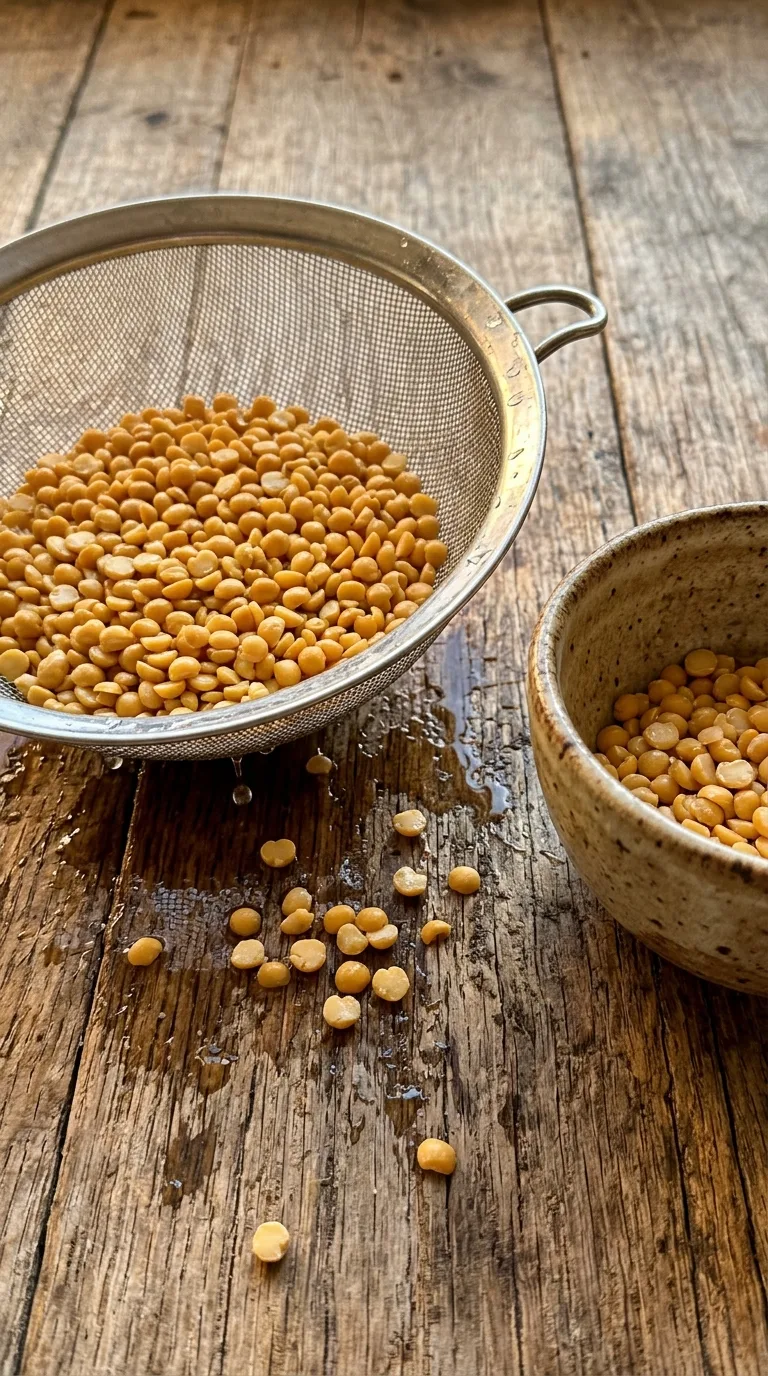
Rinse the split peas under cold running water in a sieve. Continue until the water runs clear to remove excess starch. Transfer them to a bowl and set them aside.
-
Sauté the aromatics
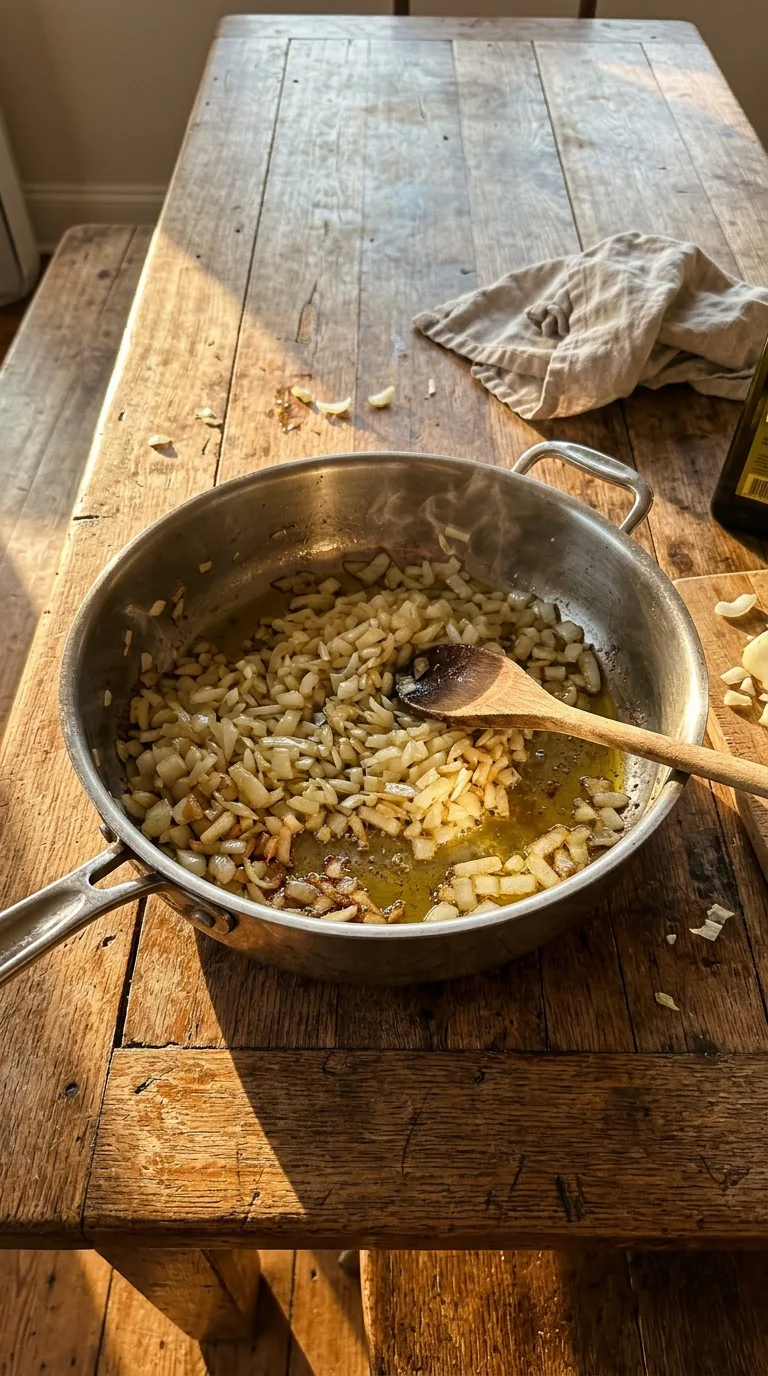
Heat the olive oil in a large saucepan over medium heat. Add the chopped onion and sauté for 5 minutes. You want the onion to be translucent and slightly brown to build a savoury base.
-
Add fresh aromatics
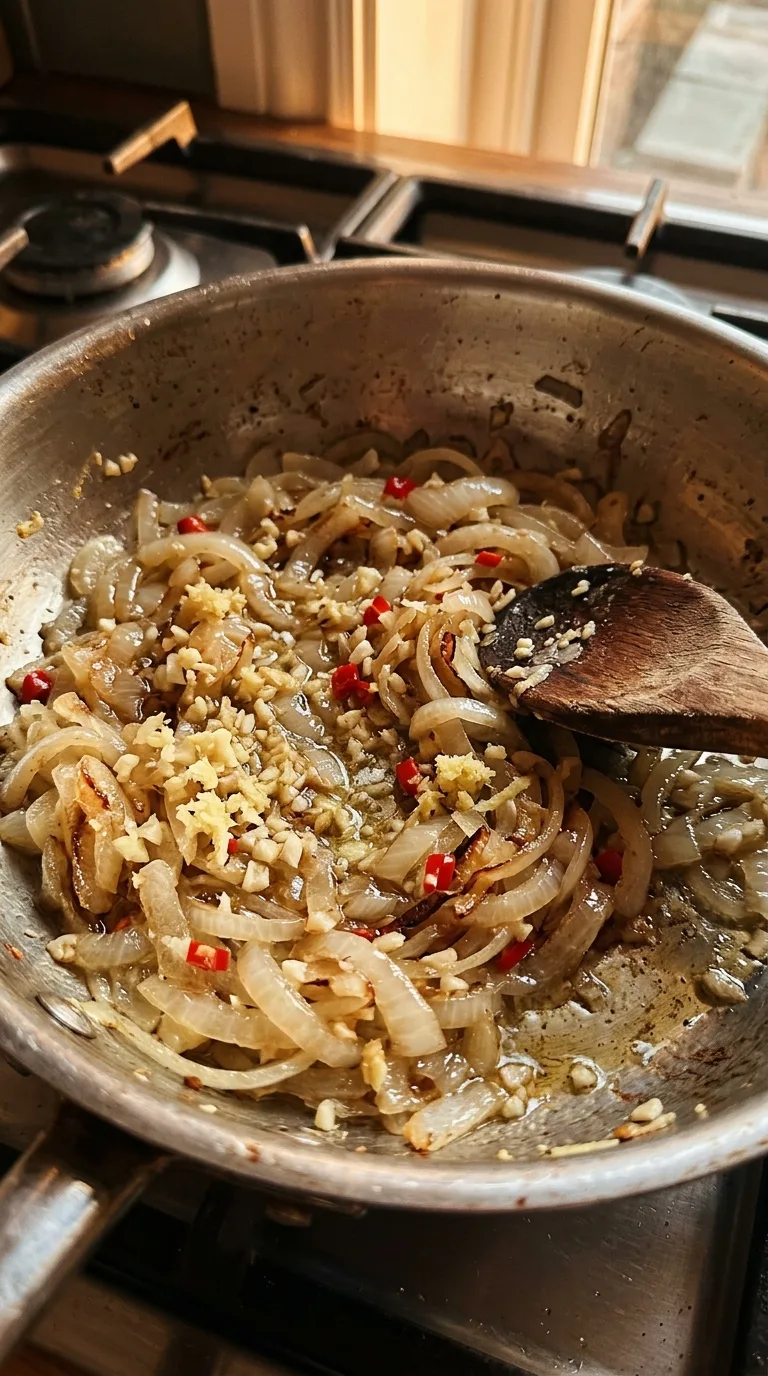
Stir in the minced garlic, grated ginger and chopped chilli. Cook for 1 minute until fragrant. Do not let the garlic brown too deeply or it will turn bitter.
-
Toast the spices
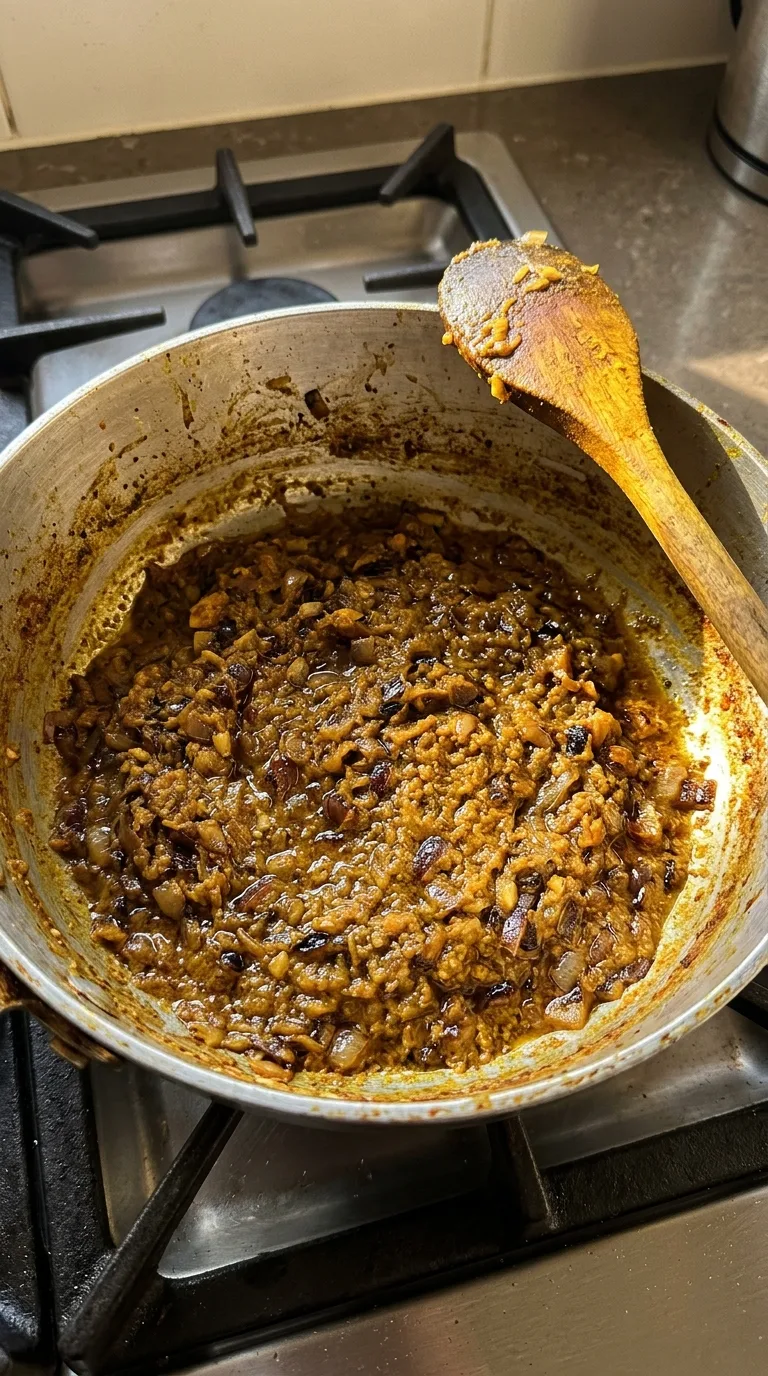
Add the cumin, coriander, turmeric and garam masala. Stir constantly for 1 minute. Toasting the spices in oil releases their essential oils for a deeper flavour.
-
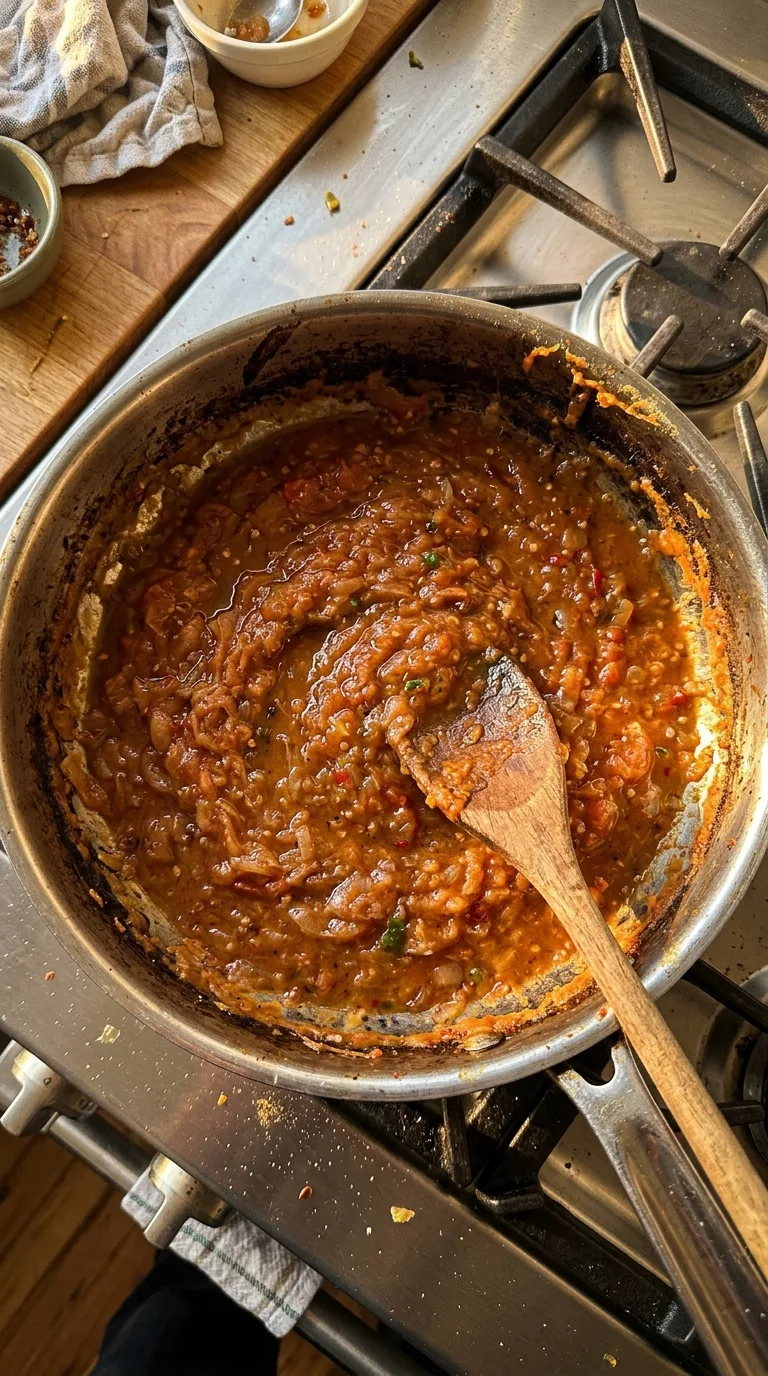
Thicken the base
Pour in the crushed tomatoes and apple juice. Cook for 3 minutes while stirring occasionally. The mixture should thicken slightly to concentrate the tomato flavour.
-
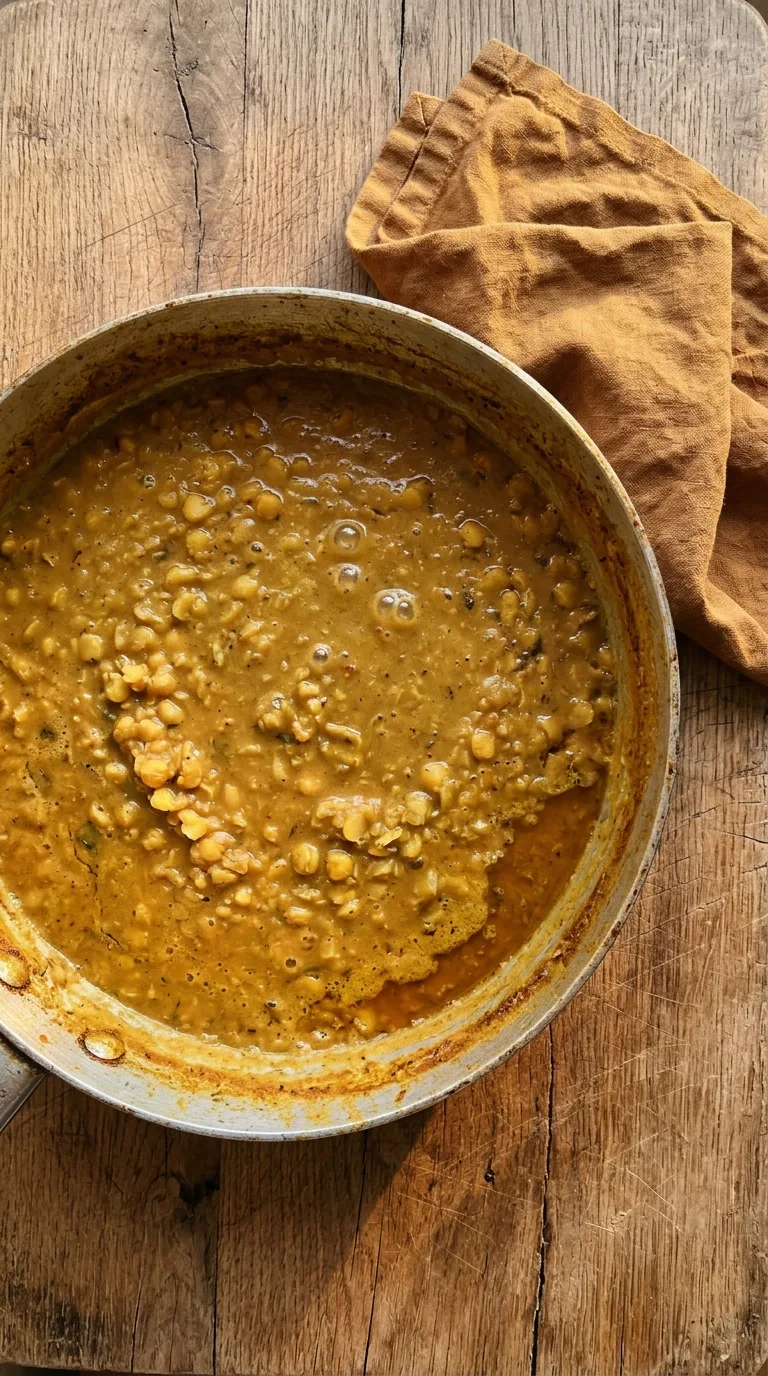
Simmer the curry
Add the rinsed split peas, vegetable stock and salt. Bring to a gentle boil, then reduce the heat to low and cover. Simmer for 35 minutes until the peas are soft and breaking apart.
-
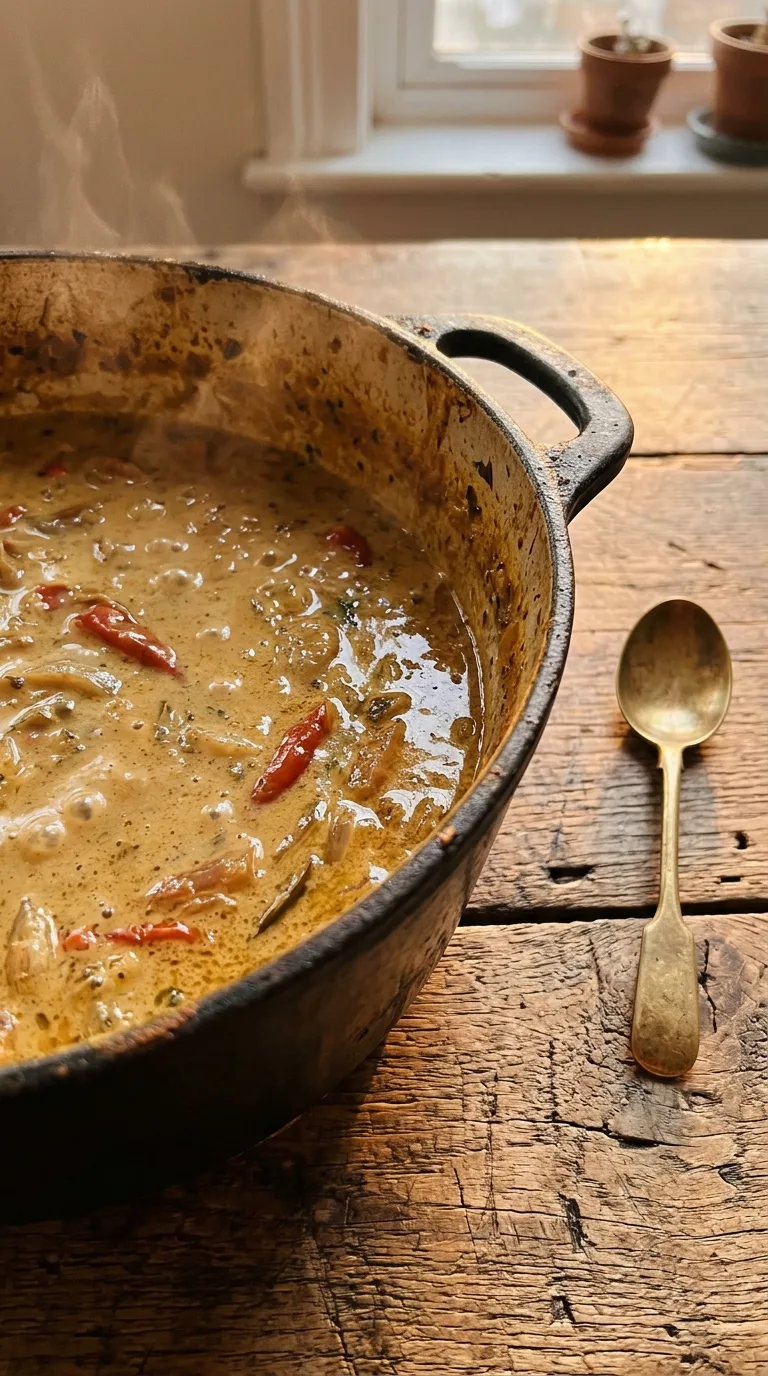
Refine the texture
Use an immersion blender to partially blend the curry directly in the pot if you prefer a smoother consistency. Stir in the coconut milk and black pepper. Simmer uncovered for 5 minutes to let the flavours meld.
-
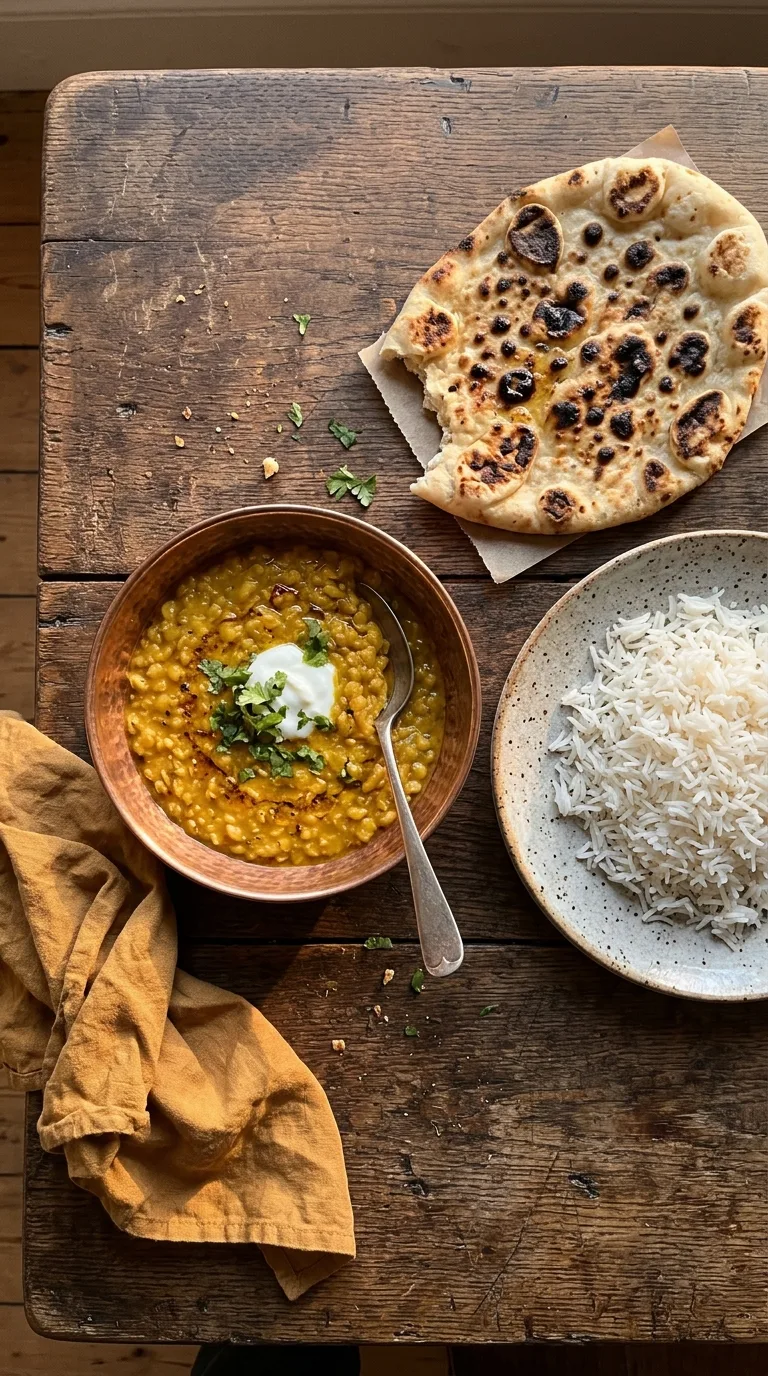
Finish and serve
Remove the pot from the heat. Stir in the fresh lemon juice and chopped coriander. The acid in the lemon juice cuts through the richness of the peas and coconut milk.
Watch the spices closely during the toasting phase. If you smell burning or see the spices darken rapidly, stir them immediately or add a splash of water. Burnt spices will impart a bitter flavour to the entire curry that cannot be removed.
How it differs from the traditional method
This version uses ground spices for a faster cook time. Traditional methods often rely on whole spices tempered in hot oil for a deeper, more complex aromatic base. Choose the traditional approach if you have more time and want a more pungent, authentic flavour profile in your curry.
Storing and reheating
Store the curry in a shallow airtight container in the fridge for up to 3 days. You may also freeze it in a freezer-proof container for up to 3 months. Thaw the curry overnight in the refrigerator before reheating it gently on the stove to maintain the texture.
Nutrition per serving
- Calories
- 215
- Protein
- 12.4 g
- Carbs
- 28.2 g
- Fat
- 6.1 g
- Fiber
- 9.5 g
- Sugar
- 7.1 g
Estimated, and offered as a guide rather than a medical figure.
Made it? Rate it.
Questions people ask
What are split peas called in India?
Split peas are generally known as dal. This term covers a wide variety of dried and split pulses, which form the protein basis of many Indian dishes and vary by region and colour.
What can I do with a bag of split peas?
Use them to make hearty stews, thick soups, or curries. Because they break down during cooking, they act as a natural thickener for sauces while providing significant plant-based protein and fibre.
What are the ingredients for pea curry?
This recipe requires yellow split peas, onion, garlic, ginger, chilli, and a blend of cumin, coriander, turmeric, and garam masala. It is finished with crushed tomatoes, vegetable stock, lemon juice, and fresh coriander.

About the author
Mary C. Rivero
Mary C. Rivero specializes in comforting home‑cooked meals, from hearty pastas and sheet‑pan dinners to quick weeknight snacks. Her recipes feature clear, step‑by‑step directions and practical tips, helping readers create flavorful dishes with confidence and ease.