Yes, You Can Freeze Homemade Chicken Broth Safely and Easily
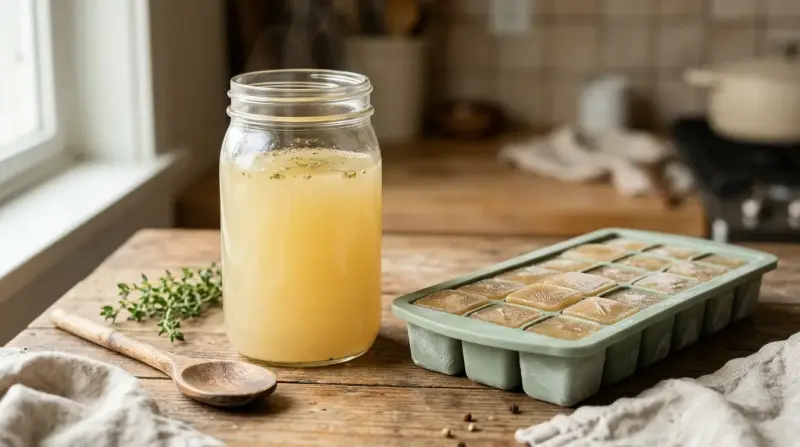
Yes, homemade chicken broth can be frozen safely; cool it fully, strain out solids, portion it, and store in airtight containers for up to three months while preserving flavour and nutrition. Ensure the broth reaches a safe temperature before chilling, label each package with the date, and use within the recommended storage period for best quality.
Freezing Options Compared
| Method | Time & Effort | Result | Ideal For |
|---|---|---|---|
| Large freezer‑safe containers | 10‑15 min prep, minimal handling | Rich, full‑bodied broth, but slower thaw | Cooking big batches, soups that need several cups |
| Ice‑cube trays | 15‑20 min prep, extra step of transferring | Portion‑size convenience, quick thaw | Adding exact amounts to sauces, rice or quinoa |
| Freezer‑grade Zip‑lock bags | 10‑12 min prep, flexible portioning | Space‑efficient, easy to label and reseal | Smaller households, variable‑size recipes |
Freezing in Large Containers
Start by bringing the freshly made broth to a gentle boil for one minute to destroy any residual bacteria. Then allow it to cool at room temperature for no longer than two hours before transferring to the refrigerator to reach below 5 °C (41 °F). Once chilled, ladle the broth into glass jars or sturdy plastic containers, leaving a 2‑centimetre headspace to allow for expansion. Seal tightly and label with the preparation date. Store at –18 °C (0 °F) or colder; the broth will retain its quality for up to three months. This method is perfect for recipes that call for larger volumes, such as a pot of soup or a stew, because you can pour directly from the container without extra thaw time. For additional guidance on freezing liquids, see our article on Can You Freeze Chicken Pasta Bake? A Complete Guide.
Portioning with Ice‑Cube Trays
Ice‑cube trays give you bite‑size portions that melt in seconds. After the broth has been boiled and chilled, gently pour it into a silicone or metal tray, using a funnel to avoid spillage. Each standard cube holds about 15 ml (½ fl oz); a typical tray yields 24 cubes, roughly one cup. Once frozen solid (about four hours), pop the cubes into a labelled Zip‑lock bag and store at –18 °C (0 °F). When a recipe requires a specific amount, simply count the cubes—four cubes equal roughly 60 ml (2 fl oz). This approach is ideal for flavour‑intensive dishes like risotto, where a small volume of broth can be added gradually. The quick thaw also means you can drop the cubes straight into a hot pan; they will melt instantly, preserving the broth’s delicate aroma.
Using Freezer Bags for Flexible Portions
Freezer‑grade Zip‑lock bags combine space efficiency with custom portion sizes. Measure the chilled broth into a measuring jug; a common size is 250 ml (8 fl oz). Pour the liquid into the bag, squeeze out excess air, and seal, leaving a small gap for the broth to expand as it freezes. For a tidy stack, lay the sealed bag flat on a baking sheet, then place it in the freezer. After a few hours, cut the frozen block into sections with kitchen scissors—each piece can be as small as 50 ml (2 fl oz). This method works well for households that cook smaller meals or need to adjust quantities on the fly. Remember to label each bag with the date and volume. For further inspiration, read our piece on Can You Cook Chicken Wings From Frozen? Yes, Follow These Safe Steps.
Thawing and Using Frozen Broth
The safest way to thaw frozen broth is to transfer the container or bag to the refrigerator and let it defrost slowly overnight; this keeps the temperature above 4 °C (39 °F) and prevents bacterial growth. If you need broth quickly, place the sealed bag in a bowl of cold water, changing the water every 30 minutes, or use the defrost function of a microwave for short bursts, stirring frequently. Never refreeze broth that has been left at room temperature for more than two hours. Once thawed, bring the broth to a gentle boil for at least one minute before using, especially if you plan to serve it as a base for soups. For a comforting application, try our Chinese Apple Chicken Soup: Halal Fruit and Poultry Broth, which showcases how a simple frozen broth can be transformed into a soothing, aromatic dish.
A printable recipe card for "Chinese Apple Chicken Soup: Halal Fruit and Poultry Broth" is just below the article, ready to download or print.
Frequently asked questions
How long can frozen chicken broth be stored?
When kept at a steady –18 °C (0 °F) or lower, homemade chicken broth remains safe and retains good flavour for up to three months. After this period the broth may develop off‑notes, although it will still be safe to consume if it has been stored properly.
Do I need to remove fat before freezing?
Removing excess fat is optional but advisable; a thin layer of fat can protect the broth from freezer burn and add richness. If you prefer a leaner broth, chill it first, then skim the solidified fat before portioning.
Can I refreeze thawed broth?
Refreezing thawed broth is not recommended because repeated temperature changes increase the risk of bacterial growth and degrade flavour. If you have thawed more than you need, keep the remainder refrigerated and use within 2‑3 days.
What container size is best for freezing?
Choose containers that match your typical usage: 500 ml (17 fl oz) jars for large batches, 250 ml (8 fl oz) bags for moderate portions, and ice‑cube trays for small, quick‑add amounts. Always leave headspace for expansion.
Printable recipe card: Chinese Apple Chicken Soup: Halal Fruit and Poultry Broth
Save it, print it, or keep it on your phone while you cook.
Loading the recipe card…

About the author
Mary C. Rivero
Mary C. Rivero specializes in comforting home‑cooked meals, from hearty pastas and sheet‑pan dinners to quick weeknight snacks. Her recipes feature clear, step‑by‑step directions and practical tips, helping readers create flavorful dishes with confidence and ease.