Chicken and Sweet Potato Korma: Creamy Indian Curry
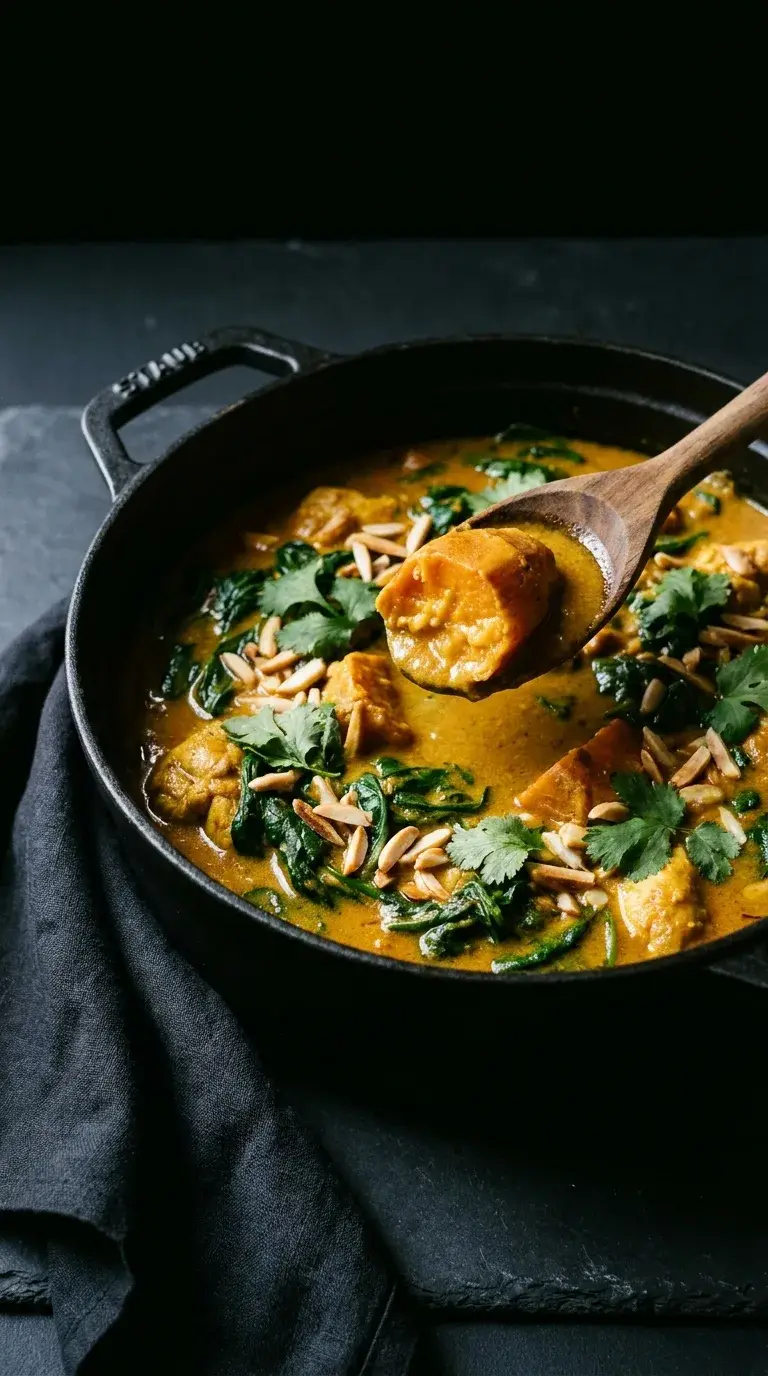
Traditional Indian kormas rely on a long process of grinding nuts and slow-cooking aromatics to build depth. This version of chicken and sweet potato korma uses jarred korma paste to reduce preparation time without losing the essential warmth of the spices. Use a Dutch oven to maintain a steady heat, which ensures the chicken stays tender while the root vegetables soften. This method allows you to achieve a complex flavour profile in a shorter window.
The result is a thick, savoury sauce with a gentle sweetness from the tubers. You must sauté the onions until golden brown to enrich the base and reduce bitterness in the final sauce. Lower the heat to a simmer for 20 minutes once the lid is on so the sweet potatoes cook through without breaking apart. Finish the dish with lemon juice to cut through the richness of the coconut milk.
Chicken and Sweet Potato Korma: Creamy Indian Curry
Recipe cardIngredients
Watch how it's made
Instructions
-
Sauté the aromatics
Heat 15 g sunflower oil over medium heat in a Dutch oven until shimmering. Add the chopped onion, minced ginger, garlic, and sliced chili. Sauté for 3–4 min until translucent to build a sweet, fragrant base.
-
Fry the paste
Stir in the korma paste. Cook for 2 min. You must do this to let the spices release their aroma and deepen the flavour of the sauce.
-
Brown the chicken
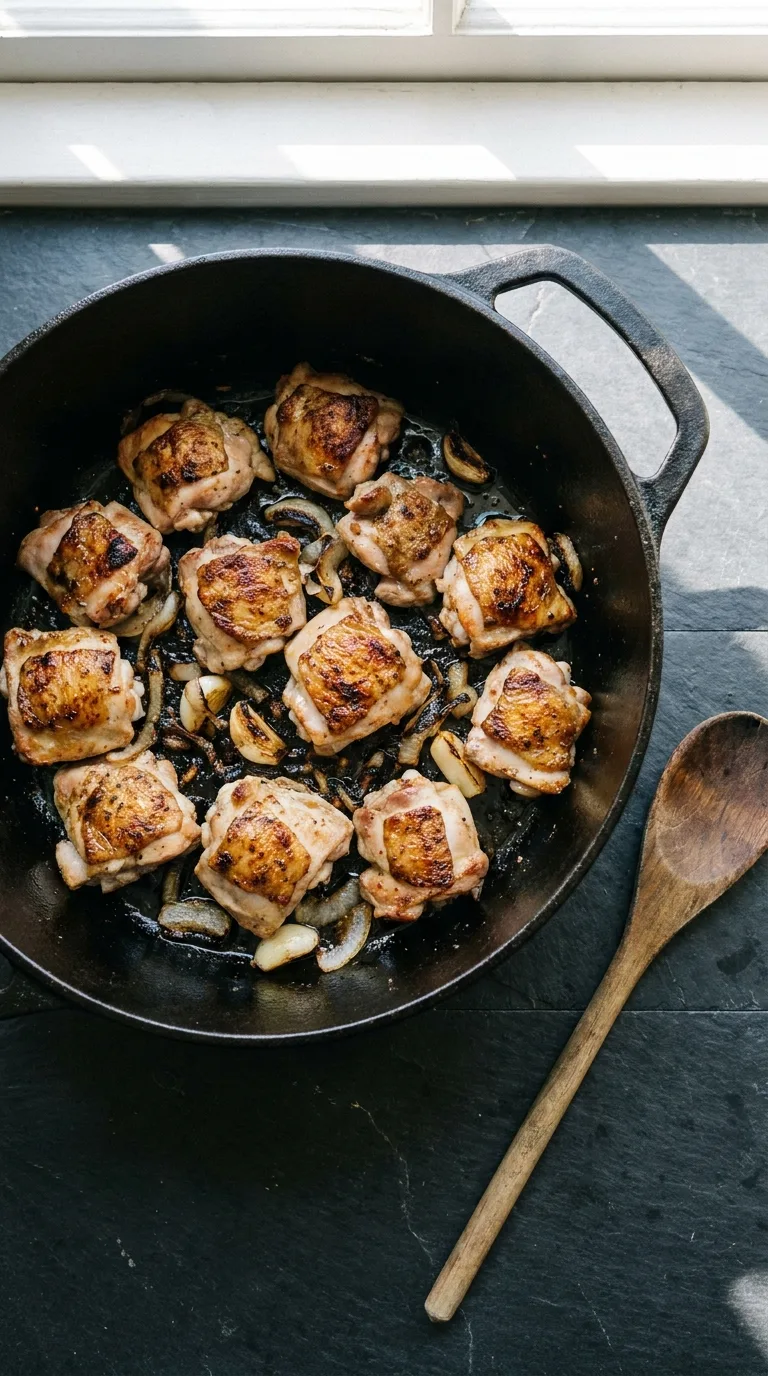
Add the chicken pieces to the pan. Brown them on all sides for 5–6 min, turning occasionally. This creates a savoury crust that adds depth to the final stew.
-
Build the liquid
Pour in the canned tomatoes and 200 ml stock. Bring the mixture to a gentle boil. This liquid will provide the moisture needed to cook the potatoes.
-
Simmer the potatoes
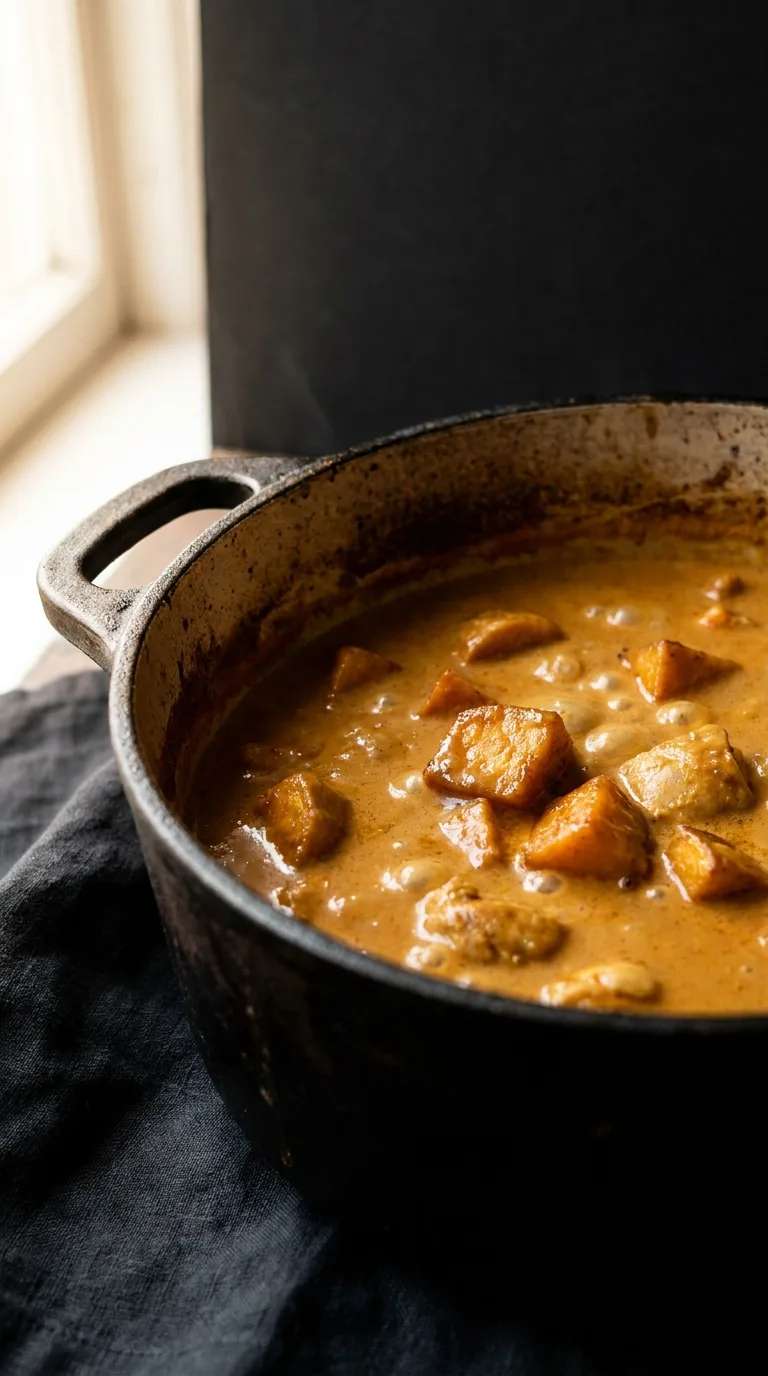
Gently fold in the sweet potato cubes. Lower the heat to a simmer and cover with a lid. Let it simmer for 20 minutes, stirring occasionally, until the sweet potatoes are tender.
-
Finish the sauce
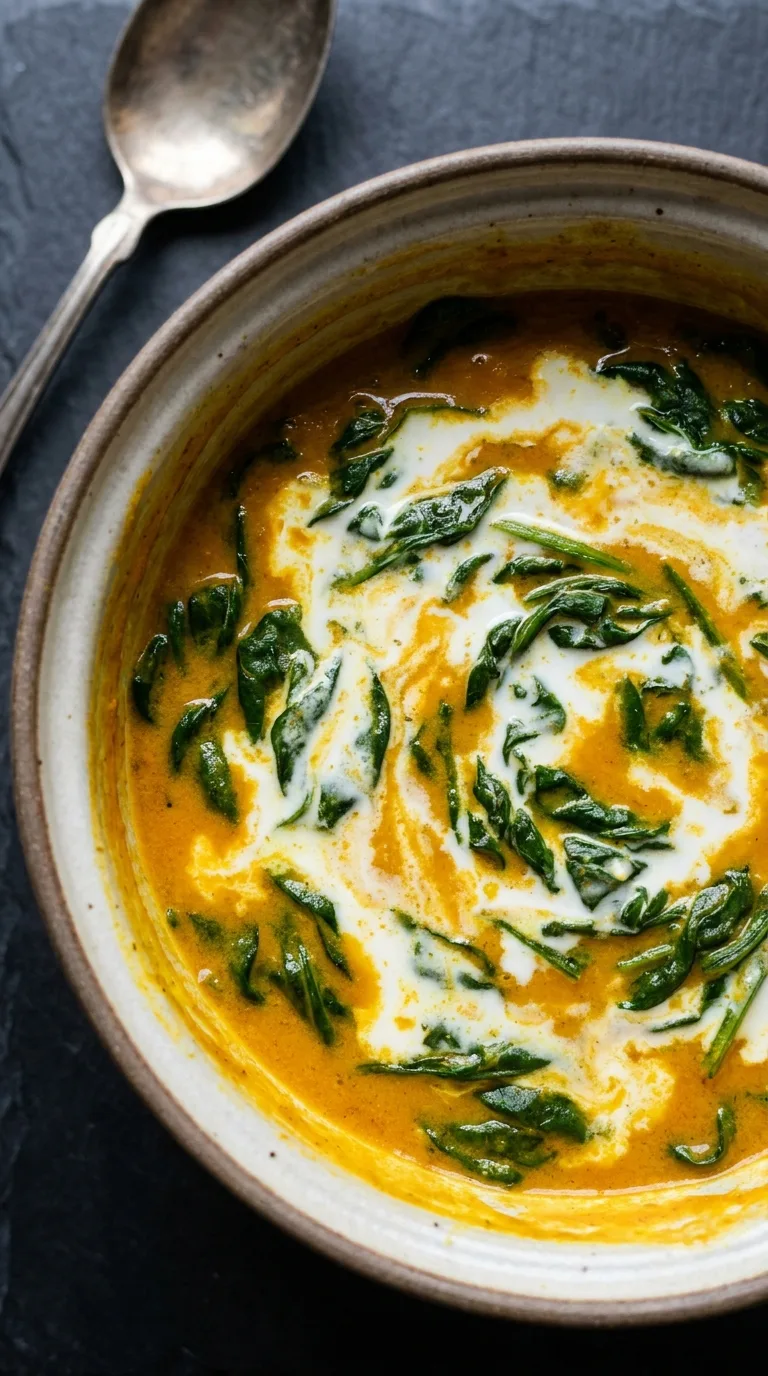
Stir in the coconut milk and spinach. Add cumin, coriander, garam masala, and a pinch of salt. Simmer uncovered for 5 minutes until the sauce thickens and the spinach wilts.
-
Season and garnish
Adjust the seasoning with black pepper, salt, and lemon juice. Use the lemon juice last to brighten the heavy creams. Scatter toasted almonds, chopped coriander, and a drizzle of coconut milk over the dish.
Sauté the onions until they are golden brown. If they remain pale, the base lacks depth and the sauce may taste slightly bitter. Browning the onions ensures a rich, savoury foundation that balances the sweetness of the potatoes.
How it differs from the traditional method
Adding sweet potato creates a thicker, creamier base than traditional chicken korma. This provides a natural sweetness that balances the spices. Use the traditional method without root vegetables if you require a lighter sauce with a more distinct, clear spice profile and a thinner consistency.
Storing and reheating
Store the korma in an airtight container in the refrigerator for up to 3 days. You can freeze the dish for up to 2 months. Thaw it overnight in the fridge before reheating to ensure the chicken retains its texture and the sauce does not separate.
Nutrition per serving
- Calories
- 410
- Protein
- 28.5 g
- Carbs
- 24.2 g
- Fat
- 19.8 g
- Fiber
- 5.4 g
- Sugar
- 9.1 g
Estimated, and offered as a guide rather than a medical figure.
Made it? Rate it.
Questions people ask
What is the difference between korma and curry?
Korma is milder and creamier than most curries. It uses nut pastes, yoghurt, or coconut milk to create a rich, velvety sauce, whereas other curries often rely more heavily on a tomato and onion base with higher heat levels.
Can you cook sweet potatoes and chicken together?
Yes. Adding them to the same pot allows the sweet potatoes to absorb the savoury flavours of the chicken and spices. Ensure the potatoes are diced into 2 cm cubes so they soften at the same rate as the chicken.
Is korma hotter than butter chicken?
No. Korma is generally similar to or milder than butter chicken. Both focus on creamy, nutty profiles, though korma often incorporates more aromatic spices like cardamom and cinnamon to provide depth without adding significant heat.

About the author
Mary C. Rivero
Mary C. Rivero specializes in comforting home‑cooked meals, from hearty pastas and sheet‑pan dinners to quick weeknight snacks. Her recipes feature clear, step‑by‑step directions and practical tips, helping readers create flavorful dishes with confidence and ease.